Hospitality in Higher Education
Explore hospitality origins and apply its principles to design campus spaces that foster belonging and wellbeing
Sponsored by MillerKnoll | Presented by Michelle Ossmann, PhD, MSN, MBA
Webinar On-Demand
In this course, you will learn about the origins of hospitality, the guest-host relationship, and considerations for supporting hospitality in higher education environments. Colleges and universities are dealing with rising student mental health needs, faculty and staff burnout, increasing competition from alternative learning programs, and commuter students who feel disconnected. One way to address these problems is by applying the concepts of hospitality to campus design.
Research into the cultural origins of hospitality show that hosts can fill fundamental human needs by extending psychological and physical security, belonging, and wellbeing to their guests. Designing spaces that offer protection, intellectual welcome, and open table fellowship can help faculty, staff, and students develop a sense of belonging to their campus communities.
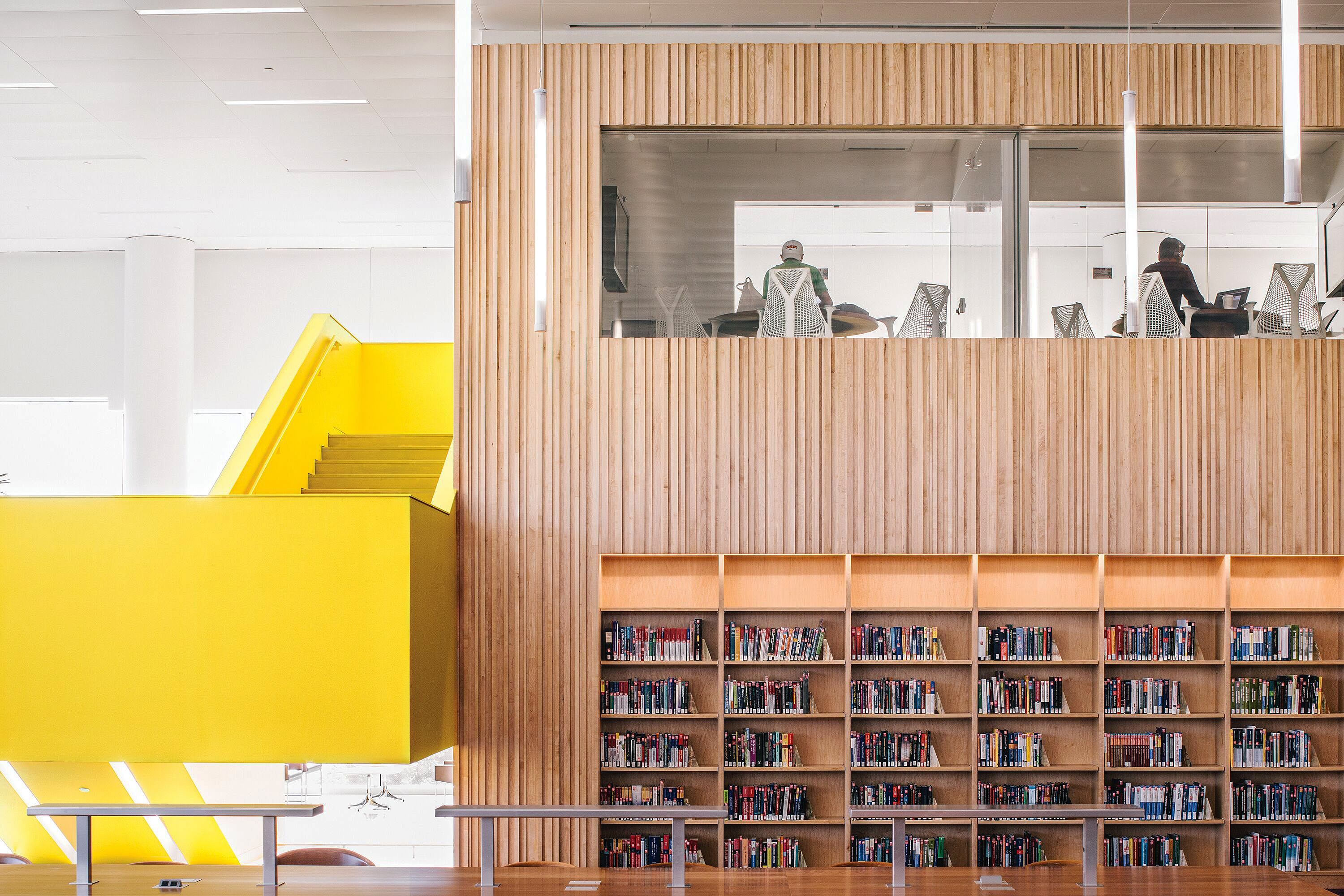
Photo courtesy of MillerKnoll
 |
Michelle Ossmann, PhD, MSN, MBA, is a socio-spatial scientist, focusing on how human interaction is affected by the organization of our buildings; she views technology as both partner and tool. Because Ossmann is also a former critical care nurse practitioner, she has a unique spatial view of health settings. She thinks quite a bit about enabling human behaviors (prevent/promote) and always has outcomes in mind. Teaching, learning, and developing ideas are what she does best. |

MillerKnoll is a global collective of design brands built on the foundation of two icons of modernism: Herman Miller and Knoll. The portfolio also includes furniture and accessories for commercial and residential spaces from Colebrook Bosson Saunders, DWR (Design Within Reach), Edelman, Geiger, HAY, HOLLY HUNT, Knoll Textiles, Maharam, Muuto, NaughtOne, and Spinneybeck | FilzFelt. Guided by a shared purpose—design for the good of humankind—MillerKnoll generates insights, pioneers innovations, and champions ideas to better align spaces with how people live, work, and gather.
Originally published in Architectural Record
Originally published in May 2026
LEARNING OBJECTIVES
- Analyze how social and relationship-based stressors on campus (e.g., isolation, lack of belonging, faculty burnout) manifest in the built environment, and evaluate how architectural design strategies can mitigate these risks by improving occupant mental health, safety, retention, and functional performance of educational facilities.
- Explain how principles of hospitality—addressing basic human needs for safety, security, nourishment, and individual recognition—translate into architectural design strategies that enhance psychological well-being, physical safety, and equitable access within campus environments.
- Assess how hospitality-driven design principles—such as protection (physical and psychological safety), intellectual welcome (cognitive clarity and accessibility), and open table (social inclusion and equity)—can be applied to reduce risk, improve security, support mental health, and foster inclusive, health-promoting environments.
- Apply hospitality-driven design strategies to campus spaces—including libraries, study areas, dining facilities, student lounges, and faculty offices—to improve occupant safety, support mental and physical well-being, enhance accessibility, and promote equitable, inclusive use of the built environment.