Photo courtesy Marvin
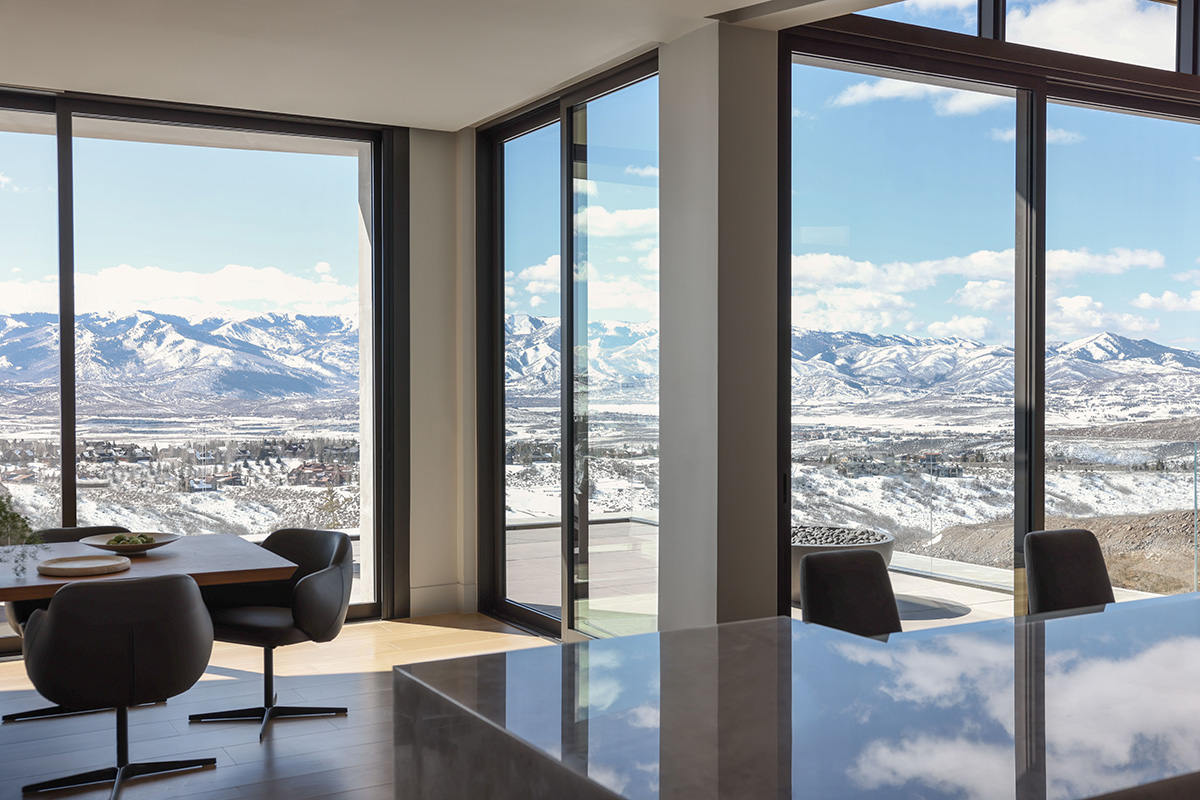
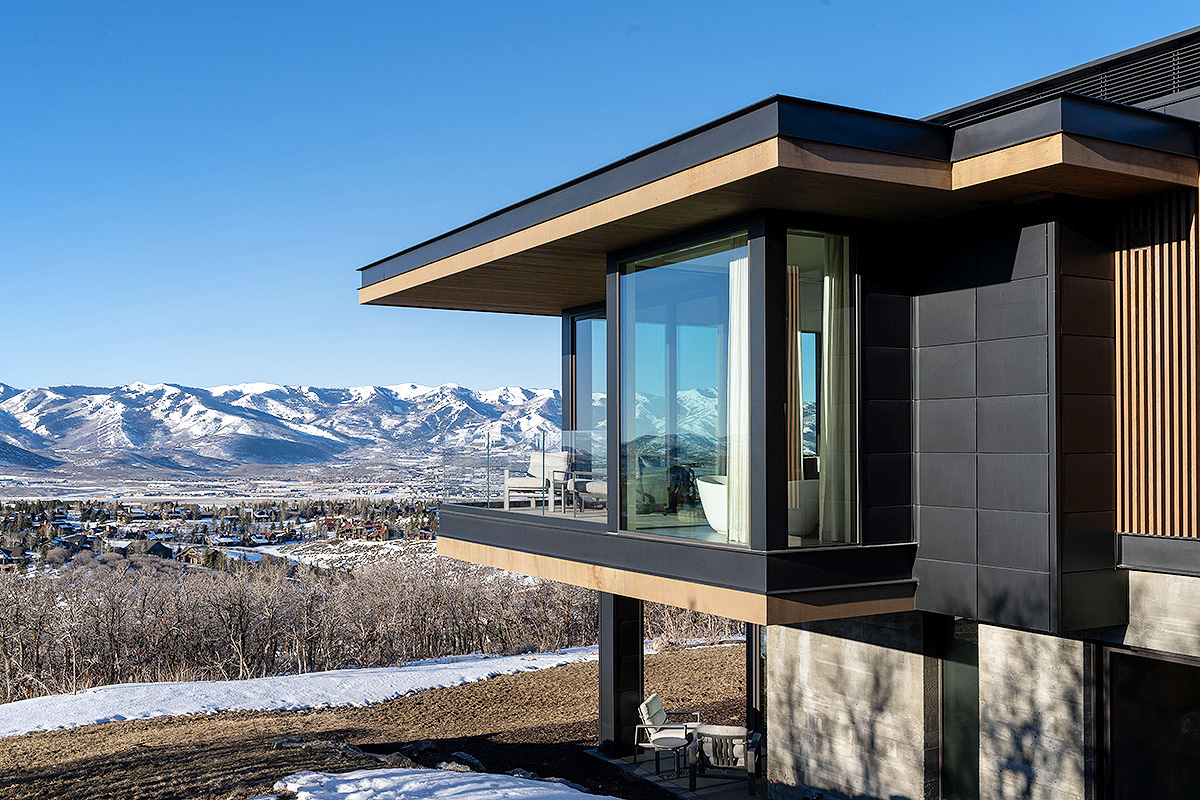
Many contemporary custom home designs include large, mulled assemblies that blur the line between indoors and outdoors.
This article introduces design professionals to the full scope of performance considerations that influence how windows and doors function in custom residential buildings. While aesthetic decisions such as sightlines, hardware, and finishes remain important, long-term performance depends on understanding how these systems respond to environmental conditions, glazing choices, acoustic demands, structural strategies, and installation methods. Learners will explore climate-driven challenges, glazing performance, sound control principles, and the implications of factory-mulled versus field-mulled assemblies. By broadening the conversation beyond appearance, this course helps architects specify window and door solutions that improve building durability, occupant comfort, and overall resilience.
Understanding Window and Door Performance
In many ways, windows and doors help make a home a home. They let in natural light and fresh air; they frame views; they block noise and buffer occupants from extreme heat, cold, and moisture.
They contribute greatly to a home’s beauty and directly influence how people experience their homes and how connected they are with nature and the outdoors. And of course, windows and doors contribute to a home’s durability and longevity. Replacing a home’s windows and doors with new ones can drastically improve a home’s comfort and energy efficiency, while giving it decades of new life.
Today’s custom homes are distinguished by “big glass”—multiple sliding door assemblies, large glazed panels, and window walls. These configurations blur the boundary between inside and outside, allow for expansive views and ample natural light, and provide a biophilic experience for the occupants inside. They also come with challenges. The assemblies must meet structural requirements, including wind loads, while achieving the desired energy performance.
Until relatively recently, windows could be regarded as “holes in the building envelope” from a performance perspective. Windows and doors—in particular, the glazing—transfer heat easily and have represented the greatest source of heat loss and gain through a building’s facades. One way architects and designers mitigate these losses is through a concept called window-to-wall ratio, or WWR. This ratio reflects the percentage of glazed surfaces, measured in square feet, to the total above-grade exterior wall area. A lower WWR minimizes heat loss; for this reason, energy codes set thresholds for WWR, typically between 30 and 40 percent. Rating systems like Passive House have even more stringent limits.
Window and door manufacturers have advanced their methods and technologies, greatly improving product performance. It’s possible to design homes with stunning window walls without sacrificing energy efficiency, comfort, or safety—if the right products are specified.
Like all materials, windows and doors transfer heat through three pathways: conduction, convection, and radiant heat transfer. Having a basic understanding of these mechanisms can help designers make good choices for their specific projects and climate zones.
Conduction describes the movement of heat through a solid material such as glass or wood. Conduction not only applies to the entire window assembly—glass, frames, and spacers—but to the entire building envelope. Obviously, some materials are better conductors than others. Metal is an excellent conductor. Fiberglass insulation is a poor conductor because it creates a labyrinth of tiny pockets that trap air. Glass, unfortunately, conducts heat fairly well, but there are many strategies for lessening heat loss through glazing, such as the use of low-conduction warm-edge insulating glass spacers and insulating panes with gas.
Convection is defined as the transfer of heat through moving air or water, and it may help explain why you feel chilly near a window on a cold day. Here’s how it works: When heated air contacts the cooler interior window glazing, it loses heat, becomes denser, and moves downward. More heated air rushes in to replace it, creating a convective loop. Convection also explains heat loss through cracks and gaps in the building envelope and between the two panes of glass.
Radiant heat transfer describes the movement of heat from warmer to cooler objects; this can be electromagnetic radiation from the sun or heat radiating from a hot object. Color greatly affects radiant heat transfer. Dark-colored objects absorb more wavelengths of light (and thus heat) than light-colored ones. This can be an advantage: think of a black wood stove radiating heat into a room, or a black dog lying outside on a cold but sunny day.
Plain uncoated glass readily transfers heat, and for this reason, it is rarely used anymore. Instead, almost all commercial glass is manufactured with low-emissivity coatings that decrease heat transfer. These coatings can be selected to meet the needs of the project. In passive solar designs, for example, solar gain can be used to help warm interiors during cold seasons. Windows and doors in these homes have low-e coatings that allow in the sun’s heat while still reducing the transfer of heat from hot to cold. When wavelengths of light enter a home through windows, they are absorbed by finishes and materials and then slowly released as heat. The location of windows and the siting of the building are key to successful passive solar design. Often, such homes include large overhangs that block direct sun in summer, when solar heat gain is not wanted, but allow in light in winter, when sun angles are lower.
There are also places where it makes more sense to limit solar heat gain through windows most of the time—in hot climates, for example, solar gain only adds to the cooling load. In these cases, low-emissivity coatings can help reduce heat transfer. Shading devices are another strategy.
Of course, heat loss (or gain) is not the only performance consideration. Windows must also control the movement of air and moisture and mitigate noise. The glazing, framing materials, and spacers all play a role, as does the quality of installation. Let’s look at some of the ways windows and doors help support overall building performance.
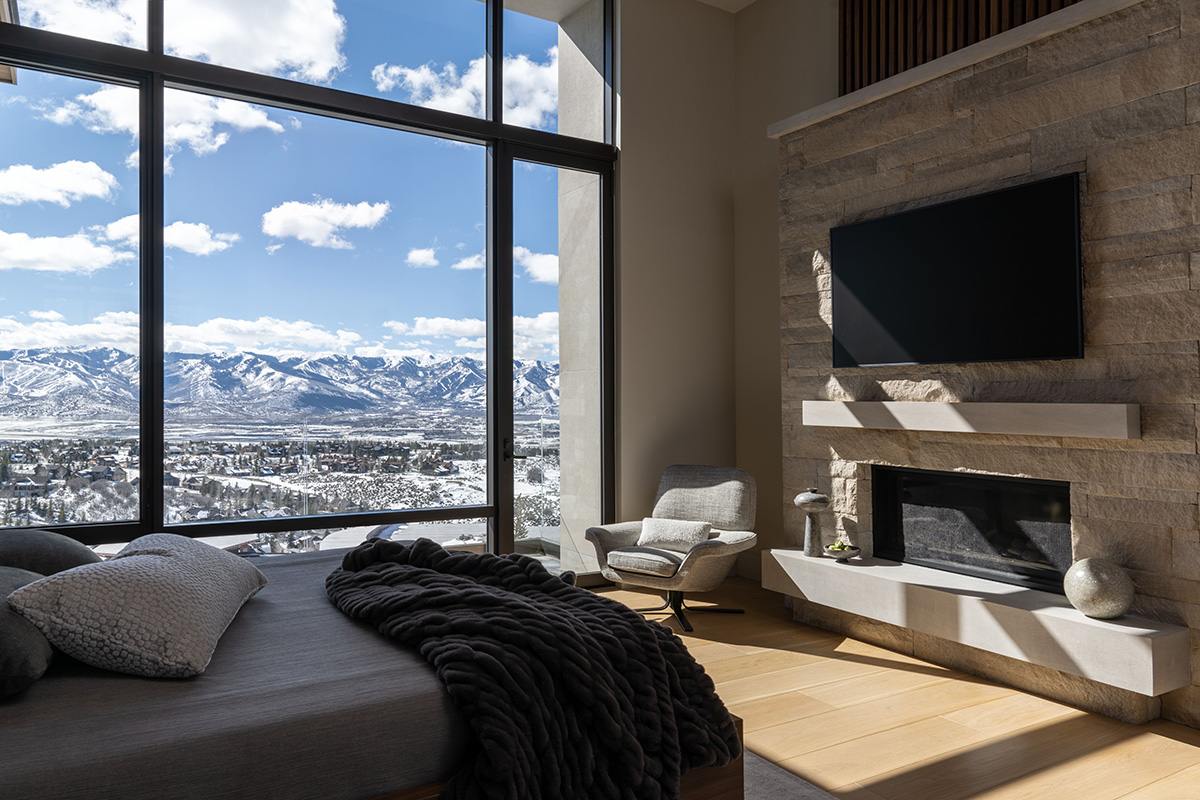
Photo courtesy of Marvin
Features with thermal mass, such as stone hearths, can capture radiant heat that enters through windows and slowly release it to warm interiors during winter.
Air Leakage: While natural ventilation is welcome on a pleasant day, no one likes a drafty window, especially when it’s cold outside. Air leakage doesn’t just affect comfort; it can significantly drive up heating or cooling demand and compromise a window or door’s ability to mitigate noise.
Air leakage occurs around windows when seals within the window fail, or when caulk or weatherstripping cracks or is compromised. The operating type of the window also makes a difference. Fixed or picture windows are the least prone to air leakage, but with the right design, quality manufacturing, and installation, many airtight configurations are possible with operating windows.
Building codes allow for a certain amount of air leakage. Typically, codes limit the rate of leakage to 0.3 cfm for windows, skylights, and sliding doors.
Moisture Control: Condensation can occur when the temperature of the window’s inside surface is colder than the dew point inside the house. (Dew point is a function of temperature and relative humidity.) Left unchecked, condensation can promote mold growth and compromise indoor air quality. This problem is more likely to occur in cold climates. Fortunately, selecting energy-efficient double- or triple-pane windows with a low U-factor can minimize this issue.
Sound Mitigation: Windows and doors play a key role in mitigating unwanted noise from outside the home. Fortunately, many of the same features that make these units energy efficient also help them effectively mitigate sound.
Windows and doors that effectively control heat transfer, air movement, moisture, and sound contribute greatly to a home’s comfort and indoor air quality.
Operating Types
A window’s style or operating type affects its energy performance—a fact which must be balanced with other attributes when specifying windows.
Fixed windows are a good choice for certain large window applications and window walls; often, they are paired with operable window types such as casements or awnings. Fixed or picture windows are more energy efficient than operable window types, since there are few, if any, places for air to escape.
Awning windows are hinged at the top and swing outward, while casements are hinged at one side and swing out. In both cases, the sash closes by pressing against the frame. Both casements and awning-style windows allow for more precise control of natural ventilation than other operable types. They also minimize framing to the outside of the window. Among the operable types, awning and casement-style windows tend to have lower air leakage than windows that slide open.
Single- and double-hung windows are a popular and traditional window style featuring two stacked sashes; to operate, one sash slides vertically past the other. Grilles or mullions can be used to divide the top light and create a classic look.
Sliding windows allow one sash to slide horizontally past the other, similar to a sliding glass door. They allow for a clean aesthetic and unobstructed views without projecting to the exterior—an important consideration when walkways are nearby.
Sliding windows and single- and double-hung windows typically leak more air than other window types. Importantly for all window types, air leakage highly depends on the quality of the window and the quality of the installation. And remember: the more air leakage, the greater the sound transfer.
Climate-Related Challenges
Climate is always a top consideration when specifying windows and doors. In cold climates, for example, the goals should be preventing heat loss through the building envelope and minimizing condensation. In hot climates, solar heat gain is a prime concern, along with glare and UV control.
Coastal climates have special considerations. It’s important that windows and doors resist moisture intrusion and that finishes are corrosion-resistant. Impact-resistant glazing is a concern where hurricanes and tropical storms are likely to occur. The high winds associated with these storms can cause objects, small and large, to become airborne, where they can potentially break or compromise the glazing in windows and doors. If this occurs, the change in internal pressure can potentially compromise the home’s structure.
Wildfire is an increasing concern in many communities, particularly those located in the Wildland-Urban Interface, or WUI. If a home is subjected to extreme heat or flying embers, it’s important that windows stay intact, preventing smoke and flames from entering the home.
We’ll look at specific considerations for these special cases later in this course.
Glazing Technologies and Performance
Glazing plays a central role in managing energy, comfort, and visual experience, so it’s important to understand the major technologies and how they affect the window or door’s performance.
The selection of glazing is arguably the most important factor affecting the energy performance of the unit. Though the home’s climate zone and specific site will largely determine what glazing you choose, you can also tailor selections for specific locations and facades. First, let’s recall the properties of glass that make it so versatile.
Glass is so ubiquitous that it’s easy to take for granted; however, it is a remarkable product that’s literally made primarily from melted sand or silicon oxide.
Plain “float glass,” also called annealed glass, is made by heating the raw materials above 600 degrees Fahrenheit, then cooling it at a slow and controlled rate. Molten glass is “floated” on a bed of denser liquid tin, resulting in all but perfectly flat surfaces on both sides. Today, nearly all glass is made this way.
Other factory processes can enhance certain properties of float glass. These are especially relevant for producing the different types of safety glass, which building codes require in certain locations and applications.
Safety glass is required in locations where occupants are more likely to fall and collide with a window—in bathrooms near showers and tubs, for example. Windows for homes in coastal locations and high wind hazard areas must be made using impact-resistant glass. It should be noted that all glass doors and large windows greater than nine square feet that fall into the hazardous location in IBC 2406.4.3 require tempered or laminated safety glass.
Tempered glass is a type of safety glass that is up to four times stronger than standard glass. This process puts the outside of the glass under compression, while the core of the glass remains under tension. When tempered glass breaks, it shatters into tiny chunks rather than jagged shards, making it less likely to injure someone.
Laminated glass is safety glass that is manufactured by sandwiching a thin film of plastic between two panes of glass and bonding them together under extreme heat and pressure. When laminated glass is broken, the plastic holds the many shards together. Laminated glass has many positive attributes. The plastic interlayer blocks almost all UV light, so the glass can help protect interior finishes and furniture. Laminated glass is very strong, making it a good choice when security is important. It is also good at dampening sound.
Impact-resistant glass is required in many coastal zones; such glass must withstand the strong winds and flying debris associated with storms and hurricanes. Also called impact glass or hurricane glass, impact-resistant glass is stronger than tempered or standard laminated glass. It is manufactured with a thicker frame, and the panes themselves are usually thicker, too. Some impact-resisting glass units are assembled using both laminated and tempered glass.
Impact-resistant glass is evaluated with three ASTM tests that collectively simulate the effects of a hurricane. In the “large missile” test, a nine-pound 2x4 is fired at the glass at 34 miles per hour. For the “small missile” test, a series of small steel balls is fired at the glass at speeds approaching 90 miles per hour. The large missile test is required for glass installed at grade and up to 30 feet, while the small missile test is required for glass that is installed at higher elevations. After the missile tests, the glass is subjected to cyclic pressure testing, where it is subjected to alternating cycles of positive and negative pressure. This test helps determine the product’s pressure rating.
Insulated glazing: A window with insulated glazing consists of two or more panes of glass that are spaced apart from each other and sealed. The insulating air space between the panes helps to reduce heat transfer, thus improving the window’s U-factor. Virtually all windows and doors produced today include insulated glazing. Though two panes of glass are typical, triple-pane and even quadruple-pane units are available.
Low-emissivity coatings: These special “low-e” coatings consist of extremely thin layers of special metallic coatings that are deposited directly on the surface of one or more panes of glass during the manufacturing process. They work by blocking some wavelengths of light while allowing others. The industry has developed a range of low-e coatings tailored to different needs and climate zones. Some are spectrally selective and block the majority of solar heat while allowing in the full spectrum of daylight. These coatings may reduce energy loss by up to 50 percent.
Low-e coatings have a noticeable color; therefore, the specification of windows with different coatings should be avoided if they are in close proximity or on the same elevation of a house.
Tinting: Glazing can be tinted (usually bronze or gray) to reduce solar heat gain. Tinted glass controls glare and solar heat gain well, but it comes at the expense of visible light transmission, or VLT. It’s important to consider whether a low-e coating is a better choice, especially in residential projects.
Gas fills: Another way to reduce heat loss through glazing is the addition of gas fills and spacers. Double- and triple-pane windows work because air itself is insulating; the gap between the panes prevents heat from transferring directly from pane to pane. Replacing the air with an inert, odorless gas, usually argon or krypton, enhances the window’s performance, as these gases are denser than air and have lower thermal conductivity. Krypton performs better than argon; however, it is rarer—and thus more expensive.
Because of the pressure difference between the gas inside the unit and the surrounding air, gas tends to leak out of the window slowly over time. Be sure to specify windows that have been certified by a third-party testing lab. The test, ASTM E2188/E2190 Standard Specification for Insulating Glass Unit Performance and Evaluation, measures gas loss in an insulating glass unit before and after the equivalent of 10 years of weathering. To pass, units may only lose up to 10 percent of their gas.
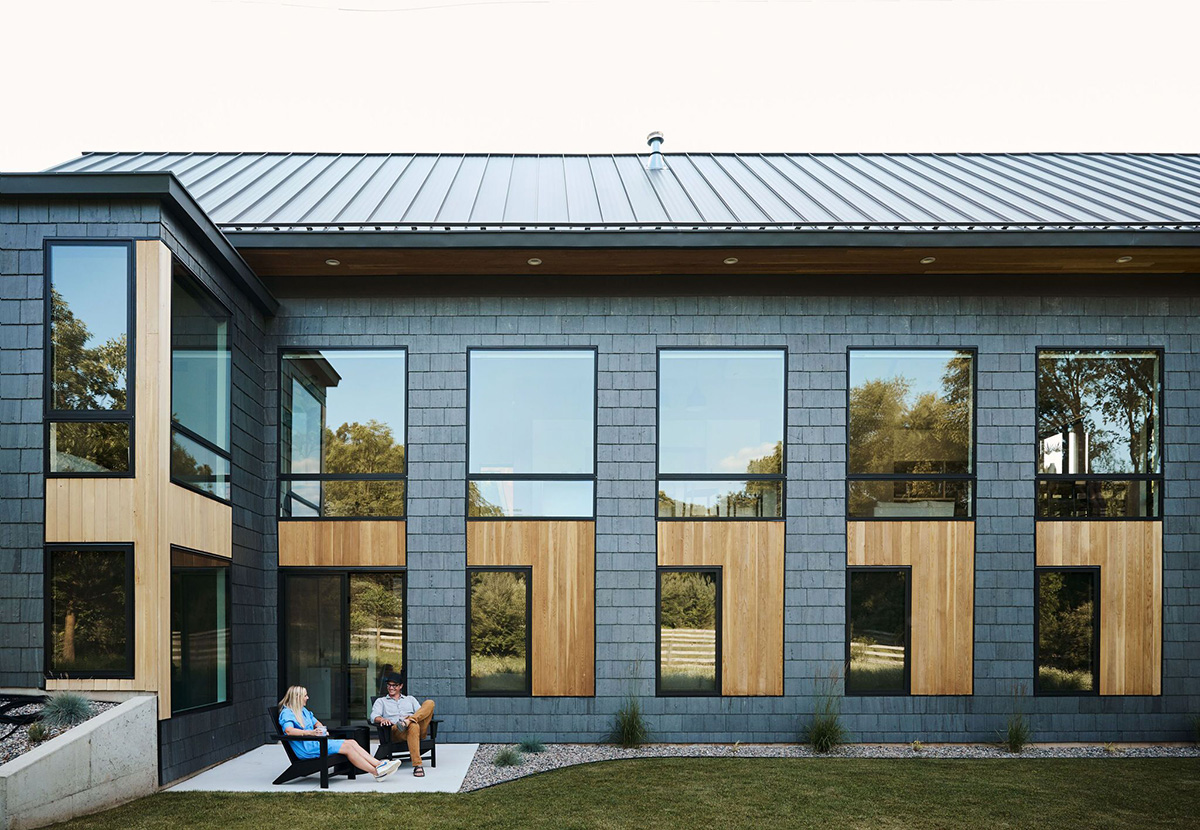
Photo courtesy of Marvin
Low-e coatings can be tailored to the climate and even to the facade to ensure windows let in light but are not overheated.
Privacy Glass
Privacy glazing is often specified for bathroom windows, sidelights alongside entry doors, or in other rooms where privacy is a concern. Privacy glass may also be a consideration for large windows or window walls in today’s custom homes. Designers can choose a strategy that complements the home’s aesthetics; some options obscure views into the window without blocking light.
The main options for privacy glass include translucent, textured, tinted, and colored glass. A newer option, switchable or “smart” glass, allows occupants the best of both worlds: clear windows with privacy glass on demand.
Translucent glass has a “frosted” appearance that is produced by sandblasting or acid etching clear glass. The resulting pattern scatters and diffuses light, obscuring views while allowing light to pass through.
Textured glass is created by pressing a pattern or design into the pane during manufacturing.
Tinted and colored glass uses hue or color to bolster privacy. The darker the color, the harder it is to see through the window.
Smart glass technology allows a window to switch between clear and opaque. One manufacturer uses a proprietary liquid crystal technology applied to the glass: when clear, the crystals are aligned; in the privacy state, the crystals scatter. Smart windows can be operated using a wall-mounted switch or remote, and they can be integrated with smart home systems. Notably, the smart window requires no power in the “private,” opaque state; the clear state requires only a half-watt of power.
Photo courtesy Marvin
Many contemporary custom home designs include large, mulled assemblies that blur the line between indoors and outdoors.
This article introduces design professionals to the full scope of performance considerations that influence how windows and doors function in custom residential buildings. While aesthetic decisions such as sightlines, hardware, and finishes remain important, long-term performance depends on understanding how these systems respond to environmental conditions, glazing choices, acoustic demands, structural strategies, and installation methods. Learners will explore climate-driven challenges, glazing performance, sound control principles, and the implications of factory-mulled versus field-mulled assemblies. By broadening the conversation beyond appearance, this course helps architects specify window and door solutions that improve building durability, occupant comfort, and overall resilience.
Understanding Window and Door Performance
In many ways, windows and doors help make a home a home. They let in natural light and fresh air; they frame views; they block noise and buffer occupants from extreme heat, cold, and moisture.
They contribute greatly to a home’s beauty and directly influence how people experience their homes and how connected they are with nature and the outdoors. And of course, windows and doors contribute to a home’s durability and longevity. Replacing a home’s windows and doors with new ones can drastically improve a home’s comfort and energy efficiency, while giving it decades of new life.
Today’s custom homes are distinguished by “big glass”—multiple sliding door assemblies, large glazed panels, and window walls. These configurations blur the boundary between inside and outside, allow for expansive views and ample natural light, and provide a biophilic experience for the occupants inside. They also come with challenges. The assemblies must meet structural requirements, including wind loads, while achieving the desired energy performance.
Until relatively recently, windows could be regarded as “holes in the building envelope” from a performance perspective. Windows and doors—in particular, the glazing—transfer heat easily and have represented the greatest source of heat loss and gain through a building’s facades. One way architects and designers mitigate these losses is through a concept called window-to-wall ratio, or WWR. This ratio reflects the percentage of glazed surfaces, measured in square feet, to the total above-grade exterior wall area. A lower WWR minimizes heat loss; for this reason, energy codes set thresholds for WWR, typically between 30 and 40 percent. Rating systems like Passive House have even more stringent limits.
Window and door manufacturers have advanced their methods and technologies, greatly improving product performance. It’s possible to design homes with stunning window walls without sacrificing energy efficiency, comfort, or safety—if the right products are specified.
Like all materials, windows and doors transfer heat through three pathways: conduction, convection, and radiant heat transfer. Having a basic understanding of these mechanisms can help designers make good choices for their specific projects and climate zones.
Conduction describes the movement of heat through a solid material such as glass or wood. Conduction not only applies to the entire window assembly—glass, frames, and spacers—but to the entire building envelope. Obviously, some materials are better conductors than others. Metal is an excellent conductor. Fiberglass insulation is a poor conductor because it creates a labyrinth of tiny pockets that trap air. Glass, unfortunately, conducts heat fairly well, but there are many strategies for lessening heat loss through glazing, such as the use of low-conduction warm-edge insulating glass spacers and insulating panes with gas.
Convection is defined as the transfer of heat through moving air or water, and it may help explain why you feel chilly near a window on a cold day. Here’s how it works: When heated air contacts the cooler interior window glazing, it loses heat, becomes denser, and moves downward. More heated air rushes in to replace it, creating a convective loop. Convection also explains heat loss through cracks and gaps in the building envelope and between the two panes of glass.
Radiant heat transfer describes the movement of heat from warmer to cooler objects; this can be electromagnetic radiation from the sun or heat radiating from a hot object. Color greatly affects radiant heat transfer. Dark-colored objects absorb more wavelengths of light (and thus heat) than light-colored ones. This can be an advantage: think of a black wood stove radiating heat into a room, or a black dog lying outside on a cold but sunny day.
Plain uncoated glass readily transfers heat, and for this reason, it is rarely used anymore. Instead, almost all commercial glass is manufactured with low-emissivity coatings that decrease heat transfer. These coatings can be selected to meet the needs of the project. In passive solar designs, for example, solar gain can be used to help warm interiors during cold seasons. Windows and doors in these homes have low-e coatings that allow in the sun’s heat while still reducing the transfer of heat from hot to cold. When wavelengths of light enter a home through windows, they are absorbed by finishes and materials and then slowly released as heat. The location of windows and the siting of the building are key to successful passive solar design. Often, such homes include large overhangs that block direct sun in summer, when solar heat gain is not wanted, but allow in light in winter, when sun angles are lower.
There are also places where it makes more sense to limit solar heat gain through windows most of the time—in hot climates, for example, solar gain only adds to the cooling load. In these cases, low-emissivity coatings can help reduce heat transfer. Shading devices are another strategy.
Of course, heat loss (or gain) is not the only performance consideration. Windows must also control the movement of air and moisture and mitigate noise. The glazing, framing materials, and spacers all play a role, as does the quality of installation. Let’s look at some of the ways windows and doors help support overall building performance.
Photo courtesy of Marvin
Features with thermal mass, such as stone hearths, can capture radiant heat that enters through windows and slowly release it to warm interiors during winter.
Air Leakage: While natural ventilation is welcome on a pleasant day, no one likes a drafty window, especially when it’s cold outside. Air leakage doesn’t just affect comfort; it can significantly drive up heating or cooling demand and compromise a window or door’s ability to mitigate noise.
Air leakage occurs around windows when seals within the window fail, or when caulk or weatherstripping cracks or is compromised. The operating type of the window also makes a difference. Fixed or picture windows are the least prone to air leakage, but with the right design, quality manufacturing, and installation, many airtight configurations are possible with operating windows.
Building codes allow for a certain amount of air leakage. Typically, codes limit the rate of leakage to 0.3 cfm for windows, skylights, and sliding doors.
Moisture Control: Condensation can occur when the temperature of the window’s inside surface is colder than the dew point inside the house. (Dew point is a function of temperature and relative humidity.) Left unchecked, condensation can promote mold growth and compromise indoor air quality. This problem is more likely to occur in cold climates. Fortunately, selecting energy-efficient double- or triple-pane windows with a low U-factor can minimize this issue.
Sound Mitigation: Windows and doors play a key role in mitigating unwanted noise from outside the home. Fortunately, many of the same features that make these units energy efficient also help them effectively mitigate sound.
Windows and doors that effectively control heat transfer, air movement, moisture, and sound contribute greatly to a home’s comfort and indoor air quality.
Operating Types
A window’s style or operating type affects its energy performance—a fact which must be balanced with other attributes when specifying windows.
Fixed windows are a good choice for certain large window applications and window walls; often, they are paired with operable window types such as casements or awnings. Fixed or picture windows are more energy efficient than operable window types, since there are few, if any, places for air to escape.
Awning windows are hinged at the top and swing outward, while casements are hinged at one side and swing out. In both cases, the sash closes by pressing against the frame. Both casements and awning-style windows allow for more precise control of natural ventilation than other operable types. They also minimize framing to the outside of the window. Among the operable types, awning and casement-style windows tend to have lower air leakage than windows that slide open.
Single- and double-hung windows are a popular and traditional window style featuring two stacked sashes; to operate, one sash slides vertically past the other. Grilles or mullions can be used to divide the top light and create a classic look.
Sliding windows allow one sash to slide horizontally past the other, similar to a sliding glass door. They allow for a clean aesthetic and unobstructed views without projecting to the exterior—an important consideration when walkways are nearby.
Sliding windows and single- and double-hung windows typically leak more air than other window types. Importantly for all window types, air leakage highly depends on the quality of the window and the quality of the installation. And remember: the more air leakage, the greater the sound transfer.
Climate-Related Challenges
Climate is always a top consideration when specifying windows and doors. In cold climates, for example, the goals should be preventing heat loss through the building envelope and minimizing condensation. In hot climates, solar heat gain is a prime concern, along with glare and UV control.
Coastal climates have special considerations. It’s important that windows and doors resist moisture intrusion and that finishes are corrosion-resistant. Impact-resistant glazing is a concern where hurricanes and tropical storms are likely to occur. The high winds associated with these storms can cause objects, small and large, to become airborne, where they can potentially break or compromise the glazing in windows and doors. If this occurs, the change in internal pressure can potentially compromise the home’s structure.
Wildfire is an increasing concern in many communities, particularly those located in the Wildland-Urban Interface, or WUI. If a home is subjected to extreme heat or flying embers, it’s important that windows stay intact, preventing smoke and flames from entering the home.
We’ll look at specific considerations for these special cases later in this course.
Glazing Technologies and Performance
Glazing plays a central role in managing energy, comfort, and visual experience, so it’s important to understand the major technologies and how they affect the window or door’s performance.
The selection of glazing is arguably the most important factor affecting the energy performance of the unit. Though the home’s climate zone and specific site will largely determine what glazing you choose, you can also tailor selections for specific locations and facades. First, let’s recall the properties of glass that make it so versatile.
Glass is so ubiquitous that it’s easy to take for granted; however, it is a remarkable product that’s literally made primarily from melted sand or silicon oxide.
Plain “float glass,” also called annealed glass, is made by heating the raw materials above 600 degrees Fahrenheit, then cooling it at a slow and controlled rate. Molten glass is “floated” on a bed of denser liquid tin, resulting in all but perfectly flat surfaces on both sides. Today, nearly all glass is made this way.
Other factory processes can enhance certain properties of float glass. These are especially relevant for producing the different types of safety glass, which building codes require in certain locations and applications.
Safety glass is required in locations where occupants are more likely to fall and collide with a window—in bathrooms near showers and tubs, for example. Windows for homes in coastal locations and high wind hazard areas must be made using impact-resistant glass. It should be noted that all glass doors and large windows greater than nine square feet that fall into the hazardous location in IBC 2406.4.3 require tempered or laminated safety glass.
Tempered glass is a type of safety glass that is up to four times stronger than standard glass. This process puts the outside of the glass under compression, while the core of the glass remains under tension. When tempered glass breaks, it shatters into tiny chunks rather than jagged shards, making it less likely to injure someone.
Laminated glass is safety glass that is manufactured by sandwiching a thin film of plastic between two panes of glass and bonding them together under extreme heat and pressure. When laminated glass is broken, the plastic holds the many shards together. Laminated glass has many positive attributes. The plastic interlayer blocks almost all UV light, so the glass can help protect interior finishes and furniture. Laminated glass is very strong, making it a good choice when security is important. It is also good at dampening sound.
Impact-resistant glass is required in many coastal zones; such glass must withstand the strong winds and flying debris associated with storms and hurricanes. Also called impact glass or hurricane glass, impact-resistant glass is stronger than tempered or standard laminated glass. It is manufactured with a thicker frame, and the panes themselves are usually thicker, too. Some impact-resisting glass units are assembled using both laminated and tempered glass.
Impact-resistant glass is evaluated with three ASTM tests that collectively simulate the effects of a hurricane. In the “large missile” test, a nine-pound 2x4 is fired at the glass at 34 miles per hour. For the “small missile” test, a series of small steel balls is fired at the glass at speeds approaching 90 miles per hour. The large missile test is required for glass installed at grade and up to 30 feet, while the small missile test is required for glass that is installed at higher elevations. After the missile tests, the glass is subjected to cyclic pressure testing, where it is subjected to alternating cycles of positive and negative pressure. This test helps determine the product’s pressure rating.
Insulated glazing: A window with insulated glazing consists of two or more panes of glass that are spaced apart from each other and sealed. The insulating air space between the panes helps to reduce heat transfer, thus improving the window’s U-factor. Virtually all windows and doors produced today include insulated glazing. Though two panes of glass are typical, triple-pane and even quadruple-pane units are available.
Low-emissivity coatings: These special “low-e” coatings consist of extremely thin layers of special metallic coatings that are deposited directly on the surface of one or more panes of glass during the manufacturing process. They work by blocking some wavelengths of light while allowing others. The industry has developed a range of low-e coatings tailored to different needs and climate zones. Some are spectrally selective and block the majority of solar heat while allowing in the full spectrum of daylight. These coatings may reduce energy loss by up to 50 percent.
Low-e coatings have a noticeable color; therefore, the specification of windows with different coatings should be avoided if they are in close proximity or on the same elevation of a house.
Tinting: Glazing can be tinted (usually bronze or gray) to reduce solar heat gain. Tinted glass controls glare and solar heat gain well, but it comes at the expense of visible light transmission, or VLT. It’s important to consider whether a low-e coating is a better choice, especially in residential projects.
Gas fills: Another way to reduce heat loss through glazing is the addition of gas fills and spacers. Double- and triple-pane windows work because air itself is insulating; the gap between the panes prevents heat from transferring directly from pane to pane. Replacing the air with an inert, odorless gas, usually argon or krypton, enhances the window’s performance, as these gases are denser than air and have lower thermal conductivity. Krypton performs better than argon; however, it is rarer—and thus more expensive.
Because of the pressure difference between the gas inside the unit and the surrounding air, gas tends to leak out of the window slowly over time. Be sure to specify windows that have been certified by a third-party testing lab. The test, ASTM E2188/E2190 Standard Specification for Insulating Glass Unit Performance and Evaluation, measures gas loss in an insulating glass unit before and after the equivalent of 10 years of weathering. To pass, units may only lose up to 10 percent of their gas.
Photo courtesy of Marvin
Low-e coatings can be tailored to the climate and even to the facade to ensure windows let in light but are not overheated.
Privacy Glass
Privacy glazing is often specified for bathroom windows, sidelights alongside entry doors, or in other rooms where privacy is a concern. Privacy glass may also be a consideration for large windows or window walls in today’s custom homes. Designers can choose a strategy that complements the home’s aesthetics; some options obscure views into the window without blocking light.
The main options for privacy glass include translucent, textured, tinted, and colored glass. A newer option, switchable or “smart” glass, allows occupants the best of both worlds: clear windows with privacy glass on demand.
Translucent glass has a “frosted” appearance that is produced by sandblasting or acid etching clear glass. The resulting pattern scatters and diffuses light, obscuring views while allowing light to pass through.
Textured glass is created by pressing a pattern or design into the pane during manufacturing.
Tinted and colored glass uses hue or color to bolster privacy. The darker the color, the harder it is to see through the window.
Smart glass technology allows a window to switch between clear and opaque. One manufacturer uses a proprietary liquid crystal technology applied to the glass: when clear, the crystals are aligned; in the privacy state, the crystals scatter. Smart windows can be operated using a wall-mounted switch or remote, and they can be integrated with smart home systems. Notably, the smart window requires no power in the “private,” opaque state; the clear state requires only a half-watt of power.
Materials
Glazing is only part of the story. Framing materials, spacers, seals, and workmanship are all components of a high-quality window or mull assembly.
Framing Materials: Window frames are an important component of the window assembly, contributing not only to its aesthetic, but to durability, performance, and overall energy efficiency. Here again, the material is only as good as the quality of construction in the factory and proper installation in the field.
Wood: Wood is a classic and versatile framing material that can be milled into virtually any shape. Commonly made with species such as pine, oak, mahogany, and Douglas-fir, wood frames are beautiful, renewable, and naturally insulating, thanks to the intricate network of tiny cells nestled between wood fibers. Wood-framed windows are extremely durable; however, they must be properly maintained, or they may be vulnerable to moisture, mold, rot, and insect damage.
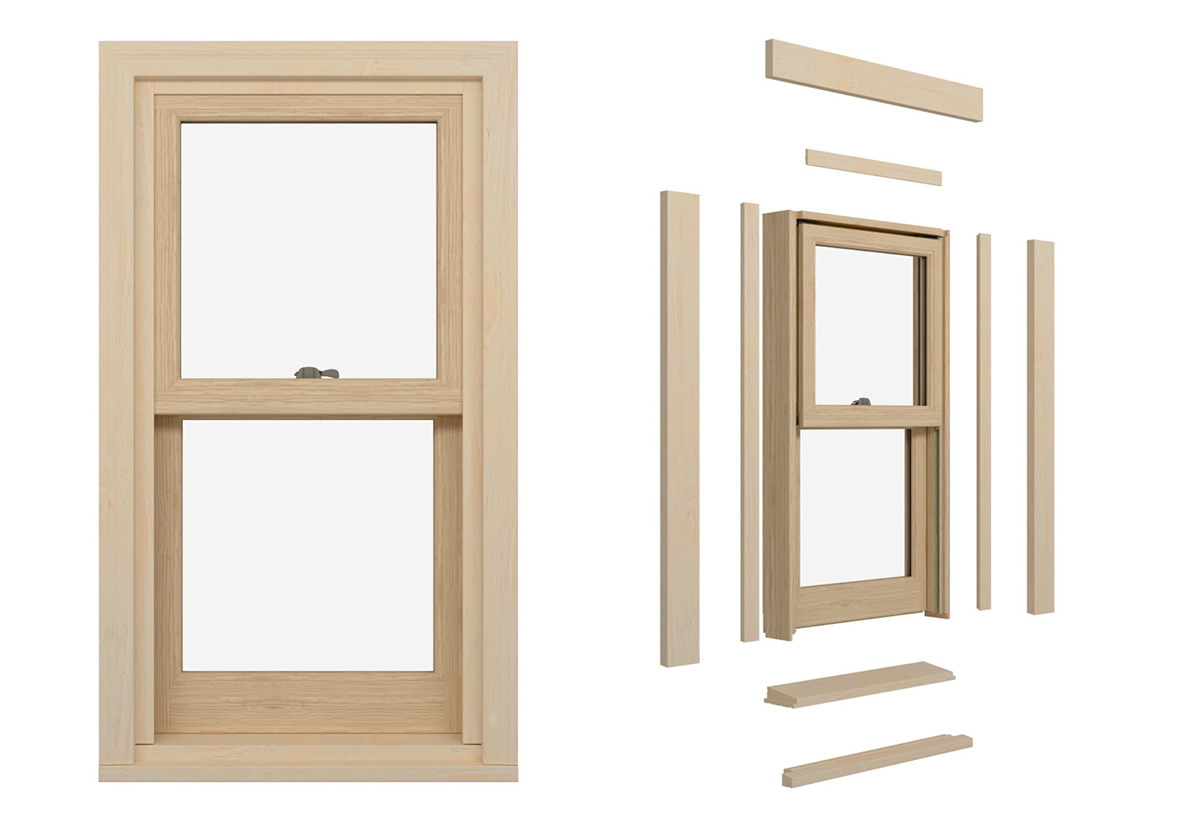
Image courtesy of Marvin
Window and door products with wood on the interior and exterior are good choices for remodels and historic renovations where preserving the character of the original structure is important.
Vinyl: Vinyl, or polyvinyl chloride, is a petroleum-based material used in many building products. Vinyl windows tend to be less expensive, and they are low-maintenance and impervious to rot; however, vinyl frames can become brittle over time, especially after prolonged exposure to UV light or cold temperatures. Vinyl is also not a good choice for hot climates or dark colors, as heat can cause the material to warp.
Fiberglass: Made from a combination of spun glass fibers and resin, fiberglass is extremely durable; like vinyl, it is low maintenance and will not rot. Here’s where the comparison ends, as fiberglass is much stronger than vinyl. It also resists warping and cracking, even when exposed to extreme temperatures and weather conditions. Fiberglass is arguably a more sustainable choice than vinyl, too, as the vinyl manufacturing process is energy intensive. Fiberglass has good thermal insulating properties, and windows made with fiberglass frames can be highly energy efficient. Fiberglass window frames have limited profile options, and they cannot be shaped into radius shapes.
Aluminum: Aluminum has many stellar properties: it is durable, low maintenance, and resistant to rot, insects, and weathering. However, aluminum can corrode, and the metal conducts heat very well and is prone to condensation in colder climates. For this reason, many aluminum windows are manufactured with a thermal break in the frames.
There are two main approaches to aluminum window manufacturing. Roll form aluminum, as the name suggests, is a large, rolled sheet of metal that is pressed down over a form to create window frame components. Roll-form aluminum is thinner and less expensive; however, it is prone to chalking and fading, and it can fail under heavy loads.
Extruded aluminum is created by heating the metal and pushing it through a die. The product can then be cut and fabricated into different shapes, sizes, and widths. Extruded aluminum is much thicker and more durable than roll-form aluminum. Another advantage is that extruded aluminum frames are finished after they are created, which allows for uniform, complete coverage.
Hybrid materials: Many window manufacturers combine the best of two different framing materials to produce products with the desired aesthetics and performance. One common pairing is aluminum and wood. Aluminum-clad wood windows feature wood on the interior and low-maintenance aluminum on the exterior, which is exposed to the elements, moisture, and insects. The wood, an excellent insulator and biophilic material, is on the inside. Another high-performance option pairs fiberglass and wood.
Finishes: The type of exterior finish impacts a window or door product’s durability. Dark-colored finishes warrant special consideration. They absorb more light, including UV light, and may be prone to fading over time; they can also cause the unit to expand and contract. Lower-quality dark finishes are vulnerable to degradation, but factory-applied powder-coated finishes can withstand even the harshest coastal environments. For fiberglass windows, look for finishes that meet the standards of AAMA 624. For aluminum windows, look for finishes that meet the standards of AAMA 2605. Durable fluoropolymer finished with 70 percent PVDF (polyvinylidene difluoride) offers outstanding resistance to humidity, fading, and chalking.
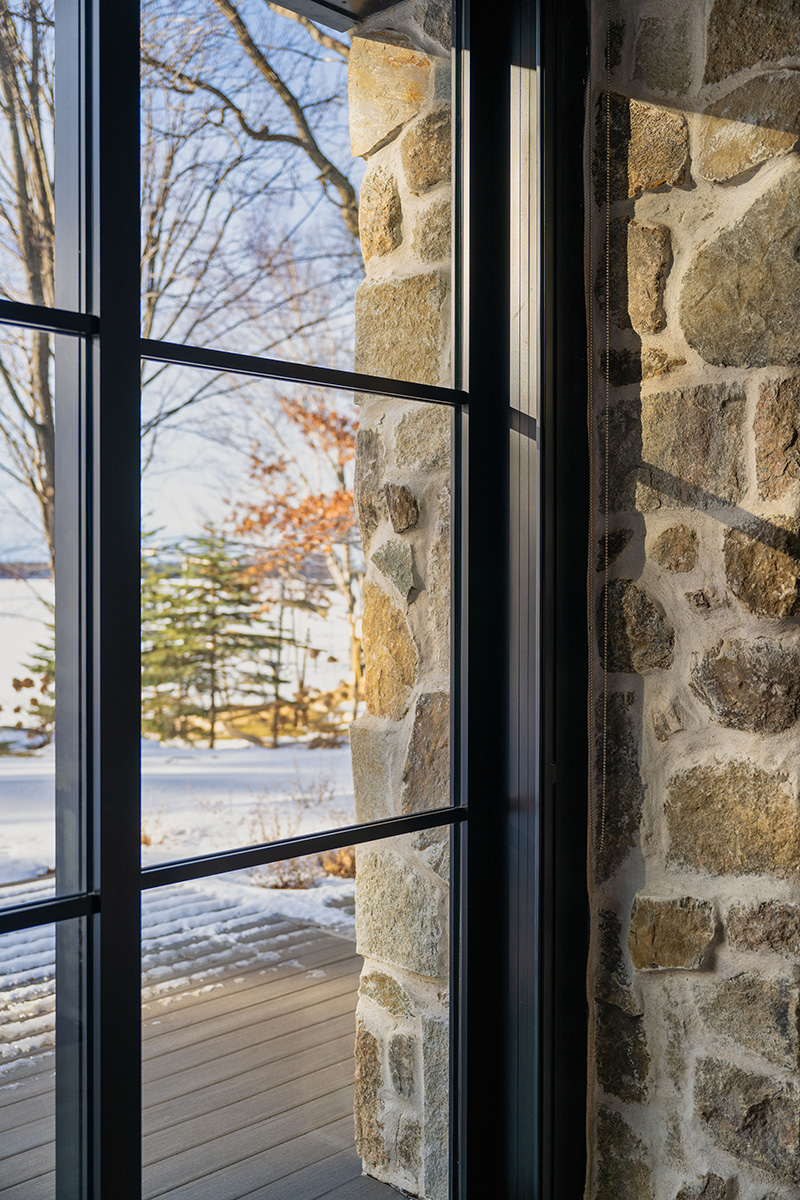
Photo courtesy of Marvin
Windows with dark frames and finishes should be made of strong, warp-resistant materials and include durable finishes that will not fade, even after years of exposure to UV light.
Spacers: Spacers and sealants are used to keep the panes of a window in an insulating glass unit a precise distance apart, typically a half inch or less. Spacers also allow for thermal expansion and pressure differences while preventing moisture and gas leaks. They also form a tight seal that minimizes the leakage of gas from between the panes. Spacers can significantly reduce heat loss, condensation, and water damage.
There are several spacer types. Metal spacers, typically made with aluminum or stainless steel, are common enough. Aluminum spacers are strong, but heat can easily pass through them. This can leave the window colder and prone to condensation. Stainless steel spacers are a better option. They’re durable and strong, and conduct heat less readily.
Warm-edge spacers are made from non-conductive materials like foam or a hybrid of plastic and metal. Warm-edge spacers reduce heat transfer at the edge of the window, and along with it, condensation. Often, these spacers are designed to expand and contract with the window, protecting the seal from cracks. Windows and doors specified for cold climates should always include warm-edge spacers. Quality matters: low-cost warm-edge spacers do not maintain their sealing.
Hybrid spacers made from a combination of metal and composite materials offer the best of both worlds, reducing thermal conductivity while providing strength and durability.
Acoustic Mitigation: Controlling Unwanted Noise
Unwanted or excess noise isn’t just annoying; it can actually cause physical and mental harm, especially when chronic. Some of the ill effects include difficulty sleeping, high blood pressure, and an increase in stress hormone production, which can aggravate other health conditions. Noise can also interfere with children’s cognitive development, specifically speech and reading.
For these reasons, progressive green building programs like LEED and WELL include standards for sound control. In the United States, noise mitigation requirements for buildings are regulated at the state and local levels. Projects at noisier building sites, such as near airports or freeways, may have to meet stricter standards. Architects should familiarize themselves with these standards and local codes when planning a new project to determine the amount of sound mitigation needed.
Windows and doors play an important role in noise mitigation through the building envelope; what’s more, sound control and energy efficiency go hand in hand. To understand why, let’s review how sound behaves and examine the characteristics of windows that effectively block sound.

Photo courtesy of Marvin
Energy efficiency and acoustic mitigation go hand in hand, as high-quality, high-performance windows will be better at blocking sound, too.
What Is Sound?
Sound is a type of energy that moves through air, water, and even solid materials as vibrations. These vibrations, or sound waves, can be measured. The amplitude, or height of the wave, determines its volume; the taller the wave, the louder the sound. The frequency, or length of each wave, determines its pitch.
We can describe amplitude, or volume of sound, using a unit of measure called the decibel (dB). Decibels are used to denote sounds that are within the range of human hearing. Volume doubles with every 10 dB. The quietest sound a person can hear is 0 dB. A typical conversation is around 60 dB; a loud music concert is an ear-damaging 95 dB.
Decibels can be measured using an instrument called a sound level meter, which assesses sound levels by measuring sound pressure through a microphone. Sound level meters are also commonly referred to as pressure level (SPL) meters, decibel meters, or noise meters.
Frequency, or the number of sound waves per second, determines a sound’s pitch. The higher the frequency, the higher the sound. Frequency is measured in hertz (Hz). Humans with normal hearing can hear frequencies between 20 Hz and 20,000 Hz, but many sounds lie outside that range. (Other animals can detect frequencies we can’t; dogs, for example, can hear frequencies up to 45,000 Hz, while bats can detect sounds up to 120,000 Hz.)
STC and OITC: Two ASTM standard rating systems are used to quantify the effectiveness of noise mitigation for windows and doors: Sound Transmission Class (STC) and Outdoor/Indoor Transmission Class (OITC).
STC measures how well a material or partition, such as walls, windows, and doors, reduces sound. The rating ranges between 0 and 100; the higher the number, the better the sound reduction.
An STC rating roughly equals the decibel (dB) reduction that a partition can provide. For example, if a sound is perceived at 70 dB on one side of a partition and 40 dB on the other side, the partition would have a STC rating of 30. For every 10-point increase in an STC rating, the volume is reduced by half.
A standard double-pane window has an STC rating of around 26 or 27. Windows with excellent sound control can achieve STC ratings of 30 or better.
Note that STC only applies to frequencies in the range of 125 - 4000 Hz; thus, it does not account for low-frequency sounds, such as the deep rumble of a passing garbage truck. A newer second metric, the OITC rating, also measures the sound reduction abilities of building envelopes and fenestration, but it includes the lower-frequency noises that are usually generated by traffic, airplanes, and heavy equipment. Like the STC rating, a higher number means better sound reduction.
High-frequency sounds dissipate more quickly than lower-frequency sounds; hence, lower frequencies are more difficult to mitigate. For this reason, the OITC rating for a barrier is usually lower than its STC rating. For example, a casement window with an STC rating of 47 may only have an OITC rating of 36.
The Role of Windows and Doors
Sound mitigation works as a system. Sound, like water and air, will follow the path of least resistance, whether that’s through a poorly installed or lower-quality window or through a thin, poorly insulated wall. Glass is inherently less sound-dampening than the materials used in the rest of the building envelope; thus, windows and doors are a critical part of a larger noise mitigation strategy.
To determine the right level of sound mitigation, it’s important to consider not only local code requirements but also specific conditions at the site. A noise survey can help determine the level of noise mitigation needed. Consider how noise will affect your client at different times of day. If your site is near noise sources that generate low frequencies, such as an airport, give special consideration to OITC ratings, which focus on low-frequency sounds.
Selecting high-quality, energy-efficient windows is a good first step toward effective acoustic mitigation. That’s because many of the same strategies that minimize heat transfer and air leakage also effectively block sound (see sidebar).
Manufacturers generally use three components of window and door design to address noise mitigation. These are materials, air space, and mass.
Materials: Just as they are important for other aspects of performance, quality materials and construction are essential for effective sound mitigation. Selecting products with dissimilar materials can also help mitigate sound. This is because sound waves change every time they go through a different material. For example, sound waves traveling through a multi-pane window with varying glass thicknesses vibrate at different rates when hitting each pane of glass. The first pane will reflect some frequencies; the next pane will reflect others, and so on.
Laminated glazing can effectively mitigate sound, as it introduces dissimilar materials into the unit. A triple-pane window with a thin glass layer, a thick glass layer, and a laminated layer mitigates sound more effectively than a triple-pane window with identical glass layers.
Air space: Adding space between panes of glass improves a window’s STC rating; however, adding panes—that is, going from double-pane to triple-pane units—doesn’t necessarily improve the STC ratings. That is because, in triple-pane units, the air space between each of the panes is typically smaller. Notably, storm windows—which add an additional glass pane to either the interior or exterior of the window frame—can significantly mitigate noise because they add up to two inches or more of air space.
Mass: Adding mass is another way to enhance noise mitigation: the more mass, the greater the reduction of sound. Dense framing materials, additional frame seals, and thicker panes of glass can all add mass to a window or door product.
A window or door’s sound mitigation performance is dependent on the quality of its manufacture. If a window or door is not built to the manufacturer’s design specifications, it won’t achieve the rating it’s been given.
It’s important to note that each window or door that comes out of the factory isn’t tested individually for its STC/OITC rating. Instead, that rating represents the sound mitigation properties for a specific configuration. Actual performance depends on quality control in the manufacturing process.
A high-quality window or door product has several distinctive features. The components fit tightly together without any gaps; glazing components and frame joints are sealed. Seals should be unbroken and continuous, and all corners should align. For these reasons, it’s important to specify windows from manufacturers with a good record of quality assurance, and that also offer competitive warranties.
Mulling over Mulling Approaches and Structural Integration
The large window walls and sliding door assemblies in modern custom homes are possible because of a process called mulling, where two or more units are joined by their frames. The structural members used to join them together are called mullions.
Mulling enables higher glass-to-wall ratios compared to installing a series of individually framed windows or a single large window. The design options are nearly limitless, and many window types may be used in mulled assemblies. A popular configuration is to flank a picture window with casements on either side. Single- or double-hung windows may be stacked in a series or in rows. Awnings are often used as a transom above or below another window type.
Mulling can take place in the factory or on the project site. In the factory, individual units are fastened into finished assemblies. For larger installations, two or more subassemblies are created in the factory and then joined together in the field.
Factory mulling has many advantages. Factory mulling provides a certified, rated, and warranted assembly. Each window unit is precisely joined with the next, ensuring consistent sizing and alignment. This consistency is critical for preventing air leaks, water infiltration, and other issues. Quality control protocols ensure each window unit meets its specifications before it is shipped. Factory mulling also provides greater warranty protection since the manufacturer is responsible for the entire window assembly, including the mullion joint. This cannot be achieved with field-mulled assemblies, where liability shifts to the installing contractor. Finally, factory mulling can save time and labor costs since the window units are already pre-assembled and ready to install.
In general, field mulling can be less precise and uniform than factory mulling; the project site presents unpredictable weather conditions, and space for assembly may be limited.
However, because shipping and transportation restrictions typically limit the size of the subassembly to a maximum of 8 x 8 feet, there may be times when field mulling is necessary. Highly customized assemblies may also warrant field mulling.
Some companies offer options for quick on-site assembly by delivering large factory-mulled sub-assemblies with all necessary components and instructions included. Such an assembly prep kit includes all of the necessary fasteners, clips, caps, and other parts, speeding up field assembly while ensuring an AAMA-450-certified window assembly.
The mulling method not only affects how the assembly looks, but also how it performs. A standard mull uses a mull pin to connect the frames and strengthen the system. The frames are joined tightly together, with no reinforcement or space between them. A reinforced mull uses a full-depth reinforcement mull pin to add strength to the mulled system. The method used will vary depending on the product, project type, and required performance ratings. In general, an integrated design approach, including early coordination with the window manufacturer and the project’s structural engineer, will ensure the design succeeds.

Photo courtesy of Marvin
Narrow frame profiles minimize visual obstructions and enhance the connection to the outdoors in large mulled assemblies.
How Mulling Affects Performance
Mulling significantly affects the structural and environmental performance of multi-unit window configurations; thus, it’s critical to consider how the design can potentially impact water management, air infiltration, structural stability, sound transmission, and code compliance. For example, building codes—in particular, header requirements—may limit the maximum size of the window wall.
Factors to consider include the size and spacing of the windows, glazing type, and the quality of the sealants used. In many ways, you will use the same design criteria as when specifying individual window and door units, selecting glazing, coatings, and framing materials that ensure high performance and take into consideration the climate and site conditions. However, mulled assemblies may have additional structural requirements to withstand expected wind loads at the project location.
Mulled window assemblies are particularly susceptible to wind damage because of their larger surface area. The wind load on a mulled window assembly is greater than that on a single window unit; the assembly may also introduce weak points at the mullions where the units are joined together.
Mulled window assemblies may require additional structural reinforcement if wind loads exceed the design pressure rating of the windows. The additional structure may take the form of steel or wood bracing in the framing, which increases the assembly’s strength and rigidity.
Here again, an integrated design approach is key. Early on in the project, architects should consult with structural engineers to perform a wind-load calculation and analysis, which takes into account the building’s location, height, exposure, and size and design of the assembly. Consult manufacturers’ representatives to assure large, mulled assemblies can be built as drawn. Have a plan for proper shipping and material handling at the jobsite, so that factory-mulled assemblies are not damaged prior to installation.
AAMA 450-20, “Performance Rating Method for Mulled Combination Assemblies, Composite Units, and Other Mulled Fenestration Systems,” describes test procedures and calculation procedures for determining the performance of mulled fenestration systems for both factory-assembled and field-assembled systems. The standard addresses deflection limits, connection strength, load application, and the anchorage of mullion elements.
AAMA 450 allows for “product grouping,” wherein multiple designs may be qualified with a single test or evaluation. The product group can include several different types of operating windows of different performance classes that are combined in a variety of ways using the same mullion profile. One test may qualify all possible combinations of the window types and is based on the weakest configuration.
With good design, thoughtful material and glazing selection, and proper installation and detailing, large mulled window assemblies can be a beautiful and enduring feature that brings in light and expansive views, promoting comfort and well-being for occupants for decades.

Photo courtesy of Marvin
This mulled assembly is used to create an attractive, modern design that showcases the simple, beautiful materials of this custom home.
Climate and Environmental Considerations
We have already seen how typical climate stressors such as heat, cold, and moisture influence material performance and glazing selection. However, there are two extreme climate stressors and situations that warrant further attention.
Coastal zones: The peace and beauty of coastal environments remain a perennial draw. However, building in these lovely places comes with a cost: extreme storms, extreme winds, and corrosive salt spray test even the strongest and most durable homes. Windows and doors are the first line of defense. This is a serious concern: if windows are breached during a storm event, not only because they will allow water in, but because the building may become pressurized and real structural damage may occur.
There are several considerations when specifying windows and doors in coastal regions. Some jurisdictions will require impact-resistant glass. Impact-resistant glazing is required in High-Velocity Hurricane Zones in Florida’s Broward and Miami-Dade Counties, and in Wind-borne Debris Regions along the Atlantic and Gulf Coast. These regions are defined as areas within one mile of the coastal mean high-water line where the basic design wind speed is equal to or greater than 130 mph, or areas where the basic design wind speed is equal to or greater than 140 mph.
Even for custom homes outside of these regions, you will still want to specify strong, durable products with corrosion-resistant finishes. Fiberglass, extruded aluminum, and aluminum-clad wood frames are all sound choices. Look for products with a marine-grade powder-coated finish. The style of window is important, too. In addition to fixed or picture windows, choose casement and awning-style windows, which create a tight seal when closed. In general, due to their high-performance requirements, there is much less flexibility for window mulled assemblies.
Performance Grade (PG) Ratings can aid in your selections. Products with such a rating have been independently tested for structural loading, air infiltration, resistance to water penetration, ease of operation, and resistance to forced entry. The higher the number, the better the performance. In general, window and door products with a PG 50 rating are suitable for hurricane zones.
Wildfire-prone regions: Unfortunately, fires have devastated communities in several states in recent years, from Lanai, Hawaii, to Boulder, Colorado, to Los Angeles, California. As these communities rebuild, jurisdictions are considering how to make new and rebuilt homes more resilient to wildfires.
Wildfire exposure is an increasing consideration for many homes, especially in the western United States. Windows are weak points in the building. When exposed to extreme heat or windblown embers known as firebrands, framing materials may ignite, or the glass may break. Breakage occurs when the temperature difference between the exposed glazing and the portion protected by the frame becomes too great.
Once heat and embers penetrate the home’s interior, it is very difficult to save the building, especially if multiple structures are burning in the same area. For this reason, many “home hardening” measures focus on keeping embers out of vulnerable parts of the building, such as soffits.
Building codes vary in their requirements for fire zones. California is the most progressive (see Sidebar), requiring new homes in the Wildland-Urban Interface, or WUI, to use insulating glass units with at least one pane of tempered glass.
If you are specifying windows and doors in a fire-prone region, select multi-pane (double- or triple-pane) units with at least one tempered glass pane. Tempered glass is about four times more resistant to breaking during a wildfire. Choose a noncombustible framing material such as aluminum or fiberglass.
Conclusion
When it comes to home design, architects give much attention to the aesthetics of windows and doors, and how these features contribute to a floorplan’s flow and function. Size, height, and width, and the alignment of sight lines are all important. However, as we have seen, there are multiple considerations to balance when specifying windows and doors for today’s custom homes. We expect a lot out of these features: they must achieve high energy performance, frame views, and allow for daylighting while controlling air infiltration, moisture, and sound. Glazing types, coatings, framing materials, spacers, and finishes, along with the overall quality of manufacture and installation, all have an effect on a window or door unit’s performance. While perhaps not as sexy as the aesthetic choices, these choices are key to both the longevity of the home and the health, comfort, and well-being of its occupants. The challenges are the same whether specifying a single unit or a large window wall; however, these large mulled assemblies introduce new considerations, such as how to meet wind loads and other structural requirements. Selecting an experienced, full-service manufacturer can go a long way toward ensuring a successful design.
This article was made possible by Marvin as part of their ongoing commitment to architecture and design, and to the architects who create it.
Andrew A. Hunt is Vice President of Confluence Communications and specializes in writing, design, and production of articles and presentations related to sustainable design in the built environment. In addition to instructional design, writing, and project management, Andrew is an accomplished musician and voice-over actor, providing score and narration for both the entertainment and education arenas. www.confluencec.com https://www.linkedin.com/in/andrew-a-hunt-91b747/