Adaptive Reuse for Multi-Family Residential: Transforming Historic Structures into Sustainable Housing
From Industrial Mills to Sacred Spaces: Strategies for Converting Heritage Buildings into High-Performance Multi-Family Communities
Sponsored by Marvin
Live Webinar Airing on June 2, 2026 at 02:00 PM ET
As housing demand grows and sustainability goals intensify, adaptive reuse has emerged as a powerful strategy for developing multi-family residential projects with cultural depth and environmental responsibility. This webinar explores two compelling case studies that demonstrate how historic buildings can be reimagined for modern living while preserving architectural integrity.
The first project, The Mill in Prattville, Alabama, is a former cotton gin manufacturing complex transformed into apartments by Chambless King Architects.
This presentation examines the adaptive reuse of The Mill at Prattville, a 147-unit residential development transforming a series of historic industrial structures dating from 1848 to 1957 into a vibrant mixed-use community. Located in Prattville’s revitalizing downtown, the project integrates residential living with a range of amenities, including community spaces, fitness facilities, and landscaped courtyards.
Nick Henninger, Chambless King Principal will discuss the complexities of converting a 19th-century mill into a modern housing development, including navigating layered regulatory requirements, coordinating with historic consultants and the National Park Service, and leveraging innovative financing strategies tied to floodplain mitigation through the ADECA Office of Water Resources. The session will also explore design strategies that preserve historic character, including exposing original structural elements and repurposing existing steel frameworks to create dynamic exterior amenities.
The second project is the transformation of The Ebenezer Baptist Church in Boston’s South End Landmarks District from a church to nine residential units. This presentation explores the renovation and adaptive reuse of the historic Ebenezer Baptist Church at 157 West Springfield Street in Boston’s South End, a project approved by the South End Landmark District Commission following extensive collaboration with the City and community stakeholders. Originally established in 1847 by formerly enslaved congregants and constructed on the site in 1887, the church is being thoughtfully transformed into nine residential units through a sensitive renovation and two-story addition.
Mike DelleFave, from RODE Architects will examine the design approach of “putting renovation first,” balancing historic preservation with contemporary intervention. The session will highlight strategies for restoring key architectural elements, including brickwork, stoops, and entryways, while introducing a modern rooftop addition that respects the original structure’s rhythm and form. Attendees will gain insight into navigating landmark approvals, integrating new construction within historic contexts, and designing adaptive reuse projects that honor both history and community.
As the final project in this session, Paul Lang of Carmina Wood Design, Labatt House reimagines a 1920s industrial building in Buffalo’s Cobblestone District as a mixed-use destination combining hospitality, workplace, and residential spaces. Inspired by the concept of an experimental brew factory, the design reflects Buffalo’s industrial heritage while introducing a layered, experiential environment through adaptive reuse.
At the ground level, The Draft Room transforms a former loading dock into a flexible gathering space, where bi-fold doors open to the street and varied seating creates multiple perspectives across a split-level interior. Industrial materials are paired with contemporary graphics, murals, and installations to create a cohesive, immersive experience.
The project brings together Labatt USA’s headquarters, hospitality venues including a speakeasy and bakery, and apartments above, demonstrating how thoughtful design can revitalize historic structures while supporting diverse uses.
Attendees will gain insight into how adaptive reuse can reduce embodied carbon, extend building lifecycles, and create distinctive residential environments that respond to both context and climate. Through these case studies, participants will explore the intersection of preservation, performance, and profitability in multi-family residential development.
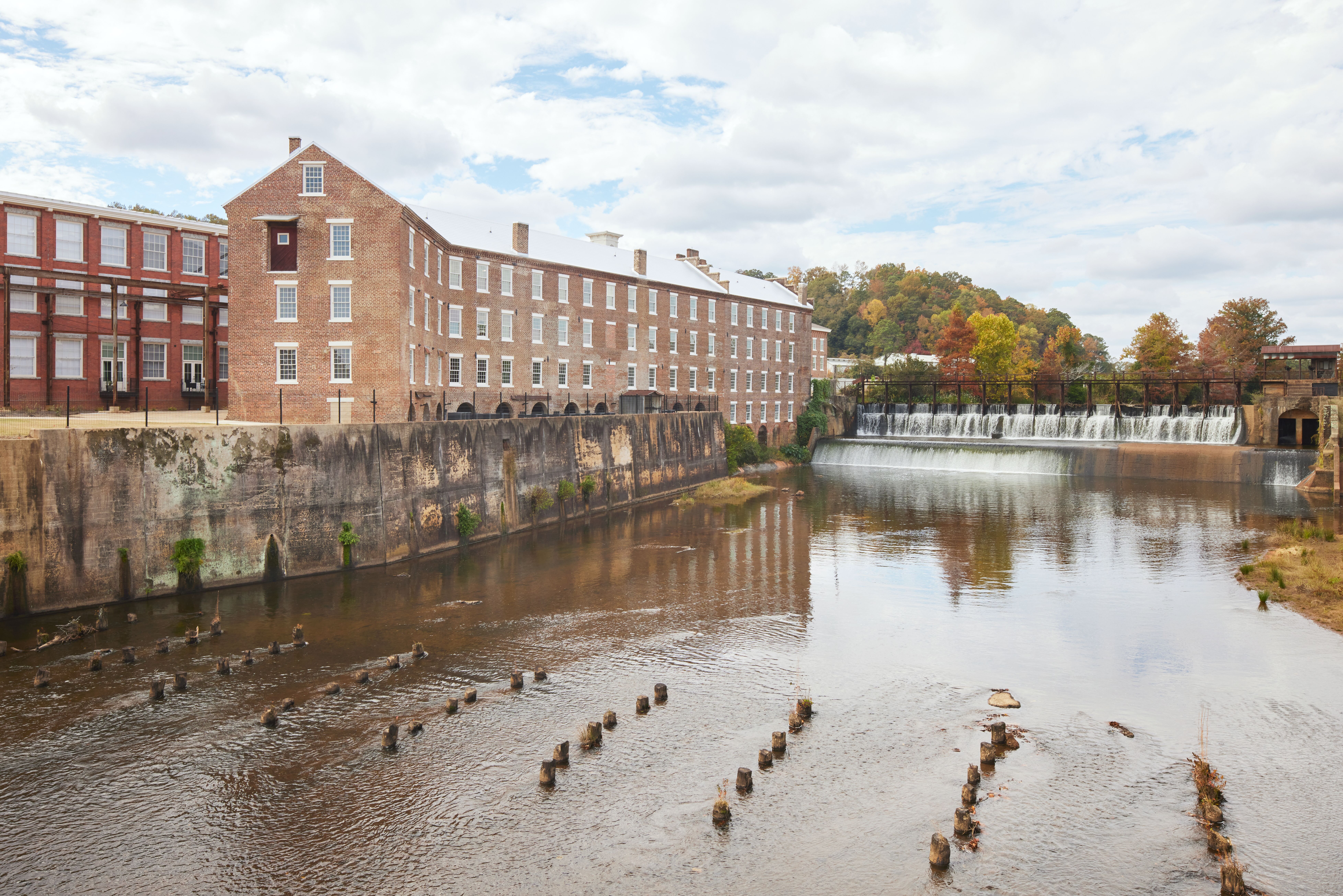
The Mill Photo courtesy of Chambless King Architects
 |
Nick Henninger, AIA, is a Principal at Chambless King Architects, an award-winning architecture firm based in Montgomery and Birmingham, Alabama. The firm’s work is rooted in impacting people and communities through thoughtful design, craftsmanship, and care, and has been recognized among the Southeast’s top design practices through its inclusion on the “A South Forty” list. A graduate of Auburn University with dual degrees in Architecture and Interior Architecture, Nick brings a detail-oriented and collaborative approach to practice, and his work reflects a belief that well-executed design creates lasting value for clients and communities alike particularly when shaped by complex and challenging constraints. Nick has led a wide range of project types and scales, with particular experience in adaptive reuse and complex renovations, including the transformation of The Mill at Prattville, a project that received local and state AIA Honor Awards for its innovative approach to historic preservation and placemaking. In addition to his professional work, Nick is actively involved in the architectural community and currently serves as President of his local AIA chapter. |
 |
Mike DellaFave, As RODE’s Studio Director, Mike ensures that the firm’s portfolio continues to meet a high caliber of design by engaging its staff’s diverse talents and pushing a process that has consistently delivered strong, concept-driven work. Mike is a registered architect, project manager, and senior project designer with over 18 years of experience. His broad range of project types include single-families, multi-family, adaptive reuse, and community-based projects; he served as the project manager for the Brucewood Homes, Boston’s first certified single-family Passive Houses.Mike also continues to contribute to the growth of the next generation of architects as a member of the design faculty at several local colleges and through his mentorship of RODE's design staff. He is the 2022 Recipient of the BSA Award for Excellence in Teaching, given annually by the Fellows of the American Institute of Architects, and attended Wentworth Institute of Technology, Pratt Institute GAUD |
 |
Paul R. Lang, AIA LEED AP BD+C, is a Managing Principal at Carmina Wood Design, an architecture and engineering firm based in Buffalo, New York, specializing in adaptive reuse and historic preservation. His work positions existing buildings not as constraints, but as opportunities for design innovation, where new interventions extend and reinterpret the life of historic structures for contemporary uses. A graduate of Penn State University holding a Bachelor and Masters of Architecture, Paul brings a pragmatic, design-driven approach to complex projects, informed by both professional experience and international academic exploration. His work is rooted in the idea that preservation can function as an active design process, balancing technical performance with the cultural and material realities of the built environment. He has led a range of rehabilitation and housing projects, including the transformation of the historic S.M. Flickinger Company Warehouse building into the Labatt House, where contemporary systems and programming were integrated within an existing layered structure to support long-term activation while reinforcing architectural character. Paul is an active in the community serving on multiple municipal boards and non-profits while also regularly contributing to industry dialogue around adaptive reuse, sustainability, and preservation, with a focus on connecting design intent to execution in the built environment. |

Marvin is a fourth-generation family-owned and led business, headquartered in Warroad, Minn., with more than 7,000 employees across 16 cities in North America. The Marvin portfolio of products for builders, architects and homeowners is designed to provide exceptional solutions for any project with a focus on creating better ways of living. Marvin products are distributed nationally through a network of independent dealers. Visit Marvin.com to learn more.
Originally published in Architectural Record
Originally published in May 2026
LEARNING OBJECTIVES
- Identify key structural, envelope, and systems challenges associated with converting historic industrial and religious buildings into multi-family residential housing.
- Evaluate strategies for meeting contemporary life-safety, accessibility, and energy code requirements within preserved building frameworks.
- Analyze how adaptive reuse contributes to reduced embodied carbon and improved environmental performance compared to new construction.
- Apply preservation-sensitive design approaches that balance historic character with modern residential comfort and market expectations.