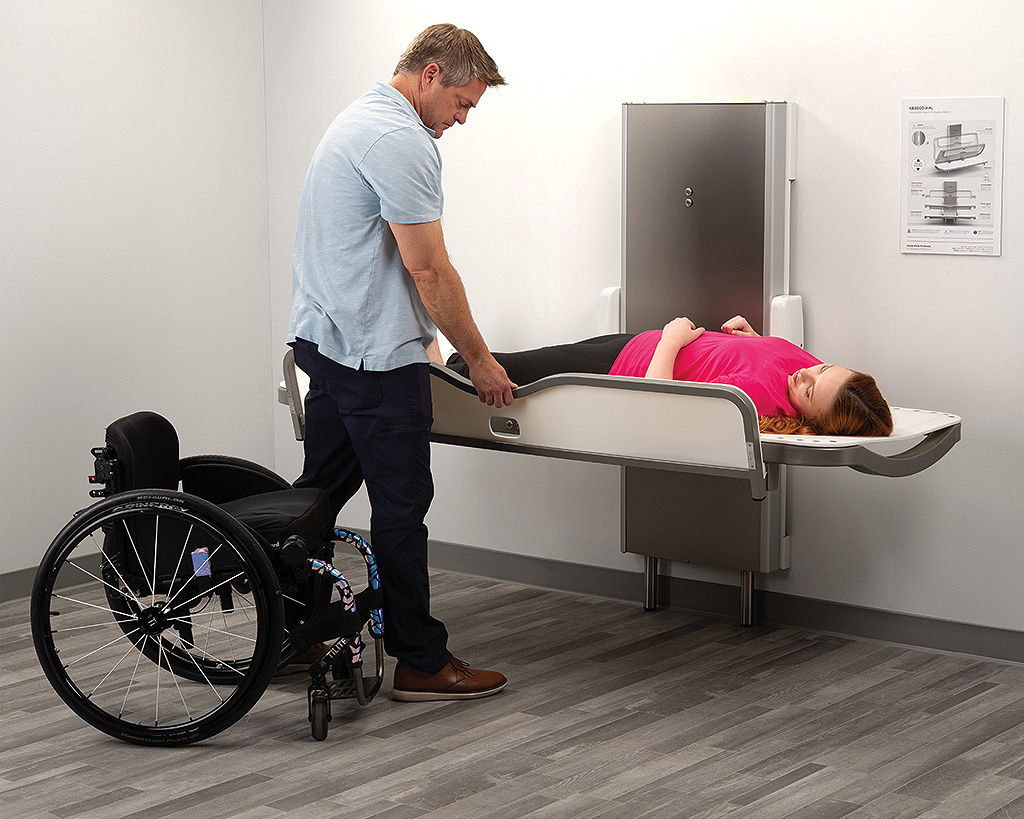
Photo courtesy of Koala Kare
Providing adult changing stations in public buildings increases inclusion and safety for everyone.
In the 2021 U.S. Census Bureau’s American Community Survey, adult respondents were asked to report if they had difficulty with hearing, vision, cognition, ambulation, self-care, and independent living. One-third of older adults and almost 13 percent of all U.S. adults reported having one of these six types of functional disability.1 This number does not factor in children from ages 2 to 17 who require similar care. Responses to “difficulty with independent living” showed that almost 6 percent of U.S. adults reported difficulty because of a physical, mental, or emotional condition in 2023.2
The Need for Dedicated Restrooms–Designing with Dignity
The struggle for independent living presents people with disabilities with significant challenges when in public. Many individuals living with disabilities and certain medical conditions do not have access to a safe, private, and dignified place to utilize the restroom. One in four adults in the United States has some type of disability, with approximately 3.6 percent of them unable to complete self-care tasks such as dressing and bathing.3 Standard ADA-compliant restrooms are not usable for all people with disabilities, specifically those who are non-ambulatory or have self-care issues. ADA standards in general restrooms do not address the needs of people with disabilities within this group. This deficiency creates substantial barriers, including a reduced quality of life that forces many to stay home or to face unsafe and unsanitary practices while out in public.
Providing Answers: What is an Adult Changing Station?
An adult changing station is an adjustable height, adult-size changing table that can accommodate people aged 2 and up, through adulthood, with a capacity typically rated to at least 440 pounds. These stations are typically provided in a dedicated universal or family-assisted restroom, which is a single-use, public restroom. This type of restroom is primarily for individuals with disabilities that prevent them from being able to use standard or ADA-compliant restrooms. Many, but not all, of these individuals require caregivers for assistance with changing and using the restroom.
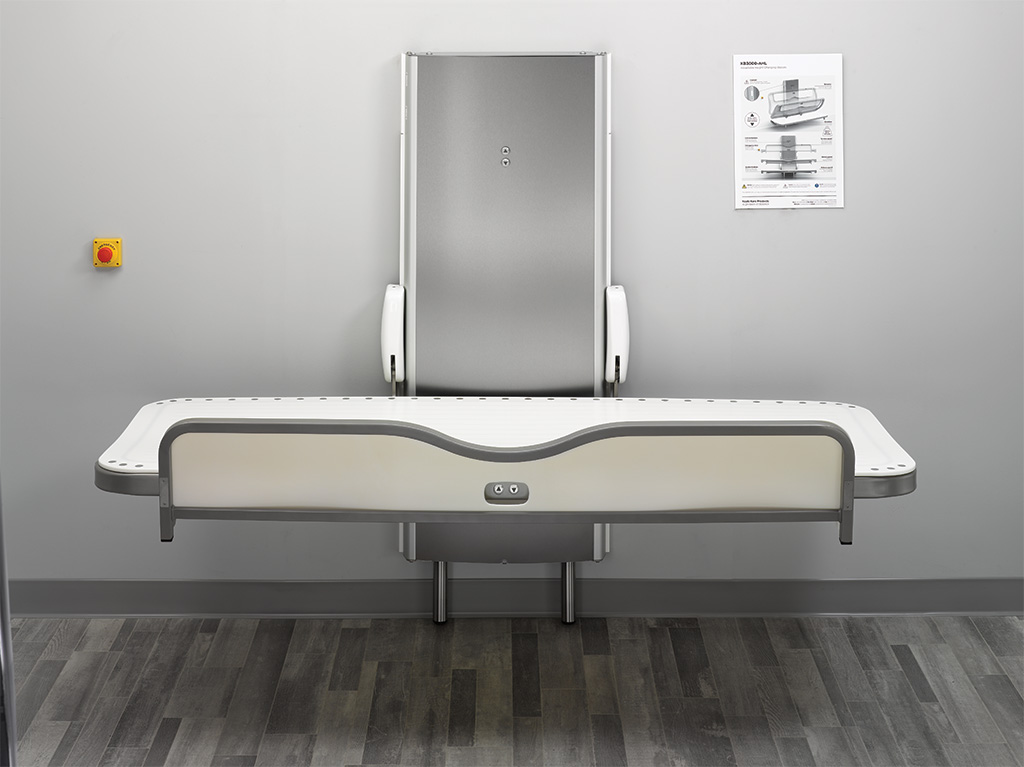
Photo courtesy of Koala Kare
Adult changing stations offer universal access to individuals with disabilities, aged 2 and up through adulthood, that prevent them from being able to use standard or ADA-compliant restrooms.
These dedicated restrooms are designed to be completely accessible, providing sufficient space and equipment for people who are not able to use the toilet independently, or people with incontinence who require additional privacy or space. This space accommodates necessary equipment, such as adjustable height, adult-size changing stations, as well as other accessories, such as an electric lift system, ensuring comprehensive accessibility and support. This restroom requires specific equipment and space for safe transfer and care that is not included in standard accessible restrooms. This space also provides full access for the caregiver.
Restroom occupancy times for universal restrooms are much longer than those of a standard restroom, averaging 15 to 30 minutes.
Who Is This Equipment Designed For?
Dedicated, universal restrooms are specifically designed for people with disabilities who cannot use a standard restroom and for those who may need assistance from a caregiver, whether personal or professional. Some examples of these individuals include people with conditions such as cerebral palsy, muscular dystrophy, and multiple sclerosis, or elderly individuals who can no longer use a restroom without assistance.
When the scope of disabilities is fully understood, the need for dedicated, inclusive restroom accommodation becomes profound. For example, in the US, approximately 1 million people have cerebral palsy. Another million have multiple sclerosis. Individuals with muscular dystrophy account for 250,000;4 there are more than 70,000 people with spina bifida.5 There are also hidden disabilities that must be accommodated. Individuals in the U.S. with stoma bags number roughly 500,000, and there are 50,000 with catheters. Additionally, people who have severe anxiety, autism, dementia, or inflammatory bowel diseases (IBS/IBD) or conditions like Crohn’s Disease, or those with epilepsy or conditions causing seizures, can be safely and more comfortably accommodated in a dedicated restroom. Other people in need of a changing station in public also include those with advanced dementia who require changing assistance.
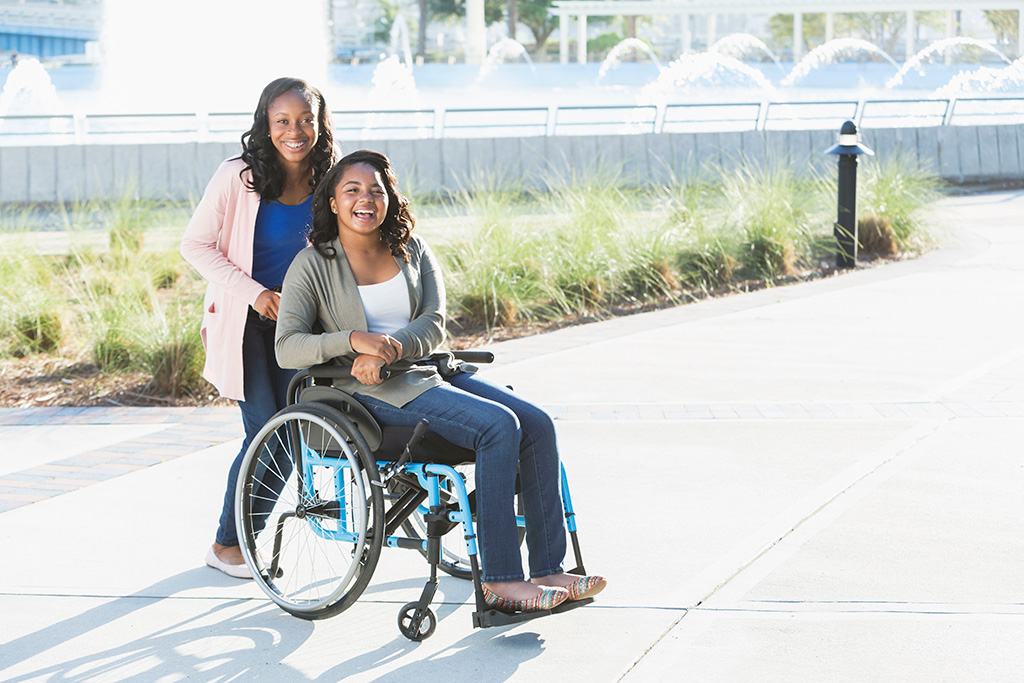
Photo: © iStock; courtesy Koala Kare
Universal or adult changing stations create inclusion, access, and equality for individuals with disabilities who cannot safely utilize restrooms.
The disparity in public restroom access for those living with severe disabilities as children and adults is glaring. Looking at it another way, in 2021, there were 300 pet relief areas reported in airports in the U.S. However, only 17 of the nearly 5,000 public airports in the United States have an adult-size changing table.6
Why Now?
Social expectations about inclusiveness have increased. This includes valuing and including people with disabilities and expanding their ability to use public facilities and buildings.
Sadly, many in this group will avoid going out in public where appropriate restroom and changing facilities are not available. Baby changing tables are too small for older children and adults. Without adult-size changing tables, families or caregivers are left changing their loved ones in public view on unsanitary restroom floors, or in the back of their vehicles in public view. According to the Changing Spaces Campaign, Advocating for Accessible Restrooms with Universal Changing Tables, these are a few examples of the difficulties so many families face without an inclusive and accessible restroom.7 As general expectations about privacy while in public restrooms increase, so too does the mandate that everyone has a right to privacy and dignity while using the restroom. Several states and municipalities have enacted or have pending legislation regarding inclusive restrooms equipped with adult-size changing stations.
What Building Types Should Provide Adult-Size Changing Stations?
Any public building, facility, or workspace where the length of the average visit would reasonably be expected to require restroom use should evaluate the need for an adult-size changing station. In other countries, like the United Kingdom, where adult changing stations have been mandated, common examples of buildings that provide inclusive restrooms include shopping centers, hospitals, stadiums/arenas/theaters, religious buildings, parks and recreation, universities, schools, museums, medical offices, aquariums, zoos, airports, and rest areas. Educational facilities, healthcare centers, and transportation services also usually have a need for an adult-sized changing station within a dedicated restroom.
Throughout the United States, a growing number of governmental and non-governmental bodies have introduced or are considering requirements and recommendations related to the installation of adult-size changing stations and inclusive restrooms in public facilities. In the U.S. and Canada, nine states–Alabama, Arizona, California, Illinois, Maryland, Minnesota, New Hampshire, Tennessee, and Rhode Island–and two provinces–British Columbia and Ontario–have enacted some type of legislation requiring these stations.8 Multiple other states have pending or proposed legislation: Arizona, California, Florida, Georgia, Illinois, Iowa, Maryland, Michigan, Minnesota, Mississippi, New Hampshire, New York, Ohio, Oklahoma, Pennsylvania, West Virginia, and Wisconsin.
Adult-Size Changing Stations and Code
A more unified national approach to inclusive restrooms has been recently codified. The 2024 International Code Council’s® (ICC) International Building Code (IBC) 1110.4 requires adult changing stations.9 Under 1110.4.1, not fewer than one adult changing stations must be provided in assembly and mercantile occupancies, where family or assisted-use toilet or bathing rooms are required to comply with IBC Section 1110.2.1; in Group B occupancies providing educational facilities for students above the 12th grade, where an aggregate of 12 or more male and female water closets are required to serve the classrooms and lecture halls; in Group E occupancies, where a room or space used for assembly purposes requires an aggregate of 6 or more male and female water closets for that room or space; and, in highway rest stops and highway service plazas.
ICC A117.1 2017 Supplement 1, Accessible and Usable Buildings and Facilities Standard, includes provisions for assisted toileting and bathing (Section 611) and adult changing stations (Section 613).10 This Supplement provides a pathway to compliance with accessible adult changing station requirements in the 2024-I Codes. Installation location, components for single-user and multiuser rooms, room configuration, changing surface, size, capacity, height adjustability, and clearances are listed in Supplement 1.
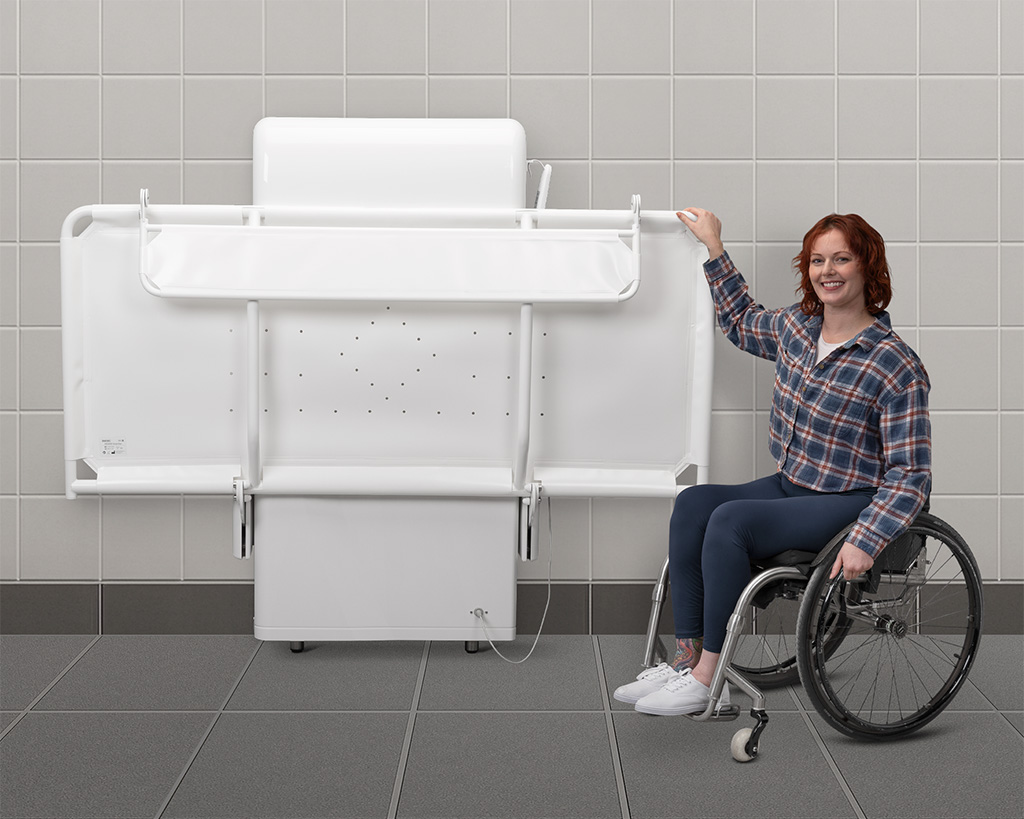
Photo courtesy of Koala Kare
Millions of adults and adolescents with special needs or disabilities require assistance with restroom use or changing. Providing restrooms with height-adjustable adult changing stations serves individuals with disabilities, mobility challenges, or medical needs, while ensuring a safe and dignified experience.
Photo courtesy of Koala Kare
Providing adult changing stations in public buildings increases inclusion and safety for everyone.
In the 2021 U.S. Census Bureau’s American Community Survey, adult respondents were asked to report if they had difficulty with hearing, vision, cognition, ambulation, self-care, and independent living. One-third of older adults and almost 13 percent of all U.S. adults reported having one of these six types of functional disability.1 This number does not factor in children from ages 2 to 17 who require similar care. Responses to “difficulty with independent living” showed that almost 6 percent of U.S. adults reported difficulty because of a physical, mental, or emotional condition in 2023.2
The Need for Dedicated Restrooms–Designing with Dignity
The struggle for independent living presents people with disabilities with significant challenges when in public. Many individuals living with disabilities and certain medical conditions do not have access to a safe, private, and dignified place to utilize the restroom. One in four adults in the United States has some type of disability, with approximately 3.6 percent of them unable to complete self-care tasks such as dressing and bathing.3 Standard ADA-compliant restrooms are not usable for all people with disabilities, specifically those who are non-ambulatory or have self-care issues. ADA standards in general restrooms do not address the needs of people with disabilities within this group. This deficiency creates substantial barriers, including a reduced quality of life that forces many to stay home or to face unsafe and unsanitary practices while out in public.
Providing Answers: What is an Adult Changing Station?
An adult changing station is an adjustable height, adult-size changing table that can accommodate people aged 2 and up, through adulthood, with a capacity typically rated to at least 440 pounds. These stations are typically provided in a dedicated universal or family-assisted restroom, which is a single-use, public restroom. This type of restroom is primarily for individuals with disabilities that prevent them from being able to use standard or ADA-compliant restrooms. Many, but not all, of these individuals require caregivers for assistance with changing and using the restroom.
Photo courtesy of Koala Kare
Adult changing stations offer universal access to individuals with disabilities, aged 2 and up through adulthood, that prevent them from being able to use standard or ADA-compliant restrooms.
These dedicated restrooms are designed to be completely accessible, providing sufficient space and equipment for people who are not able to use the toilet independently, or people with incontinence who require additional privacy or space. This space accommodates necessary equipment, such as adjustable height, adult-size changing stations, as well as other accessories, such as an electric lift system, ensuring comprehensive accessibility and support. This restroom requires specific equipment and space for safe transfer and care that is not included in standard accessible restrooms. This space also provides full access for the caregiver.
Restroom occupancy times for universal restrooms are much longer than those of a standard restroom, averaging 15 to 30 minutes.
Who Is This Equipment Designed For?
Dedicated, universal restrooms are specifically designed for people with disabilities who cannot use a standard restroom and for those who may need assistance from a caregiver, whether personal or professional. Some examples of these individuals include people with conditions such as cerebral palsy, muscular dystrophy, and multiple sclerosis, or elderly individuals who can no longer use a restroom without assistance.
When the scope of disabilities is fully understood, the need for dedicated, inclusive restroom accommodation becomes profound. For example, in the US, approximately 1 million people have cerebral palsy. Another million have multiple sclerosis. Individuals with muscular dystrophy account for 250,000;4 there are more than 70,000 people with spina bifida.5 There are also hidden disabilities that must be accommodated. Individuals in the U.S. with stoma bags number roughly 500,000, and there are 50,000 with catheters. Additionally, people who have severe anxiety, autism, dementia, or inflammatory bowel diseases (IBS/IBD) or conditions like Crohn’s Disease, or those with epilepsy or conditions causing seizures, can be safely and more comfortably accommodated in a dedicated restroom. Other people in need of a changing station in public also include those with advanced dementia who require changing assistance.
Photo: © iStock; courtesy Koala Kare
Universal or adult changing stations create inclusion, access, and equality for individuals with disabilities who cannot safely utilize restrooms.
The disparity in public restroom access for those living with severe disabilities as children and adults is glaring. Looking at it another way, in 2021, there were 300 pet relief areas reported in airports in the U.S. However, only 17 of the nearly 5,000 public airports in the United States have an adult-size changing table.6
Why Now?
Social expectations about inclusiveness have increased. This includes valuing and including people with disabilities and expanding their ability to use public facilities and buildings.
Sadly, many in this group will avoid going out in public where appropriate restroom and changing facilities are not available. Baby changing tables are too small for older children and adults. Without adult-size changing tables, families or caregivers are left changing their loved ones in public view on unsanitary restroom floors, or in the back of their vehicles in public view. According to the Changing Spaces Campaign, Advocating for Accessible Restrooms with Universal Changing Tables, these are a few examples of the difficulties so many families face without an inclusive and accessible restroom.7 As general expectations about privacy while in public restrooms increase, so too does the mandate that everyone has a right to privacy and dignity while using the restroom. Several states and municipalities have enacted or have pending legislation regarding inclusive restrooms equipped with adult-size changing stations.
What Building Types Should Provide Adult-Size Changing Stations?
Any public building, facility, or workspace where the length of the average visit would reasonably be expected to require restroom use should evaluate the need for an adult-size changing station. In other countries, like the United Kingdom, where adult changing stations have been mandated, common examples of buildings that provide inclusive restrooms include shopping centers, hospitals, stadiums/arenas/theaters, religious buildings, parks and recreation, universities, schools, museums, medical offices, aquariums, zoos, airports, and rest areas. Educational facilities, healthcare centers, and transportation services also usually have a need for an adult-sized changing station within a dedicated restroom.
Throughout the United States, a growing number of governmental and non-governmental bodies have introduced or are considering requirements and recommendations related to the installation of adult-size changing stations and inclusive restrooms in public facilities. In the U.S. and Canada, nine states–Alabama, Arizona, California, Illinois, Maryland, Minnesota, New Hampshire, Tennessee, and Rhode Island–and two provinces–British Columbia and Ontario–have enacted some type of legislation requiring these stations.8 Multiple other states have pending or proposed legislation: Arizona, California, Florida, Georgia, Illinois, Iowa, Maryland, Michigan, Minnesota, Mississippi, New Hampshire, New York, Ohio, Oklahoma, Pennsylvania, West Virginia, and Wisconsin.
Adult-Size Changing Stations and Code
A more unified national approach to inclusive restrooms has been recently codified. The 2024 International Code Council’s® (ICC) International Building Code (IBC) 1110.4 requires adult changing stations.9 Under 1110.4.1, not fewer than one adult changing stations must be provided in assembly and mercantile occupancies, where family or assisted-use toilet or bathing rooms are required to comply with IBC Section 1110.2.1; in Group B occupancies providing educational facilities for students above the 12th grade, where an aggregate of 12 or more male and female water closets are required to serve the classrooms and lecture halls; in Group E occupancies, where a room or space used for assembly purposes requires an aggregate of 6 or more male and female water closets for that room or space; and, in highway rest stops and highway service plazas.
ICC A117.1 2017 Supplement 1, Accessible and Usable Buildings and Facilities Standard, includes provisions for assisted toileting and bathing (Section 611) and adult changing stations (Section 613).10 This Supplement provides a pathway to compliance with accessible adult changing station requirements in the 2024-I Codes. Installation location, components for single-user and multiuser rooms, room configuration, changing surface, size, capacity, height adjustability, and clearances are listed in Supplement 1.
Photo courtesy of Koala Kare
Millions of adults and adolescents with special needs or disabilities require assistance with restroom use or changing. Providing restrooms with height-adjustable adult changing stations serves individuals with disabilities, mobility challenges, or medical needs, while ensuring a safe and dignified experience.
The Adult Changing Station: Cornerstone of a Dedicated Restroom
Many adults and children have special needs or disabilities that require a caregiver when it comes to restroom use or changing. One in four adults in the United States has some type of disability, with approximately 3.6 percent of them unable to complete self-care tasks such as dressing and bathing.11 Standard public restrooms are unable to meet their needs in a way that is hygienic, safe, or dignified. As such, many of these individuals forgo going to buildings and facilities that do not address their needs.
Providing dedicated restrooms with adjustable height adult-size changing stations ensures that a building is inclusive to people with these needs and their caregivers. Adult-size changing stations serve people with disabilities, mobility challenges, incontinence, or other medical needs. These stations also help to ensure a safe changing process for the caregiver.
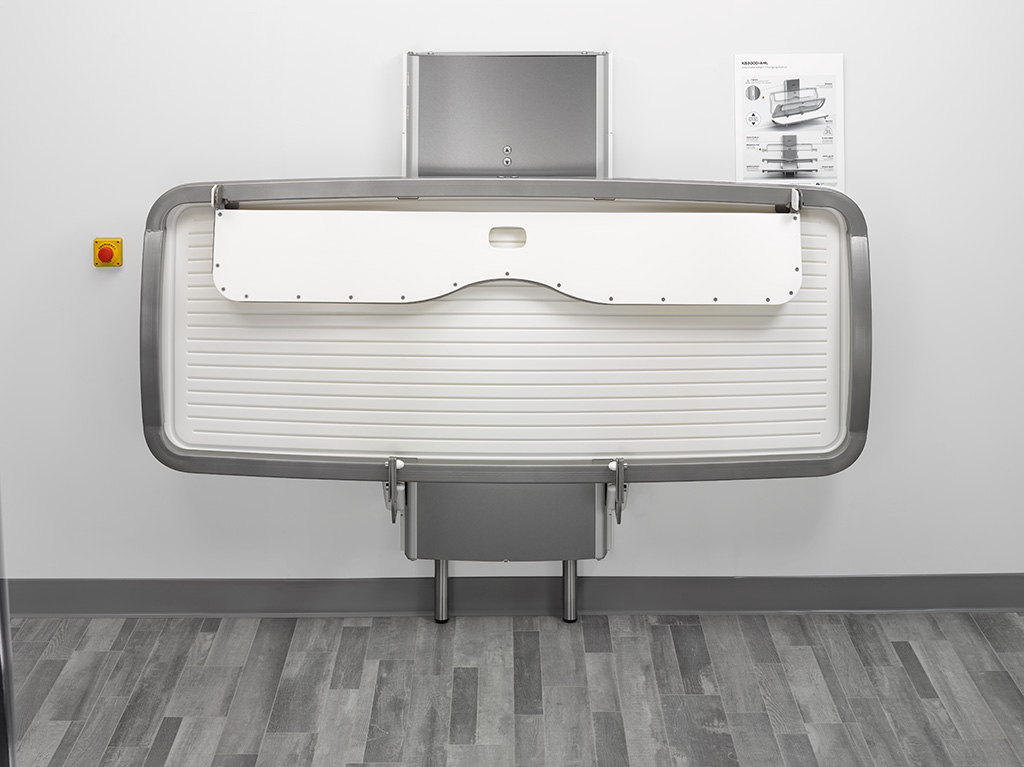
Photo courtesy of Koala Kare
An adjustable height adult changing station installation.
Key Considerations When Specifying Adult-Size Changing Station Equipment
First, the individuals to be served should be assessed. Does this facility serve just children, adolescents, or also adults? The specified station needs to have a changing surface that is large enough and a weight capacity high enough to support the user types. For stations that accommodate adults, the size of the changing surface should be large enough for safe and comfortable use. A changing surface area should be at least 70 inches long by 30 inches wide. The surface should also be tested to support a weight of at least 440 pounds (200 kg).
The accessibility requirements for both the design and station should comply with requirements applicable in the jurisdiction of the project, including but not limited to ADA, ICC A117.1 International Building Code (IBC), and state building code requirements.
For safety, an adult-size changing station in a dedicated restroom should be UL Listed for the U.S. and Canada (UL 962 and C22.2 No. 68).
It should also have a durable and strong design that keeps up with the traffic and maintenance needs of public buildings.
Additional considerations include specifying a NRTL Class 1 electrical system to protect against electrical shock, a built-in backup battery to ensure operation during a power outage, and equipment with a front safety guard.
An adult station should have a safety guard in front of the bed that can be operated with one hand and less than 5 pounds of force. The front safety guard locks in a raised position along the front side when in use and easily rotates and locks when not in use.
Some restrooms may be near a pool, showers, or beach, so people being changed may be wet. For facilities with high water or moisture levels, IPX4 or greater ratings demonstrate water resistance. Additionally, an IP rating assigned to the adult-size changing station indicates its water resistance. Electronic devices receive their waterproofing classification through IPX ratings. The IPX rating serves as an essential factor to evaluate before buying electronic devices that will encounter water exposure. An IPX4 rating means the station can withstand significant exposure to water without damage to its electrical components.
Where vandalism or heavy traffic is a concern, an IK9 rating indicates high impact resistance. Also, stations that have height control buttons built on the units are better suited for buildings with higher traffic or vandalism issues compared to stations with handheld controls.
Cleanliness and hygiene are important considerations for station users. The changing surface needs to be easy to clean and sanitize. The changing surface should be smooth, non-porous, and made from materials that can be easily wiped down and cleaned, such as plastic or vinyl, and that can withstand being hosed down with water if needed. Additionally, a crevice-free design prevents the buildup of contamination on the changing surface.
Comparing Fixed Height Versus Adjustable Height Changing Stations
Both stationary or fixed height adult-size changing stations and adjustable height adult-size changing stations are available. Fixed height stations are generally unsafe for transferring or carrying someone larger than a small child. To expand usability, a ceiling hoist is needed for any type of fixed-height station.
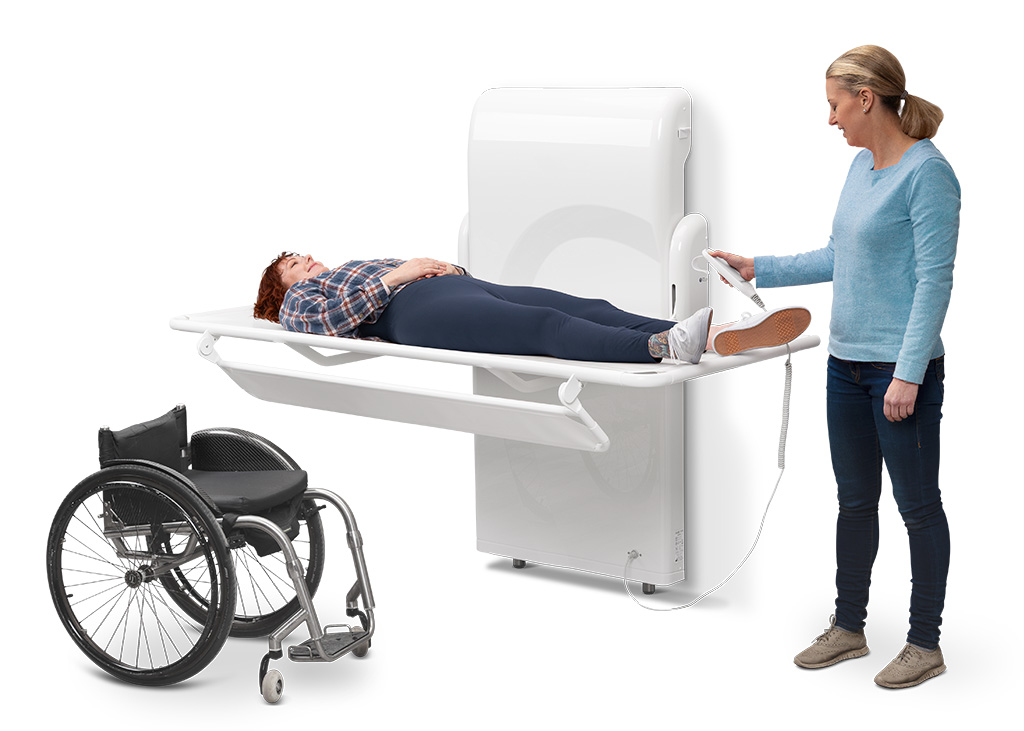
Photo courtesy of Koala Kare
Changing stations that are height adjustable allow for safe transfer for a range of individuals and caregivers.
Adjustable height adult changing stations offer the safest, most comprehensive solution for all individuals. The point of transfer from a wheelchair to a changing station needs to be secure for the person being changed and the person assisting them. Therefore, it is crucial that the height from the floor of the changing surface of an adult changing station be easily adjustable to accommodate transfer and movement. The height of the station should be able to adjust low enough to allow for safe transfer from a wheelchair. Safe transfer from a wheelchair to a station needs a changing surface that can be adjusted to the hip height of the caregiver doing the transfer, to minimize risk and liability for all individuals. The adjustable height of the station should also rise high enough to allow for comfortable reach and access when changing for a variety of different users. The changing surface height also needs to be adjusted to a height for a safe change that does not strain or stretch or cause the caregiver to be in an unsafe or unbalanced position. For those persons with disabilities who do not rely on a caregiver but do need a station, an adjustable height ensures their safety as they sit or lie on the surface.
To enable safe transfer and use, building codes require a changing surface that has a height adjustment range of at least 17-38 inches from the floor.
For safe and simple operation, height adjustment buttons need to be easy to access on the station or on a handheld device connected to the station.
Example Specification
The following specification covers example language for a surface-mounted adjustable height, adult-size changing station:
- Powered Height Adjustability: Changing surface shall electronically adjust to meet at least the code minimum range of 17-38 inches from the floor.
- Weight Capacity: Tested to support up to 440 lbs. (200 kg) static load.
- UL certified for the U.S. and Canada.
- Class 1 electrical system to protect against electrical shock.
- Changing Surface shall be a minimum 70 inches long, and 30 inches wide, and can be opened and closed with one hand.
- Unit shall have a safety rail or guard that rotates and locks under changing bed when in the closed position.
- Unit shall withstand significant exposure to water without damage to electrical components. It shall include a grounded power cord and have a splash-proof control system. Electrical components and wiring shall not come in contact with station users or caregivers.
- Changing surface shall not have covered areas to help ensure cleanliness.
Additional Equipment Safety Considerations
Adult-size changing stations can be classified under the designation of medical electrical equipment, where the medical equipment designation is desired or required. In those situations, it is important that the stations comply with IEC 60601. IEC 60601 is a series of international standards published by the International Electrotechnical Commission (IEC) that sets the requirements for the basic safety and essential performance of medical electrical equipment.12 This standard series ensures that electrical medical devices are safe for both patients and healthcare providers by addressing risks like electrical shock, mechanical failure, and excessive heat. The standard mandates a robust risk management process to identify and mitigate potential hazards during the design and manufacturing of the device.
For adult-size changing stations with electric operating equipment, UL compliance is a must. Stations should also offer a built-in backup battery to ensure continuous operation in the case of a power outage.
Durability is also a major consideration. As this equipment occupies a public space, durability and vandalism prevention must also be considered. Vandal-resistant changing surface and integrated recessed height controls offer a proven method to withstand tampering. The bed surface can be rated with up to an IK10 rating, which means the equipment is resistant to high-impact and sharp objects. IK ratings define impact resistance for electronics and enclosures and offer a useful guide to product durability. Specifying stations with a surface having an IK10 rating means the station is resistant to high-impact and sharp objects. The IK Rating Guide highlights IK10 as the highest level of impact resistance, with a “10” rating offering protection against 20 joules of impact energy. Selecting an adult-size changing station with a changing surface frame, constructed with heavy-duty powder-coated, rust-free steel tubing, means the station can withstand significant exposure without damage. To further increase durability, the unit should also feature no removable parts or exposed wires.
Installation Recommendations
Installation of adult-size changing station products should be done in strict compliance with the manufacturer’s written instructions and recommendations. Depending on station design and operation, it is critical to verify that wall blocking has been installed properly and that required electrical services have been installed properly.
The design professional should verify wall location of the station does not interfere with door swings or the use of fixtures. The station should be installed at the location and height indicated on the drawings, and be level, plumb, and in proper relationship with adjacent construction. Installers should use fasteners and anchors suitable for the wall substrate and project conditions. Minimum clear floor space of 36 inches needs to be strictly observed along the station’s full length and on at least one end.
Accessories for Adult Changing Stations in a Dedicated Restroom
To maximize the usability of an adult-size changing station, it is recommended that dedicated restrooms have additional, unique equipment and accessories. These accessories are all designed to enable those with mobility challenges or disabilities to overcome accessibility barriers in the restroom.
A hoist or electric patient lift system allows easy, direct transfer for the cared and their caregiver. An electric hoist may be ceiling or wall-mounted and operates along a specified length of track. For adults with exceptional mobility limitations, whose caregivers cannot safely move them to a comfortable surface, integrating a patient lift system with a changing table is essential. A hoist provides reduced risk of injury for both caregivers and their patients during lifts and transfers. Electric hoists offer further safety and control. These hoists can be equipped with safety features such as a soft start/stop, emergency stop buttons, and emergency lowering devices. When specifying a hoist, the design professional should keep in mind the position of other equipment, including the toilet and changing table, in relation to the hoist. Hoists should also not obstruct lighting or other fixtures.
A privacy screen is another unique accessory that adds dignity to an inclusive restroom. Though it seems unusual or unnecessary in a single-use restroom format, privacy screens offer privacy at the adult-size changing table where multiple caregivers or people are involved. Sometimes, when a parent or family member is the caregiver, there are siblings in the restroom, and privacy is needed and desired when changing someone at the adult-size changing station.
A powered door to the restroom ensures access for people with disabilities. Powered doors use automatic openers, activated either by push buttons or sensors, and open quickly with low force and remain open long enough for people to pass safely. A powered door grants a seamless entry and exit for people with mobility challenges. Powered doors also comply with ADA accessibility laws.
Additional recommended accessories and equipment for the inclusive restroom include:
- Adjustable Height Sink.
- Coat hooks at two heights.
- Colostomy bag shelf.
- Grab bars (both vertical and horizontal).
- Mirrors, recommended regular and full-length.
- Paper towel dispenser and/or hand dryer.
- Soap dispenser.
- Toilet seat cover dispenser.
- Toilet tissue dispenser.
- Toilet.
- Wall-mounted privacy screen
- Waste receptacle, including a Large Sanitary Disposal unit.
- Wide paper towel dispenser.
Aesthetic Considerations in the Dedicated Restroom
While inclusive restrooms open a new world of opportunity for those with disabilities, going above and beyond with wall color and lighting design furthers the experience for users with disabilities or certain sensitivities. Non-clinical warm and welcoming designs, including those featuring murals and beautiful colors, transform both the room and time. Extra lighting that is also ambient offers an even level of illumination and helps prevent glare or unnecessary shadows. It is also important to consider the noise level of equipment, especially hand dryers, which can be very loud for those with sensory sensitivities.
Not only can warm and inviting color beautify the room, but it can also enable wayfinding, particularly for those persons with visual or perceptive impairments. Color contrast between walls, floors, and fittings helps identify equipment and aid in safe navigation. Murals are better positioned on the side of a privacy screen rather than on a permanent wall, as they can be overpowering or misleading for people with sight perception, dementia or autism. Necessary signage should also be well-contrasted.
Adult Changing Station Layout
Public restrooms are an essential building amenity and, as such, have to adapt to a wide range of human abilities. The Americans with Disabilities Act (ADA) sets the minimum access requirements for newly designed and constructed or renovated state and local government facilities, public accommodations, and commercial facilities. Many projects must also follow the provisions of the ICC A117.1-2017, Accessible and Usable Buildings and Facilities Standard. To ensure proper accommodation, prescriptive requirements mandate standards for both new and existing buildings. While the ADA does not yet have provisions regarding adult-size changing stations or inclusive restrooms, the layout and clearance in an inclusive restroom’s overall design must still meet ADA guidelines.
Understanding ADA Applications in the Dedicated Restroom
Knowing and utilizing current code requirements grants the ability to confidently specify, layout, and build accessible restroom accessory and toilet compartment components for commercial restrooms. Prescriptive requirements within the code set the design standards, reach ranges, space requirements, and layouts in individual, inclusive restrooms. When designing restrooms, some of each type of accessible plumbing fixture, restroom accessory, and toilet, as well as their installation location, must meet accessibility requirements contained in the ADA and ICC A117.1.
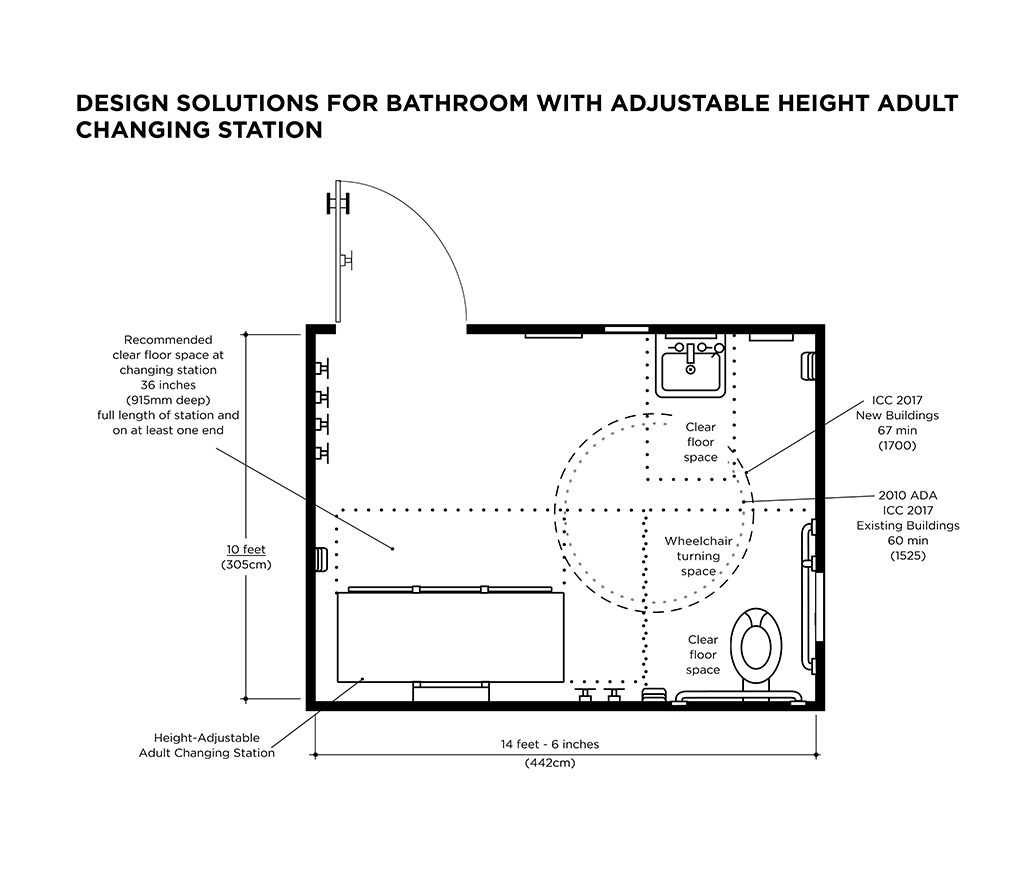
Illustration courtesy of Koala Kare
Layout Recommendations for Adult Changing Stations
The A117.1 Standard has layout recommendations when installing an adult-size changing station, referred to also as ACS. The ACS and its supporting structure shall not obstruct required clear floor spaces and maneuvering clearances at fixtures, at the station itself, at doors, or in the turning spaces. The changing surface must comply with 613.4.1 through 613.4.4. The ICC mandates height adjustability between 17 and 38 inches above the floor as measured to the top of the changing surface, with some exceptions allowed. ICC also sets maneuvering clearances. Under 613.4.4, code requires maintaining a clear floor space of 36 inches (91.4 cm) minimum floor clearance depth along the open long side and 36 inches (91.4 cm) minimum floor clearance width along the depth of one end of the changing surface, when in the down position. Side rail and rail positioning and size are also covered under the ICC.
If there is any emergency stop feature included with the ACS, that control needs to be within easy access of the caregiver while using the station. For the individual inclusive restroom entrance, the door should be outswing and satisfy, at a minimum, ADA access criteria. Ideally, turning space at the entrance should be maximized to facilitate access. Powered doors also aid access.
Advocates recommend that instructions for equipment use, both visual and written, be clearly posted in the restroom. Ideally, these instructions list the steps and utilize pictures. Video instructions for use can be integrated through a QR code on the instruction sheet.
For the building containing adult-size changing stations, it is recommended that clear signage be posted on the door to the restroom facility, as well as outside of the building, indicating the availability of an inclusive restroom with an ACS. Advocates advise the inclusion of accessible restrooms on any maps of the building, as well as on building websites, as an accessibility feature. Universal Changing Table Map USA offers a searchable map of buildings that include adult changing tables.12
Understanding how to specify for accommodation can work in tandem with the desire for coordinated aesthetics, improved operating costs, hygiene, compliance, and sustainability on a project. For design professionals to achieve their vision and to better serve the most vulnerable building occupants, it is important to understand the impacts of these requirements on layout.
Applying Knowledge for Inclusivity
Public Places that Benefit from Adult-Size Changing Stations
For millions of people with mobility challenges–as well as their families and caregivers–something as basic as using a restroom can become a major barrier. While public spaces have made progress with ramps, elevators, and grab bars, one critical accessibility feature is still shockingly rare: adult-size changing stations. Places such as airports, amusement parks, community centers and pools, educational facilities, rest stops, hospitals, libraries, museums, zoos, parks, and entertainment centers inhibit inclusion due to the lack of a safe and dignified space for people with disabilities to use a restroom.
Jennifer Corcoran made the decision early on in her son’s life that he would not miss out on experiences due to his disability. Her son uses a wheelchair and is nonverbal, requiring total care. Corcoran found that every outing needed to be heavily planned: medication was sorted, extra clothes were packed, and resources in nearby buildings were identified. The lack of accessible, inclusive restrooms presented a major obstacle. Corcoran was forced to bring a massage table to some locations to help change her son because restrooms lacked the space and equipment to accommodate his needs. Corcoran began advocating for adult-size changing stations in Ohio when she collaborated with her representatives to introduce concurrent bills in the Ohio Senate and the Ohio House of Representatives.
In January 2025, Corcoran and her son, and Co-Lead Advocate Kim Kirkwood and her son, were honored to attend the opening of the first of 29 new Ohio rest stops, all of which will have family restrooms with an adjustable height, adult-size changing table.
Examples in Inclusion: Stadiums & Arenas
Game day is about more than the final score. It’s the anticipation as fans stream into the stadium, the thrill of singing along with the crowd, the pride of wearing team colors, and the joy of sharing traditions across generations. Stadiums and arenas are where communities gather, memories are made, and fans of all ages come together to be part of something bigger.
But for many families and caregivers, the excitement of game day comes with hidden challenges. For fans with mobility issues or disabilities, the absence of adult-size changing stations in large venues often turns what should be a joyful outing into a stressful experience. Instead of focusing on the game, families are forced to navigate unsafe, uncomfortable, and undignified alternatives. For some, this reality means skipping live events altogether.
The Hidden Challenge Behind the Excitement
Most stadiums are designed with energy and spectacle in mind—big screens, booming sound systems, and state-of-the-art seating. Yet one of the most fundamental needs is often overlooked: safe, private, and accessible, inclusive restrooms for every fan. Without adult changing stations, caregivers and people with disabilities are left with impossible options. Do they attempt a change in a public restroom that isn’t equipped for their needs? Do they resort to the floor of a restroom or a car in the parking lot? Do they leave early and miss the very moments that make game day special? Do they sit uncomfortably (soiled and/or wet) in order to stay at the event? Or do they forgo simple things, like eating and drinking, so they can avoid needing a restroom? These choices strip away dignity, compromise safety, and send a message, however unintentional, that some fans don’t fully belong.
Why Adult Changing Stations Matter
Accessibility is more than getting through the stadium gates or finding the right seating section. True inclusion means designing every part of the experience with all fans in mind. Adult-size changing stations are a simple but powerful step toward equity. By installing adult changing stations in stadiums and arenas, the design professional can:
- Restore dignity: Fans with mobility challenges deserve the same respect and comfort as everyone else.
- Relieve stress for caregivers: Families can enjoy the game without worrying about where or how to manage basic needs.
- Encourage participation: More families can confidently attend live events, knowing their needs will be met.
- Set a new industry standard: Just as accessibility ramps and ADA seating are now a given, adult-size changing stations should be, too.
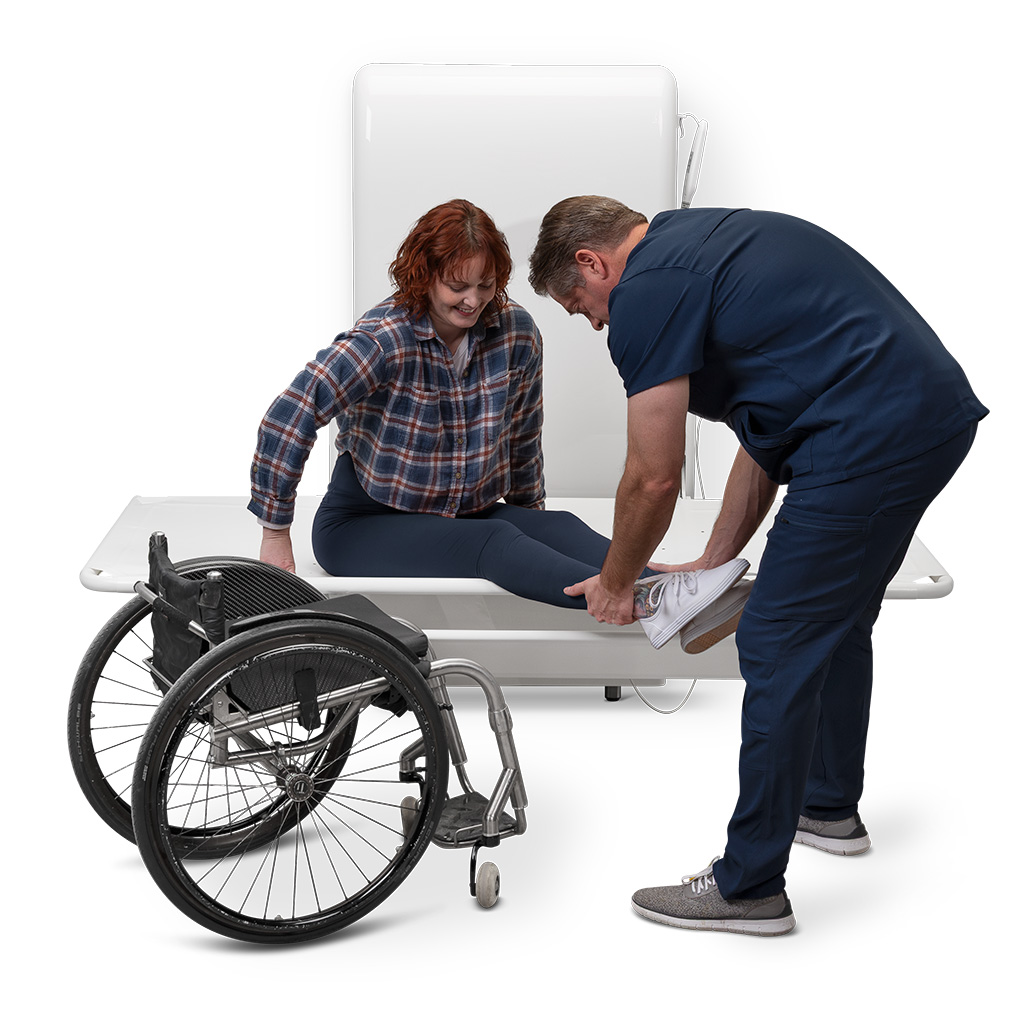
Photo courtesy of Koala Kare
A dedicated restroom with an adult changing station prevents the exclusion of individuals with disabilities.
Inclusion Belongs Everywhere, Even the Restrooms
Sports have the unique power to unite. Rivalries aside, game day is about collective energy–cheering with strangers who suddenly feel like family. It’s about belonging.
That’s why inclusion cannot stop at the entrance gate or the concourse. It must extend to every corner of the stadium, including the restrooms. When adult-size changing stations are missing, an entire community of fans is excluded from the full game-day experience.
Installing these stations is a commitment to equity, dignity, and respect. It’s a statement that says: every fan matters. As the sports and entertainment industries continue to evolve, stadiums and arenas have an opportunity to lead the way in accessibility. By making adult-size changing stations a standard feature, venues can ensure that inclusion is more than a buzzword; it’s a lived reality for every guest who walks through their gates, because game day isn’t just about the players on the field or the performers on stage. It’s about the fans, the grandparents bringing their grandchildren to their first game, the lifelong supporters who’ve been coming for decades, the families who make memories together in the stands. Inclusion belongs everywhere, and that includes restrooms. By prioritizing adult-size changing stations, stadiums and arenas can ensure that game day is truly for everyone, today, tomorrow, and for generations to come.
Installing adult-size changing stations creates an immediate and lasting impact – from airports and stadiums to schools and hospitals – making inclusion a reality, not an afterthought.
“Now that you, as an architect knows that people are being changed on bathroom floors or in vehicles and refraining from eating and drinking so they can be included in society, there is no reason to design new buildings without family restrooms including height-adjustable adult-size changing tables,” says Corcoran, Advocate for the Ohio Chapter
of the Changing Spaces Campaign. Resources are readily available on this topic at changingspacescampaign.com.
ENDNOTES
1U.S. Census Bureau. (2023) 2018-2022 American Community Survey 5-year Estimates. [Obtained via API].
2U.S. Census Bureau. (2021, November 21) How Disability Data are Collected from The American Community Survey.
3Centers for Disease Control and Prevention, “Disability Impacts All of Us” (2022).
4"Duchenne muscular dystrophy.” National Organization for Rare Disorders. Accessed December 15, 2025.
5“Spina Bifida.” American Association of Neurological Surgeons. April 15, 2024. Accessed December 15, 2025.
6Morris J. “17 Airports in the USA That Have Adult Changing Tables,”. Wheelchair Travel. (September 10, 2022),
7Changing Spaces Campaign. Accessed November 4, 2025.
8Legislation. Changing Spaces Campaign. Accessed December 10, 2025.
9https://codes.iccsafe.org/content/IBC2024P1/chapter-11-accessibility#IBC2024P1_Ch11_Sec1110.4. Accessed December 10, 2025.
10https://codes.iccsafe.org/content/ICCA117.12017P6/icc-a117-1-2017-with-supplement-1-standard-for-accessible-and-usable-buildings-and-facilities#ICCA117.12017P6_ChSupp1. Accessed December 10, 2025.
11https://www.intertek.com/medical/regulatory-requirements/iec-60601-1/#:~:text=What%20is%20IEC%2060601?%20The%20IEC%2060601,safety%20for%20both%20patients%20and%20healthcare%20providers. Accessed November 5, 2025.
12https://my.atlist.com/map/306b2633-4789-4c3c-af67-f948baa51f66?marker_id=8a246646-f172-4c74-badf-7ee639b65414&type=marker&modal_open=true. Accessed December 10, 2025.
Amanda Voss, MPP, is an author, editor, and policy analyst. Writing for multiple publications, she has also served as the managing editor for Energy Design Update.
The instructor(s) and course authors have disclosed that they have no relevant financial relationships or proprietary interests related to the content of this learning event.