Photo courtesy of Inpro WT
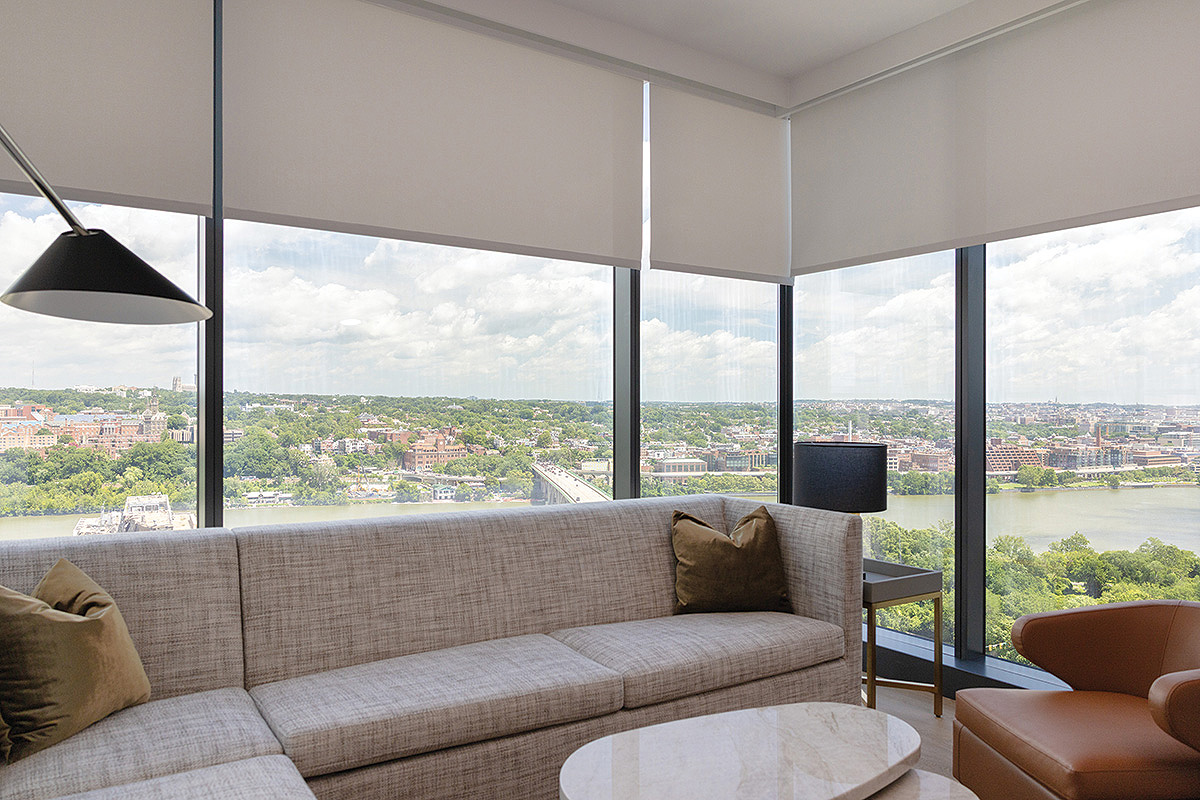
Commercial roller shades manage daylight, glare, and privacy across diverse interior spaces, supporting visual comfort, energy efficiency, and high-performance design.
Daylight remains a defining element of contemporary commercial design, shaping interiors and influencing how people experience space. While it can reduce reliance on artificial lighting and support occupant well-being, sunlight can also create discomfort when it produces glare or uneven warmth in occupied areas. People may shift positions, adjust shades, or move away from bright zones, making careful design essential. Architects and designers work to harness daylight’s benefits while mitigating its challenges, balancing visual and thermal conditions to create interiors that are functional and comfortable.
Comfort, Cooling Loads, and the Shape of a Workday
Solar heat gain is one of the largest drivers of cooling loads in commercial buildings, especially in heavily glazed environments. When sun-exposed surfaces start radiating heat, indoor temperatures drift, often forcing mechanical systems to work harder just to maintain a baseline. In tall lobbies, classrooms facing morning sun, or open offices lined with floor-to-ceiling glass, these fluctuations appear not just seasonally but hour to hour. The result is a space that looks consistent in the renderings but feels different throughout the day.
For occupants, daylight quality is often felt before it’s consciously noticed. A bright vertical window can make a nearby workstation uncomfortable even when the rest of the room is evenly lit. Excessive contrast leads to squinting and eyestrain, and it’s not unusual for occupants to describe visual glare as more disruptive than temperature swings. That discomfort directly affects how long people stay in a particular seat, how well they perform on focused tasks, and how welcoming a space feels.
Different Programs, Different Light
Offices, schools, hospitality environments, and healthcare spaces all respond to daylight differently. A conference room requires controlled contrast for presentations. A hotel lobby needs both clarity and warmth at changing times of day. A classroom demands low-glare conditions for screens and whiteboards. Buildings with expansive glazing experience even greater variability, requiring designers to consider not just the facade orientation but how the interior is programmed and occupied over time.
Codes, Standards, and the Push for Performance
Energy codes and voluntary frameworks now treat daylight management as part of core building performance. ASHRAE sets limits for solar heat gain; LEED and WELL tie comfort to health and productivity; and material content regulations influence the selection of fabrics and components. The challenge for designers is to meet these technical requirements while still achieving the architectural intent—the transparency, openness, and connection to outdoors that clients expect.
When daylight is balanced, neither too dim nor too intense, spaces function better. Research continues to show improvements in cognitive performance, satisfaction, and perceived air quality when glare is addressed, and thermal comfort is stable. Automated shading systems have become one of the most effective ways to achieve this, supporting energy efficiency and occupant comfort while preserving views.
Roller Shades as a Strategic Solution
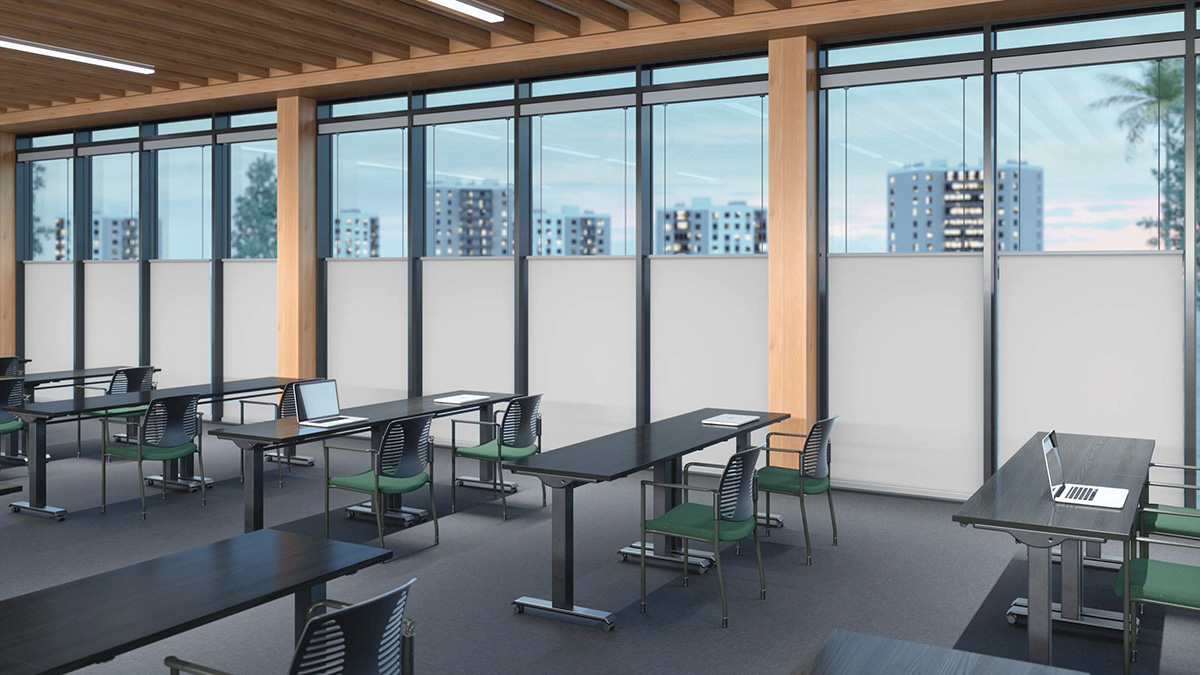
Photo courtesy of Inpro WT
Well-specified roller shades enhance occupant wellness by balancing daylight, reducing glare, and supporting consistent interior comfort.
Glare, heat near windows, and uneven light can make occupants uncomfortable and reduce productivity in modern commercial spaces. Roller shade systems, which are frequently specified late in design, address these challenges by managing daylight effectively. The following sections examine how these versatile, high-performance tools help architects balance natural light, enhance comfort, and improve overall building performance, transforming sunlight from a potential problem into a design asset.
Design Implications for Architects
- Early shade selection supports coordination with daylighting and thermal comfort strategies rather than treating shades as late-stage finishes.
- Establishing performance intent by facade orientation helps manage glare and daylight behavior throughout the day.
- Aligning shading with lighting controls and HVAC zoning reduces the risk of competing systems and unintended energy penalties.
Managing Daylight and Glare
Properly specified roller shades allow designers to control solar heat gain, reduce glare on work surfaces and digital displays, and create more uniform interior temperatures, improving interior comfort in lobbies, offices, conference rooms, and hospitality spaces. By managing solar energy at the window plane, shades reduce reliance on HVAC systems, lower energy use, and support long-term sustainability goals.
Supporting Wellness and Healthy Interiors
Beyond energy and comfort, roller shades play a role in promoting wellness and healthier interiors. Adjustable shading helps maintain access to natural daylight, supporting circadian rhythms and visual comfort, while giving occupants a sense of control over their environment in ways that align with leading green building certification frameworks. Advances in fabric technology, such as PVC-free, low-VOC, and recycled materials, allow architects to meet indoor air quality requirements without compromising durability, aesthetic flexibility, or environmental performance.
Integration with Smart, High-Performance Design
Roller shades are central to creating interiors that adapt to both occupant needs and building performance goals. When integrated with building systems, roller shades help manage energy use efficiently and support consistent interior conditions. Careful material and hardware design extends product life, while takeback programs promote circularity and minimize environmental impact. By combining responsive operation with long-lasting, sustainable construction, roller shades support interiors that are efficient, resilient, and ready for future demands.
Sustainable Materials and Responsible Design
Material selection plays a critical role in high-performance commercial interiors, influencing both occupant wellness and environmental impact. Roller shade systems offer a unique opportunity to integrate functional performance with sustainable design. Carefully engineered fabrics and components can minimize emissions, withstand daily use over many years, and support circularity at the end of their service life. By addressing both human and environmental considerations, these systems contribute meaningfully to healthier, more resilient interior environments.
Design Implications for Architects
Considering roller shade fabrics as part of the interior materials package helps streamline emissions and material-ingredients documentation during submittals.
Relying on third-party certifications can simplify compliance with low-emitting interior requirements and owner sustainability reporting.
Evaluating durability and cleaning compatibility by building type supports long-term performance, particularly in healthcare and education environments.
PVC-Free Roller Shade Fabrics: Material Characteristics and IAQ Advantages
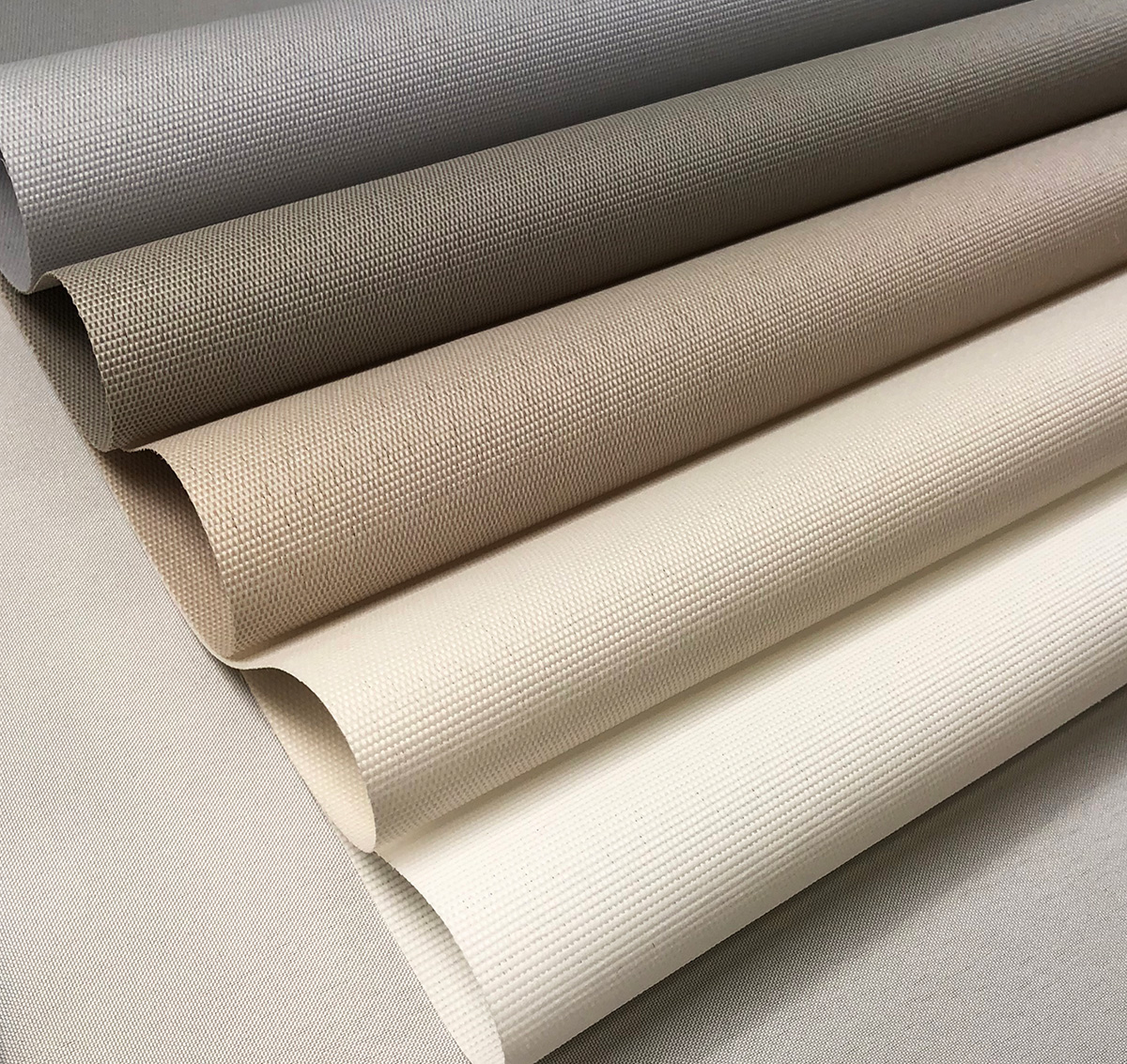
Photo courtesy of Inpro WT
PVC-free roller shade fabrics support healthier interiors by eliminating vinyl-related additives, reducing VOC and SVOC emissions, and delivering durable, predictable daylight and glare control through engineered fiber construction rather than chemical coatings.
Conventional commercial roller shade fabrics are commonly manufactured with polyvinyl chloride (PVC), which relies on plasticizers, stabilizers, and halogenated flame retardants to achieve flexibility and performance. These additives can migrate from the material over time, contributing to indoor VOC loading, semi-volatile organic compound (SVOC) accumulation, and potential particulate-bound emissions when exposed to heat and UV.
PVC-free roller shade fabrics avoid the chemical inputs associated with vinyl. Instead of relying on PVC coatings, most non-PVC constructions employ polyester, polyester–fiberglass blends, or other thermoplastic-free fiber systems. These materials are engineered for dimensional stability and tensile strength, maintaining consistent optical performance over time. Fabric properties such as woven density, yarn geometry, and color or finish are carefully tuned to achieve required openness factors, visible light transmission (VLT), and effective glare control. By addressing performance through material design rather than chemical coatings, these fabrics deliver predictable, long-lasting shading characteristics.
From an IAQ and materials standpoint, PVC-free fabrics provide distinct benefits:
- No phthalate plasticizers, which reduces SVOC reservoirs and long-term off-gassing.
- No halogenated flame retardants, avoiding persistent and bioaccumulative compounds.
- Low-VOC manufacturing, supporting compliance with major emissions standards (e.g., CDPH Standard Method v1.2 [Standard Method for the Testing and Evaluation of Volatile Organic Chemical Emissions From Indoor Sources Using Environmental Chambers], GREENGUARD Gold).
- Thermal and UV stability without chlorine-based polymers, reducing degradation over the product’s lifespan.
For architects working under stringent material-health criteria—such as California’s CARB regulations, the Collaborative for High Performance Schools (CHPS) program, and Massachusetts’ adoption of low-emitting materials requirements—PVC-free shade fabrics simplify documentation by aligning with established IAQ frameworks and third-party certifications.
In specifications, PVC-free fabrics:
- Meet typical commercial requirements for openness factor, colorfastness, tear strength, and ultraviolet resistance.
- Support WELL, LEED v4.1, and Green Globes credit pathways for low-emitting interiors and materials transparency.
- Reduce risk of occupant exposure to common PVC-associated additives without compromising daylight or glare control performance.
Overall, PVC-free roller shade fabrics offer a material-health–optimized alternative to traditional PVC-coated products, enabling architects to meet indoor environmental quality goals while maintaining the performance parameters required for solar control systems.
Why PVC-Free Shade Fabrics Matter for Architects
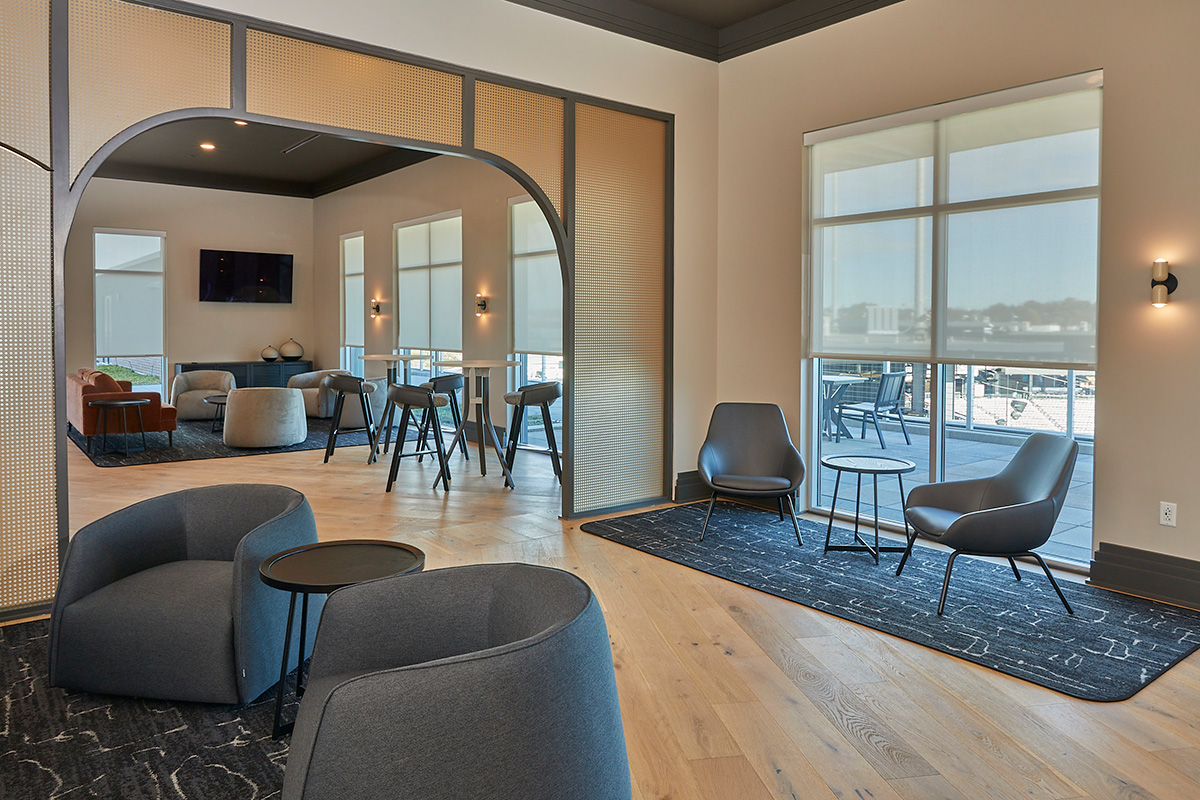
Photo courtesy of Inpro WT
PVC-free roller shade fabrics help architects meet stricter indoor air quality standards in states with formal low-emitting materials regulations.
PVC-free roller shade fabrics are increasingly relevant to architectural specifications because they simplify compliance with low-emitting materials requirements in states with formal pollutant-control mandates. While the main fabric performance characteristics remain comparable to conventional PVC-coated products, PVC-free constructions avoid plasticizers and halogenated additives that can complicate emissions documentation.
Photo courtesy of Inpro WT
Commercial roller shades manage daylight, glare, and privacy across diverse interior spaces, supporting visual comfort, energy efficiency, and high-performance design.
Daylight remains a defining element of contemporary commercial design, shaping interiors and influencing how people experience space. While it can reduce reliance on artificial lighting and support occupant well-being, sunlight can also create discomfort when it produces glare or uneven warmth in occupied areas. People may shift positions, adjust shades, or move away from bright zones, making careful design essential. Architects and designers work to harness daylight’s benefits while mitigating its challenges, balancing visual and thermal conditions to create interiors that are functional and comfortable.
Comfort, Cooling Loads, and the Shape of a Workday
Solar heat gain is one of the largest drivers of cooling loads in commercial buildings, especially in heavily glazed environments. When sun-exposed surfaces start radiating heat, indoor temperatures drift, often forcing mechanical systems to work harder just to maintain a baseline. In tall lobbies, classrooms facing morning sun, or open offices lined with floor-to-ceiling glass, these fluctuations appear not just seasonally but hour to hour. The result is a space that looks consistent in the renderings but feels different throughout the day.
For occupants, daylight quality is often felt before it’s consciously noticed. A bright vertical window can make a nearby workstation uncomfortable even when the rest of the room is evenly lit. Excessive contrast leads to squinting and eyestrain, and it’s not unusual for occupants to describe visual glare as more disruptive than temperature swings. That discomfort directly affects how long people stay in a particular seat, how well they perform on focused tasks, and how welcoming a space feels.
Different Programs, Different Light
Offices, schools, hospitality environments, and healthcare spaces all respond to daylight differently. A conference room requires controlled contrast for presentations. A hotel lobby needs both clarity and warmth at changing times of day. A classroom demands low-glare conditions for screens and whiteboards. Buildings with expansive glazing experience even greater variability, requiring designers to consider not just the facade orientation but how the interior is programmed and occupied over time.
Codes, Standards, and the Push for Performance
Energy codes and voluntary frameworks now treat daylight management as part of core building performance. ASHRAE sets limits for solar heat gain; LEED and WELL tie comfort to health and productivity; and material content regulations influence the selection of fabrics and components. The challenge for designers is to meet these technical requirements while still achieving the architectural intent—the transparency, openness, and connection to outdoors that clients expect.
When daylight is balanced, neither too dim nor too intense, spaces function better. Research continues to show improvements in cognitive performance, satisfaction, and perceived air quality when glare is addressed, and thermal comfort is stable. Automated shading systems have become one of the most effective ways to achieve this, supporting energy efficiency and occupant comfort while preserving views.
Roller Shades as a Strategic Solution
Photo courtesy of Inpro WT
Well-specified roller shades enhance occupant wellness by balancing daylight, reducing glare, and supporting consistent interior comfort.
Glare, heat near windows, and uneven light can make occupants uncomfortable and reduce productivity in modern commercial spaces. Roller shade systems, which are frequently specified late in design, address these challenges by managing daylight effectively. The following sections examine how these versatile, high-performance tools help architects balance natural light, enhance comfort, and improve overall building performance, transforming sunlight from a potential problem into a design asset.
Design Implications for Architects
- Early shade selection supports coordination with daylighting and thermal comfort strategies rather than treating shades as late-stage finishes.
- Establishing performance intent by facade orientation helps manage glare and daylight behavior throughout the day.
- Aligning shading with lighting controls and HVAC zoning reduces the risk of competing systems and unintended energy penalties.
Managing Daylight and Glare
Properly specified roller shades allow designers to control solar heat gain, reduce glare on work surfaces and digital displays, and create more uniform interior temperatures, improving interior comfort in lobbies, offices, conference rooms, and hospitality spaces. By managing solar energy at the window plane, shades reduce reliance on HVAC systems, lower energy use, and support long-term sustainability goals.
Supporting Wellness and Healthy Interiors
Beyond energy and comfort, roller shades play a role in promoting wellness and healthier interiors. Adjustable shading helps maintain access to natural daylight, supporting circadian rhythms and visual comfort, while giving occupants a sense of control over their environment in ways that align with leading green building certification frameworks. Advances in fabric technology, such as PVC-free, low-VOC, and recycled materials, allow architects to meet indoor air quality requirements without compromising durability, aesthetic flexibility, or environmental performance.
Integration with Smart, High-Performance Design
Roller shades are central to creating interiors that adapt to both occupant needs and building performance goals. When integrated with building systems, roller shades help manage energy use efficiently and support consistent interior conditions. Careful material and hardware design extends product life, while takeback programs promote circularity and minimize environmental impact. By combining responsive operation with long-lasting, sustainable construction, roller shades support interiors that are efficient, resilient, and ready for future demands.
Sustainable Materials and Responsible Design
Material selection plays a critical role in high-performance commercial interiors, influencing both occupant wellness and environmental impact. Roller shade systems offer a unique opportunity to integrate functional performance with sustainable design. Carefully engineered fabrics and components can minimize emissions, withstand daily use over many years, and support circularity at the end of their service life. By addressing both human and environmental considerations, these systems contribute meaningfully to healthier, more resilient interior environments.
Design Implications for Architects
Considering roller shade fabrics as part of the interior materials package helps streamline emissions and material-ingredients documentation during submittals.
Relying on third-party certifications can simplify compliance with low-emitting interior requirements and owner sustainability reporting.
Evaluating durability and cleaning compatibility by building type supports long-term performance, particularly in healthcare and education environments.
PVC-Free Roller Shade Fabrics: Material Characteristics and IAQ Advantages
Photo courtesy of Inpro WT
PVC-free roller shade fabrics support healthier interiors by eliminating vinyl-related additives, reducing VOC and SVOC emissions, and delivering durable, predictable daylight and glare control through engineered fiber construction rather than chemical coatings.
Conventional commercial roller shade fabrics are commonly manufactured with polyvinyl chloride (PVC), which relies on plasticizers, stabilizers, and halogenated flame retardants to achieve flexibility and performance. These additives can migrate from the material over time, contributing to indoor VOC loading, semi-volatile organic compound (SVOC) accumulation, and potential particulate-bound emissions when exposed to heat and UV.
PVC-free roller shade fabrics avoid the chemical inputs associated with vinyl. Instead of relying on PVC coatings, most non-PVC constructions employ polyester, polyester–fiberglass blends, or other thermoplastic-free fiber systems. These materials are engineered for dimensional stability and tensile strength, maintaining consistent optical performance over time. Fabric properties such as woven density, yarn geometry, and color or finish are carefully tuned to achieve required openness factors, visible light transmission (VLT), and effective glare control. By addressing performance through material design rather than chemical coatings, these fabrics deliver predictable, long-lasting shading characteristics.
From an IAQ and materials standpoint, PVC-free fabrics provide distinct benefits:
- No phthalate plasticizers, which reduces SVOC reservoirs and long-term off-gassing.
- No halogenated flame retardants, avoiding persistent and bioaccumulative compounds.
- Low-VOC manufacturing, supporting compliance with major emissions standards (e.g., CDPH Standard Method v1.2 [Standard Method for the Testing and Evaluation of Volatile Organic Chemical Emissions From Indoor Sources Using Environmental Chambers], GREENGUARD Gold).
- Thermal and UV stability without chlorine-based polymers, reducing degradation over the product’s lifespan.
For architects working under stringent material-health criteria—such as California’s CARB regulations, the Collaborative for High Performance Schools (CHPS) program, and Massachusetts’ adoption of low-emitting materials requirements—PVC-free shade fabrics simplify documentation by aligning with established IAQ frameworks and third-party certifications.
In specifications, PVC-free fabrics:
- Meet typical commercial requirements for openness factor, colorfastness, tear strength, and ultraviolet resistance.
- Support WELL, LEED v4.1, and Green Globes credit pathways for low-emitting interiors and materials transparency.
- Reduce risk of occupant exposure to common PVC-associated additives without compromising daylight or glare control performance.
Overall, PVC-free roller shade fabrics offer a material-health–optimized alternative to traditional PVC-coated products, enabling architects to meet indoor environmental quality goals while maintaining the performance parameters required for solar control systems.
Why PVC-Free Shade Fabrics Matter for Architects
Photo courtesy of Inpro WT
PVC-free roller shade fabrics help architects meet stricter indoor air quality standards in states with formal low-emitting materials regulations.
PVC-free roller shade fabrics are increasingly relevant to architectural specifications because they simplify compliance with low-emitting materials requirements in states with formal pollutant-control mandates. While the main fabric performance characteristics remain comparable to conventional PVC-coated products, PVC-free constructions avoid plasticizers and halogenated additives that can complicate emissions documentation.
California — CALGreen Low-Emitting Requirements
Under the California Green Building Standards Code (CALGreen), interior finish materials must meet defined emissions criteria (Sections 4.504.2 and 5.504.4). Roller shade fabrics are not named explicitly but fall under the broader category of interior finishes.
Specifying PVC-free, low-VOC fabrics reduces documentation burden and supports compliance with CALGreen’s mandatory pollutant control requirements for both residential and nonresidential projects.
Massachusetts — MSBA Low-Emitting and Material Health Requirements
For projects funded by the Massachusetts School Building Authority (MSBA), Project Advisory 81 (2023) requires teams to achieve credits and verification under LEED or NE-CHPS pathways, including:
- IEQ: Low-Emitting Materials
- IEQ: Indoor Air Quality Assessment
- Material Ingredients (HPDs / Declare / equivalent)
Roller shade fabrics contribute to these requirements when treated as part of the interior finish package. PVC-free products generally meet emissions criteria more readily and support MSBA reimbursement pathways.
Specification Checklist
- Require roller shade fabrics that are PVC-free and certified low-emitting.
- Request a Health Product Declaration (HPD) or Declare label documenting chemical content.
- California: Provide CALGreen-compliant emissions documentation for finish materials.
- Massachusetts (MSBA): Show how fabrics contribute to LEED or CHPS low-emitting and material-ingredients credits.
- Include associated hardware, adhesives, and coatings in the emissions submittal to maintain full assembly compliance.
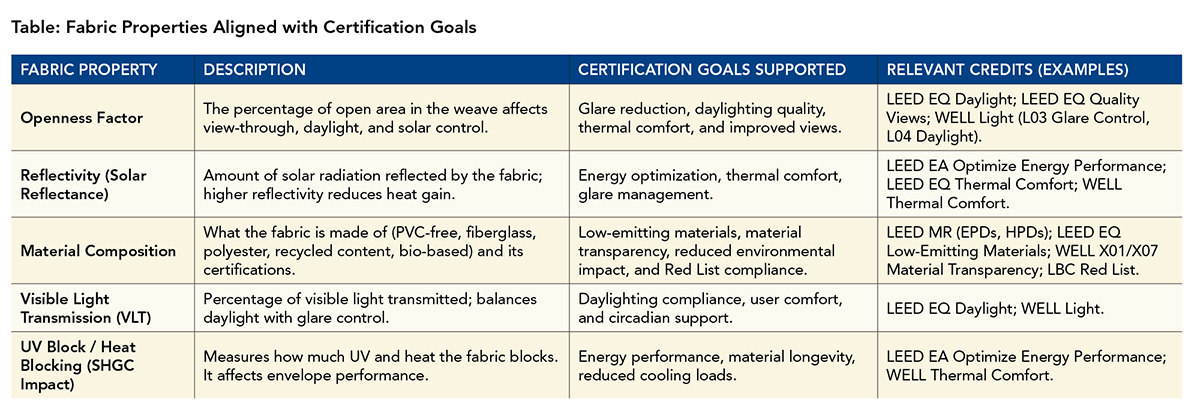
Table: Fabric Properties Aligned with Certification Goals
Durability, Cleanability, and Long-Term Performance
Durability and cleanability are fundamental performance attributes of commercial roller shade systems. Fabrics and hardware face prolonged UV exposure, mechanical cycling, tension loads, and environmental contaminants. If materials are not engineered for long-term stability, UV degradation can compromise tensile strength and cause fading. Advanced polyester and fiberglass-core fabrics, however, maintain structural integrity and color over years of solar exposure. Hardware reliability is equally important. Anodized or powder-coated aluminum tubes resist corrosion, while high-cycle clutch mechanisms and sturdy brackets reduce operational failures and extend service life. Cleanability also plays a key role. Commercial fabrics collect dust, airborne particulates, and biological contaminants. Moisture-resistant, non-porous weaves with stain-repellent finishes can be safely cleaned using neutral pH detergents, protecting both hygiene and material integrity. Together, these characteristics ensure roller shade systems perform consistently, remain maintainable, and endure across diverse commercial environments.
Long-term performance also affects predictive energy modeling. A shade that warps, sags, or loses opacity no longer provides the intended solar heat gain coefficient (SHGC) reduction or glare control. Consistent fabric tension and maintained openness factors ensure the system continues to perform as modeled, supporting stable interior temperatures and limiting overuse of HVAC and lighting systems.
Actionable Considerations for Architects
- Specify fabric tensile strength, UV stability ratings, and cycle-tested hardware.
- Require performance testing under ASTM G154 (UV exposure), ASTM D5034 (tensile strength), and American Association of Textile Chemists and Colorists (AATCC) cleanability standards.
- Confirm long-term retention of openness factor, colorfastness, and dimensional stability.
- Validate maintenance protocols with facility teams to ensure cleaning agents are compatible with fabric chemistry.
Circular Design Strategies: Takeback, Reuse, and End-of-Life Pathways
Circularity in roller shade systems expands beyond recycled content. Architects can design for selective disassembly, modularity, and material recovery, reducing replacement waste and operational downtime.
Modular systems allow replacement of the fabric only, rather than the tube, brackets, or drive system, reducing material disposal by an estimated 70 to 80 percent. Selecting hardware with mechanical fasteners instead of permanent adhesives supports disassembly during retrofit cycles. Shade tubes and brackets made from aluminum can enter established recycling streams, while many PVC-free polyester fabrics are now compatible with mechanical or chemical recycling processes offered by manufacturers.
Manufacturer takeback programs provide defined end-of-life pathways, documenting diversion rates and material recovery strategies—information increasingly requested in owner sustainability reporting and environmental, social, and governance (ESG) frameworks. These programs also reduce landfill contributions and support circular-economy metrics in LEED, Green Globes, and corporate sustainability guidelines.
Actionable Considerations for Architects
- Require modular shade systems with replaceable fabric panels.
- Select hardware designed for mechanical disassembly and closed-loop recyclability.
- Request manufacturer documentation on takeback or recycling programs, including diversion rate data.
- Track end-of-life pathways to support owner ESG reporting and waste-reduction goals.
Aligning Shade Specifications with LEED, WELL, and Green Globes
Roller shade materials actively influence compliance paths across major building certification systems. In LEED v4.1, shades contribute to Low-Emitting Materials (IEQ), Daylight (EPD/HPD credits), and Optimize Energy Performance when they support glare control and reduced lighting loads. PVC-free fabrics with HPDs or Declare labels streamline documentation for both chemical transparency and emissions requirements.
WELL v2 emphasizes visual comfort, daylight access, and indoor air quality, making shade fabrics integral to achieving features such as L03 (Circadian Lighting Design), X08 (Light Glare Control), and A05 (Cleaning & Sanitization). Shades that maintain consistent opacity, reduce direct beam exposure, and limit off-gassing directly support these intents.
Green Globes evaluates interior materials for emissions, durability, recyclability, and lifecycle impact, rewarding modular systems and verified low-emitting products.
Actionable Considerations for Architects
- Require HPDs, Declare labels, or equivalent material-ingredients documentation in Division 12 (Furnishings, Construction Specifications Institute) specifications.
- Coordinate shade openness factors and reflectance values with daylight modeling teams to support LEED daylight and energy credits.
- Use PVC-free, low-emitting fabrics to streamline WELL and Green Globes IAQ criteria.
- Document recycling, takeback, and modularity features to support certification narratives and owner sustainability reporting.
Enhancing Window Performance Through Energy Efficiency and Envelope Integration
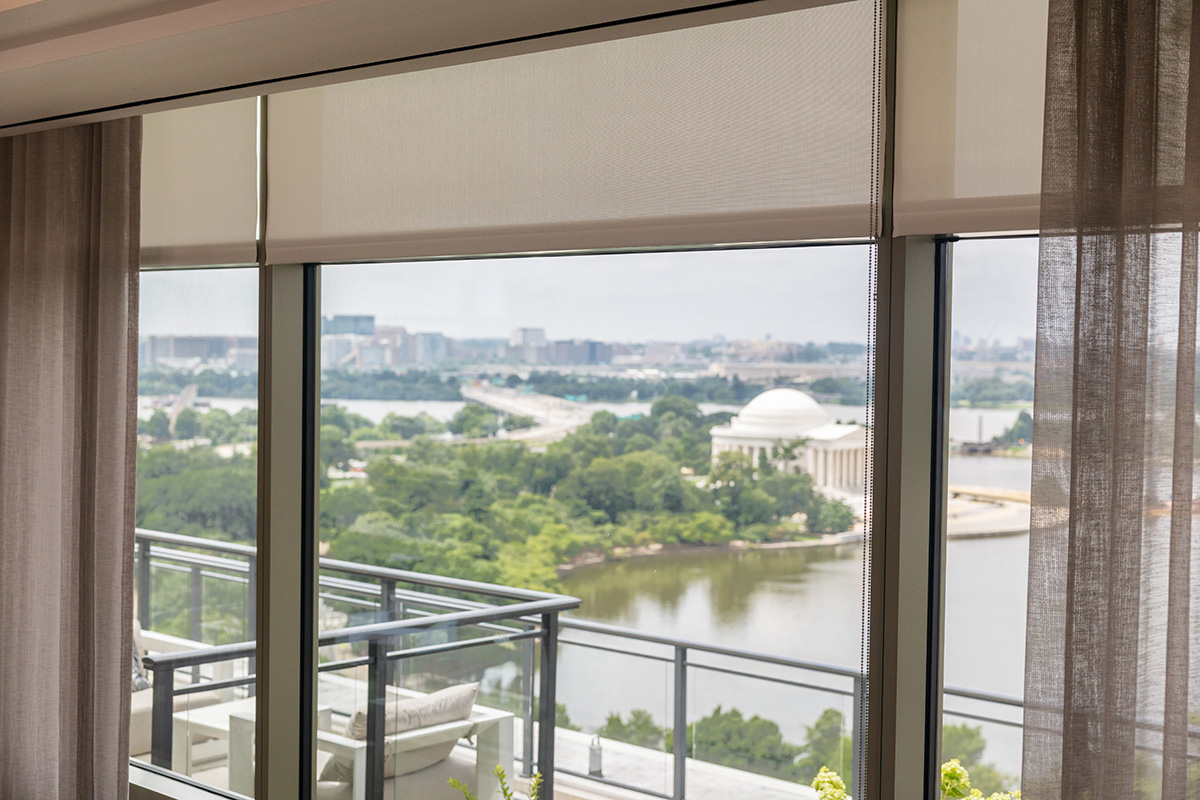
Photo courtesy of Inpro WT
By intercepting solar energy at the window plane, roller shades help regulate heat gain, stabilize interior conditions, and support efficient envelope performance.
In high-performance commercial interiors, roller shades have evolved beyond aesthetic elements to become integral to building performance. When carefully specified and coordinated with the building envelope, they help control solar heat gain and manage daylight, improving comfort while supporting efficient HVAC operation. In this way, shading systems contribute to both sustainability and occupant wellness throughout the space.
Design Implications for Architects
- Coordinating shade openness, reflectance, and control strategy with facade orientation and space use supports predictable daylight and thermal performance.
- Including interior shading assumptions in daylight and energy modeling helps ensure that modeled outcomes align with real-world operation.
- Detailing shade pockets, clearances, and service access early reduces the risk of conflicts with lighting, sprinklers, and air-distribution systems.
Controlling Solar Heat Gain at the Window Plane
Solar heat gain is one of the primary factors driving uneven interior temperatures, especially in buildings with large glazed facades. Without mitigation, radiant heat entering through windows can create hotspots near sunlit zones and force HVAC systems to overcompensate, increasing energy consumption and operational costs. Roller shades intercept this energy at the window plane, moderating interior heat before it penetrates the space. Fabric properties—such as reflectivity, color, opacity, and openness—directly influence how much solar radiation is absorbed, reflected, or transmitted. For instance, low-opacity, light-colored fabrics can reflect heat while maintaining soft daylight, whereas denser, darker fabrics block more direct sunlight and enhance contrast control.
Climate-specific strategies are critical. In hot, arid zones (ASHRAE Zones 1–3), fabrics with high reflectivity and low solar heat gain coefficients help minimize cooling loads while maintaining daylight for visual comfort. In mixed-humid or temperate climates (Zones 4–5), adjustable shades allow architects to balance seasonal solar gain, letting in warmth during winter while shading occupants in summer. For cold climates (Zones 6–7), selective openness can maximize passive solar gain during the heating season while still controlling glare and protecting furnishings.
Harmonizing Shades with Daylighting and HVAC Strategies
Integration is the key to unlocking shading performance. Roller shades can help maintain target illuminance levels and reduce reliance on artificial lighting when coordinated with building systems. Coordinating shade deployment with HVAC zoning ensures that perimeter spaces do not overheat or overcool, supporting more uniform interior conditions. Dynamic shading strategies, whether scheduled by time of day, solar orientation, or occupancy, allow architects to optimize both energy efficiency and occupant well-being throughout the year.
The National Renewable Energy Laboratory (NREL) has demonstrated that automated, integrated shading systems can reduce annual lighting energy use by up to 40 percent in highly glazed buildings, while contributing to more predictable thermal environments. These systems also reduce peak cooling demand, lowering electricity costs and supporting sustainability targets.
Building-Wide Energy Implications
Roller shades can influence energy performance across the entire building when integrated into early design and energy modeling. By controlling the timing and amount of solar gain, shades help reduce HVAC load swings, improving system efficiency and predictability. In summer, they limit heat penetration and reduce mechanical cooling demand, while in winter, strategic openness allows beneficial solar gain to support heating. Considering shading in energy models enables architects to make informed decisions about glazing, orientation, and envelope insulation, linking interior design choices directly to building-wide performance outcomes. The UV resistance, durability, and cleanability of advanced fabrics ensure consistent performance over the life of the building.
Envelope Coordination and Architectural Intent
Shading performance is maximized when roller shades are treated as part of the building envelope rather than standalone fixtures. Window orientation, facade geometry, and glazing performance all influence fabric choice and system strategy. For example, a north-facing lobby may prioritize view-through and daylight distribution, whereas a west-facing conference room may require denser shading to block low-angle afternoon sun. Coordinated design preserves the architectural intent while delivering measurable benefits in thermal comfort, visual quality, and energy reduction.
Integration with building management systems helps maintain consistent interior conditions as sunlight patterns change. This adaptive control aligns with wellness and daylighting goals while enhancing energy performance. Over time, it supports interiors that feel comfortable, promote occupant health, and respond resiliently to evolving environmental conditions.
Future-Ready, Adaptive Solutions
As energy codes and occupant expectations evolve, roller shade systems must offer long-term flexibility. Thoughtful design enables upgrades or modifications to hardware, controls, or fabrics without replacing the entire system. By focusing on lifecycle performance, architects can ensure shading solutions continue to operate efficiently, comply with evolving standards, and support sustainable building management over time.
Hardware, Controls, and Adaptive Automation
Effective roller shade design begins with selecting the appropriate hardware and control systems to balance performance, convenience, and architectural intent.
Power Types: Non-Motorized vs. Motorized Roller Shade Systems
Roller shades can be powered in two distinct ways—non-motorized or motorized—and this choice determines how the shade physically moves. Non-motorized (manual) shades use chains, clutches, cranks, or spring-assist mechanisms to raise and lower the fabric. They remain a dependable choice for small rooms, private offices, and classrooms where users can easily reach the controls and sunlight conditions are predictable.
Motorized systems, by contrast, rely on an electric, low-voltage, or battery-powered motor inside the roller tube. The motor lifts the fabric smoothly and consistently, with no need for cords, chains, or physical exertion. Motorized shades excel in large or tall windows, multi-story glass facades, areas with accessibility considerations, and any zone where uniform performance is required across multiple shades. They also significantly reduce wear caused by improper manual operation.
In many buildings, a hybrid strategy is ideal: non-motorized shades in small, enclosed rooms and motorized units across public spaces, perimeter zones, or high-bay glazing. The power choice sets the foundation for everything else—control systems, automation, integration, and long-term performance.
Selecting Shade Operation by Space Type
Manual shades are well-suited to smaller rooms where occupants can easily reach controls and daylight conditions remain relatively stable. Motorized shades are typically preferred for tall glazing, wide window spans, and projects that require consistent daylight control across a facade, and they also support accessibility where manual operation is impractical. Cordless or tamper-resistant systems are commonly specified in environments where cords and chains are restricted by safety or behavioral health policies.
When motorized shades are integrated with sensors or building management systems, they can help maintain target light levels and reduce unnecessary lighting and cooling demand, while still allowing occupant override when appropriate.
Control Types: User-Controlled vs. Automated Systems
How a roller shade is controlled is separate from how it is powered.
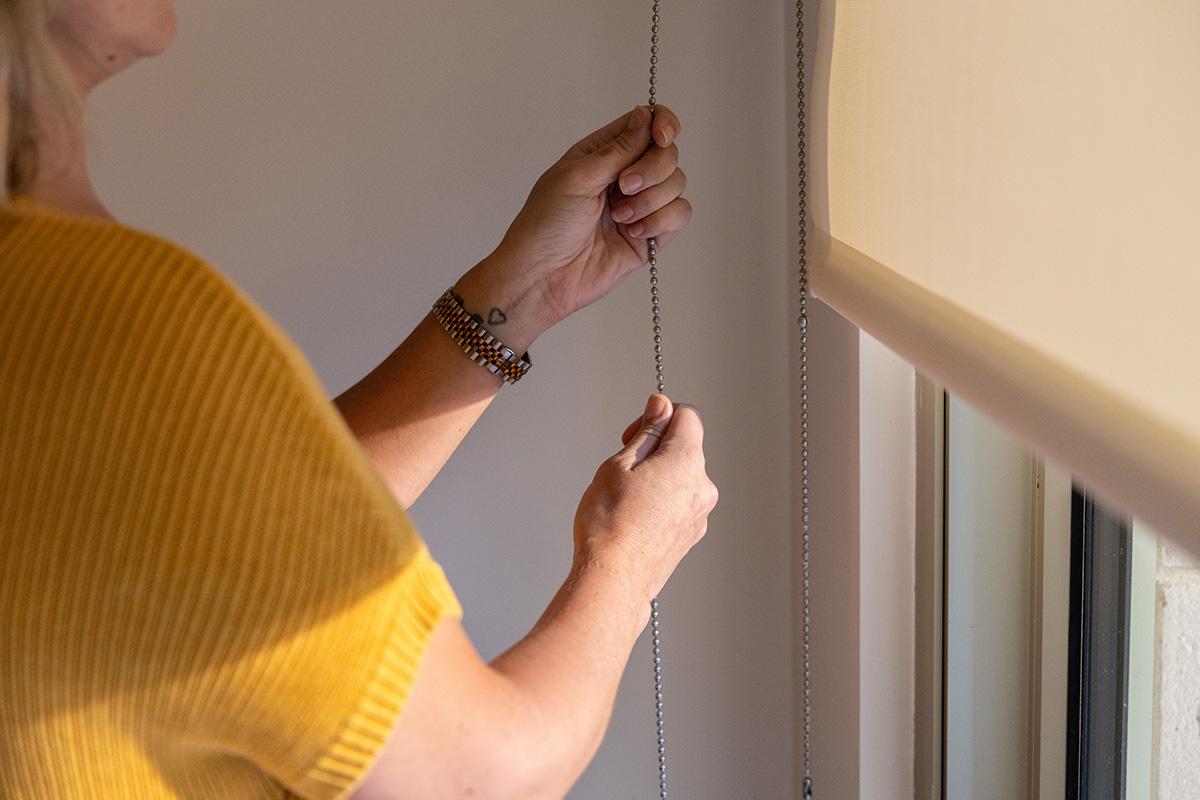
Photo courtesy of Inpro WT
User-controlled roller shades allow occupants to adjust daylight and privacy directly, supporting immediate comfort needs in smaller or individualized spaces.
User-Controlled Operation:
User-controlled systems rely on people to initiate shade movement. Both non-motorized and motorized shades can be operated manually:
- Manual chain/cord control (non-motorized)
- Spring-assist lift (non-motorized)
- Wall switches or keypads (motorized)
- Handheld remotes (motorized)
- Mobile apps or digital interfaces (motorized)
User control is appropriate when occupants need immediate, personal adjustment—private offices, small meeting rooms, or healthcare rooms where flexibility is required.
Automated Operation
Automated shading leverages sensors, schedules, or building management system (BMS) inputs to move motorized shades without user intervention. Automation enables shades to respond to:
- Shifting sun angles
- Daylight intensity
- Glare on work surfaces
- Occupancy changes
- Interior temperature or cooling demand
- Time-of-day rules
- Seasonal programming
Automated systems maintain consistent comfort and daylight quality throughout the day—something manual control cannot accomplish reliably. They also ensure that shades remain open when daylight is beneficial and close only when needed, preserving views and reducing unnecessary electric lighting.
Importantly, automation does not eliminate user override. Most systems allow temporary occupant adjustments while maintaining overall performance goals.
Bringing It All Together: Designing for Light, Performance, and Practical Integration
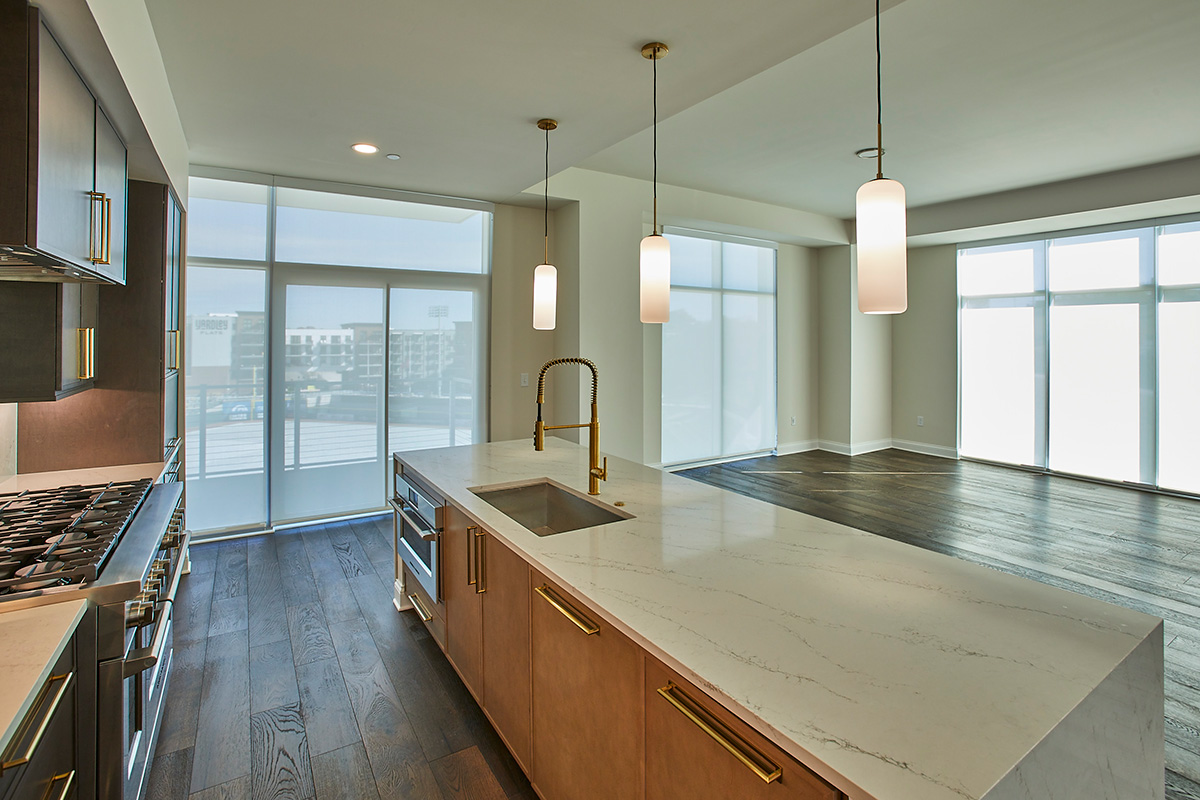
Photo courtesy of Inpro WT
Coordinated roller shades integrate with glazing, lighting, and interiors to shape daylight while supporting comfort, energy efficiency, and material health when specified early as part of the building’s performance strategy.
Roller shades today function as coordinated building-performance components, not just visual finishes. They shape how daylight enters a space, influence comfort and energy demand, and contribute to healthy, low-emitting interiors. Fabric selection, opacity, color, and hardware all affect solar control, glare management, thermal performance, and long-term durability. These choices are therefore part of the overall environmental strategy, informing how well a building supports its occupants and meets sustainability goals.
Effective shading design depends on thoughtful coordination—not only of fabrics and controls, but of how the system interfaces with the surrounding architecture.
Mounting Strategies as Architectural Coordination
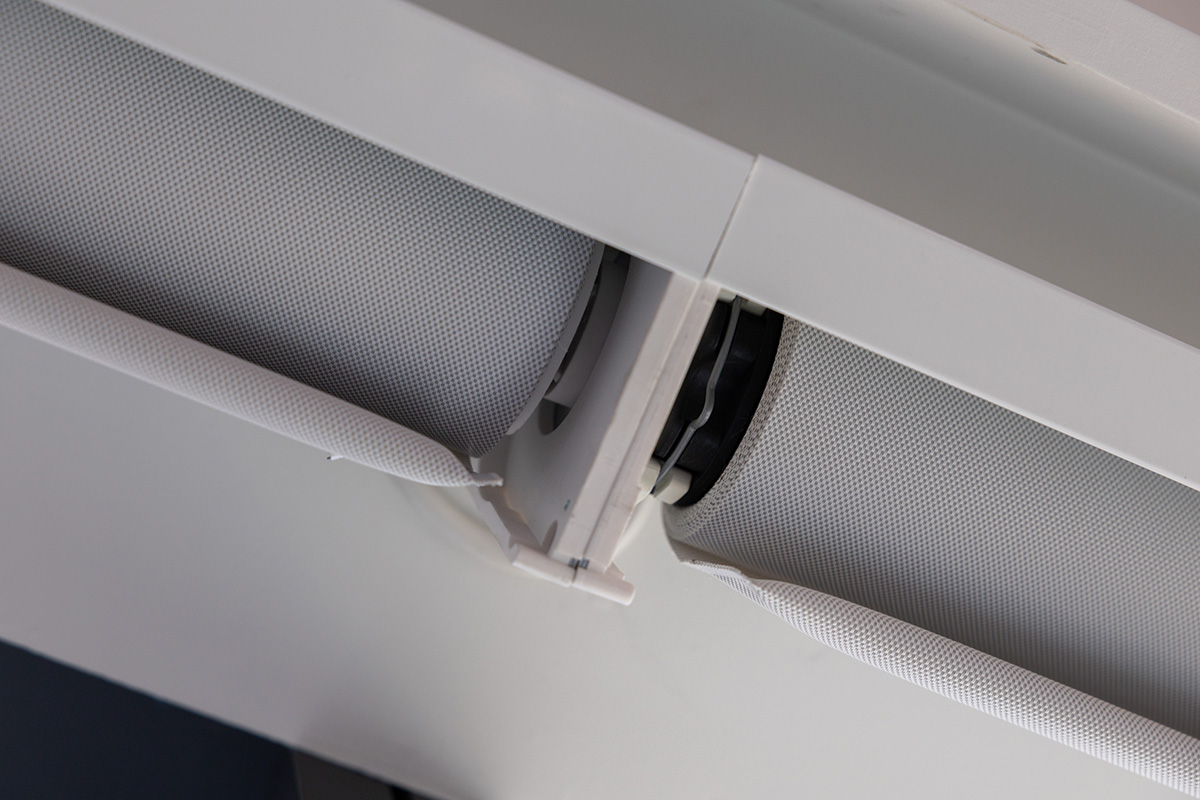
Mounting decisions determine how well shades integrate with ceilings, window frames, and adjacent building systems. Recessed housings create a clean, unobtrusive installation that supports a streamlined ceiling plane—useful in workplaces, healthcare settings, and hospitality interiors where visual clarity and easy maintenance matter.
Exposed brackets or face-mounted systems can emphasize alignment with mullions or other architectural modules. When coordinated carefully, these installations reinforce the project’s underlying geometry and simplify access for service.
Jamb-mounted shades provide a tight, stable fit and minimize gaps at the window edge, improving control of glare and light leakage. This approach often benefits education, civic, and medical projects where durability and predictable operation are priorities.
Each mounting choice affects not only how the system looks, but how it performs. Misaligned brackets, inadequate pockets, or poorly coordinated clearances can lead to uneven rolls, fabric wear, conflicts with sprinklers or lighting, and reduced reliability. Thoughtful detailing ensures that shading systems contribute to both visual coherence and dependable long-term operation.
Designing for Building Types: Light That Serves the Program
Different building types offer different opportunities to shape daylight into a supportive, program-specific asset.
In office environments, ceiling- or recessed-mounted shades maintain uninterrupted lines across long window runs and prevent visual clutter. Automated or sensor-driven systems can be zoned according to facade orientation, allowing morning light, afternoon glare, and seasonal shifts to be managed with consistency. This prevents cognitive fatigue and boosts comfort, especially in hybrid and flexible workspaces where daylight contributes significantly to user satisfaction and energy performance.
In healthcare settings, population well-being becomes the guiding principle. Washable, low-VOC fabrics protect indoor air quality while resisting frequent cleaning. Accessible brackets allow facility staff to maintain or replace components without disturbing patients. Blackout or semi-opaque options deliver privacy and rest while still honoring circadian rhythms. The shading system becomes part of the healing environment—quietly supporting recovery, calm, and dignity.
Educational environments demand reliability and clarity. Ceiling-mounted shades eliminate interference with digital displays, whiteboards, and AV equipment. Daylight- and occupancy-responsive controls reduce teacher intervention and create more equitable learning conditions throughout the day. Students benefit from stable visual comfort, while facilities benefit from reduced energy consumption.
Hospitality spaces rely on emotion, ambience, and brand experience. Coordinated finishes, recessed hardware, and smooth motorized operation allow guests to modulate privacy and light with elegance and ease. Shades become part of the sensory experience of the room, and part of the building’s sustainability strategy as well, contributing to passive cooling and reducing the need for artificial lighting.
Multi-Use, High-Traffic, and Specialty Spaces
High-traffic, multi-use, and specialty environments introduce unique challenges. Auditoriums, open-plan offices, and convention centers require robust, modular hardware that withstands heavy use and allows tension, alignment, and performance to remain consistent across large expanses of glazing. Proper bracket spacing and alignment with window modules preserve both structural integrity and elegant movement.
Maintenance access is equally important. Planning where the motor sits, how the system is reached for service, and how worn parts can be swapped out ensures that future work happens without disturbing the space. When these considerations are addressed early, the system runs more reliably over time, and its lifespan naturally extends, supporting smooth daily operations for the building.
Specialty spaces demand even greater specificity:
- Museums and galleries require fabrics with high UV filtration to protect artworks while still allowing a relationship with natural light.
- Laboratories often need low-VOC, PVC-free, cleanable fabrics that maintain hygiene without introducing reflectivity that distorts visual tasks.
- Broadcast or production studios rely on fabrics tuned to control glare without creating sound-reflective surfaces.
Automation becomes especially valuable here. Linking shades to daylight sensors, occupancy detectors, and building management systems enhances consistency of light quality and supports energy-use strategies without requiring constant manual adjustment.
Real-World Applications: When Light and Architecture Work Together
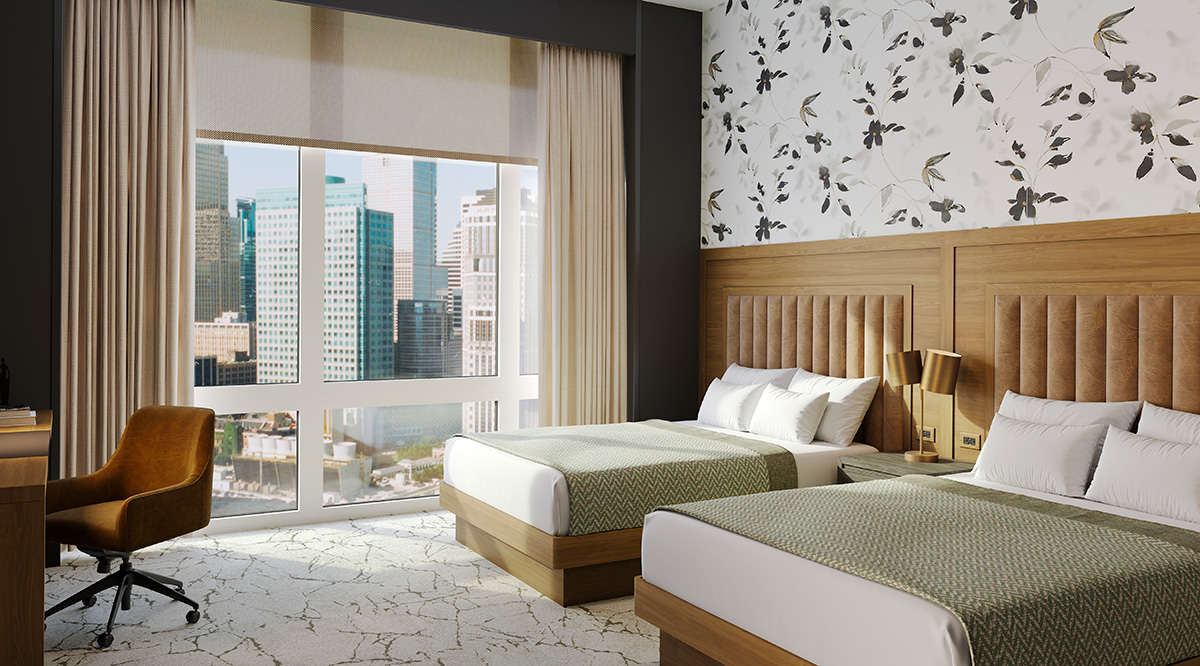
Photo courtesy of Inpro WT
Boutique hotel guestrooms use integrated roller shades to balance daylight and privacy while supporting automated energy management and guest-controlled comfort.
Real-world projects reveal the transformative potential of integrated shading.
- A multi-story office tower used recessed, motorized shades synchronized with the building management system to keep glare low while preserving views. The system reduced cooling loads and unified the rhythm of the interior, allowing the architecture to feel coherent across multiple floors.
- A major hospital renovation employed ceiling-mounted, PVC-free fabrics that balanced privacy with daylight penetration. The shades avoided interference with overhead lighting and HVAC, improved overall indoor air quality, and reduced cleaning burden on staff.
- Educational facilities installed ceiling-mounted, sensor-controlled shades that responded automatically to changing conditions, preventing glare on screens, enabling smoother instruction, and ensuring consistent conditions for students across the school day.
- A boutique hotel integrated recessed motorized shades with the room automation system, allowing the shades to adjust automatically for daylight and energy management while giving guests simple controls to select scenes or override positions for privacy and comfort. This approach provides effortless lighting management, aligns with luxury expectations, and maintains operational efficiency.
These projects demonstrate that early, intentional shading design integrates with the architecture and supports overall building performance, rather than functioning as an afterthought.
Specification as a Design Philosophy
Specification is where intention becomes reality. Fabric selection must reflect a blend of solar performance, glare control, transparency, sustainability credentials, and aesthetic alignment. Mounting choices—face, ceiling, jamb, or recessed—must match both design vision and installation feasibility. Manual versus motorized operation depends on occupancy patterns, accessibility, maintenance cycles, and the building’s long-term energy strategy.
Hardware durability, modularity, and material health matter greatly. Low-VOC, PVC-free components support healthier interiors, while modular construction eases replacement and reduces waste. Integration with daylight, occupancy, and building management systems ensures automated performance that helps buildings operate responsively rather than reactively.
When architects specify shading with intention, they transform roller shades into architectural instruments: quiet, responsive elements that support human comfort and environmental responsibility in equal measure.
The Future of Commercial Shading: Technology, Early Integration, and the ROI
Roller shades are no longer just accessories at the perimeter of a room. They are quickly becoming active components of high-performance building systems.
Shading as an Evolving Performance Technology
While the fundamentals of glare control and daylight modulation remain essential, the next generation of commercial shading is influenced by rapid shifts in technology, material science, and integrated building operations. Architects are increasingly asked to design spaces that not only feel visually balanced but also contribute to lower energy use and improved wellness outcomes. In this context, shading is transforming from a reactive tool to a predictive, data-driven system that helps buildings operate more intelligently.
AI-Driven Automation and Predictive Controls
One of the most promising developments is the rise of intelligent controls that anticipate solar conditions instead of responding to them after discomfort occurs. Advanced systems can track sun angles, outdoor brightness, facade orientation, occupancy, and even cloud cover forecasts to adjust shade positions proactively. The result is smoother transitions, far fewer occupant overrides, and more stable thermal and visual conditions throughout the day.
For architects, this shift means designing for a future in which shading plays a major role in managing electric lighting, HVAC load, and facade performance. Integrating sensors and building management systems early in design can maximize these benefits. Instead of isolated devices, shades become part of a coordinated envelope strategy, one that learns and adapts to the building’s usage patterns over time.
Glass-Shade Integration and High-Performance Facades
As glazing systems advance, shading has become inseparable from facade performance. Electrochromic glass, low-e coatings, and spectrally selective glazing are increasingly paired with interior roller shades to balance visible light, solar heat gain, and occupant comfort. The two work best in combination: glazing provides baseline solar control, while shades offer the fine-tuned modulation of glare and contrast that occupants rely on throughout the day.
This emerging coordination requires architects to think about shades during schematic design, not after the envelope is detailed. Mullion spacing, shade width, pocket depth, and access requirements all influence how cleanly shades integrate into the architectural language. When treated as a facade component, not an interior addendum, roller shades help preserve architectural intent while supporting high-performance outcomes.
The Importance of Early Design Coordination
Many performance and aesthetic issues with shading systems originate from late-stage decisions. Shades added near the end of design often conflict with lighting fixtures, ceiling coves, fire sprinklers, and HVAC diffusers. Late coordination also limits opportunities to conceal housings, align pockets, or standardize components across large facades.
Early-phase integration avoids these pitfalls. During schematic design, the architect can align shade pockets with lighting layout, verify clearance for side channels, coordinate control pathways, and evaluate materials in relation to the project’s energy goals. Early involvement of shade specialists ensures accurate dimensional planning, particularly for large-span windows, unusually shaped openings, or buildings with complex thermal requirements. The benefit is not just smoother installation; it is a more cohesive and intentional architectural expression.
Why Owner Perception and ROI Matter
Designers often need to justify shading decisions to owners who may not initially understand the ROI. Yet the business case for automated roller shades is getting stronger. Smarter shading strategies can reduce peak cooling loads, stabilize interior temperatures, and optimize the performance of LED lighting systems. In deep-plan offices, where workspaces extend far from exterior windows, automation helps maintain a consistent distribution of daylight, lowering reliance on overhead fixtures. Hotel and hospitality environments see additional benefits: shades improve guest comfort, protect furnishings from fading, and create more attractive, glare-free interiors that support premium room rates.
These performance gains translate into measurable operating savings, improved occupant satisfaction, and better leasing performance, especially in Class A office space where daylight, views, and comfort are key differentiators. Viewed over a building’s lifespan, shading is one of the few interior components that contributes directly to operational performance, not just aesthetics.
Toward More Sustainable, Circular, and Flexible Systems
As projects move toward net-zero and low-carbon goals, shading materials and hardware are evolving too. Manufacturers are introducing fabrics with lower embodied carbon, recycled content, and reduced chemical additives. Hardware is becoming lighter and more modular, allowing easier upgrades and component reuse.
Flexible power delivery is another emerging trend. Low-voltage, DC-powered, and Power-over-Ethernet (PoE) shades minimize wiring complexity and support future adaptability. These approaches align with broader trends in electrification and integrated building networks, giving architects new ways to reduce installation impacts and support long-term flexibility.
Conclusion
Roller shades have become integral to high-performance commercial design—far more than accessories at the window line. Throughout this course, we’ve explored how they shape daylight, reduce glare, and stabilize thermal comfort while supporting energy efficiency, code compliance, and occupant well-being. Material advancements such as PVC-free and low-VOC fabrics, durable hardware, and lower-carbon options give architects healthier, longer-lasting choices. Early coordination ensures clean integration with ceilings, facades, and building systems, while intelligent controls and predictive automation extend shading’s impact across lighting, HVAC, and envelope performance. These systems also contribute meaningful operational value, protecting interiors, enhancing user satisfaction, and supporting long-term ROI. As buildings move toward smarter, healthier, and more sustainable futures, well-designed roller shade solutions remain essential tools for creating comfortable, resilient, and visually compelling environments.
Kathy Price-Robinson writes about construction and architecture with a focus on durability and climate resiliency. www.kathyprice.com.