Photo courtesy of Inpro
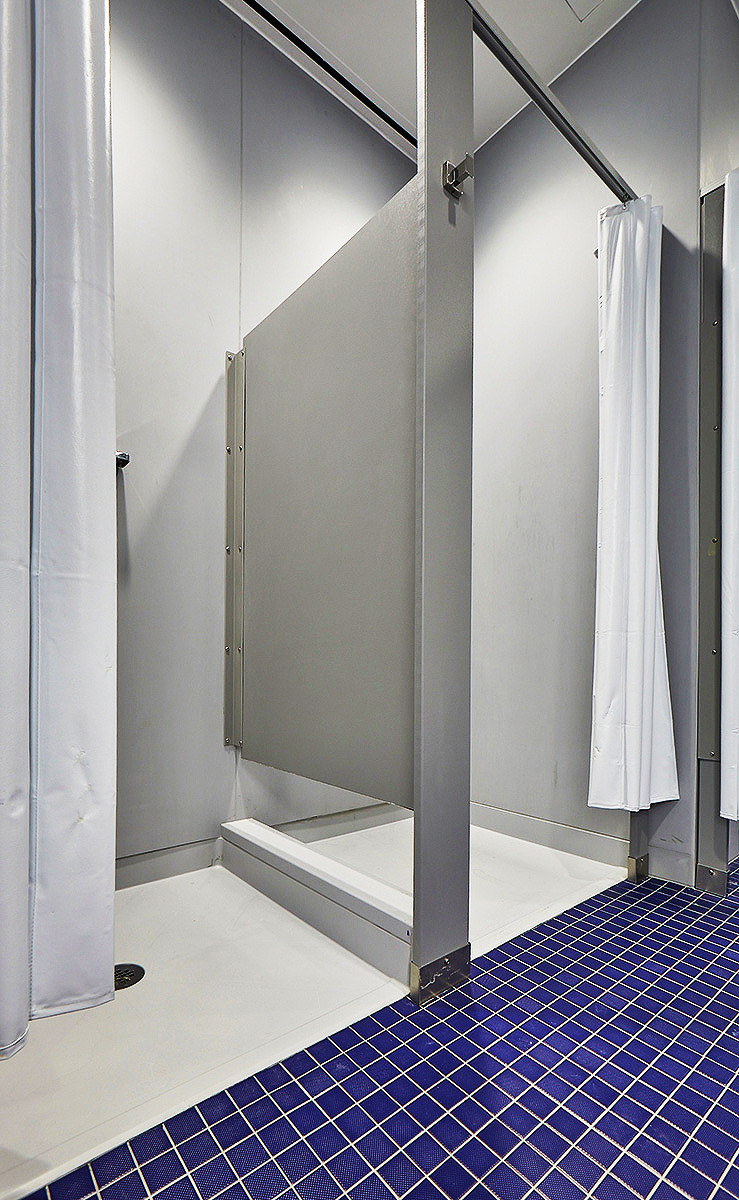
Example of an ADA-compliant shower base at Colby College in Waterville, Maine.
Educational environments are among the most complex building types when it comes to accessibility, serving students, faculty, staff, and visitors. These facilities, especially public institutions, cater to students with a wide range of physical, sensory, and cognitive needs. In K–12 schools and higher education campuses, ADA compliance is not limited to classrooms alone, but extends across corridors, restrooms, dining facilities, residence halls, athletic spaces, and shared common areas. This article explores critical areas where noncompliance often occurs due to overlooked specification and installation details. Readers will gain a clearer understanding of how ADA standards affect design decisions, how ANSI standards relate to federal ADA requirements, and how early coordination and informed product selection can reduce risk while supporting inclusive, functional learning environments.
ACCESSIBILITY: A CORE REQUIREMENT IN EDUCATIONAL DESIGN
ADA compliance is essential to equitable access in educational environments, supporting safety, independence, and full participation for students, faculty, and visitors. In educational facilities, ADA compliance is increasingly being approached through the lens of universal design, which integrates accessibility seamlessly into the overall learning environment rather than treating it as a separate requirement.
It’s worth revisiting the concept of universal design and why it is so effective at helping designers create integrated, accessible, and equitable spaces.
The concept was conceived by architect Ron Mace in the mid-1980s to address the shortcomings of designing for accessibility strictly by adhering to ADA standards. A decade later, Mace led a group of architects, product designers, and engineers to develop seven universal design principles. Universal design can be defined as the design of products and environments to be usable by all people, to the greatest extent possible, without the need for adaption or specialized design. In educational settings, universal design can be applied beyond physical spaces, extending to curriculum, textbooks, webpages, and services that a school provides.
Universal design uses ADA requirements as a starting point. It’s an approach that goes beyond checking a box; instead, designers consider how to integrate accessibility into a broader design that benefits everyone.
Universal design can help those with disabilities feel like they belong, rather than feeling as if a building’s accessibility features are separating them from the rest of the student body and staff. For example, a school may include a wheelchair-accessible ramp that meets ADA requirements but stick it out of the way on the side of a building, where it leads to a separate entrance with an automatic door. A universal design, in contrast, might incorporate a single “no-step” entry with automatic doors that everyone can use. Universal design casts a wide net, considering all manner of disabilities, from those with physical limitations to the vision- and hearing-impaired to neuro-diverse individuals with autism, ADD, or ADHD.
Biophilic design, a design approach that uses building materials and design features to connect occupants with aspects of nature, can be another aspect of universal design that benefits everyone.
For example, views of green spaces and access to natural light have been shown to have positive effects on students, lowering stress, enhancing well-being, and improving academic performance. When working with the right manufacturer, it is easy to incorporate biophilic design into features that support accessibility—signage, for example, or the use of solid surfaces in natural colors and patterns.
Requirements for Educational Institutions
All public school districts, colleges, and universities must comply with Title II of the Americans with Disabilities Act (ADA), which requires state and local governments to provide equal access to programs, services, and activities for people with disabilities. These institutions must also comply with Section 504 of the Rehabilitation Act, which ensures equal access to education for those with disabilities. Private schools that receive federal funding must also comply with Section 504 and with ADA Title III.
Educational institutions face heightened scrutiny when it comes to accessibility. Schools and universities serve a broad cross-section of the population. Those that fall short of ADA requirements may face fines from the Department of Justice and/or lawsuits from citizens. These institutions must stay abreast of the latest changes and make the necessary upgrades to their facilities to stay in compliance.
Requirements cover the full range of a facility, from the exterior approach to parking areas and entries and exits. Inside these buildings, corridors, classrooms, and restrooms must be easy to navigate and not present obstacles or other protruding objects. ADA requirements extend far beyond classrooms and include other common-use areas, including hallways, dining halls, libraries and media centers, cafeterias, auditoriums, play areas, and athletic fields. Dormitories and residence halls have special considerations for accessibility in private rooms, bathrooms, and common areas. For all of these varied spaces, the governing principle is that there must not be barriers that prevent students from participating in activities within them.
Accessibility is not a specialty concern, but a baseline requirement that influences planning, layout, and detailing across all building systems. Importantly, just because a product or design feature is “ADA compliant” doesn’t mean it will remain so through construction or renovation. Installation conditions or errors can take a feature out of compliance, especially if members of the design and construction team are not communicating well. For example, for a shower base to be ADA compliant, the finished floor must be installed within a half inch from the top of the threshold.
An integrated design approach can help prevent these types of issues. It is also critical to consider accessibility alongside other factors such as durability, ease of cleaning, and sustainability. For these reasons, there is growing emphasis on addressing accessibility early in the design process to reduce risk from small specification or installation errors. Manufacturers are also improving ADA-supportive products through clearer documentation, greater installation flexibility, and solutions designed for high-use educational settings. Together, these trends support more inclusive campuses while helping specifiers achieve compliance with greater confidence and fewer field corrections.
COMMON ACCESSIBILITY VIOLATIONS
Accessibility may be required in educational facilities, but that does not mean it is always provided for. A GAO report from 2020 found that two-thirds of U.S. public school districts have schools with physical barriers that may limit access for people with disabilities.
The most common areas with barriers GAO observed were restrooms, interior doorways, and classrooms. The agency also noted barriers related to safety and security. For example, double-door vestibules that were installed to heighten security limited the space wheelchair could maneuver.
Barriers in restrooms were also common, and nearly half the schools they visited did not have signs with braille or other raised characters to identify accessible bathrooms. Fixtures that were mounted too high for those in wheelchairs to access were another common problem.
Other doorway-related barriers included heavy interior doors, doors with hardware such as knobs that require twisting, and missing signage. Barriers in academic spaces, which include classrooms, libraries, and labs, included tight pathways and signs and countertops that were mounted too high. Many auditoriums featured steep ramps or no ramps at all.
In addition to these major issues, there are also several small but critical details that most often lead to accessibility violations. These include clear floor space, reach ranges, mounting heights, protruding objects, and circulation widths. These issues frequently arise during construction or renovation phases, particularly in high-use educational settings where durability and repeated maintenance are factors.
Let’s take a look at some of these common issues and explore strategies designers can use to avoid them.
Signage
The ADA requires that educational institutions provide equal access to programs and facilities. Because conditions in schools, universities, and other facilities change frequently, signage compliance is a continual exercise rather than a “one-and-done” project. In fact, many ADA violations in educational buildings are related to signage that is either missing, incorrect, hard to find, or installed in the wrong locations or at the improper height.
ADA-compliant signs are required in several places, including those that identify permanent rooms. These are interior spaces where the usage of the space—and therefore the sign—is not likely to change. Examples include classrooms, offices, auditoriums, laboratories, cafeterias, restrooms, and many more. ADA-compliant signage is also required at elevators and stairwells, and to designate accessible routes, exits, and parking. Signage at these locations must include the international symbol of accessibility. Finally, ADA compliance is required on informational and directional signage. These include signs that provide general information about a building or portion of a building, and those that provide directions for navigating a space.
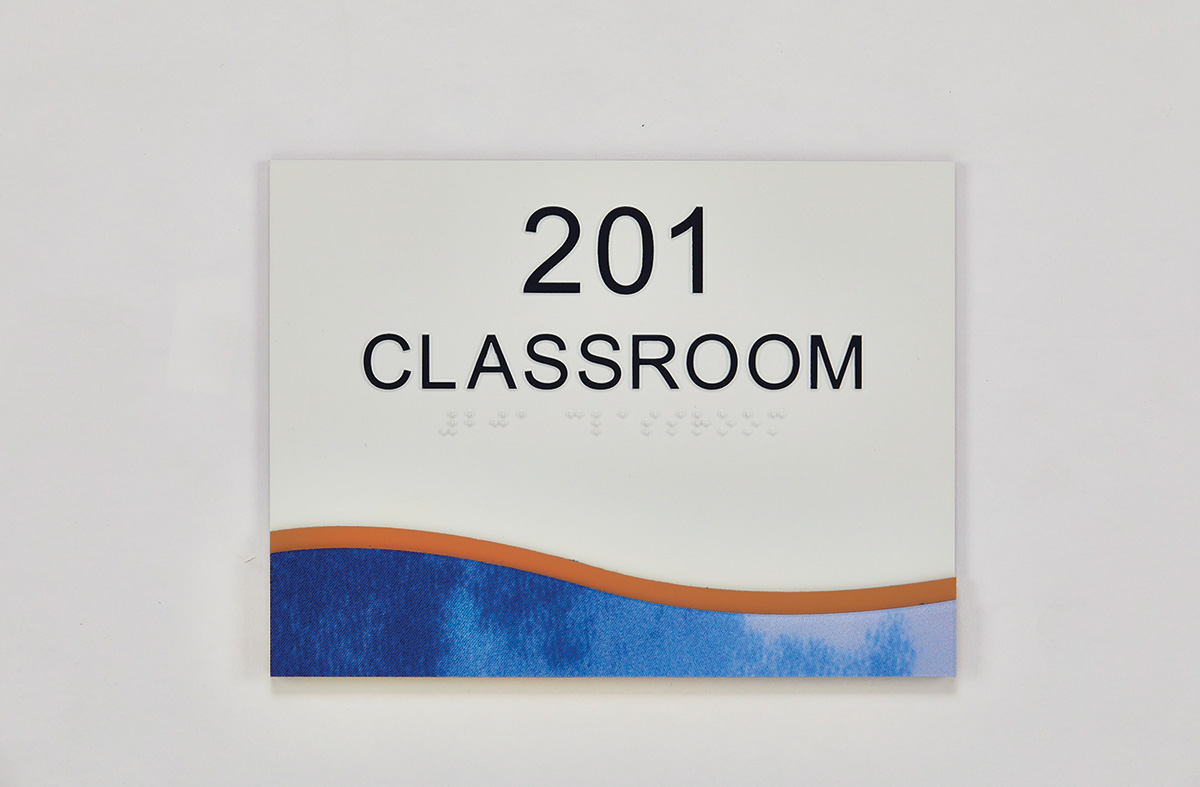
ADA-compliant signs typically have three parts: text, a pictogram, and raised braille. Where both visual and tactile characters are required, the institution can provide either one sign or two separate signs: one with visual characters, one with tactile characters.
The ADA provides strict and specific guidance for the location and installation height of signage, and for the visual and tactile elements in the sign. For example, tactile characters must be located at least 48 inches and no more than 60 inches above the finish floor or ground surface, as measured from the baseline of the highest tactile character.
There are also specific requirements for the location of a tactile sign in relation to the entry door. For example, at a single door, it must be located alongside the door at the latch side. At a double door with one active leaf, the sign must be located on the inactive leaf.
Pictograms must have a minimum “field height” of 6 inches, and characters and/or braille cannot be located in the pictogram field. Pictograms must be accompanied by words describing the pictogram, and the words must be raised (tactile).
Visual characters must be a minimum of 40 inches above the finish floor or ground. There are also specific requirements for the size of visual characters based on the horizontal viewing distance from the sign.
Signage must also include adequate contrast between the text and graphics and the background. This applies whether dark text on a light background or light text on a dark background. A contrast ratio of 70% is recommended. While this guideline certainly helps those who are visually impaired, it also makes viewing and interpreting the sign easier for everyone.
On top of all of these highly specific requirements, signage should complement the school or institution’s overall aesthetic and style. Choosing a manufacturer that specializes in ADA-compliant signage will provide the flexibility and custom options while ensuring compliance. Some manufacturers even provide installation services to ensure that signs are mounted in the right locations and at the proper height.
Photo courtesy of Inpro
Example of an ADA-compliant shower base at Colby College in Waterville, Maine.
Educational environments are among the most complex building types when it comes to accessibility, serving students, faculty, staff, and visitors. These facilities, especially public institutions, cater to students with a wide range of physical, sensory, and cognitive needs. In K–12 schools and higher education campuses, ADA compliance is not limited to classrooms alone, but extends across corridors, restrooms, dining facilities, residence halls, athletic spaces, and shared common areas. This article explores critical areas where noncompliance often occurs due to overlooked specification and installation details. Readers will gain a clearer understanding of how ADA standards affect design decisions, how ANSI standards relate to federal ADA requirements, and how early coordination and informed product selection can reduce risk while supporting inclusive, functional learning environments.
ACCESSIBILITY: A CORE REQUIREMENT IN EDUCATIONAL DESIGN
ADA compliance is essential to equitable access in educational environments, supporting safety, independence, and full participation for students, faculty, and visitors. In educational facilities, ADA compliance is increasingly being approached through the lens of universal design, which integrates accessibility seamlessly into the overall learning environment rather than treating it as a separate requirement.
It’s worth revisiting the concept of universal design and why it is so effective at helping designers create integrated, accessible, and equitable spaces.
The concept was conceived by architect Ron Mace in the mid-1980s to address the shortcomings of designing for accessibility strictly by adhering to ADA standards. A decade later, Mace led a group of architects, product designers, and engineers to develop seven universal design principles. Universal design can be defined as the design of products and environments to be usable by all people, to the greatest extent possible, without the need for adaption or specialized design. In educational settings, universal design can be applied beyond physical spaces, extending to curriculum, textbooks, webpages, and services that a school provides.
Universal design uses ADA requirements as a starting point. It’s an approach that goes beyond checking a box; instead, designers consider how to integrate accessibility into a broader design that benefits everyone.
Universal design can help those with disabilities feel like they belong, rather than feeling as if a building’s accessibility features are separating them from the rest of the student body and staff. For example, a school may include a wheelchair-accessible ramp that meets ADA requirements but stick it out of the way on the side of a building, where it leads to a separate entrance with an automatic door. A universal design, in contrast, might incorporate a single “no-step” entry with automatic doors that everyone can use. Universal design casts a wide net, considering all manner of disabilities, from those with physical limitations to the vision- and hearing-impaired to neuro-diverse individuals with autism, ADD, or ADHD.
Biophilic design, a design approach that uses building materials and design features to connect occupants with aspects of nature, can be another aspect of universal design that benefits everyone.
For example, views of green spaces and access to natural light have been shown to have positive effects on students, lowering stress, enhancing well-being, and improving academic performance. When working with the right manufacturer, it is easy to incorporate biophilic design into features that support accessibility—signage, for example, or the use of solid surfaces in natural colors and patterns.
Requirements for Educational Institutions
All public school districts, colleges, and universities must comply with Title II of the Americans with Disabilities Act (ADA), which requires state and local governments to provide equal access to programs, services, and activities for people with disabilities. These institutions must also comply with Section 504 of the Rehabilitation Act, which ensures equal access to education for those with disabilities. Private schools that receive federal funding must also comply with Section 504 and with ADA Title III.
Educational institutions face heightened scrutiny when it comes to accessibility. Schools and universities serve a broad cross-section of the population. Those that fall short of ADA requirements may face fines from the Department of Justice and/or lawsuits from citizens. These institutions must stay abreast of the latest changes and make the necessary upgrades to their facilities to stay in compliance.
Requirements cover the full range of a facility, from the exterior approach to parking areas and entries and exits. Inside these buildings, corridors, classrooms, and restrooms must be easy to navigate and not present obstacles or other protruding objects. ADA requirements extend far beyond classrooms and include other common-use areas, including hallways, dining halls, libraries and media centers, cafeterias, auditoriums, play areas, and athletic fields. Dormitories and residence halls have special considerations for accessibility in private rooms, bathrooms, and common areas. For all of these varied spaces, the governing principle is that there must not be barriers that prevent students from participating in activities within them.
Accessibility is not a specialty concern, but a baseline requirement that influences planning, layout, and detailing across all building systems. Importantly, just because a product or design feature is “ADA compliant” doesn’t mean it will remain so through construction or renovation. Installation conditions or errors can take a feature out of compliance, especially if members of the design and construction team are not communicating well. For example, for a shower base to be ADA compliant, the finished floor must be installed within a half inch from the top of the threshold.
An integrated design approach can help prevent these types of issues. It is also critical to consider accessibility alongside other factors such as durability, ease of cleaning, and sustainability. For these reasons, there is growing emphasis on addressing accessibility early in the design process to reduce risk from small specification or installation errors. Manufacturers are also improving ADA-supportive products through clearer documentation, greater installation flexibility, and solutions designed for high-use educational settings. Together, these trends support more inclusive campuses while helping specifiers achieve compliance with greater confidence and fewer field corrections.
COMMON ACCESSIBILITY VIOLATIONS
Accessibility may be required in educational facilities, but that does not mean it is always provided for. A GAO report from 2020 found that two-thirds of U.S. public school districts have schools with physical barriers that may limit access for people with disabilities.
The most common areas with barriers GAO observed were restrooms, interior doorways, and classrooms. The agency also noted barriers related to safety and security. For example, double-door vestibules that were installed to heighten security limited the space wheelchair could maneuver.
Barriers in restrooms were also common, and nearly half the schools they visited did not have signs with braille or other raised characters to identify accessible bathrooms. Fixtures that were mounted too high for those in wheelchairs to access were another common problem.
Other doorway-related barriers included heavy interior doors, doors with hardware such as knobs that require twisting, and missing signage. Barriers in academic spaces, which include classrooms, libraries, and labs, included tight pathways and signs and countertops that were mounted too high. Many auditoriums featured steep ramps or no ramps at all.
In addition to these major issues, there are also several small but critical details that most often lead to accessibility violations. These include clear floor space, reach ranges, mounting heights, protruding objects, and circulation widths. These issues frequently arise during construction or renovation phases, particularly in high-use educational settings where durability and repeated maintenance are factors.
Let’s take a look at some of these common issues and explore strategies designers can use to avoid them.
Signage
The ADA requires that educational institutions provide equal access to programs and facilities. Because conditions in schools, universities, and other facilities change frequently, signage compliance is a continual exercise rather than a “one-and-done” project. In fact, many ADA violations in educational buildings are related to signage that is either missing, incorrect, hard to find, or installed in the wrong locations or at the improper height.
ADA-compliant signs are required in several places, including those that identify permanent rooms. These are interior spaces where the usage of the space—and therefore the sign—is not likely to change. Examples include classrooms, offices, auditoriums, laboratories, cafeterias, restrooms, and many more. ADA-compliant signage is also required at elevators and stairwells, and to designate accessible routes, exits, and parking. Signage at these locations must include the international symbol of accessibility. Finally, ADA compliance is required on informational and directional signage. These include signs that provide general information about a building or portion of a building, and those that provide directions for navigating a space.
ADA-compliant signs typically have three parts: text, a pictogram, and raised braille. Where both visual and tactile characters are required, the institution can provide either one sign or two separate signs: one with visual characters, one with tactile characters.
The ADA provides strict and specific guidance for the location and installation height of signage, and for the visual and tactile elements in the sign. For example, tactile characters must be located at least 48 inches and no more than 60 inches above the finish floor or ground surface, as measured from the baseline of the highest tactile character.
There are also specific requirements for the location of a tactile sign in relation to the entry door. For example, at a single door, it must be located alongside the door at the latch side. At a double door with one active leaf, the sign must be located on the inactive leaf.
Pictograms must have a minimum “field height” of 6 inches, and characters and/or braille cannot be located in the pictogram field. Pictograms must be accompanied by words describing the pictogram, and the words must be raised (tactile).
Visual characters must be a minimum of 40 inches above the finish floor or ground. There are also specific requirements for the size of visual characters based on the horizontal viewing distance from the sign.
Signage must also include adequate contrast between the text and graphics and the background. This applies whether dark text on a light background or light text on a dark background. A contrast ratio of 70% is recommended. While this guideline certainly helps those who are visually impaired, it also makes viewing and interpreting the sign easier for everyone.
On top of all of these highly specific requirements, signage should complement the school or institution’s overall aesthetic and style. Choosing a manufacturer that specializes in ADA-compliant signage will provide the flexibility and custom options while ensuring compliance. Some manufacturers even provide installation services to ensure that signs are mounted in the right locations and at the proper height.
ADA-Compliant Showers
The ADA lays out clear guidelines regarding the dimensions and configuration of showering facilities for those with disabilities. While this guidance is straightforward enough, conditions in the field often aren’t. Source: www.Inprocorp.com/your-guide-to-ADA-compliant-showers/
Many educational buildings include bathing facilities, whether a dormitory or a school with locker rooms. In general, bathing facilities must include at least one accessible shower. Be sure to check with the code in the project’s jurisdiction to ensure compliance.
There are three main types of accessible showers. Transfer-type showers allow a wheelchair user to transfer their body from the wheelchair to a seat in the shower, using grab bars if necessary. The dimensions for transfer showers are 36” by 36”. These dimensions are measured from the centerline of opposing walls, since prefabricated units often have rounded corners and slightly tapered walls to get the form off the mold. There are very specific requirements governing the size of the entryway, clear floor space, location and dimensions of the seat, and the sizes and locations of the grab bars. Importantly, ANSI requires a vertical grab bar in addition to the horizontal grab bars required by the ADA.
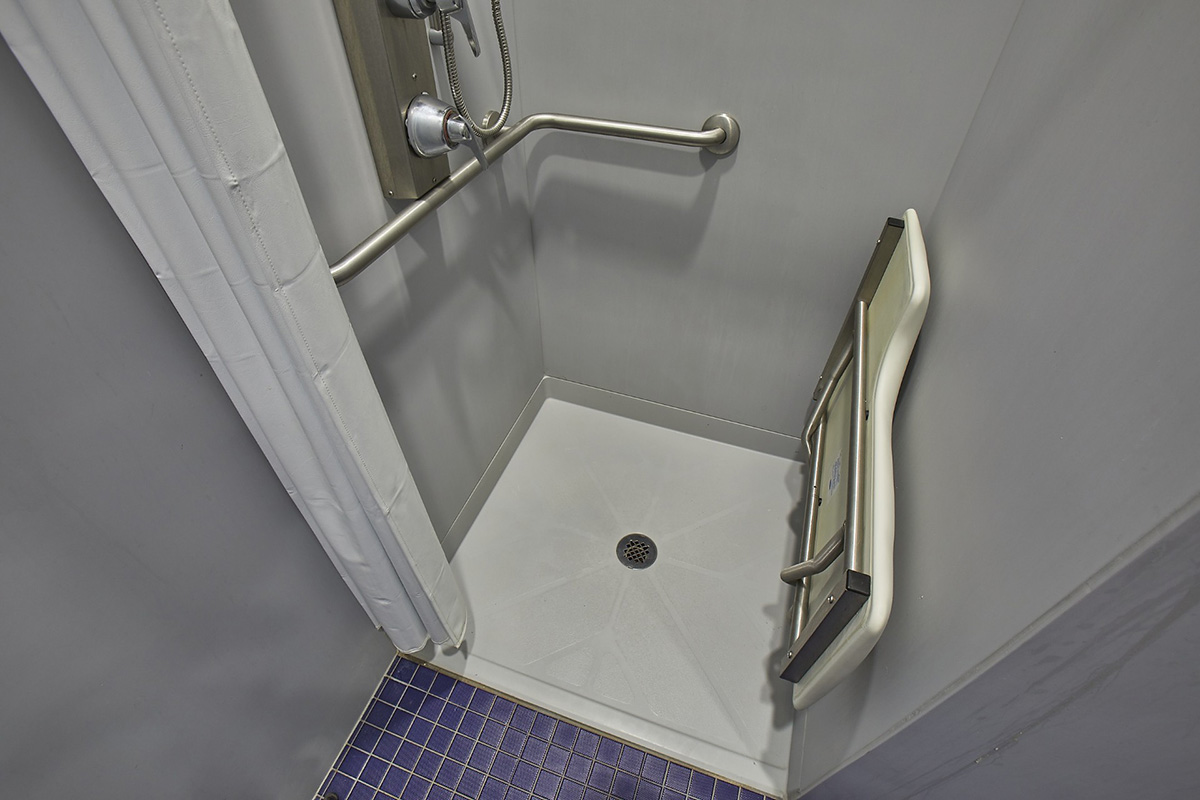
Photo courtesy of Inpro
As shown, a transfer shower enables a wheelchair user to safely transfer their body from the chair to a seat inside the shower.
As the name implies, roll-in showers allow a wheelchair user to roll their chair inside the shower without transferring their body from the wheelchair to a seat. These showers measure 60 inches wide by 30 inches deep, which is wide enough to comfortably accommodate a wheelchair. Importantly, ANSI standards require a folding seat in all roll-in type showers. Even if it is not required, including a folding seat in a roll-in shower is recommended, as it allows for a transfer option, thereby making the shower accessible to more users.
Wheelchair users must not encounter any barriers when entering the shower. Therefore, ADA requires a curbless entry. The distance between the bathroom floor and the shower floor cannot exceed one-half inch. The threshold may be rounded, beveled, or vertical, but the vertical rise cannot exceed 0.25 inches, and the bevel may not be steeper than 1:2.
Alternate roll-in showers are similar to the roll-in showers, but the front wall is partially enclosed, allowing for a folding seat to be mounted inside. These showers measure 60 Inches wide by 36 Inches deep, with a minimum 36” entry. Like roll-in showers, these showers must be curbless, and the threshold may not exceed one-half inch.
Some of the dimensions for accessible showers are absolute, not minimum. For example, transfer showers must measure 36” by 36”. This is because the back wall of a transfer shower should be available for support once a user has transferred to the seat.
The dimensions also ensure that controls and grab bars are within reach.
The height of the threshold in relation to the surrounding finish flooring is another critical dimension, and it absolutely cannot exceed one-half inch. Manufactured shower bases with a thin but strong floor make compliance easier. These shower bases can be installed on grade, and the finished floor floated to within one-half inch of the top of the threshold.
Because of the specificity of the requirements, manufactured ADA showers are ideal for ensuring compliance. Some manufacturers provide documents and videos that guide installations, and some provide installation services.
Whichever option you choose, try to design for the greatest flexibility and greatest benefit to the most people. For example, ADA requires accessible showers and bathtubs to include a hand-held shower spray unit that can also be used in a fixed position. Specifying an adjustable-height shower head provides the most flexibility, as it allows anyone to use the shower, whether disabled or not.
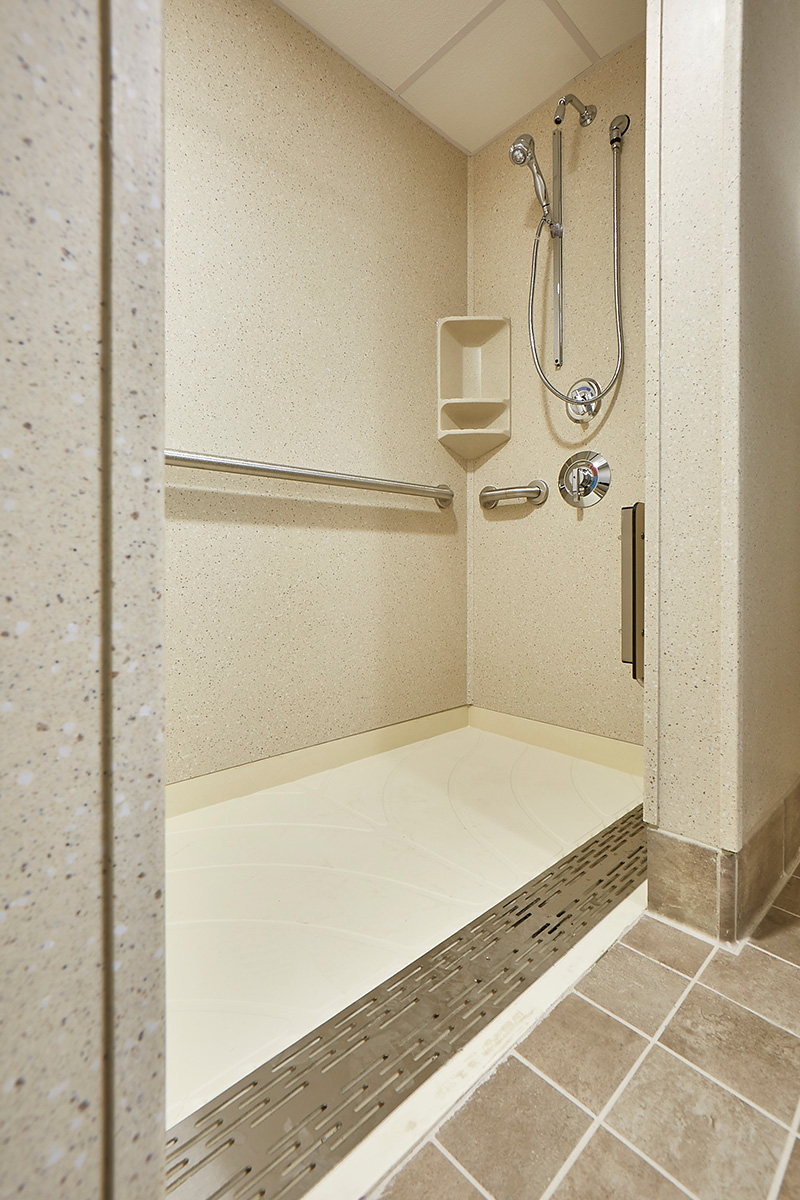
Photo courtesy of Inpro
An accessible shower in the renovated at Earhart Hall at Purdue University features a molded shower base with easy-to-clean solid surface walls and trim.
Handrails
Handrails are an important element in accessible schools and campuses. Handrails allow people to safely navigate up and down stairs and along ramps, and although they are especially important for people with disabilities, they benefit a wide range of users.
Generally, there are two different types. Surface-mounted handrails are anchored directly into the ground at both the top and bottom of the staircase, providing a sturdy and reliable solution. An example would be handrails alongside stairs leading to the building’s entry. Wall-mounted handrails are typically used in building interiors, in stairwells, hallways, and even in some classrooms that include raised platforms.
Handrails are required in certain locations, including stairwells and walking surfaces with a running slope greater than 5 percent, or 1:20—in other words, a ramp. In general, handrails used in level hallways don’t have to comply with ADA specifications.
As with many other accessible features, mounting requirements for handrails are very specific. Handrails must be continuous, running the full length of each stair flight and ramp run. ADA requires handrails to be installed between 34 inches and 38 inches from the walking surface to the top of the gripping surface. The minimum space between the gripping surface and the wall or adjacent surface is 1.5 inches. There are also specifications for the diameter of handrails and the nature of the gripping surface. For example, gripping surfaces cannot be obstructed along their tops or sides. Those with disabilities benefit from continuous gripping surfaces, as they allow the user to grasp the handrail and prevent a fall.
Note that the height requirements for handrails are relevant for adult users. In elementary schools and other institutions where young children are regularly present, a second, lower handrail is essential. It should be installed at a maximum height of 28 inches, with at least 9 inches between the bottom and top handrails to prevent entrapment.
Handrails’ use can be hard on wall surfaces, but handrails can be paired with durable wall protection for a total solution that is both durable and ADA-compliant, and that matches the aesthetics of the building. Working with an experienced manufacturer that specializes in accessible products can help ensure a cohesive aesthetic and a compliant design. Some manufacturers will even provide an installation team so that handrails are properly located.
ADA AND ANSI ACCESSIBILITY STANDARDS
While for the most part accessibility requirements are aligned and applicable to any educational facility in the United States, it’s important to understand the difference between governing laws and standards.
The ADA is a federal civil rights law enforced by the U.S. Department of Justice (DOJ). First enacted in 1990, the law prohibits discrimination against people with disabilities. It is relevant to many areas of life, from employment and access to government services to transportation, public buildings, and communications.
The law was revised in 2010, when the DOJ adopted Titles II and III. Title II covers requirements for state and local governments and protects people with disabilities from discrimination in government-sponsored services, programs, and activities. Notably, Title II applies whether or not the state or local government receives federal funding. Title II is applicable to all public schools and educational institutions.
Title III prohibits discrimination against those with disabilities in activities within “places of public accommodation.” These include businesses that are typically open to the public and fall under one of 12 categories listed in the ADA. They include restaurants, movie theaters, schools, day care facilities, recreation facilities, and doctors’ offices. In addition, new construction and renovations to places of public accommodation and commercial buildings must comply with ADA standards. Title III is applicable to private educational institutions.
Notably, Title III requires “architectural barriers” to be removed in existing buildings of businesses. These are physical features that prevent movement or access for people with disabilities—stairs, for example, are an architectural barrier for wheelchair users if no ramp is available.
ICC A117.1-2017: Accessible And Usable Buildings And Facilities is an American National Standard more commonly known as ANSI A117. It is published by the International Code Council and is compatible with the International Building Code.
ANSI standards are intended for adoption by government agencies and entities that develop model codes. They provide comprehensive criteria for making sites, facilities, buildings, and other elements accessible to people with disabilities.
Here’s where it gets confusing. ADA is a law, and its requirements are legally enforceable nationwide. ANSI standards are typically adopted (and sometimes modified) at the state or local level. While ADA Standards often reference ANSI technical criteria, project teams cannot assume that meeting ANSI standards guarantees ADA compliance, or that meeting ADA standards satisfies building code in the project’s jurisdiction. It’s imperative to understand all accessibility requirements before the project begins, and to coordinate with all members of the project team. There are several instances where the ANSI guidelines are different or more stringent than ADA standards. Let’s look at some common examples.
Clear floor space: Also called ground space, clear floor space is required at each “accessible element”—for example, at drinking fountains, lavatories and sinks, appliances, beds, and fire extinguisher stations, to name but a few. The ADA requires a clear floor space of 30” x 48” for each element, but spaces can overlap if the elements are close together—a drinking fountain near a fire extinguisher, for example. If the feature includes space below where a wheelchair user can maneuver their feet and/or knees, then the object can overlap the clear floor space area. ANSI requirements used to follow ADA requirements, but in the 2017 version, the length of the clear floor space increased from 48” to 52”.
Turning radius: A wheelchair user must be able to turn their chair at least 180 degrees and navigate a space without bumping into a wall, fixture, or other obstruction. ADA guidelines require a minimum 60”-diameter circular turning space, or turning radius. ANSI standards are more stringent and require a minimum 67” turning radius. This requirement changed in 2017 to reflect the proliferation of larger, more powerful wheelchairs, and it applies to new buildings and facilities. Existing facilities can provide a 60” turning radius and still comply with ANSI.
Vertical grab bars: Both the ADA and ANSI standards require horizontal grab bars at water closets, transfer shower stalls, and tubs. ANSI also requires a vertical grab bar that is a minimum of 18” long mounted along the side wall at these same locations. There are strict guidelines for the placement of this bar:
- The bottom of the bar should be located between 39” and 41” above the floor.
- The center line of the bar should be located between 39” and 41” from the rear wall.
Remember that these standards represent the minimum requirement. A universal design approach may result in a design that exceeds these requirements to better accommodate all users of a building.
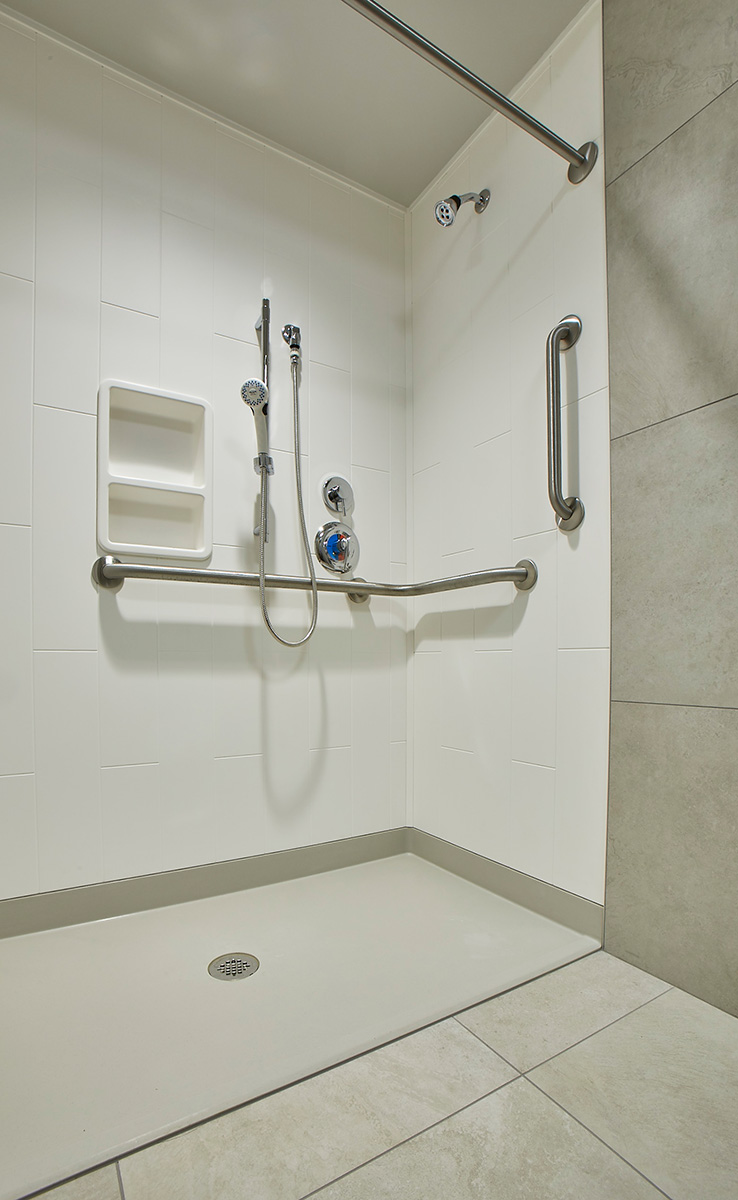
Photo courtesy of Inpro
ANSI standards require accessible showers to include a vertical grab bar in addition to the horizontal grab bars that are also required by the ADA.
THE BENEFITS OF COORDINATED DESIGN
Accessibility goals can be best achieved through early design coordination and informed specification practices. Addressing ADA and code requirements during schematic design rather than treating them as late-stage checks can help avoid expensive changes and enable a more cohesive, integrated design. Coordination between design teams, facility managers, and manufacturers can help prevent field conflicts.
Coordinated design can also help teams attain multiple and complementary goals. These goals may include durability, ease of maintenance, sustainability, and the creation of flexible spaces that support holistic health and well-being for all building occupants.
Early coordination facilitates the seamless integration of accessibility into broader campus design goals. For example, signage is an important part of wayfinding. One common approach is to identify different floors or areas with a designated color or color palette and graphic theme.
ADA-compliant signage can be designed with these colors and graphics, which are also carried over into other wayfinding features on walls and flooring. This approach is a good example of universal design, as it uses several different ways to help people find their way through a building or campus. Let’s look at some other examples where accessibility is considered together with other goals and challenges.
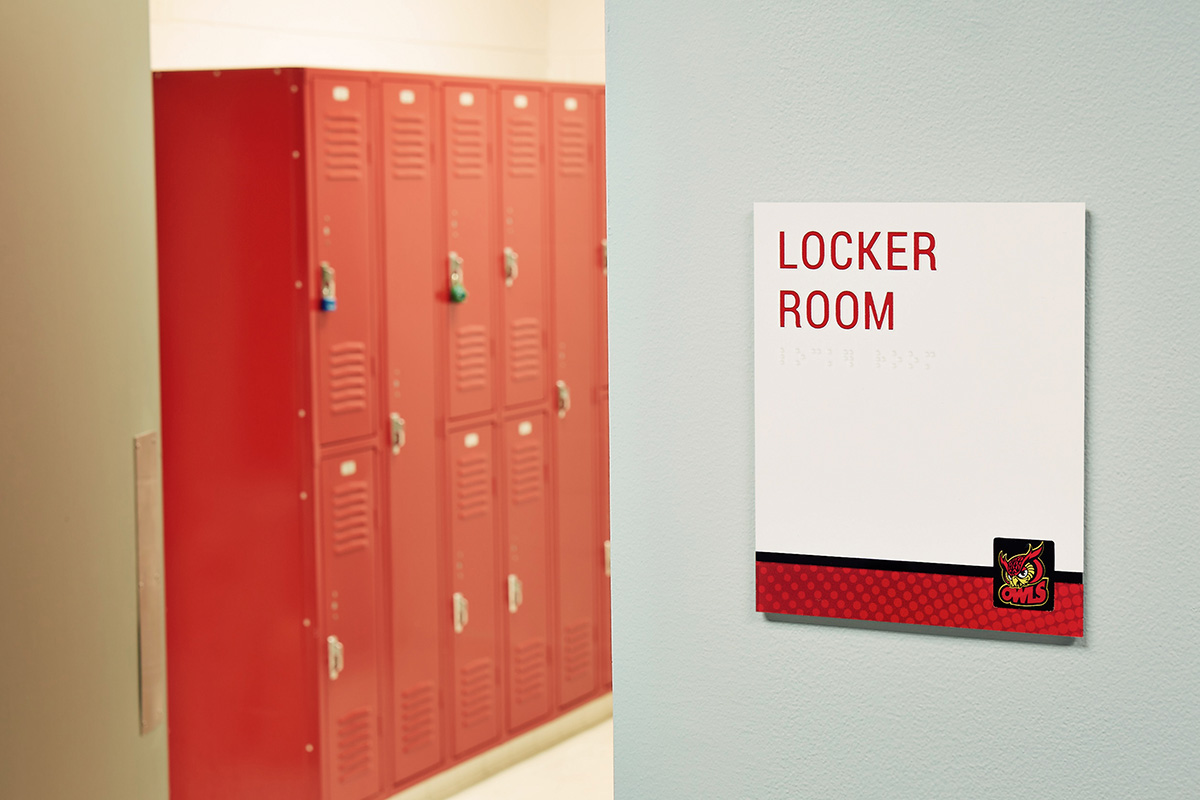
Photo courtesy of Inpro
With raised Braille and good contrast between the clear red text and the white background, the signage at this locker room meets accessibility requirements while integrating the school’s colors and mascot.
Durable solutions: Schools, dormitories, and other educational facilities are high-traffic environments. Certain areas, including restrooms, hallways, and dorm rooms, see constant use. Hundreds of students may enter and leave a classroom every day. Wheelchairs frequently bump or graze against walls.
Sound material choices can help ensure the health and long-term durability of these spaces. Solid surface is a good example of a versatile material that can be used in a number of features, from shower bases and partition walls to wall protection. The smooth, non-porous surface doesn’t harbor germs, and it is stain-resistant and easy to clean, both everyday grime and more stubborn impacts such as graffiti and scuff marks.
Flexible learning spaces: Educational institutions are under intense pressure to make the most of their facilities. Renovations and additions are expensive; at the same time, students and their families increasingly expect schools and universities to provide environments that are truly accessible and accommodate different abilities and learning styles.
Flexible spaces accommodate different types of activities, from individual study to group projects. They can be easily adapted for more than one function, relying on movable furnishings and fixtures—and even walls—that can be easily reconfigured.
As an example, a new addition at the Friendship Learning Center in North Fond Du Lac, Wisconsin, features flexible spaces for students in pre-K through 5th grade. Called “The World of Friendship,” the project includes movable glass walls that allow classroom pods to be converted into larger “learning lands” that are named after continents. Printed wall protection is used to designate these spaces: first graders are in Australia, second graders are in South America, third graders are in Asia, fourth graders are in North America, and fifth graders are in Europe.
Interior architectural signage meets ADA requirements and complements the learning spaces with similar colors and graphics. Biophilic elements, such as the wooden stairs, are also part of the design.
Wellness-focused environments: A biophilic design approach can aid in creating such environments by introducing elements of nature into finishes and furnishings. Biophilic design elements include natural patterns, colors, and textures; live plants, and images of gardens, plant life, animals, and the like. Wellness-focused spaces use natural lighting whenever possible, and finishes and furnishings are selected with the health and well-being of occupants in mind. Such materials do not emit harmful chemicals, including volatile organic compounds (VOCs), and may be certified by independent labels such as GREENGUARD.
It’s easy to see how sustainability goals can dovetail with the creation of wellness-focused environments. Daylighting can save on lighting costs, and non-toxic materials are better for the environment, just as they are better for occupants.
Renovations are an excellent time to upgrade facilities for ADA compliance while integrating other design goals like sustainability, durability, and wellness. A renovation of 1930s-era dormitories for the Corps of Cadets at Texas A&M University illustrates how these spaces can be modernized with consideration for privacy, safety, and health. The restrooms feature standard and custom molded shower bases, along with walls, trim, partitions, and shower caddies made from solid surface material. All of these elements are durable, easy to clean, and non-porous. Solid surface is Class A fire-rated and may be certified by GREENGUARD as a low-emitting material. Each standard shower includes a solid surface door for privacy, while the ADA-compliant shower utilizes a curtain.
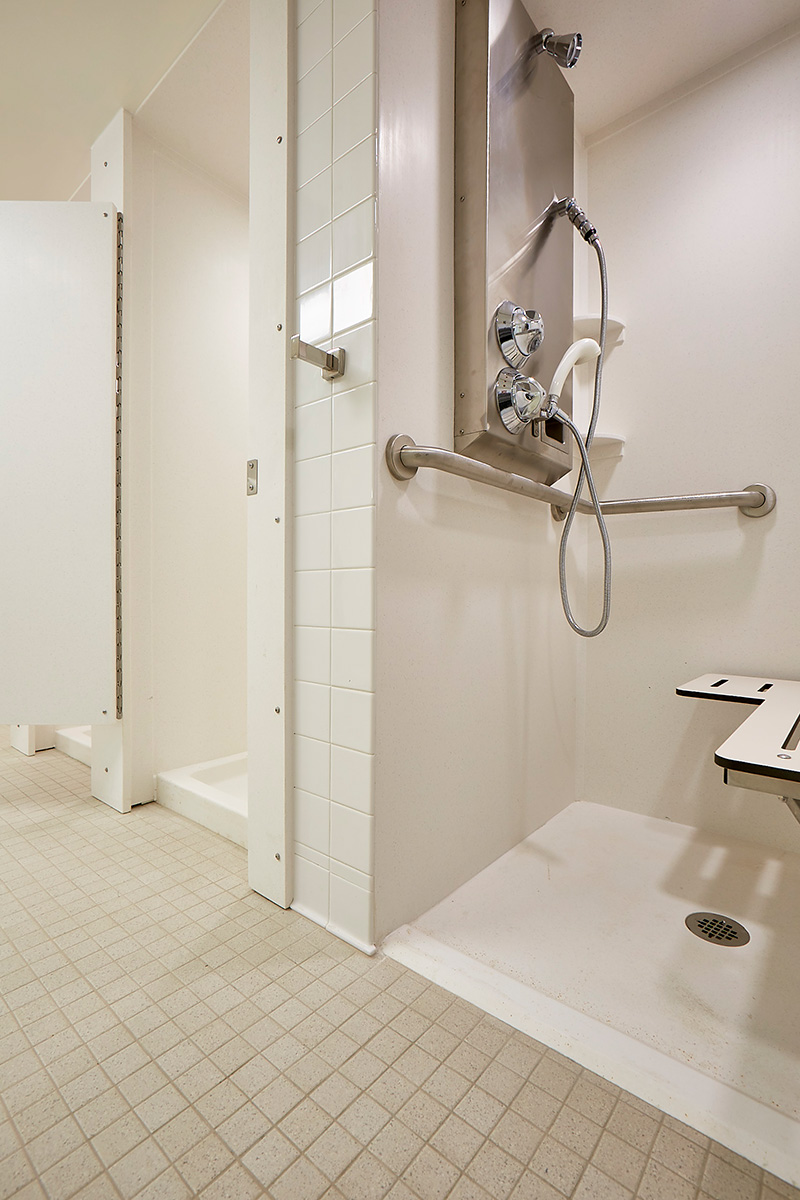
Photo courtesy of Inpro
Washrooms at a renovated Corps of Cadets dormitory at Texas A&M University feature extensive use of solid surface products, including a molded shower base for this accessible shower.
Conclusion
Ensuring accessibility in educational facilities is crucial, as these institutions welcome a broad range of students, staff, and visitors. Accessibility requirements are very specific, and a compliant product can become non-compliant if not properly installed. Working with an experienced manufacturer that specializes in accessible solutions can go a long way to mitigating these issues. An integrated and universal design approach can help ensure a cohesive, compliant design that benefits everyone.
Andrew A. Hunt is Vice President of Confluence Communications and specializes in writing, design, and production of articles and presentations related to sustainable design in the built environment. In addition to instructional design, writing, and project management, Andrew is an accomplished musician and voice-over actor, providing score and narration for both the entertainment and education arenas. www.confluencec.com https://www.linkedin.com/in/andrew-a-hunt-91b747/