Photo courtesy of Goldbrecht LLC
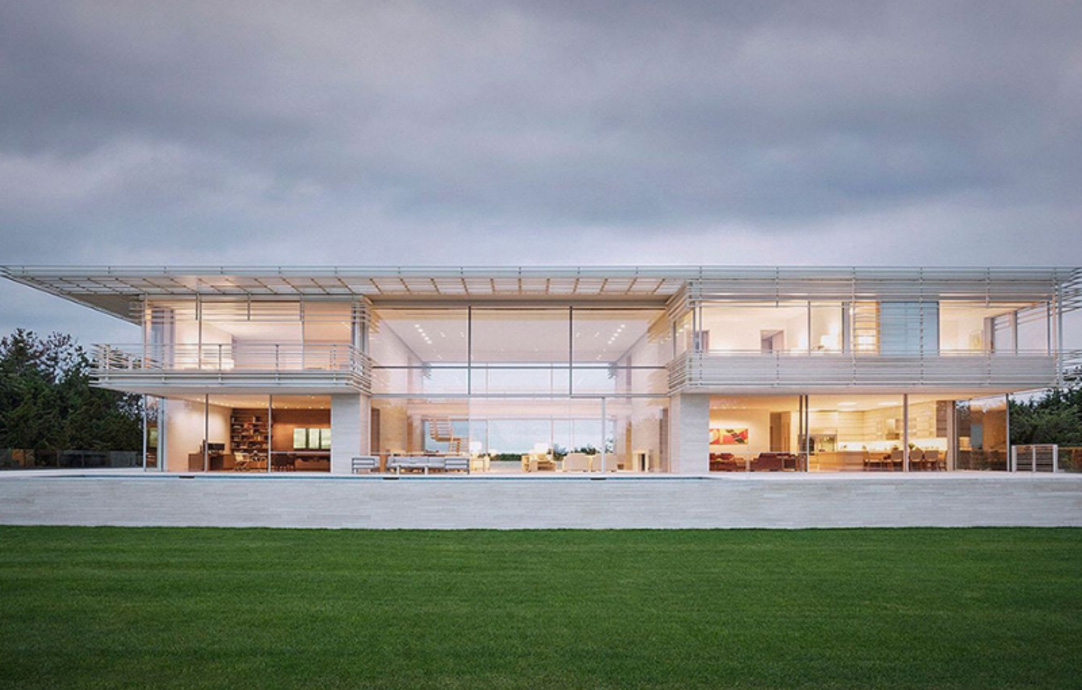
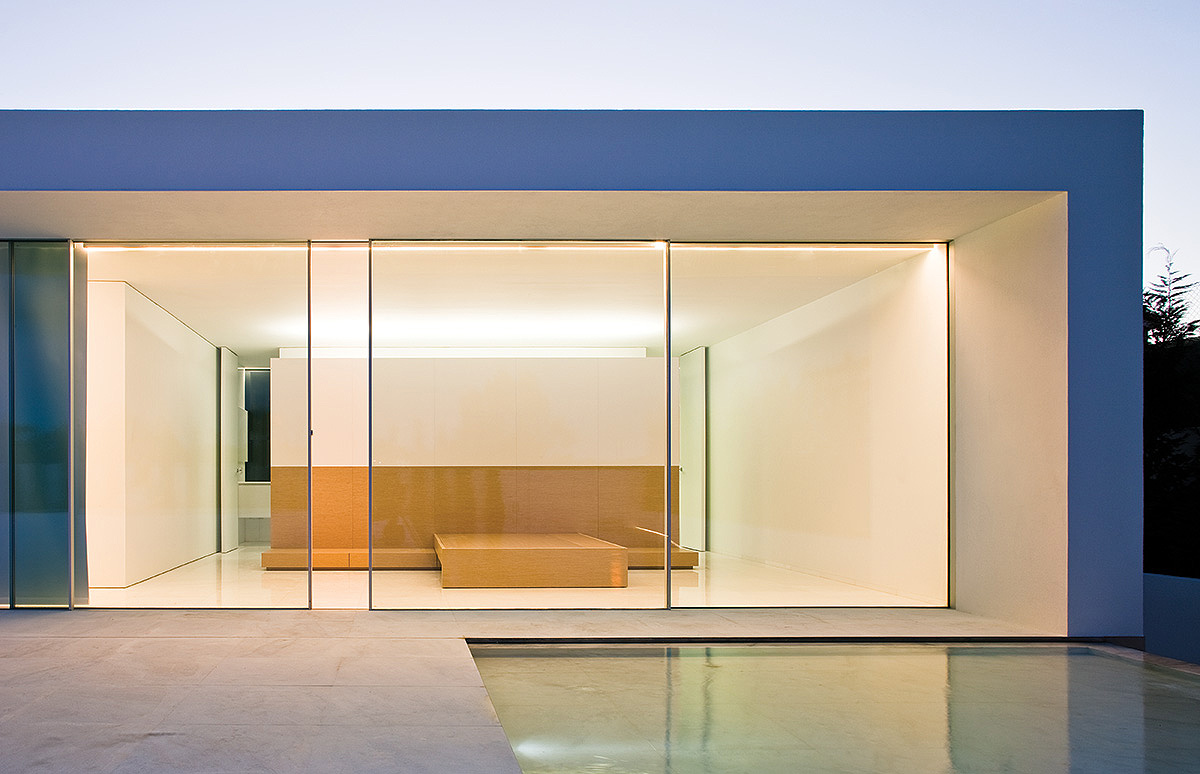
Sliding glass walls at the Atrium House.
This course explores the evolution of structurally glazed slim-line window systems, from their inception through the many iterations that have refined both the engineering and performance of the systems. The concept of treating glass as a primary structural material rather than a secondary infill and the related architectural explorations will be explored in depth. Through historical context, material science, and design application, participants will gain a deeper understanding of how reassigning structural responsibility from frame to glass enables ultra-minimal profiles, large spans, and enhanced spatial continuity. A discussion of sustainability, resiliency, and cost effectiveness is included. Case studies of projects conclude the discussion, which demonstrate how the range of slim line window and door systems is used today.
Slim Line Glazing Systems – Overview
Architects have explored innovative ways to connect interior space to the exterior environment through uninterrupted expanses of glass since the inception of modern architecture over 100 years ago. This design goal of making the building enclosure selectively disappear continues today and builds on the work of the original pioneers of modernism. This article will outline how, in the last 30 years, a new product category has emerged—slim line glazing systems—that meets and exceeds the challenge of the invisible wall in an unprecedented and elegant manner. These systems are not to be confused with what is known in Europe as slimline glazing, which is a glass product with limited depth to fit into window frames that emulate historic single-glazed windows.
Historical context for this innovation adds value and perspective to what has become available today. Notable early modernists Le Corbusier, Mies Van Der Rohe, and, later, Richard Neutra and Pierre Koenig all made meaningful contributions to the design lineage of the continuous horizontal glass window and wall.
Arguably, the first modern expression of the design opportunity provided by horizontal window and wall openings is included in Le Corbusier’s Five Points of Architecture, published in 1926—exactly 100 years ago. The inclusion of the continuous ribbon window that is free from the structure as one of only five defining elements of modern architecture initiated this search for making the wall evaporate, flooding the interior with light, and better connecting with the outdoors.
Mies Van Der Rohe’s contributions include the furtherance of the use of glass walls, including operable elements. The Tugendhat house in Brno, in the Czech Republic, featured large floor-to-ceiling windows to capture views of a neighboring castle. Two of these large windows could be lowered into the floor below, eliminating the separation of interior and exterior entirely. Another notable example by Mies is the Farnsworth House near Chicago, which has a completely glass facade that fully blurs the boundary between inside and outside, connecting this country retreat to its natural surroundings.
Richard Neutra’s Kaufman Desert House, built in 1946, represents the maturation of the concept of the disappearing wall with large sliding panels. The corner of the building opens entirely and connects the interior with the adjacent pool and garden, with views of the San Jacinto mountains. The broad overhangs that keep much of the glass in shadow further render the glass invisible, connecting the interior and exterior when the panels are open or closed.
Pierre Koenig, an architect who was influenced by Richard Neutra, designed two mid-century houses that employed industrial construction techniques. They were part of a program by Arts and Architecture magazine to showcase experimental, affordable, and efficient housing types. Koenig’s case study houses #21 & #22 both featured steel framing and large expanses of fixed and sliding glass, early precursors of the minimal glazing approach that continues to evolve today.
The desire for this architectural approach of an invisible wall and space flowing between the interior and exterior is firmly established in the first 100 years of modern architecture. It is free of the structural mullion but is limited by:
- The available size of glass panels,
- The width and depth of frame materials that reduce sightlines and
- The poor thermal and acoustic performance of single glazing.
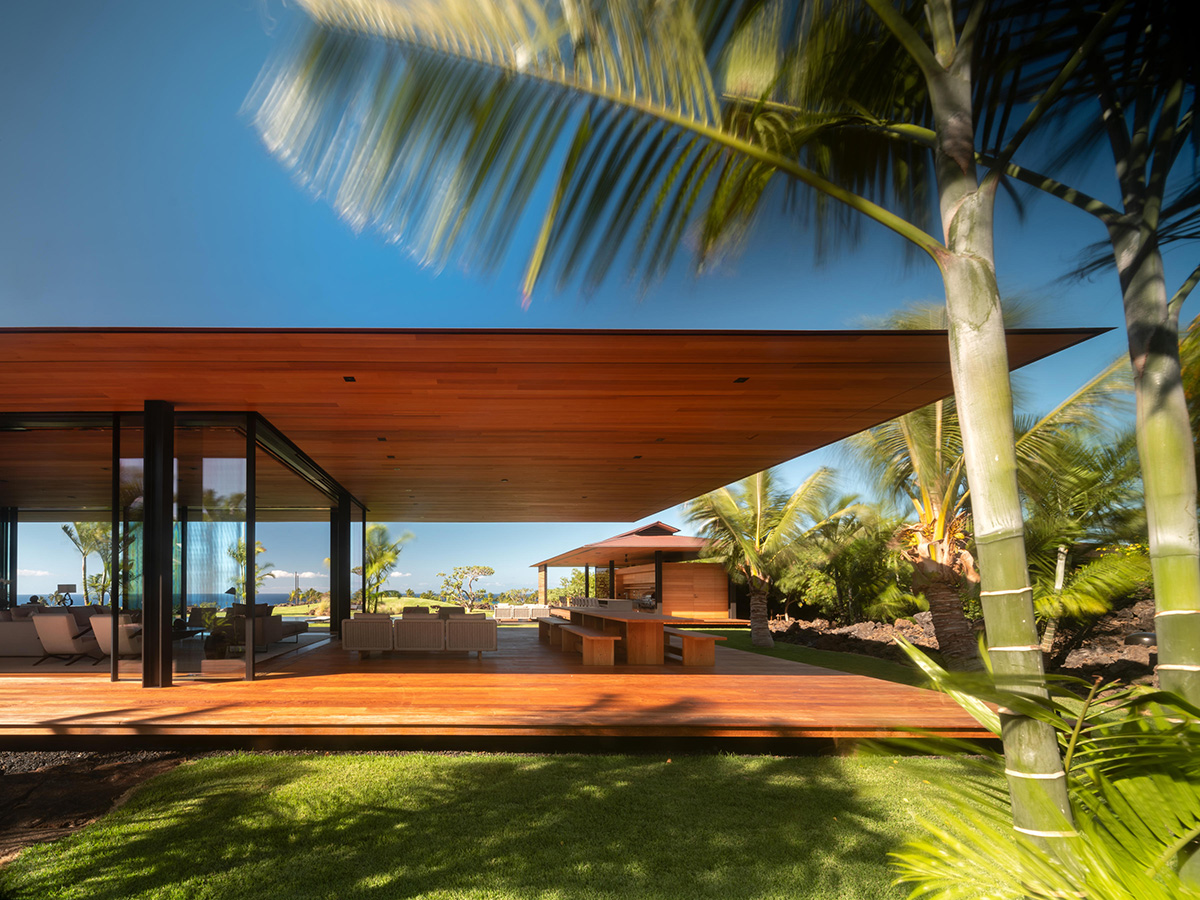
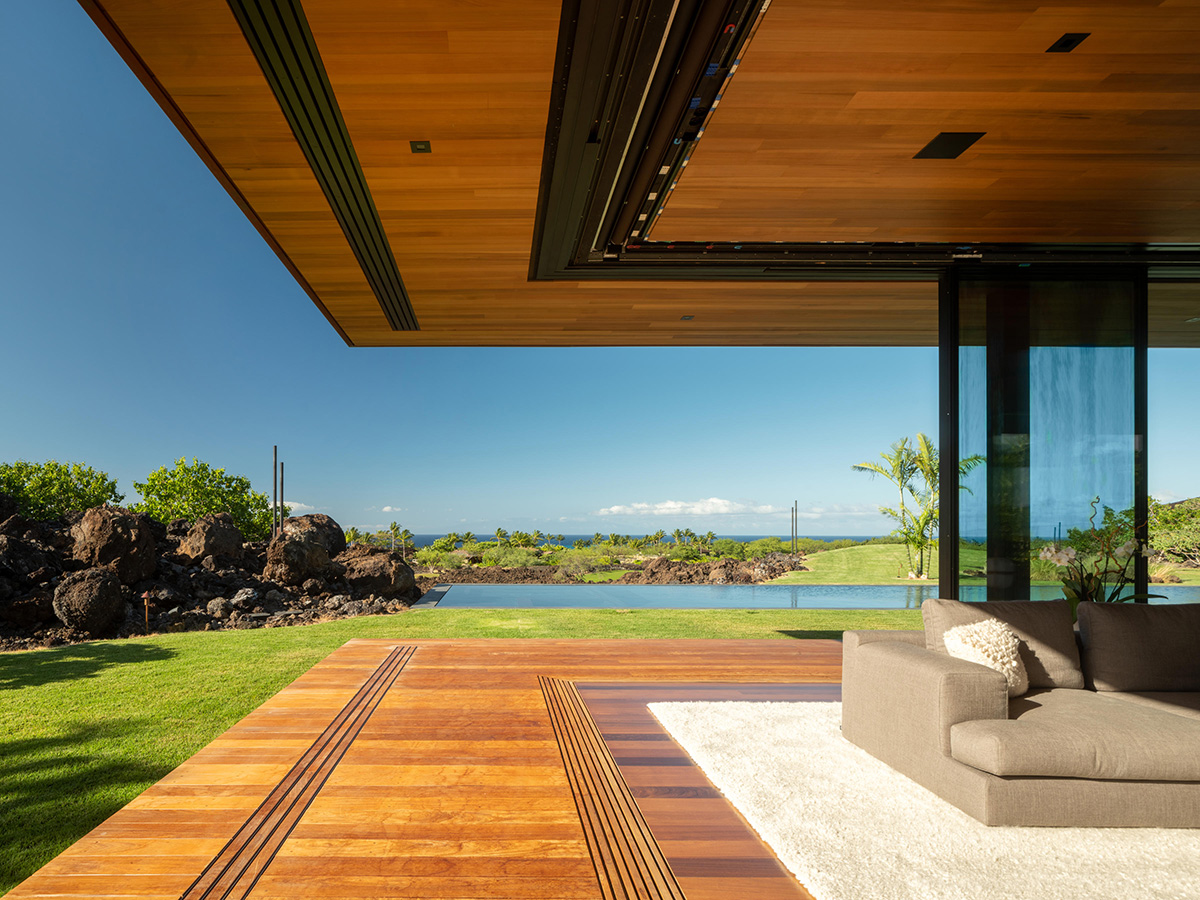
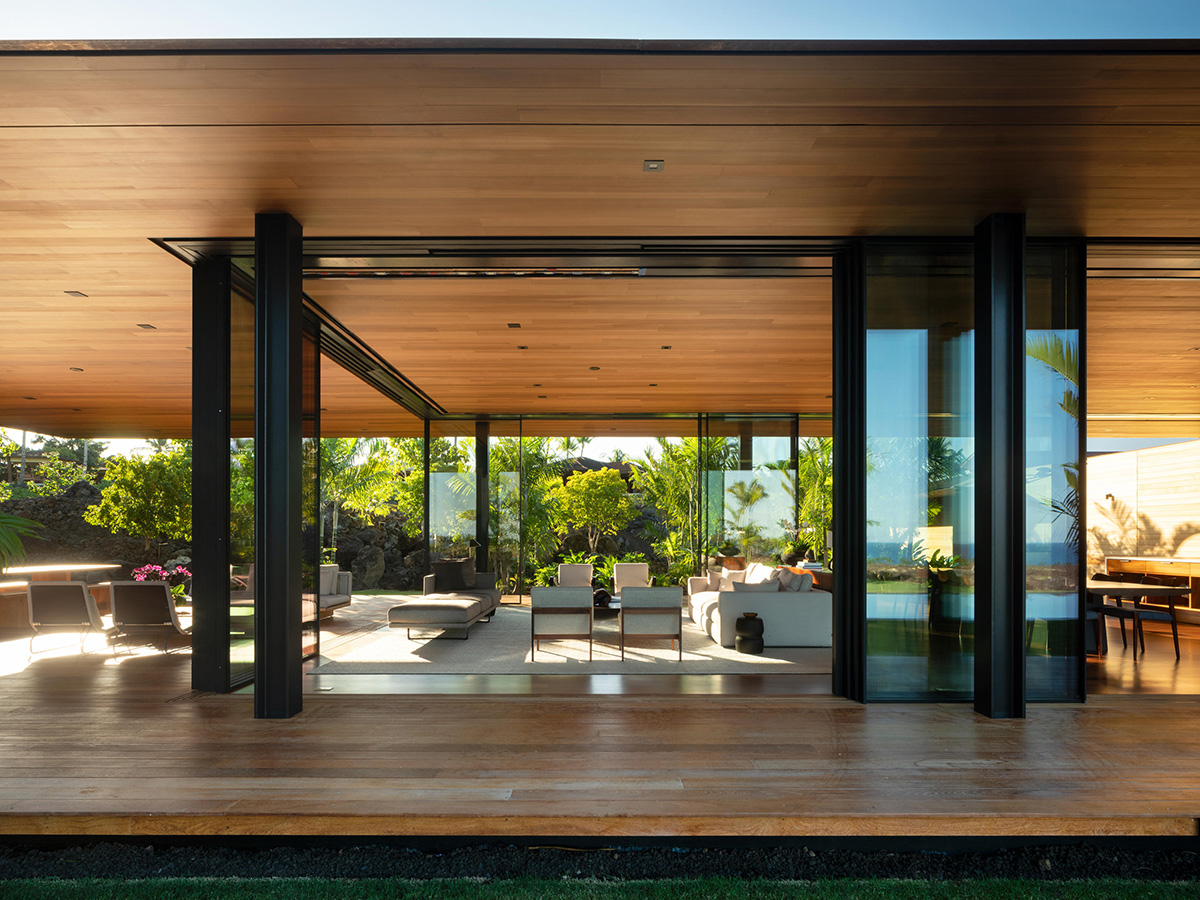
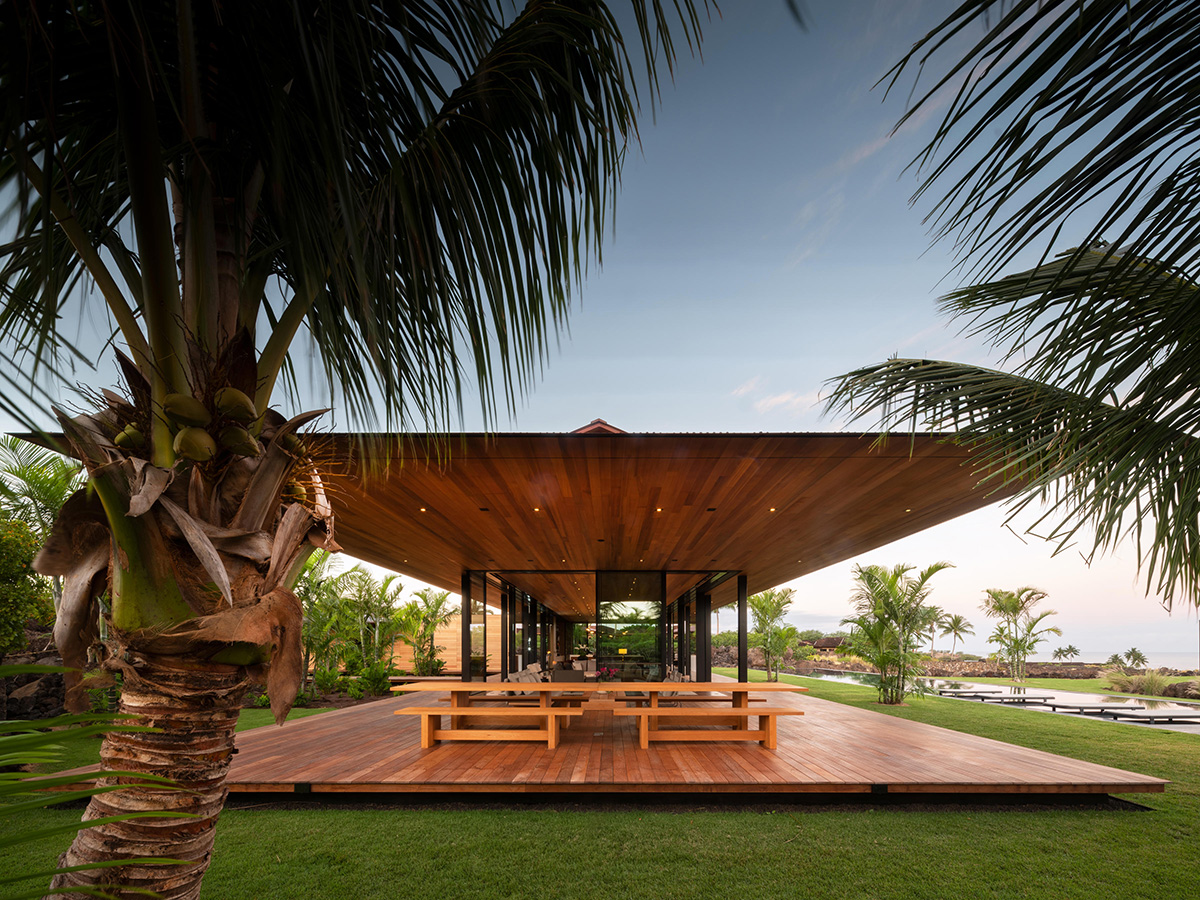
Slim line glazing systems present solutions to all of these shortcomings. Case studies of recent projects that employ slim line glazing are included after the conclusion of this article. These include a stunning Hawaiian residence by Olson Kundig Architects, whose portfolio has continued the legacy of opening buildings to nature. Products typically tend to evolve incrementally with gradual, often unnoticeable changes in the numerous iterations that lead to what is available today. Slim line glazing systems, however, represent a complete paradigm shift from earlier window and door systems.
While traditionally the frame supported the glass, these systems use the glass as structure with the frame demoted to a minimal edge treatment and hardware interface. With the ability to recess the operable hardware into the floor and ceiling assembly, the wall seems truly invisible. Slim line glazing systems were made possible by advancements in glass manufacturing that allowed panels to be larger, stronger, and more energy efficient.
Structural glazing is made possible by innovations in the production of glass that have significantly improved its overall strength. This technology has been available for years, but was not widely available until the late 1970’s and 1980’s. The processes include a range of post-processing methods that use heating and cooling to improve the structural properties of float glass panels of various thicknesses. With improved strengths and the uniform appearance of float glass, structural glazing emerged in a variety of configurations. Most configurations still relied on the glass transferring lateral loads to the window or door frame, or, in the case of fixed glass, directly to the building structure. The combination of the change from plate glass to float glass and tempering results in glass that is four to five times stronger than the early sliding glass and fixed glass used by early modern architects.
Slim line systems routinely utilize insulated glass units that are 1-1/4” and 1-3/4” thick, allowing for more robust thicknesses of the layers of glass. This results in significant improvements to the strength of the glazing. Even thicker IG units are available if required by the structural requirements.
Manufacturing technology has also matured, with a number of producers now able to deliver large units. Size is limited by the machinery that produces the glass, and currently, single pieces as large as 10-6” x 35’-0” are available.
The thermal and acoustic performance of glass has also been improved dramatically. The thicker assemblies of slim line systems also allow for triple glazing with improved structural and thermal properties. Special coatings on single and insulated glass units have been available for many years, but were not widely deployed in the architectural glass market until the late 1970’s.
The primary change that improved energy efficiency is the family of low-emissivity, or low-E, coatings that could be used on single and double-glazed units. A byproduct of the major energy crisis of the 1970s, these high-performance coatings soon became commonplace in both commercial and residential glazing. These coatings improve both the solar heat gain coefficient (SHGC) and the insulating properties (U-value). The actual values will depend on the specific glass and coatings that are used, but both factors are at least twice as good as those for clear float glass.
In addition to the special coatings, the gas used in the cavity can also contribute to the performance of the system. Argon and Krypton are the gases most commonly used, and both have a significant effect, with Krypton slightly better than Argon. Given their increased density when compared to air, they resist convection and conduction of energy in the glass cavity. A triple-glazed assembly of low-E glass with 95 percent Krypton in the cavities can have an overall U value of 0.10, which is exceptional, resulting in an interior glass surface temperature of 64 degrees when the outside glass surface temperature is 0 degrees (calculations done in accordance with NFRC standards. Figures from National Glass Association technical paper FB49-17 (2022)).
The use of laminated glass in architectural applications has also gained popularity in approximately the same time frame. First used in the airline and automotive industry, it is now available as part of insulated glass units. The interlayer is typically a polymer made of polyvinyl butyral (PVB) or ethylene–vinyl acetate (EVA). Again, the specific assembly must be known to identify the in-place effectiveness of noise reduction, but in general, the addition of the interlayer will make the Sound Transmission Coefficient (STC) rating double what it would have been without the laminated component. Laminated glass is also a safety and security benefit as it stays in place when broken.
So, with the availability of large sheets of glass with strength improved four to five times and energy and acoustic performance at least doubled, the door opened to the opportunity for slim line glazing systems. Starting in the early 1990s, slim line windows were developed in Switzerland by Erik Joray, who later founded the company Vitrocsa. With a background in prefabricated homes, watchmaking, and designing and building greenhouses, he soon developed a number of patents that gave birth to this innovative approach to architectural glazing.
Slim line glazing continues to gain popularity and is available in fixed glazing and a range of operable configurations. It has been specified by some of the world’s leading Architects in projects all around the globe.
Slim Line Glazing Performance Characteristics
The defining features of these systems are the absence of a bulky frame or track system. Systems are available with a variety of glazing, including typical 1” IG units and thicker double, triple, and bonded units to meet the structural, energy, and acoustic requirements for each application. Operable systems are available in horizontal sliding, pivoting, vertical sliding, outswing, turnable corner, and as a retracting wall.
Slim line systems can be built to unusually large-sized applications, typically determined by the availability of glass size. Imported low-E glass is typically available up to 26’ x 10’-6”. The architects and builders for the new Apple headquarters in Cupertino, California, were able to procure single pieces of glass that are 47 feet long. These high-profile projects are breaking through prior limitations with new and better manufacturing equipment that will benefit other projects in the future.
Leading systems are rated for hurricane impact with 1.75” IG units. A 12’ tall panel that is 4’-6” wide was tested with ratings as follows:
- 70 psf/165 mph for sliding/fixed in double/triple track.
- 80 psf/177 mph for singular fixed windows.
Given that units are typically tempered, they are naturally resistant to heat stress. If not fully tempered, some level of heat treatment is recommended to resist heat stress.
The expected useful life of structural glazing is reported to be 50 years, and traditional aluminum windows are listed at 30 years. Given that these systems only became available 30 years ago, it is too early to make a definitive evaluation on the actual useful life, but it would seem to align with the 50-year mark assigned to structural glazing. Given the high quality and precision manufacturing associated with minimally edge-framed systems, it would not be unusual that their expected useful life exceeds 50 years. As mentioned earlier, the acoustic performance of slim line systems is improved by specifying laminated glass or triple glazing. Laminated glass uses a PVB interlayer, which significantly improves the NRC and STC ratings.
Designing with Slim Line Glazing Systems
Slim line Glazing Systems have many applications and can be included in all types of residential, institutional, and commercial projects where a minimal aesthetic is desirable. The most prevalent use to date is in high-end modern residential projects, and the most often used type is for sliding doors to provide the effect of an invisible wall.
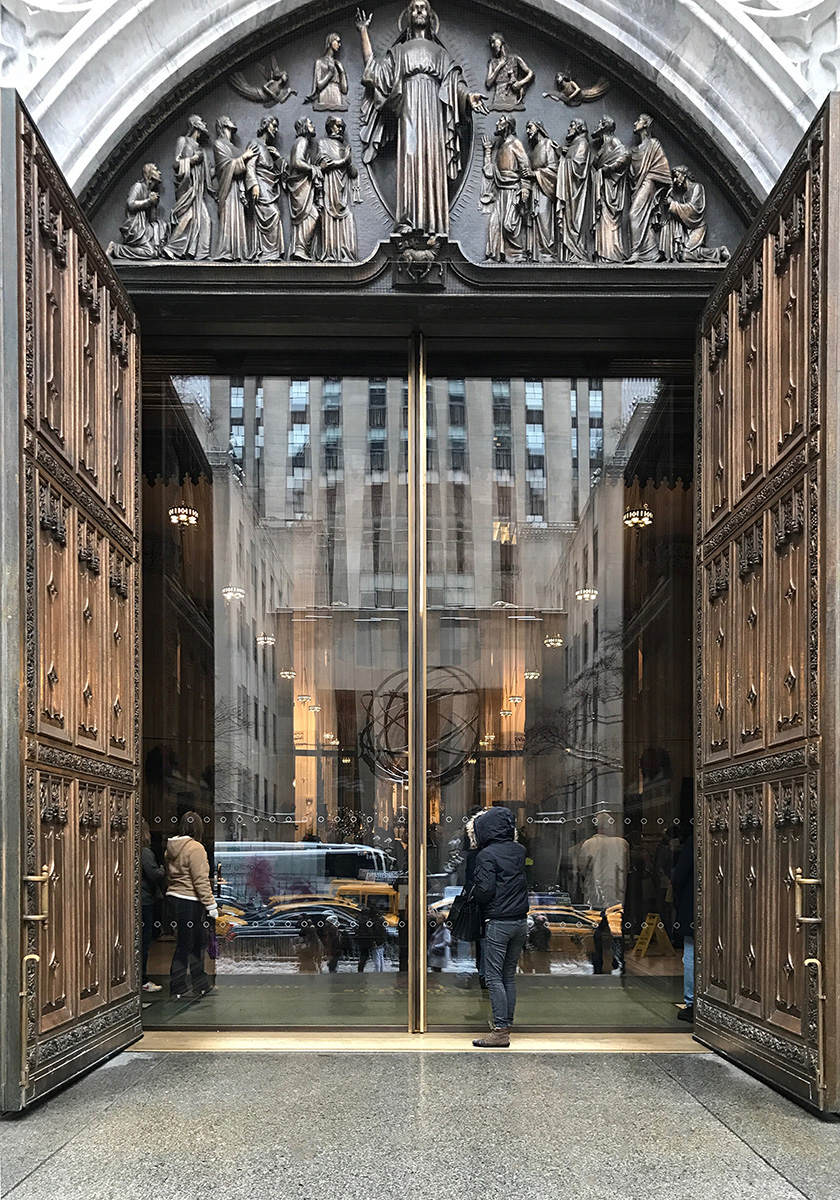
It seems somewhat counterintuitive, but another unique application for slim line glazing systems is for invisible walls on historic properties. A good example of this application is included in one of the case studies included at the end of this article. When the design intent requires a light touch or no contact with the historic facade, an invisible layer of slim glazing can provide the protection needed. This approach can work for enclosing porticos, porches, protecting stained glass, and providing interior vestibules where interruption or extension of the historic fabric is either difficult or inappropriate.
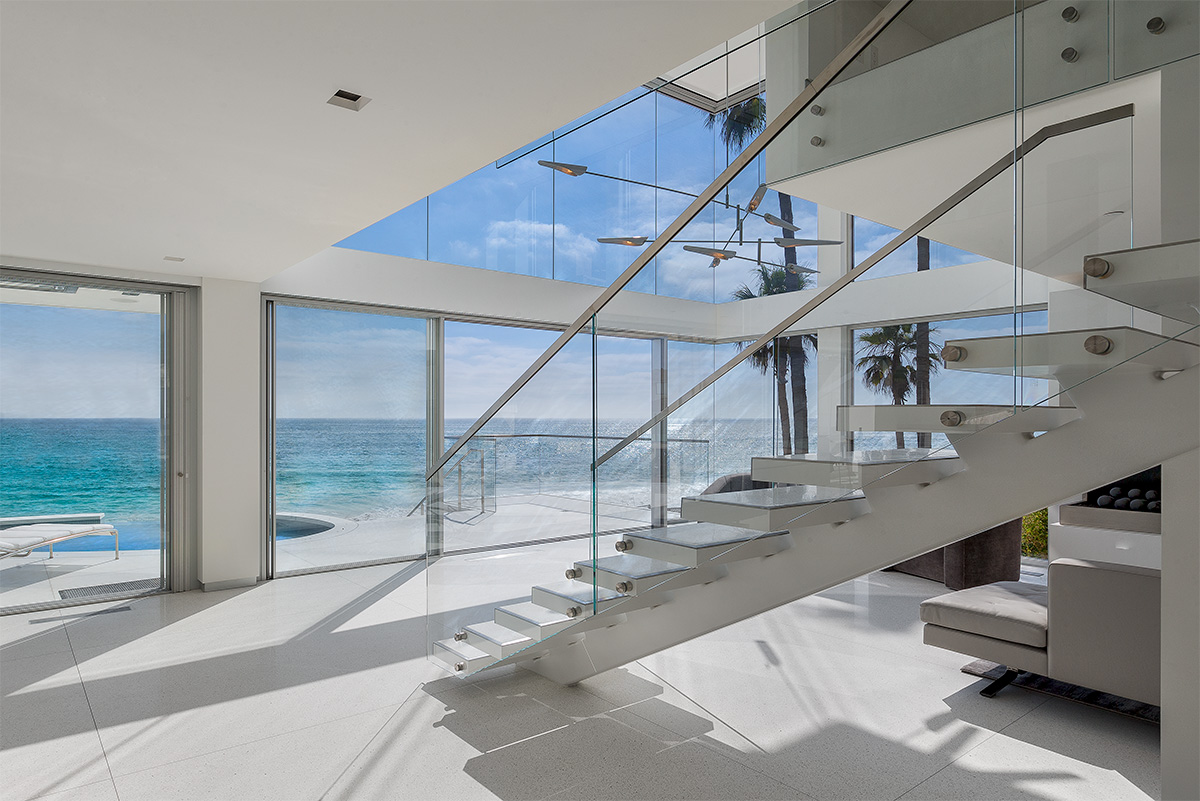
Photo: Emil Kara; courtesy of Goldbrecht LLC
Fixed and sliding units in residence in Laguna Beach, California. Architect: Kanner Architects.
Sliding units can be provided in a variety of configurations. All panels can stack to one side with four or five tracks, allowing for a very large opening. They can also part in the center of four panel openings, as seen in the Laguna Beach residence photo, with as little as a ¾” edge frame at the meeting point.
Some of the more innovative design alternatives that are available include pivoting, turnable corners, and fully retracting wall systems. Pivoting units allow the glass wall to turn out or in, which opens large sections of the wall with minimal edge profiles. Retractable wall systems are available, which hearken back to Mies’ Tugendhat House of 100 years ago, albeit with improved mechanics and more slender sight lines. The turnable corner option allows panels to slide around corners so that they can then be stored in a wall pocket or stacked along the side of a wall. Additional operable functions include vertical sliding, side hung outswing, or casement type.
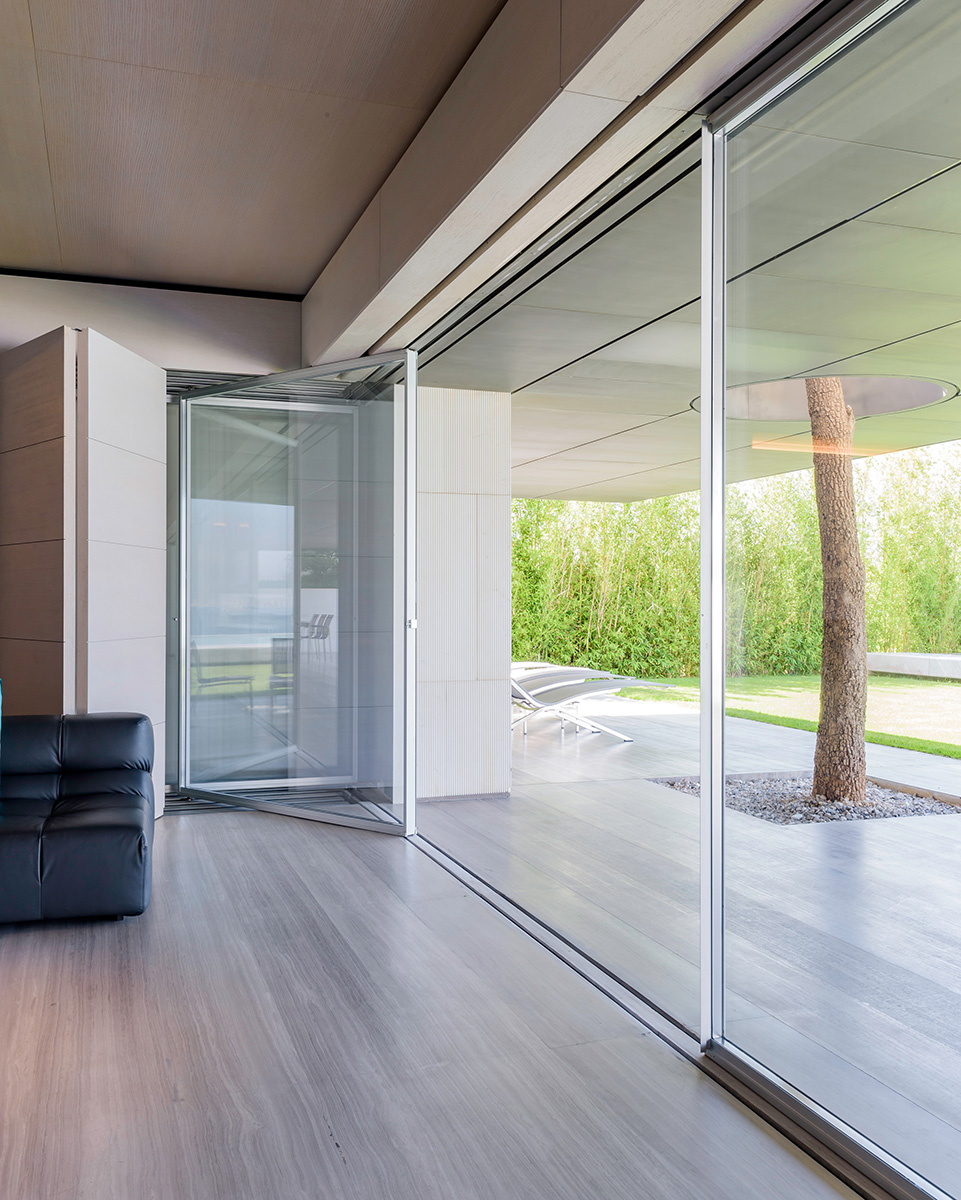
Photo courtesy of Goldbrecht LLC
Turnable corner unit with glass panels stored in a wall pocket.
There is also a wide range of options available for treating the head, sill, and jamb conditions, including recessing them into the adjacent construction. With perimeter frames and hardware already minimal, this can be accomplished with little alteration to the surrounding floor, wall, or ceiling construction. Units and systems can be provided with screens by the same or allied manufacturers.
As with any large openings in a wall, there are critical structural considerations. Structural glazing is heavy, so the structure under the systems needs to be carefully designed to support the system with little or no deflection. Allowable deflection in the structure above the head track can be as little as 1/4” by some manufacturers. ICCC code references the AAMA TIR-11 standard, which only allows deflection in glass or window units over 13’,6” to be L/240 + ½”. So the larger units in slim line systems need to be both strong and stiff to meet code requirements.
With a recessed track, including shim space, taking up 3-1/2” of the subfloor assembly, coordination will be necessary to allow for enough depth for the structure required to support the large structural glass panels. The header also needs to be designed so that it does not restrict the operation of the system as well. There are options for a head track that can accommodate some deflection, which is recommended for most conditions.
Exterior considerations are at the discretion of the design architect. If the design intent is to “make the wall disappear,” the use of broad overhangs is often used to keep the system in shadow.
A wide range of hardware options is also available from leading manufacturers, including a wide range of metal finishes, motorized operators, cushion close and locking devices that coordinate with building security systems. Motorized operators are typically in the head of sliding units and allow for smooth, silent cascading opening of multiple panels. Motorized systems are available that integrate with home automation and security applications.
Available interior treatments include recessing side, head, and floor tracks into the surrounding construction, as well as utilizing the interior floor finish material to further conceal the floor track. Drapery or shade pockets can complement a concealed track in a deeper head condition or soffit to enhance the system and avoid limiting sightlines.
Slim line glazing systems continue to evolve, and unique and special installations are becoming possible with each new iteration of the systems. The two newest options are the turnable corner and the retracting wall.
Photo courtesy of Goldbrecht LLC
Sliding glass walls at the Atrium House.
This course explores the evolution of structurally glazed slim-line window systems, from their inception through the many iterations that have refined both the engineering and performance of the systems. The concept of treating glass as a primary structural material rather than a secondary infill and the related architectural explorations will be explored in depth. Through historical context, material science, and design application, participants will gain a deeper understanding of how reassigning structural responsibility from frame to glass enables ultra-minimal profiles, large spans, and enhanced spatial continuity. A discussion of sustainability, resiliency, and cost effectiveness is included. Case studies of projects conclude the discussion, which demonstrate how the range of slim line window and door systems is used today.
Slim Line Glazing Systems – Overview
Architects have explored innovative ways to connect interior space to the exterior environment through uninterrupted expanses of glass since the inception of modern architecture over 100 years ago. This design goal of making the building enclosure selectively disappear continues today and builds on the work of the original pioneers of modernism. This article will outline how, in the last 30 years, a new product category has emerged—slim line glazing systems—that meets and exceeds the challenge of the invisible wall in an unprecedented and elegant manner. These systems are not to be confused with what is known in Europe as slimline glazing, which is a glass product with limited depth to fit into window frames that emulate historic single-glazed windows.
Historical context for this innovation adds value and perspective to what has become available today. Notable early modernists Le Corbusier, Mies Van Der Rohe, and, later, Richard Neutra and Pierre Koenig all made meaningful contributions to the design lineage of the continuous horizontal glass window and wall.
Arguably, the first modern expression of the design opportunity provided by horizontal window and wall openings is included in Le Corbusier’s Five Points of Architecture, published in 1926—exactly 100 years ago. The inclusion of the continuous ribbon window that is free from the structure as one of only five defining elements of modern architecture initiated this search for making the wall evaporate, flooding the interior with light, and better connecting with the outdoors.
Mies Van Der Rohe’s contributions include the furtherance of the use of glass walls, including operable elements. The Tugendhat house in Brno, in the Czech Republic, featured large floor-to-ceiling windows to capture views of a neighboring castle. Two of these large windows could be lowered into the floor below, eliminating the separation of interior and exterior entirely. Another notable example by Mies is the Farnsworth House near Chicago, which has a completely glass facade that fully blurs the boundary between inside and outside, connecting this country retreat to its natural surroundings.
Richard Neutra’s Kaufman Desert House, built in 1946, represents the maturation of the concept of the disappearing wall with large sliding panels. The corner of the building opens entirely and connects the interior with the adjacent pool and garden, with views of the San Jacinto mountains. The broad overhangs that keep much of the glass in shadow further render the glass invisible, connecting the interior and exterior when the panels are open or closed.
Pierre Koenig, an architect who was influenced by Richard Neutra, designed two mid-century houses that employed industrial construction techniques. They were part of a program by Arts and Architecture magazine to showcase experimental, affordable, and efficient housing types. Koenig’s case study houses #21 & #22 both featured steel framing and large expanses of fixed and sliding glass, early precursors of the minimal glazing approach that continues to evolve today.
The desire for this architectural approach of an invisible wall and space flowing between the interior and exterior is firmly established in the first 100 years of modern architecture. It is free of the structural mullion but is limited by:
- The available size of glass panels,
- The width and depth of frame materials that reduce sightlines and
- The poor thermal and acoustic performance of single glazing.
Slim line glazing systems present solutions to all of these shortcomings. Case studies of recent projects that employ slim line glazing are included after the conclusion of this article. These include a stunning Hawaiian residence by Olson Kundig Architects, whose portfolio has continued the legacy of opening buildings to nature. Products typically tend to evolve incrementally with gradual, often unnoticeable changes in the numerous iterations that lead to what is available today. Slim line glazing systems, however, represent a complete paradigm shift from earlier window and door systems.
While traditionally the frame supported the glass, these systems use the glass as structure with the frame demoted to a minimal edge treatment and hardware interface. With the ability to recess the operable hardware into the floor and ceiling assembly, the wall seems truly invisible. Slim line glazing systems were made possible by advancements in glass manufacturing that allowed panels to be larger, stronger, and more energy efficient.
Structural glazing is made possible by innovations in the production of glass that have significantly improved its overall strength. This technology has been available for years, but was not widely available until the late 1970’s and 1980’s. The processes include a range of post-processing methods that use heating and cooling to improve the structural properties of float glass panels of various thicknesses. With improved strengths and the uniform appearance of float glass, structural glazing emerged in a variety of configurations. Most configurations still relied on the glass transferring lateral loads to the window or door frame, or, in the case of fixed glass, directly to the building structure. The combination of the change from plate glass to float glass and tempering results in glass that is four to five times stronger than the early sliding glass and fixed glass used by early modern architects.
Slim line systems routinely utilize insulated glass units that are 1-1/4” and 1-3/4” thick, allowing for more robust thicknesses of the layers of glass. This results in significant improvements to the strength of the glazing. Even thicker IG units are available if required by the structural requirements.
Manufacturing technology has also matured, with a number of producers now able to deliver large units. Size is limited by the machinery that produces the glass, and currently, single pieces as large as 10-6” x 35’-0” are available.
The thermal and acoustic performance of glass has also been improved dramatically. The thicker assemblies of slim line systems also allow for triple glazing with improved structural and thermal properties. Special coatings on single and insulated glass units have been available for many years, but were not widely deployed in the architectural glass market until the late 1970’s.
The primary change that improved energy efficiency is the family of low-emissivity, or low-E, coatings that could be used on single and double-glazed units. A byproduct of the major energy crisis of the 1970s, these high-performance coatings soon became commonplace in both commercial and residential glazing. These coatings improve both the solar heat gain coefficient (SHGC) and the insulating properties (U-value). The actual values will depend on the specific glass and coatings that are used, but both factors are at least twice as good as those for clear float glass.
In addition to the special coatings, the gas used in the cavity can also contribute to the performance of the system. Argon and Krypton are the gases most commonly used, and both have a significant effect, with Krypton slightly better than Argon. Given their increased density when compared to air, they resist convection and conduction of energy in the glass cavity. A triple-glazed assembly of low-E glass with 95 percent Krypton in the cavities can have an overall U value of 0.10, which is exceptional, resulting in an interior glass surface temperature of 64 degrees when the outside glass surface temperature is 0 degrees (calculations done in accordance with NFRC standards. Figures from National Glass Association technical paper FB49-17 (2022)).
The use of laminated glass in architectural applications has also gained popularity in approximately the same time frame. First used in the airline and automotive industry, it is now available as part of insulated glass units. The interlayer is typically a polymer made of polyvinyl butyral (PVB) or ethylene–vinyl acetate (EVA). Again, the specific assembly must be known to identify the in-place effectiveness of noise reduction, but in general, the addition of the interlayer will make the Sound Transmission Coefficient (STC) rating double what it would have been without the laminated component. Laminated glass is also a safety and security benefit as it stays in place when broken.
So, with the availability of large sheets of glass with strength improved four to five times and energy and acoustic performance at least doubled, the door opened to the opportunity for slim line glazing systems. Starting in the early 1990s, slim line windows were developed in Switzerland by Erik Joray, who later founded the company Vitrocsa. With a background in prefabricated homes, watchmaking, and designing and building greenhouses, he soon developed a number of patents that gave birth to this innovative approach to architectural glazing.
Slim line glazing continues to gain popularity and is available in fixed glazing and a range of operable configurations. It has been specified by some of the world’s leading Architects in projects all around the globe.
Slim Line Glazing Performance Characteristics
The defining features of these systems are the absence of a bulky frame or track system. Systems are available with a variety of glazing, including typical 1” IG units and thicker double, triple, and bonded units to meet the structural, energy, and acoustic requirements for each application. Operable systems are available in horizontal sliding, pivoting, vertical sliding, outswing, turnable corner, and as a retracting wall.
Slim line systems can be built to unusually large-sized applications, typically determined by the availability of glass size. Imported low-E glass is typically available up to 26’ x 10’-6”. The architects and builders for the new Apple headquarters in Cupertino, California, were able to procure single pieces of glass that are 47 feet long. These high-profile projects are breaking through prior limitations with new and better manufacturing equipment that will benefit other projects in the future.
Leading systems are rated for hurricane impact with 1.75” IG units. A 12’ tall panel that is 4’-6” wide was tested with ratings as follows:
- 70 psf/165 mph for sliding/fixed in double/triple track.
- 80 psf/177 mph for singular fixed windows.
Given that units are typically tempered, they are naturally resistant to heat stress. If not fully tempered, some level of heat treatment is recommended to resist heat stress.
The expected useful life of structural glazing is reported to be 50 years, and traditional aluminum windows are listed at 30 years. Given that these systems only became available 30 years ago, it is too early to make a definitive evaluation on the actual useful life, but it would seem to align with the 50-year mark assigned to structural glazing. Given the high quality and precision manufacturing associated with minimally edge-framed systems, it would not be unusual that their expected useful life exceeds 50 years. As mentioned earlier, the acoustic performance of slim line systems is improved by specifying laminated glass or triple glazing. Laminated glass uses a PVB interlayer, which significantly improves the NRC and STC ratings.
Designing with Slim Line Glazing Systems
Slim line Glazing Systems have many applications and can be included in all types of residential, institutional, and commercial projects where a minimal aesthetic is desirable. The most prevalent use to date is in high-end modern residential projects, and the most often used type is for sliding doors to provide the effect of an invisible wall.
It seems somewhat counterintuitive, but another unique application for slim line glazing systems is for invisible walls on historic properties. A good example of this application is included in one of the case studies included at the end of this article. When the design intent requires a light touch or no contact with the historic facade, an invisible layer of slim glazing can provide the protection needed. This approach can work for enclosing porticos, porches, protecting stained glass, and providing interior vestibules where interruption or extension of the historic fabric is either difficult or inappropriate.
Photo: Emil Kara; courtesy of Goldbrecht LLC
Fixed and sliding units in residence in Laguna Beach, California. Architect: Kanner Architects.
Sliding units can be provided in a variety of configurations. All panels can stack to one side with four or five tracks, allowing for a very large opening. They can also part in the center of four panel openings, as seen in the Laguna Beach residence photo, with as little as a ¾” edge frame at the meeting point.
Some of the more innovative design alternatives that are available include pivoting, turnable corners, and fully retracting wall systems. Pivoting units allow the glass wall to turn out or in, which opens large sections of the wall with minimal edge profiles. Retractable wall systems are available, which hearken back to Mies’ Tugendhat House of 100 years ago, albeit with improved mechanics and more slender sight lines. The turnable corner option allows panels to slide around corners so that they can then be stored in a wall pocket or stacked along the side of a wall. Additional operable functions include vertical sliding, side hung outswing, or casement type.
Photo courtesy of Goldbrecht LLC
Turnable corner unit with glass panels stored in a wall pocket.
There is also a wide range of options available for treating the head, sill, and jamb conditions, including recessing them into the adjacent construction. With perimeter frames and hardware already minimal, this can be accomplished with little alteration to the surrounding floor, wall, or ceiling construction. Units and systems can be provided with screens by the same or allied manufacturers.
As with any large openings in a wall, there are critical structural considerations. Structural glazing is heavy, so the structure under the systems needs to be carefully designed to support the system with little or no deflection. Allowable deflection in the structure above the head track can be as little as 1/4” by some manufacturers. ICCC code references the AAMA TIR-11 standard, which only allows deflection in glass or window units over 13’,6” to be L/240 + ½”. So the larger units in slim line systems need to be both strong and stiff to meet code requirements.
With a recessed track, including shim space, taking up 3-1/2” of the subfloor assembly, coordination will be necessary to allow for enough depth for the structure required to support the large structural glass panels. The header also needs to be designed so that it does not restrict the operation of the system as well. There are options for a head track that can accommodate some deflection, which is recommended for most conditions.
Exterior considerations are at the discretion of the design architect. If the design intent is to “make the wall disappear,” the use of broad overhangs is often used to keep the system in shadow.
A wide range of hardware options is also available from leading manufacturers, including a wide range of metal finishes, motorized operators, cushion close and locking devices that coordinate with building security systems. Motorized operators are typically in the head of sliding units and allow for smooth, silent cascading opening of multiple panels. Motorized systems are available that integrate with home automation and security applications.
Available interior treatments include recessing side, head, and floor tracks into the surrounding construction, as well as utilizing the interior floor finish material to further conceal the floor track. Drapery or shade pockets can complement a concealed track in a deeper head condition or soffit to enhance the system and avoid limiting sightlines.
Slim line glazing systems continue to evolve, and unique and special installations are becoming possible with each new iteration of the systems. The two newest options are the turnable corner and the retracting wall.
Green Building and Slim Line Glazing Systems
With a lot of emphasis on limited glazing and high-performance window systems in many sustainable building guidelines, the application of full glass walls in an energy-efficient design could be viewed negatively. This is not a valid view, however, due to the advancements in energy efficiency in the structural glazing itself. Slim line glazing systems can be specified so that the insulating value meets or exceeds the maximum U value in your climate zone, and some systems are certified to meet passive house standards.
Given that the goal of designing these systems is to make the wall disappear, some projects may end up exceeding the maximum percentage of glazed area that is allowed by applicable energy codes. This can typically be resolved by performing a more detailed performative analysis so that the total building envelope, including the large glazed areas, meets the minimum requirements of the energy code.
U-values will vary based on the system specified, but most leading systems are thermally broken and tested to NFRC standards with a U-value of .35 for 1.25” IG units and .21 for 1.75” IG units. Architects can consult with glass manufacturers on the available units or utilize the online glazing calculators that some producers make available to estimate the overall U-value and Solar Heat Gain Coefficient (SHGC) of a specific design.
Air leakage is well managed for these systems with precision hardware and weatherstripping at the perimeter and meeting rails. Since the structural glazing is available in large units, the amount of perimeter that requires sealing as a percentage of the overall area is less than for smaller-sized conventional windows and doors.
Glazing units are designed for each application with the full range of options available for each project. The thickness will be governed by the wind loads, and energy and acoustic performance are impacted by the coatings, interlayers, and the gases specified for the cavity. Architects should work with the system manufacturer on glass options as the sourcing of the glass and the assembly of the overall system need to be expertly coordinated to achieve the desired performance levels.
Head and sill tracks and side jamb assemblies are thermally broken and only approximately 2-3/4” wide, including shim space. When they are recessed into adjacent construction, it further improves the energy performance of the overall assembly by benefiting from the insulation in the walls, ceilings, or floors.
Some systems are assembled in the U.S. utilizing locally sourced or imported glazing. Check with each manufacturer to confirm where the components are assembled and sourced.
There are several benefits to the use of slim line glazing systems related to air quality. The overall tightness of the systems reduces water penetration, which does not contribute to the growth of mold. Most track assemblies recommend a sub-sill that freely drains to the exterior, further reducing the opportunity for small amounts of water to support the growth of mold. Given the inorganic nature of the materials in the entire assembly and the fact that they are prefabricated off site there is no noxious emittance during or after the installation. And of course, the biggest benefit to overall air quality is the amount of fresh air that becomes available due to the fact that the openings are so large.
Innovation in design is also easily achieved with slim line glazing systems as they elegantly integrate excellent energy performance and healthy building features in an aesthetically pleasing manner.
Specifying Slim Line Glazing Systems
Delivering a project with slim line glazing systems is not a standardized procedure. Like many high-end products and systems, it is best to consult the manufacturer’s representatives early in the design process. A lot has been said about Integrated Project Delivery (IPD) in the commercial building sector, where architects, engineers, builders, and Manufacturers collaborate throughout the course of the pre-construction phase. With a specialized system, like slim line glazing systems, that impacts architectural, interior, structural, electrical, lighting, acoustic, and mechanical design, it is best to adopt an integrated delivery approach to ensure a successfully coordinated result. These hybridized project delivery systems are becoming more common in all building markets, but especially in the higher-end residential and commercial markets.
A precision-designed and manufactured system is costly to fabricate. The square foot cost will vary depending on the structural and energy requirements. For fixed and sliding units that resist an 85 mph wind load, a reasonable budget is in the $180-$220 psf range for the system with an additional 40 percent for assembly and installation by factory-certified specialists. Costs will increase for higher wind loads, tall sliding panels, or sliding configurations with a large number of tracks.
As an initial cost, this is tracking to be approximately 50 percent more than a high-end residential unitary window or door system with a wood interior and an extruded aluminum exterior, and significantly lower than a thermally broken custom steel framed window system. These more conventional systems only come with high-performance 1” insulated glass units, whereas the slim line systems have structural glazing with an overall thickness of 1.25” or 1.75”.
Given that structural glazing has an estimated 50-year life span and unitary windows are in the 25–35 year range for expected useful life, this results in life cycle costs that are quite close to each other using only a cost per year analysis. If construction cost escalation is factored into the replacement of the unitary windows after their expected useful life, then the slim line systems have a markedly lower life cycle cost for the 50-year horizon.
Given that the most typical application is in high-end residential projects, the cost of the glazing system also needs to be viewed in terms of the difference between the glazing system and the wall construction that would otherwise be in its place. Stone or stucco exteriors with level 5 finished drywall or plaster on the interior is also quite costly, so the net difference in the overall cost of the wall system is not significant.
Design decisions that contribute so much to the overall aesthetic are rarely made on cost alone, but it is interesting to note that the life cycle cost is reasonable and equivalent to custom windows and wall systems that would otherwise be in the place of the larger, slim line system.
Embodied carbon in building materials is a continuing concern, and slim line glazing systems, which are comprised primarily of aluminum and glass, traditionally have generated a lot of carbon emissions in the production or cradle to gate phase of their life cycle. This is, however, changing with alternative fuels, carbon capture, and the use of recycled materials in glass and aluminum production. Some glass manufacturers report that the use of alternative fuels and newer systems for manufacturing has reduced the release of carbon by 50 percent during manufacturing.
As many of these are evolving technologies, it will require research by architects to determine the efforts being made by specific manufacturers to reduce carbon emissions in the production of the components required for slim line glazing systems. Slim line systems use considerably less aluminum than conventional unitary windows due to the size of the glazing units and the narrow and precise profiles of the tracks and frame. Given that the systems have a long life cycle, the carbon impact per year of service use is equivalent to or lower than that of other products. The increased energy efficiency of the systems also reduces the operational carbon impact over the life of the system.
Slim line glazing systems have been extensively tested so they can be evaluated by architects utilizing both US and European protocols. Testing results will vary based on the manufacturer and the specifics for each system, but leading systems have been fully tested in the US for design pressure, air infiltration, and water penetration according to AAMA/WDMA/CSA 101/I.S.2 A440-05. Leading systems have also passed hurricane impact testing. Testing documentation will require close scrutiny by Architects as most European testing protocols are not accepted by US code officials.
Typical details will also vary based on the system and the manufacturer. Most systems are provided standard with anodized aluminum perimeter frames, hardware, and tracks. Fluoropolymer (Kynar) or powder-coated finishes are also available as upgrades.
Some typical details are included in the following three diagrams.
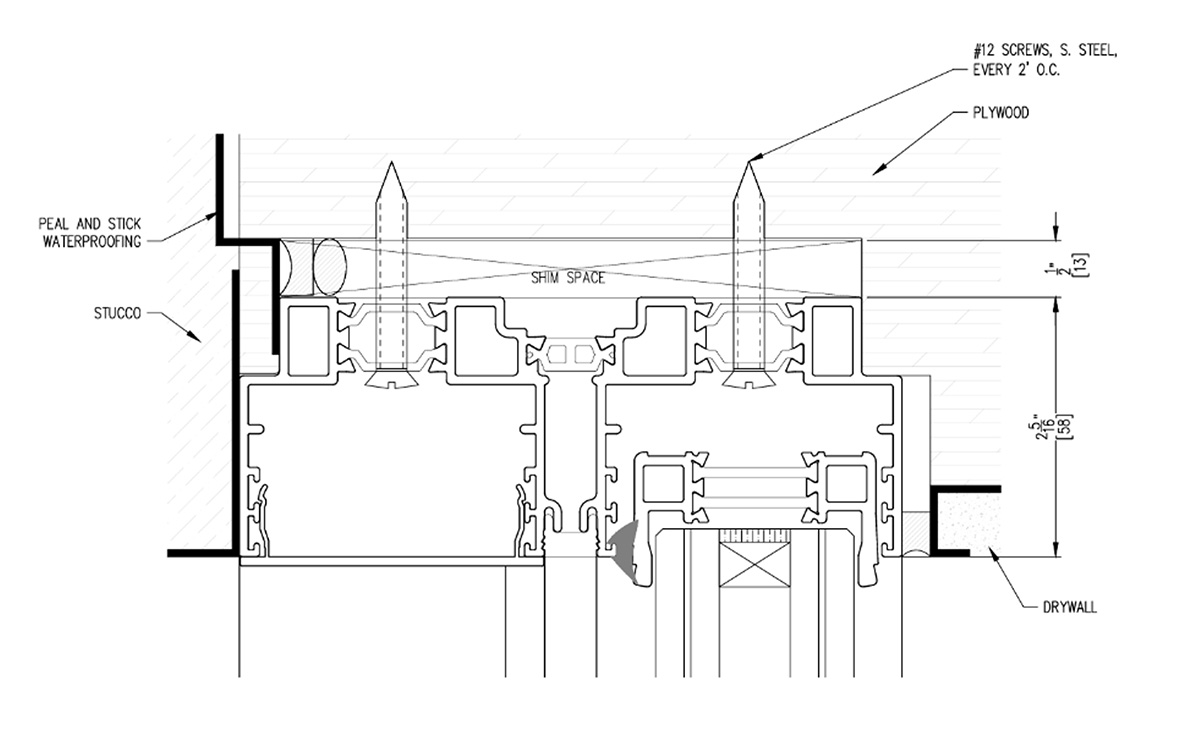
Diagram courtesy of Goldbrecht LLC
Diagram 1
This head detail in Diagram 1 shows a condition where the stucco on the exterior and the drywall on the interior overlap the narrow 2-5/16” deep frame, so all that you see is the glass. This would require no deflection in the structural header to avoid impacting the operation of the unit.
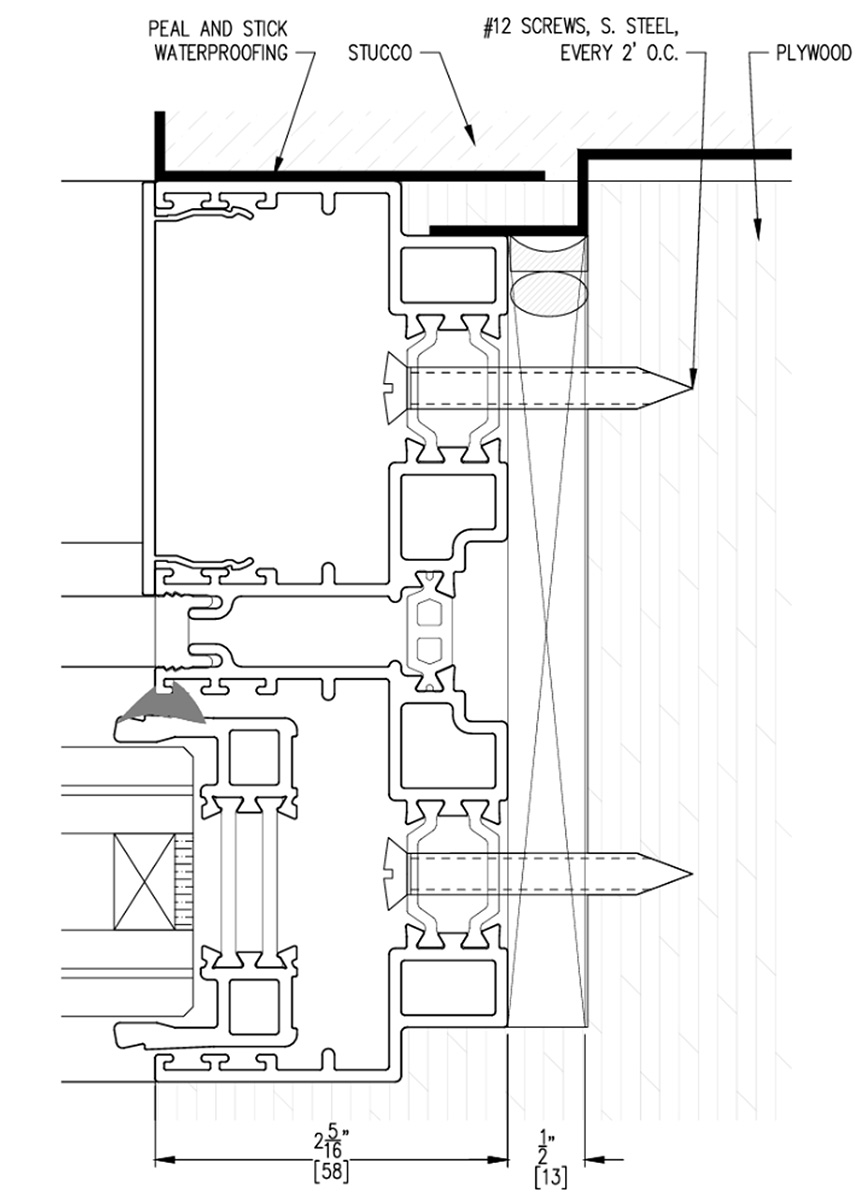
Diagram courtesy of Goldbrecht LLC
Diagram 2
Diagram 2 shows a side jamb with only the exterior frame concealed by stucco. The sealing of the fastener holes and the application of the peel and stick waterproofing is to be provided by the on-site contractor and typically is not provided by the slim line glazing contractor.
This detail also clearly shows the thermal breaks and the crisp rectilinear shapes of the minimal framing system.
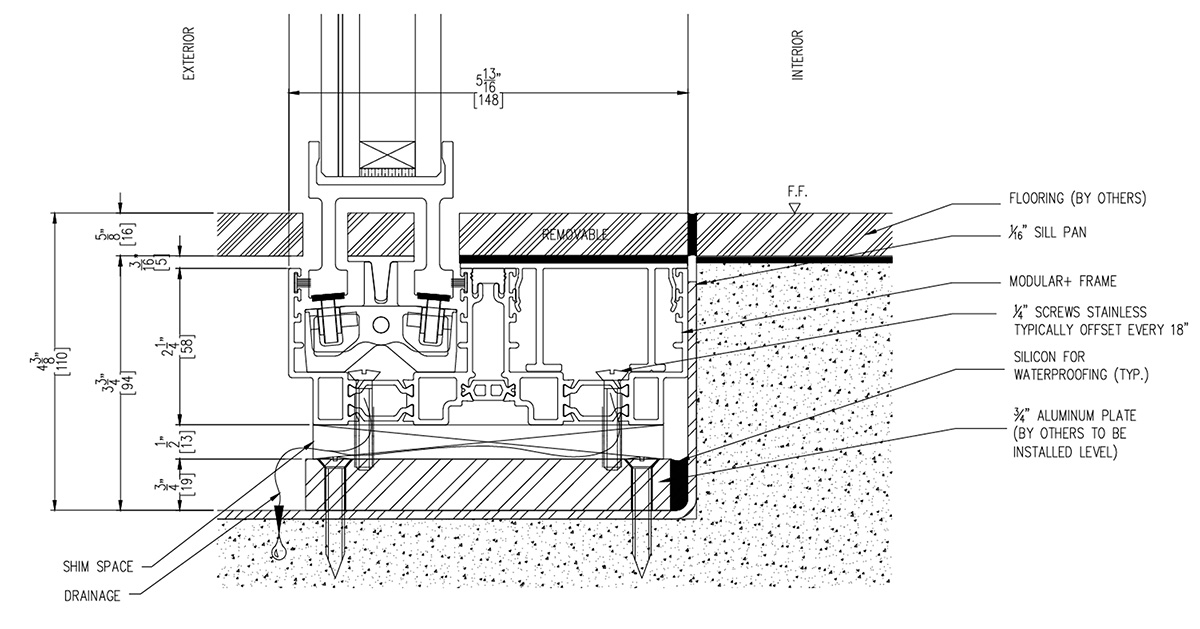
Diagram courtesy of Goldbrecht LLC
Diagram 3
The invisible sill detail above shows how the assembly can fit into a continuous shelf in the foundation or recess in the subfloor system that is roughly 5-3/4” wide by 4-1/2” high. The finished flooring can continue to cover the unused sections of track as well as the space between the rollers, so it blends in seamlessly with the interiors. Note that the sill pan is not provided by the slim line glazing manufacturer and that there will need to be a pathway provided for this pan to drain to the exterior.
These are some typical details provided to better understand the system. Each manufacturer has support for architects with downloads of product specifications, details, and most have BIM objects for your use. It is best to start the dialogue with these experts as soon as you would like to work with a slim line glazing system to take full advantage of the support and documentation they typically provide.
Installation of these systems is not the same as unitary window and door systems, and as such, typically requires the involvement of factory-trained and certified installation experts. The systems are manufactured to an exceptionally high level of precision; remember, the inventor was involved in watchmaking, and as such, the installation is time-consuming and requires the attachment points to be precisely level and plumb. Architects should also take care to specify what is not typically included by the system manufacturer, which can include sub-sills, weeps, flashing, and waterproof membranes surrounding the opening.
Conclusion
As architects, our designs come to life and are enhanced by access to products and systems that best express our aesthetic goals. A former Swiss watchmaker first developed the elements of early minimally framed windows and doors that have now been developed into a full category of glazing systems. From that seed, these systems have grown to include invisible walls that slide, pivot, turn corners, and disappear into the floor. Material-based thinking and innovative engineering facilitated a unique synthesis of advancements in glass and frame technology that provides Architects with an invaluable set of systems to assist them in delivering on a commonly held aesthetic goal.
From the very birth of modern architecture, the idea of better connecting interiors with the environment was firmly established. Slim line glazing systems represent a paradigm shift in window and door production that elegantly and clearly fulfills that 100-year-old goal.
Russell A Davidson, FAIA, served as a volunteer leader of the Architecture profession in numerous roles in the American Institute of Architects, including AIA New York State President and AIA National President. He is a former president and principal of KG+D Architects, an award-winning firm in New York’s Hudson Valley.