Image courtesy of Excel Dryer
As international surveys show that users now prioritize hygiene, designers adopt new technologies to deliver cleaner, higher-performing commercial restrooms.
A global survey of architects and designers, restaurant owners and facility managers, and consumers reveals rising post-pandemic expectations for commercial restrooms. This course highlights how hygiene concerns shape user behavior and design priorities. Participants will explore touchless solutions—including sensor faucets, automated flush valves, self-opening doors, and high-efficiency hand dryers, both wall-mounted and sink-mounted—that reduce cross-contamination and enhance experience. Operational and environmental impacts, from maintenance and waste to energy and cost, are covered, along with strategies for meeting LEED, WELL, and sustainability goals. Real-world case studies demonstrate measurable improvements in performance and satisfaction.
Global Survey Findings: Post-Pandemic Expectations for Commercial Restrooms
In the years since COVID-19 reshaped the way people navigate shared environments, commercial restrooms have taken on a significance few would have predicted a decade ago. Once considered back-of-house necessities, they are now viewed as visible markers of a facility’s hygiene standards, operational competence, and commitment to occupant well-being. A series of global surveys commissioned to better understand these pandemic attitudes—conducted in the United States, Spain, Germany, and Turkey—reveals a profound shift in how users define cleanliness, how facility managers assess operational demands, and how design professionals approach product selection.
While each region expressed unique tendencies, the overall trend is remarkably consistent: sanitary performance has become the central performance metric in commercial restrooms. And with facility stakeholders and consumers aligned more closely than ever before, washroom design is now shaped not by aesthetics alone but by measurable expectations for cleanliness, touch-free operation, and efficient maintenance.
Hygiene Drives Decision-Making
Across all countries and stakeholder groups surveyed, hygiene and cleanliness ranked as the top priorities influencing restroom design. European architects and designers consistently ranked “sanitary/hygienic” and “cleanliness of the bathroom” first and second when evaluating hand-drying solutions or specifying products for new projects. Facility managers in Germany and Spain echoed these priorities, listing sanitary factors ahead of traditional drivers such as cost, noise, and aesthetics. Similarly, restaurant owners in Turkey and Spain ranked sanitary performance as the top factor in their decision matrices.
U.S. findings reinforce this trend. When consumers and facility professionals were asked to identify the conditions that most strongly suggest a dirty restroom, several indicators emerged with overwhelming agreement. Paper towels or toilet paper on the floor, overflowing trash bins, water on the floor, sticky flooring, and soap or water pooling on counters were the leading contributors to negative impressions. Two of the top contributors—paper towels on the floor and overflowing trash receptacles—are commonly associated with paper-towel systems, highlighting how quickly excess paper can erode perceptions of cleanliness.
These rankings matter not only as reflections of user perception but as drivers of design decisions. Architects responding to the European survey indicated that cleanliness is increasingly intertwined with decisions about layout, material selection, and restroom technology. Rather than assuming housekeeping will correct cleanliness issues after the fact, design teams are seeking ways to prevent them from occurring in the first place.
A Shared Definition of a “Clean” or “Dirty” Restroom
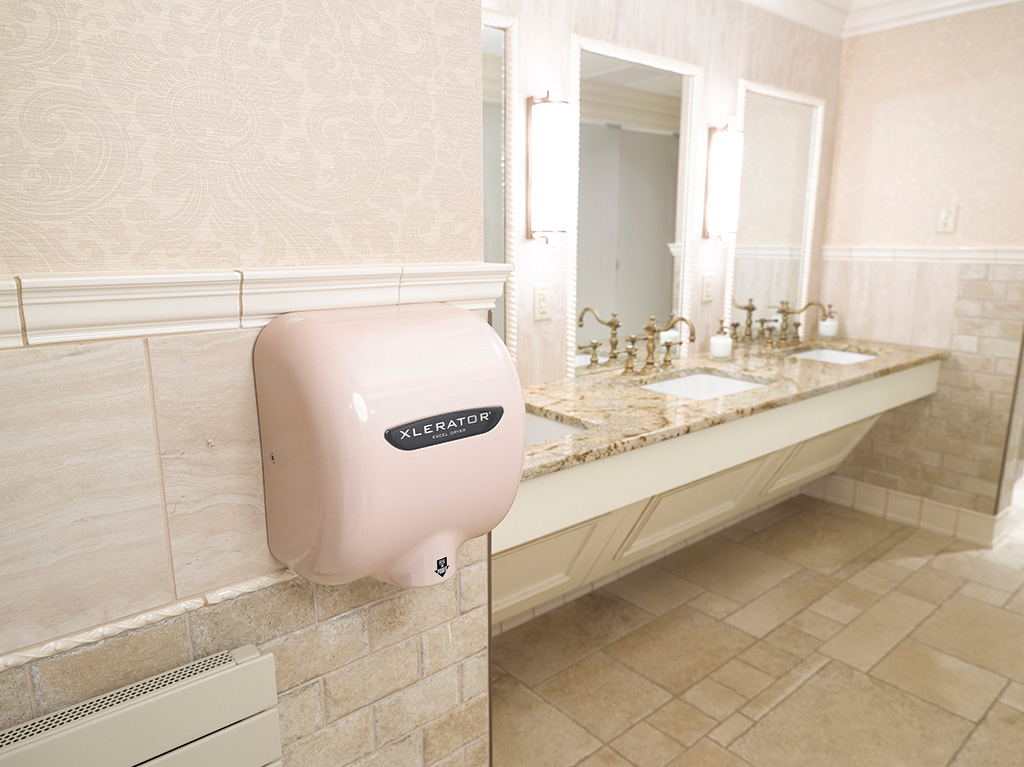
Image courtesy of Excel Dryer
Post-pandemic perceptions are clear—cleaner, safer restrooms are no longer optional but expected worldwide.
One of the clearest findings across global markets is the growing alignment between users and facility operators about what defines a well-maintained space. While cultural expectations can vary, the survey results show striking consistency in how respondents evaluate restroom conditions. Across all groups, a restroom is considered clean when:
- Floors are dry and free of debris
- Counters remain uncluttered and do not accumulate soap or water
- Waste is contained, not overflowing
- Fixtures work reliably and without requiring touch
- Supplies (soap, toilet paper) are consistently stocked
Conversely, a restroom is considered dirty when:
- Paper towels or toilet paper litter the floor
- Trash receptacles overflow
- Wet floors create hazards
- Counters show signs of pooling water or soap
- Fixtures malfunction or create bottlenecks
- Housekeeping lapses feel visible
In the U.S., the numbers illustrate the impact: 58 percent of consumers said a dirty restroom makes them think “much less” of the business. Only 18 percent said it has no effect on their perception. Of those customers surveyed, 80 percent would not or might not return to a restaurant with a dirty restroom.
This shared definition is essential for designers. Knowing what users consider “dirty” provides a practical blueprint for the products, technologies, and layouts that help keep restrooms cleaner throughout the day with less intervention.
How the Pandemic Permanently Altered Expectations
While the desire for clean restrooms is not new, the pandemic accelerated and formalized expectations in ways that continue to influence design decisions today. Across all regions, users and facility stakeholders identified several long-term shifts that began during COVID-19 and have since become permanent standard-of-care expectations.
1. Increased cleaning protocols: In Spain, 65 percent of architects cited enhanced cleaning as the most noticeable change in today’s restrooms. German respondents also cited more visible or more frequent cleaning practices, while Turkish facilities reported similar patterns.
2. The widespread adoption of touchless features: Touch-free faucets, flush valves, and dispensers ranked among the top three changes observed in all European markets. In the U.S., 82 percent of facility managers and restaurant operators said transitioning to touchless fixtures was “important” or “extremely important.” Users now expect to move through a restroom with minimal contact, and design teams have responded accordingly.
3. Greater visibility of maintenance: In Turkey, cleaning schedules and well-stocked supplies were cited as significant changes since the pandemic. German facility managers similarly noted a rise in posted cleaning information, signaling transparency and diligence. These elements, once operational details, are now perceived as hygiene indicators.
A key theme emerged across all surveys: the pandemic shifted cleanliness from a visual impression to a systems-based expectation. Users no longer evaluate hygiene solely by what they see; they assess it by what features and technologies they believe are in place to prevent contamination in the first place.
Paper Waste and Operational Strain
The surveys show a strong connection between paper-based drying systems and both user dissatisfaction and operational burden. Paper waste consistently ranked as the most visible indicator of an unclean washroom across all respondent groups. It also represents one of the most resource-intensive consumables for facility teams to manage.
Facility managers across Spain, Germany, and the U.S. identified “effort to maintain” as a top consideration when evaluating hand-drying systems. In many cases, this factor ranked second only to hygiene and cleanliness. Respondents cited multiple challenges commonly linked to paper-towel use:
- Frequent restocking
- Labor required to monitor and empty bins
- Overflowing receptacles during peak hours
- Litter that undermines cleanliness
- Long-term costs of consumables
- Supply-chain unpredictability during high-demand periods
In Turkey, additional concerns surfaced around “enhancing the flow of bathroom usage,” reflecting a need to minimize bottlenecks. Congested drying areas or overused waste stations can slow user circulation, problems that paper-heavy systems often exacerbate.
These operational insights are significant for design professionals. They suggest that paper-based systems not only influence hygiene perception but also place a steady strain on staffing and maintenance budgets.
A Nuanced View of Global Hand-Drying Preferences
While the surveys show clear alignment on cleanliness and maintenance priorities, they also reveal nuanced regional preferences for hand-drying methods.
Europe: Strong support for high-efficiency dryers
- In Spain, 91 percent of stakeholders (architects, facility managers, and restaurant owners) prefer hand dryers only, both options, or have no strong preference, meaning only 9 percent insist on paper towels alone.
- In Turkey, nearly one-third of restaurant owners preferred dryers exclusively.
- German respondents expressed confidence in dryers’ cleanliness and maintenance benefits.
United States: Mixed preferences but growing openness
Although older U.S. consumers frequently prefer paper towels, two-thirds of consumers overall support having electric dryers available. Notably, consumers also widely believe dryers are more environmentally friendly, suggesting strong potential for broader adoption as hygiene-forward technologies continue to advance.
Across all regions, users associated electric dryers with:
- Reduced mess
- Touch-free operation
- Lower maintenance demands
- Cleaner overall restroom environments
The surveys also show that when dryers are paired with touch-free faucets, reliable soap systems, or integrated sink configurations, users perceive them as supporting the broader hygiene goals that have become essential in a post-pandemic world.
Global Alignment and Emerging Priorities
Despite cultural and regional differences, the research reveals a surprisingly unified global perspective. Users and facility managers are asking the same core questions:
- Does this restroom appear and feel hygienic?
- Are touchless features provided where I expect them?
- Does the space avoid conditions that create a mess or contamination?
- Are maintenance and cleanliness practices reliable and visible?
- Does the drying solution help keep the restroom clean and easy to manage?
Design teams are increasingly looking for solutions that address these questions at the specification stage, not through increased labor or reactive maintenance. This shift represents one of the most significant design opportunities of the current moment: creating restrooms that support user trust, reduce operational strain, and align with the rising global standard for hygiene and performance.
Image courtesy of Excel Dryer
As international surveys show that users now prioritize hygiene, designers adopt new technologies to deliver cleaner, higher-performing commercial restrooms.
A global survey of architects and designers, restaurant owners and facility managers, and consumers reveals rising post-pandemic expectations for commercial restrooms. This course highlights how hygiene concerns shape user behavior and design priorities. Participants will explore touchless solutions—including sensor faucets, automated flush valves, self-opening doors, and high-efficiency hand dryers, both wall-mounted and sink-mounted—that reduce cross-contamination and enhance experience. Operational and environmental impacts, from maintenance and waste to energy and cost, are covered, along with strategies for meeting LEED, WELL, and sustainability goals. Real-world case studies demonstrate measurable improvements in performance and satisfaction.
Global Survey Findings: Post-Pandemic Expectations for Commercial Restrooms
In the years since COVID-19 reshaped the way people navigate shared environments, commercial restrooms have taken on a significance few would have predicted a decade ago. Once considered back-of-house necessities, they are now viewed as visible markers of a facility’s hygiene standards, operational competence, and commitment to occupant well-being. A series of global surveys commissioned to better understand these pandemic attitudes—conducted in the United States, Spain, Germany, and Turkey—reveals a profound shift in how users define cleanliness, how facility managers assess operational demands, and how design professionals approach product selection.
While each region expressed unique tendencies, the overall trend is remarkably consistent: sanitary performance has become the central performance metric in commercial restrooms. And with facility stakeholders and consumers aligned more closely than ever before, washroom design is now shaped not by aesthetics alone but by measurable expectations for cleanliness, touch-free operation, and efficient maintenance.
Hygiene Drives Decision-Making
Across all countries and stakeholder groups surveyed, hygiene and cleanliness ranked as the top priorities influencing restroom design. European architects and designers consistently ranked “sanitary/hygienic” and “cleanliness of the bathroom” first and second when evaluating hand-drying solutions or specifying products for new projects. Facility managers in Germany and Spain echoed these priorities, listing sanitary factors ahead of traditional drivers such as cost, noise, and aesthetics. Similarly, restaurant owners in Turkey and Spain ranked sanitary performance as the top factor in their decision matrices.
U.S. findings reinforce this trend. When consumers and facility professionals were asked to identify the conditions that most strongly suggest a dirty restroom, several indicators emerged with overwhelming agreement. Paper towels or toilet paper on the floor, overflowing trash bins, water on the floor, sticky flooring, and soap or water pooling on counters were the leading contributors to negative impressions. Two of the top contributors—paper towels on the floor and overflowing trash receptacles—are commonly associated with paper-towel systems, highlighting how quickly excess paper can erode perceptions of cleanliness.
These rankings matter not only as reflections of user perception but as drivers of design decisions. Architects responding to the European survey indicated that cleanliness is increasingly intertwined with decisions about layout, material selection, and restroom technology. Rather than assuming housekeeping will correct cleanliness issues after the fact, design teams are seeking ways to prevent them from occurring in the first place.
A Shared Definition of a “Clean” or “Dirty” Restroom
Image courtesy of Excel Dryer
Post-pandemic perceptions are clear—cleaner, safer restrooms are no longer optional but expected worldwide.
One of the clearest findings across global markets is the growing alignment between users and facility operators about what defines a well-maintained space. While cultural expectations can vary, the survey results show striking consistency in how respondents evaluate restroom conditions. Across all groups, a restroom is considered clean when:
- Floors are dry and free of debris
- Counters remain uncluttered and do not accumulate soap or water
- Waste is contained, not overflowing
- Fixtures work reliably and without requiring touch
- Supplies (soap, toilet paper) are consistently stocked
Conversely, a restroom is considered dirty when:
- Paper towels or toilet paper litter the floor
- Trash receptacles overflow
- Wet floors create hazards
- Counters show signs of pooling water or soap
- Fixtures malfunction or create bottlenecks
- Housekeeping lapses feel visible
In the U.S., the numbers illustrate the impact: 58 percent of consumers said a dirty restroom makes them think “much less” of the business. Only 18 percent said it has no effect on their perception. Of those customers surveyed, 80 percent would not or might not return to a restaurant with a dirty restroom.
This shared definition is essential for designers. Knowing what users consider “dirty” provides a practical blueprint for the products, technologies, and layouts that help keep restrooms cleaner throughout the day with less intervention.
How the Pandemic Permanently Altered Expectations
While the desire for clean restrooms is not new, the pandemic accelerated and formalized expectations in ways that continue to influence design decisions today. Across all regions, users and facility stakeholders identified several long-term shifts that began during COVID-19 and have since become permanent standard-of-care expectations.
1. Increased cleaning protocols: In Spain, 65 percent of architects cited enhanced cleaning as the most noticeable change in today’s restrooms. German respondents also cited more visible or more frequent cleaning practices, while Turkish facilities reported similar patterns.
2. The widespread adoption of touchless features: Touch-free faucets, flush valves, and dispensers ranked among the top three changes observed in all European markets. In the U.S., 82 percent of facility managers and restaurant operators said transitioning to touchless fixtures was “important” or “extremely important.” Users now expect to move through a restroom with minimal contact, and design teams have responded accordingly.
3. Greater visibility of maintenance: In Turkey, cleaning schedules and well-stocked supplies were cited as significant changes since the pandemic. German facility managers similarly noted a rise in posted cleaning information, signaling transparency and diligence. These elements, once operational details, are now perceived as hygiene indicators.
A key theme emerged across all surveys: the pandemic shifted cleanliness from a visual impression to a systems-based expectation. Users no longer evaluate hygiene solely by what they see; they assess it by what features and technologies they believe are in place to prevent contamination in the first place.
Paper Waste and Operational Strain
The surveys show a strong connection between paper-based drying systems and both user dissatisfaction and operational burden. Paper waste consistently ranked as the most visible indicator of an unclean washroom across all respondent groups. It also represents one of the most resource-intensive consumables for facility teams to manage.
Facility managers across Spain, Germany, and the U.S. identified “effort to maintain” as a top consideration when evaluating hand-drying systems. In many cases, this factor ranked second only to hygiene and cleanliness. Respondents cited multiple challenges commonly linked to paper-towel use:
- Frequent restocking
- Labor required to monitor and empty bins
- Overflowing receptacles during peak hours
- Litter that undermines cleanliness
- Long-term costs of consumables
- Supply-chain unpredictability during high-demand periods
In Turkey, additional concerns surfaced around “enhancing the flow of bathroom usage,” reflecting a need to minimize bottlenecks. Congested drying areas or overused waste stations can slow user circulation, problems that paper-heavy systems often exacerbate.
These operational insights are significant for design professionals. They suggest that paper-based systems not only influence hygiene perception but also place a steady strain on staffing and maintenance budgets.
A Nuanced View of Global Hand-Drying Preferences
While the surveys show clear alignment on cleanliness and maintenance priorities, they also reveal nuanced regional preferences for hand-drying methods.
Europe: Strong support for high-efficiency dryers
- In Spain, 91 percent of stakeholders (architects, facility managers, and restaurant owners) prefer hand dryers only, both options, or have no strong preference, meaning only 9 percent insist on paper towels alone.
- In Turkey, nearly one-third of restaurant owners preferred dryers exclusively.
- German respondents expressed confidence in dryers’ cleanliness and maintenance benefits.
United States: Mixed preferences but growing openness
Although older U.S. consumers frequently prefer paper towels, two-thirds of consumers overall support having electric dryers available. Notably, consumers also widely believe dryers are more environmentally friendly, suggesting strong potential for broader adoption as hygiene-forward technologies continue to advance.
Across all regions, users associated electric dryers with:
- Reduced mess
- Touch-free operation
- Lower maintenance demands
- Cleaner overall restroom environments
The surveys also show that when dryers are paired with touch-free faucets, reliable soap systems, or integrated sink configurations, users perceive them as supporting the broader hygiene goals that have become essential in a post-pandemic world.
Global Alignment and Emerging Priorities
Despite cultural and regional differences, the research reveals a surprisingly unified global perspective. Users and facility managers are asking the same core questions:
- Does this restroom appear and feel hygienic?
- Are touchless features provided where I expect them?
- Does the space avoid conditions that create a mess or contamination?
- Are maintenance and cleanliness practices reliable and visible?
- Does the drying solution help keep the restroom clean and easy to manage?
Design teams are increasingly looking for solutions that address these questions at the specification stage, not through increased labor or reactive maintenance. This shift represents one of the most significant design opportunities of the current moment: creating restrooms that support user trust, reduce operational strain, and align with the rising global standard for hygiene and performance.
Hygiene-Forward, Touch-Free Technologies Addressing User Priorities
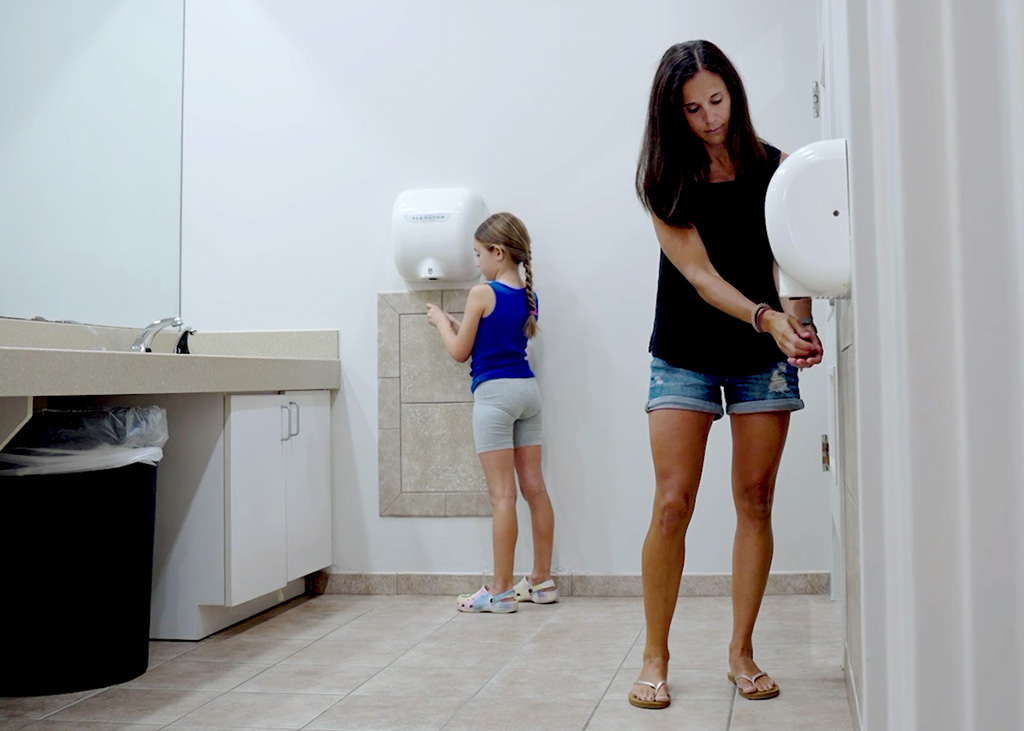
Photo courtesy of Excel Dryer
Across the United States and Europe, research shows users want touch-free drying solutions.
As designers and facility managers examine how washrooms function, they are increasingly adopting technologies that streamline user movement, reduce contact points, and avoid conditions that commonly lead to mess. The survey findings indicate that users respond most strongly to restrooms that are orderly, predictable, and easy to navigate—and touch-free systems have become central to achieving this outcome. Rather than being add-ons or conveniences, these technologies now serve as the structural foundation for a hygienic restroom environment.
The shift is driven as much by operational efficiency as by user perception. Facility managers in all surveyed regions ranked maintenance effort as a key consideration in restroom design, citing predictable function, reduced waste, and fewer failure points as essential to keeping the space clean. Touch-free technologies help address precisely those concerns. When faucets, flush valves, dispensers, and dryers operate automatically, the restroom is easier to keep tidy and easier to reset, even during peak traffic.
Rethinking the User Path: Reducing Contact Through Smart Sequencing
A central theme emerging from both user feedback and facility operations is the importance of creating a smooth, linear handwashing sequence. Systems that require users to touch multiple surfaces or move with wet hands across the space introduce opportunities for contamination and create conditions that survey respondents consistently identified as “dirty”: water migration, floor drips, paper litter, and wet countertops.
Design teams are responding by specifying fixtures that reduce friction along the handwashing path. Touch-free faucets, automated soap dispensers, and integrated drying systems allow the user to complete every step—wash, rinse, and dry—in one place without changing posture or reaching across other fixtures. This reduces lateral movement, which in turn reduces water on the floor and helps maintain a more orderly environment. The user sees a simpler, cleaner, more intuitive sink. The operator sees a system that eliminates several of the most frequent sources of maintenance calls.
Sensor Faucets
The role of the faucet has broadened beyond basic handwashing. Designers now view it as a control point that can either prevent or create a mess, depending on how it functions. Sensor faucets provide consistent flow duration, minimize splashing, and prevent prolonged running, each contributing to a cleaner overall facility.
Survey data from Spain and Germany made clear that architects prioritize hygienic performance at this stage of the handwashing sequence. Their specification decisions reflect a preference for fixtures that eliminate touchpoints, precisely regulate water flow, and prevent pooling on counters. Users share the same preference: a predictable flow makes the process more comfortable and reduces the likelihood of water spilling over the basin or onto surrounding surfaces.
Because water on the floor was one of the highest-ranking indicators of “dirty” restrooms among U.S. facility managers, sensor faucets that keep water contained at the point of use also directly support operational goals.
Automated Flush Valves
Automated flush valves address two issues that frequently affect both perception and maintenance. First, they remove one of the most obvious high-touch surfaces in the restroom. Second, they ensure that fixtures reset reliably after each use. Consistency matters as much as hygiene: toilets that do not flush thoroughly or require repeated manual operation disrupt traffic flow and increase the workload for cleaning staff.
Across European surveys, “effort to maintain” was repeatedly cited as a top priority for facility managers and restaurant operators. Automated flush valves reduce that effort by ensuring consistent performance throughout the day. They also help control odor—another factor strongly associated with perceived cleanliness.
Touch-Free Dispensers
Although soap dispensers and paper dispensers may appear to be minor elements within the restroom, both user and operator data suggest they play an outsized role in shaping how clean the space feels. In the U.S. study, a non-functioning paper towel dispenser ranked nearly as high as overflowing trash in signaling a dirty space. The failure is immediately visible and inconveniences the user, who may leave the restroom without thoroughly drying their hands or generate additional waste by retrieving towels from alternative locations.
Touch-free dispensers alleviate several of these problems. Automated soap dispensers regulate quantity, reduce drips, and prevent buildup on counters. Touch-free paper dispensers help reduce overuse and dispense more predictably. But perhaps more importantly, they remove a category of mechanical touch points that—when they fail—ranked significantly higher than dryer failures as a signal of a dirty restroom in both consumer and facility-manager responses.
Still, the surveys point toward an unmistakable trend: while touch-free paper systems are improvements over manual dispensers, the long-term movement in many building types is toward drying approaches that eliminate paper altogether.
High-Efficiency Hand Dryers in Practice
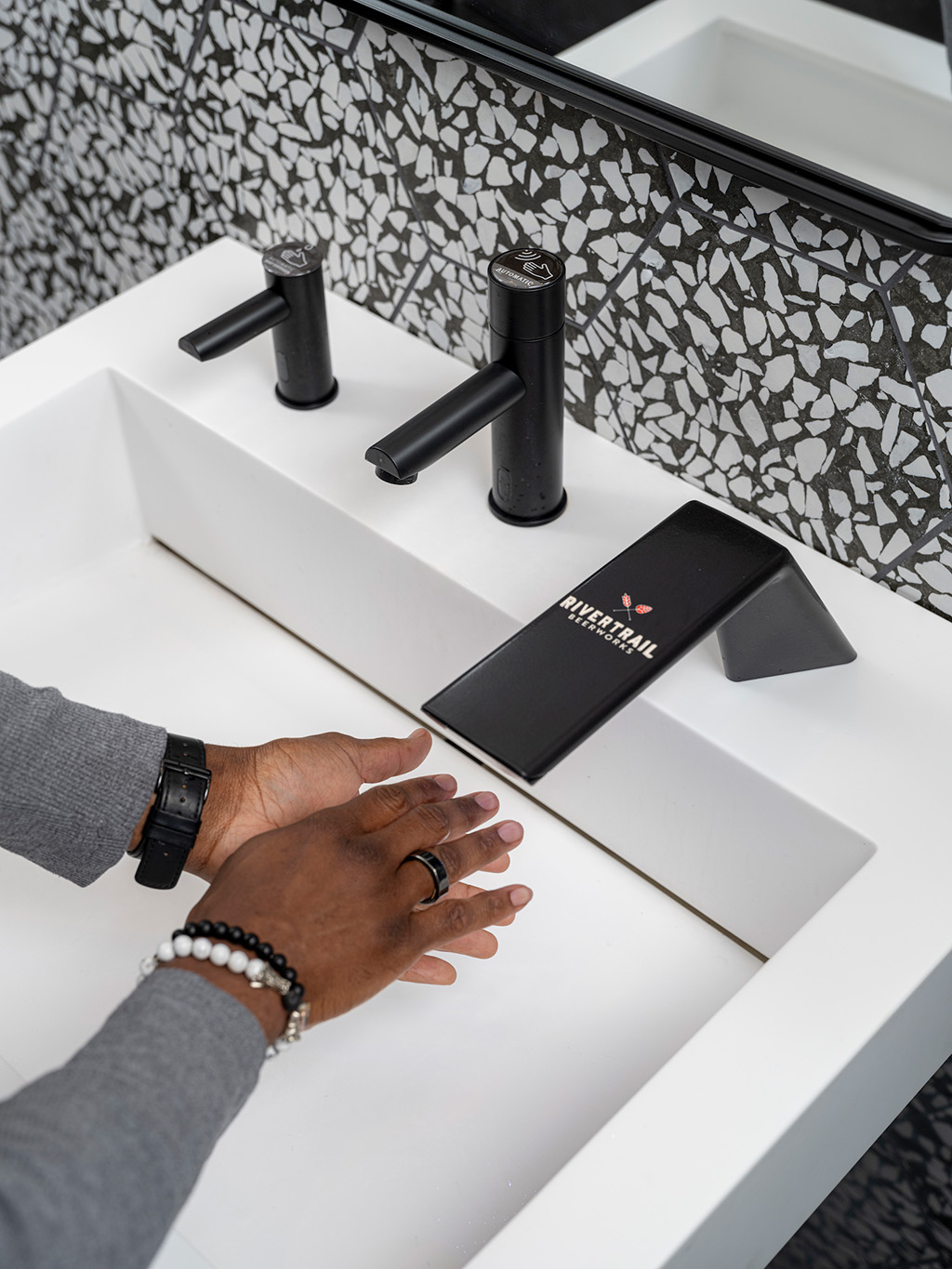
Photo courtesy of Excel Dryer
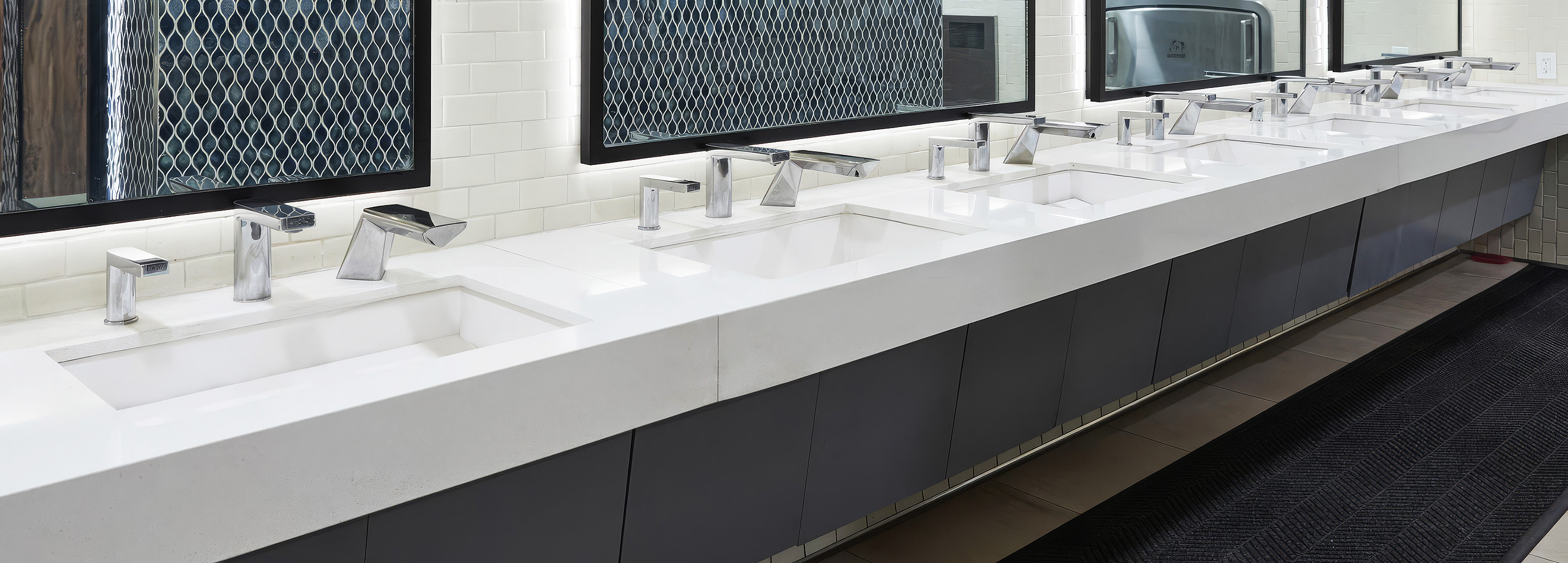
Integrated touch-free sink systems with built-in high-efficiency hand dryers enable complete wash-and-dry functionality at a single station, minimizing touchpoints for superior hygiene.
Hand drying emerged as one of the most critical differentiators in both the U.S. and European data. Users frequently associate dryers with reduced clutter, fewer touchpoints, and restrooms that remain cleaner for longer. Facility managers viewed them through the lens of operational benefits: dryers eliminate the need for restocking, reduce trash volume, prevent overflowing bins, and reduce the hours required to maintain the restroom.
There is also mounting awareness of filtration performance. HEPA filtration, highlighted in several European surveys, improves user confidence by providing cleaner airstreams during drying. Operators noted that filtration adds an additional layer of hygiene-forward performance, especially in facilities pursuing wellness certifications.
Not all drying technologies are equivalent from a design standpoint. Integrated sink-mounted dryers address the challenges of water migration by keeping hands within the basin during drying. This reduces the drips and puddles that ranked high on the list of negative cleanliness indicators for both consumers and facility managers. From a design perspective, these systems create a unified aesthetic and reduce the number of fixtures projecting into circulation space.
Hands-Free Doors and the Extended Touchless Pathway
The movement toward touchless technology does not end at the sink or the stall. Many designers are now rethinking the entire sequence of restroom entry and exit. Doors are among the highest-touch components in any public restroom, making them a natural focal point for modernization.
Solutions range from fully automatic door systems in high-capacity buildings to hands-free pull hardware or foot-operated devices in smaller facilities. What unites these strategies is the intent to remove one of the last remaining shared surfaces along the restroom pathway. By pairing low-contact door systems with predictable touchless fixtures inside, designers create a continuous, hygienic experience that users understand instinctively and that operators can maintain with fewer interventions.
A More Predictable, More Orderly Restroom
Taken together, the technologies now shaping commercial restrooms share a common purpose: creating a clean, efficient pathway that reduces maintenance requirements and enhances users’ sense of safety and comfort. These strategies demonstrate how thoughtful technologies address each of those triggers through design, not by adding more labor but by reducing the conditions that cause disorder in the first place.
The result is a restroom that feels intuitive and dependable. Users encounter fewer touchpoints, fewer failures, and fewer reasons to question the space’s hygiene. Facility managers benefit from systems that reduce restocking, contain messes, and streamline their work. Architects develop solutions that improve both performance and experience in one of the most scrutinized areas of any building.
Operational and Environmental Impacts of Product Choices
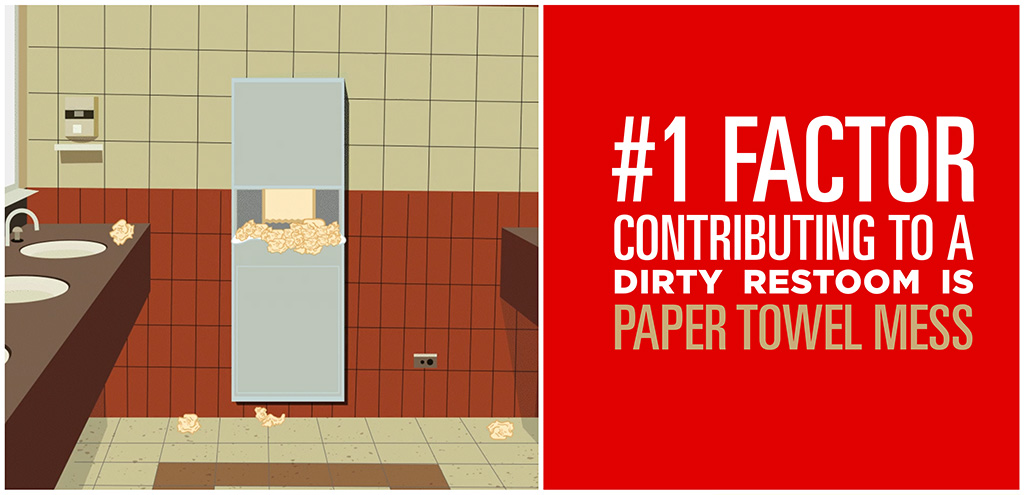
Image courtesy of Excel Dryer
Paper towel litter and overflowing bins ranked as the number one contributor to perceptions of a dirty public restroom across consumers, facility managers, and restaurant owners alike.
Across all regions represented in the global survey, respondents consistently linked washroom cleanliness and user confidence not only to visible conditions but to the underlying maintenance demands created by specific product choices. Facility managers, architects, and operators noted that waste accumulation, constant restocking, and fixture reliability shape day-to-day operations just as much as they influence user perception. As hygiene-forward design becomes standard practice, these findings have prompted project teams to examine the full operational and environmental consequences of their specifications. Teams now routinely consider how much material a restroom consumes, how often staff must intervene, and how resource-intensive each system proves over its whole lifecycle. In this context, product selection becomes a long-term strategy that determines patterns of labor, waste generation, water and energy use, and ultimately the performance and sustainability of the restroom.
Paper Towel Systems
Towels represent one of the most significant ongoing material streams in commercial washrooms, and their environmental footprint begins long before they reach a dispenser. In its most recent national Materials Flow Report, the U.S. Environmental Protection Agency (EPA) found that Americans generated 67.4 million tons of paper and paperboard in 2018, the latest year for which statistics are available, accounting for 23.1 percent of total municipal solid waste (MSW) that year. Of that total, 17.2 million tons were landfilled, a category that includes tissue-grade products such as paper towels, which are typically not accepted in recycling streams due to contamination.
Global forestry data also underscore the scale of fiber demand. Global forestry data show that industrial roundwood removals, a large share of which is used in pulp-and-paper production, exceed 2 billion cubic meters annually, with the United States remaining one of the world’s largest producers and consumers. While significant portions of tissue products include recycled content, virgin fiber remains essential for maintaining strength in the paper stream, linking restroom paper consumption directly to ongoing timber extraction.
The environmental impacts extend downstream as well. Once discarded, tissue products that enter landfills decompose under anaerobic conditions, producing methane, a greenhouse gas with a global warming potential 28 to 34 times greater than CO₂ over 100 years. The EPA’s national Greenhouse Gas Inventory identifies landfilled paper as a contributor to methane emissions, though capture rates vary across landfill facilities.
From an operational standpoint, paper towels create a predictable and recurring labor burden. They must be ordered, shipped, stored, stocked, and disposed of—tasks that facilities must repeat continuously, with higher frequency in busy environments. Overflowing bins, dispenser jams, and floor debris require custodial staff to intervene frequently, especially in restrooms serving restaurants, stadiums, airports, and retail centers. These cycles add labor hours that do not diminish as long as paper remains the primary drying method.
The Manufacturing Footprint
Understanding the environmental load of consumables also requires examining their upstream manufacturing stages. The paper and pulp sector is widely recognized as one of the more resource-intensive industrial categories. The pulp-and-paper sector remains one of the most water-intensive manufacturing industries in the United States, with recent USGS estimates showing withdrawals of approximately 700 million gallons per day for paper production alone.
Energy demand within the pulp and paper sector has been well documented by the U.S. Department of Energy (DOE). Although the DOE’s detailed profiles were developed in the early 2000s, they remain the most recent comprehensive federal evaluations of the sector’s energy intensity. According to the DOE, the U.S. pulp and paper industry consumed 2,430 trillion Btu of energy in 2002, an amount surpassed only by a few other heavy industries. These reports also identify significant electricity and steam inputs across pulping, drying, and finishing processes.
Even as mills have improved efficiency through process optimization and combined heat-and-power systems, the production of these products remains energy- and water-intensive. Because towels are single-use consumables, these upstream burdens recur perpetually. Each incremental increase in towel usage, including the heightened post-pandemic preference for fresh-drying materials, amplifies impacts across the supply chain.
Lifecycle Evidence Comparing Dryers and Paper Towels
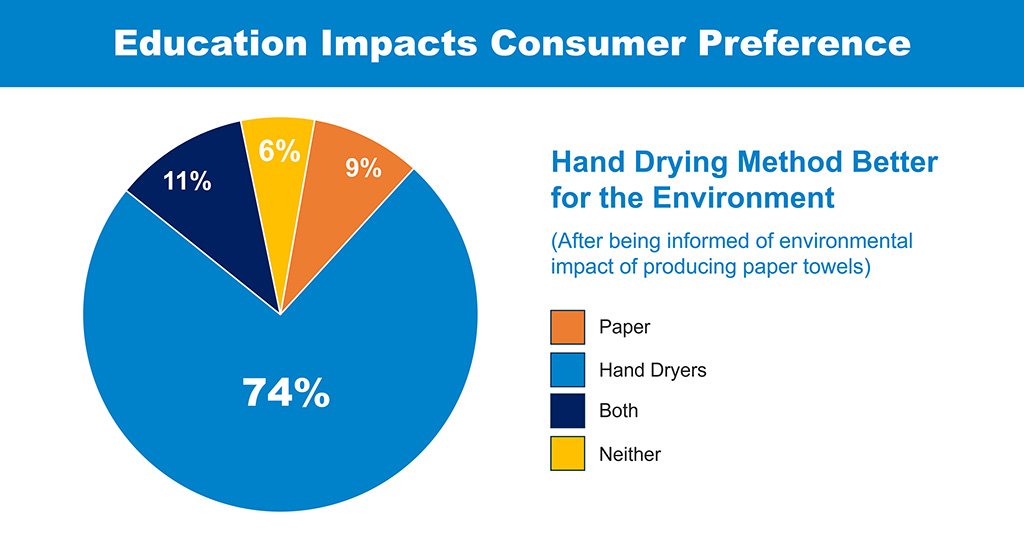
Image courtesy of Excel Dryer
Post-pandemic perceptions are clear—cleaner, safer restrooms are no longer optional but expected worldwide.
Lifecycle assessments (LCAs) provide a structured framework for evaluating environmental impacts across the manufacturing, transport, use, and disposal stages. Multiple peer-reviewed LCAs comparing hand-drying systems show that high-efficiency electric hand dryers can have lower total environmental impacts than paper towels in regions where the electricity grid is not heavily coal-dependent.
A recent cradle-to-grave lifecycle assessment (LCA) conducted by TrueNorth Collective provides a comprehensive evaluation of environmental impacts across hand-drying systems. The study found that all impacts were greater with paper towels. Specifically, the global warming potential of high-efficiency electric hand dryers was 83 percent lower than that of virgin-content paper towels and 81 percent lower than 100 percent recycled-content paper towels. High-efficiency hand dryers also reduce carbon footprint by up to 94 percent compared to 100 percent recycled paper towels in certain scenarios. These results do not suggest that dryers are impact-free, as they consume electricity and their environmental performance depends on the regional energy grid. However, unlike paper towels, dryers consolidate impacts into a durable device with a long service life, eliminating the recurring material throughput that drives much of paper towels’ environmental footprint.
Operational Costs and Labor Demands
The operational differences between paper-based and electronic systems become especially clear when labor and maintenance costs are taken into account. Towel systems require continuous staff attention: checking stock, refilling dispensers, emptying overflowing bins, clearing debris, and transporting waste. These repetitive tasks are especially burdensome in high-traffic facilities, where bins fill rapidly. EPA’s MSW data underscores the scale of fiber disposal nationally, waste that individual facilities must manage daily at their own cost.
Electric hand dryers shift operational spending from consumables to equipment operation. Modern high-efficiency dryers use optimized motors and brief run cycles, significantly reducing per-use energy consumption. Because they require no restocking or waste removal, they reduce custodial workload and minimize interruptions to restroom function. Facilities with heavy use—such as stadiums, shopping centers, and transportation hubs—often report measurable reductions in labor demands after transitioning from paper to high-performance dryers.
Downtime further affects costs. A jammed paper dispenser or a full waste bin can create immediate functional problems. Durable electrical fixtures, particularly those designed for high-volume environments, reduce unplanned maintenance and enable staff to focus on higher-value cleaning tasks that directly support sanitation and user experience.
Durability and Maintenance Efficiency
Another factor influencing long-term performance is durability. Facilities that rely on consumables inherently face more frequent failures, such as stockouts, jammed dispensers, or overflow conditions. Touchless, sensor-driven fixtures—including faucets, flush valves, and integrated drying systems—reduce opportunities for user error and minimize circumstances that create disorder.
Durability also contributes to a more stable cleaning regimen. For example, integrated sink-dryer systems help confine water to the basin area, reducing floor moisture and decreasing mopping frequency. Fixture reliability establishes a consistent baseline that supports hygiene, reduces time spent on reactive tasks, and promotes user confidence.
Streamlining Maintenance to Improve Hygiene and Sustainability
Systems that reduce supply volume, contain water movement, and minimize touchpoints allow staff to maintain a cleaner environment with fewer interventions. These efficiencies also have environmental benefits: less waste, fewer trash-hauling cycles, and reduced material and energy use associated with single-use towels.
Supporting LEED, WELL, and Sustainability Goals Through Product Selection
Sustainability and occupant well-being have become core priorities in contemporary commercial design. And restrooms, once peripheral to these discussions, are now recognized as essential contributors to green building performance. As the global surveys indicate, today’s users expect restrooms that are not only hygienic but also environmentally responsible and thoughtfully designed. The post-pandemic shift toward health-centered design has further strengthened the connection between hygiene, resource efficiency, and building performance standards.
Product selection plays a pivotal role in meeting these goals. Fixtures such as faucets, flush valves, hand dryers, dispensers, and restroom accessories can influence energy consumption, water use, material transparency, indoor environmental quality, and operational sustainability. As buildings pursue third-party certifications such as LEED and WELL, restrooms become strategic spaces for integrating high-performance products that support both environmental and health objectives.
How Restroom Products Can Contribute to Green Building Credits
LEED and WELL frameworks emphasize measurable outcomes related to resource efficiency and occupant well-being—two areas strongly influenced by restroom design. Products selected for these spaces can contribute to multiple credit categories, particularly in Water Efficiency, Materials and Resources, Energy and Atmosphere, and Indoor Environmental Quality.
Water Efficiency (LEED WE credits): Sensor-operated, low-flow faucets help reduce consumption by delivering controlled discharge and eliminating the risk of taps being left running. Because water pooling on counters and floors was identified in surveys as one of the top indicators of a dirty restroom, controlled-flow fixtures offer a dual benefit: they support hygiene while reducing water waste. Lower flow rates align with LEED prerequisites and help achieve points for indoor plumbing fixture efficiency.
High-efficiency flush valves similarly reduce water consumption, supporting both LEED Water Efficiency and overall operational sustainability. Touchless systems also help maintain consistent performance, reducing improper flushing or excessive use.
Energy and Atmosphere (LEED EA credits): Energy-efficient hand dryers can contribute to overall building energy performance. Modern units are typically engineered with optimized motors and lower wattage demands, offering faster dry times with reduced energy consumption. While hand dryers themselves do not earn direct LEED points, efficient products contribute to modeled reductions in overall building energy use, a core part of LEED’s Energy and Atmosphere credit strategy.
Electric hand dryers also reduce the embodied energy associated with the production, transport, and disposal of paper towels. These reductions do not count as formal LEED credits but support the broader intent of lifecycle efficiency.
Materials and Resources (LEED MR credits): Restroom product selection can influence material transparency, waste reduction, and long-term product durability. Products that carry third-party-verified disclosures—such as Environmental Product Declarations (EPDs) or Health Product Declarations (HPDs)—support LEED’s Materials and Resources credits. These disclosures allow project teams to make informed decisions about materials, supply chains, and lifecycle impacts.
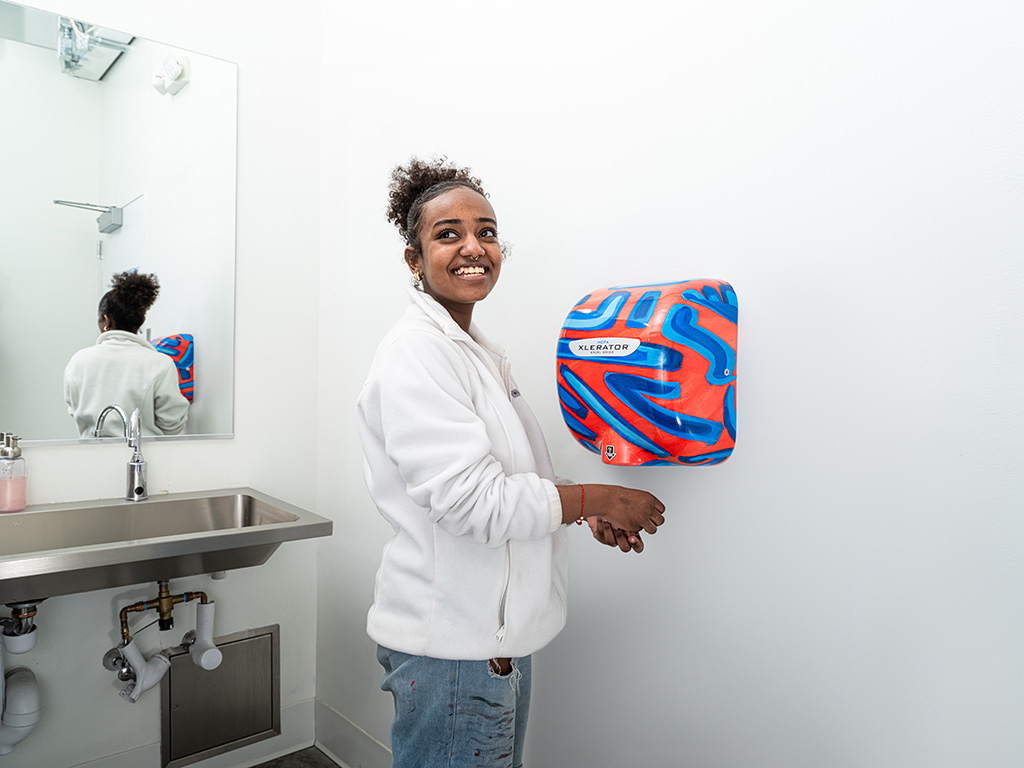
Photo courtesy of Excel Dryer
Specifying high-efficiency hand dryers in commercial restrooms eliminates paper towel waste, significantly reducing material sent to landfills.
Waste reduction plays a significant role in this category. The surveys revealed that paper towels contribute heavily to restroom maintenance challenges and waste generation. Reducing paper towel usage directly decreases landfill volume and lowers the operational impacts associated with single-use products.
Indoor Environmental Quality (LEED IEQ credits): Touchless technologies, when integrated thoughtfully, can help support a cleaner restroom environment by reducing contact points and minimizing the spread of contaminants. Cleanliness also affects user perception, comfort, and satisfaction, elements addressed in WELL criteria related to mental well-being and stress reduction.
Design strategies that prevent water accumulation on floors and counters also contribute to occupant safety and indoor environmental quality. By reducing slip hazards and maintaining cleaner surfaces, the restroom environment supports overall health objectives.
Material Transparency, Energy Efficiency, and Water Management Benefits: The global surveys underscore that users and facility managers alike value restrooms that feel clean, operate efficiently, and minimize waste. These expectations align naturally with green building frameworks.
Material Transparency and Durability: As product transparency becomes more common in the built environment, architects increasingly seek fixtures backed by documentation that clarifies material ingredients, potential emissions, and expected lifecycle. Durable fixtures that require minimal intervention reduce repair cycles and replacement frequency, conserving materials over the long term.
Products with robust construction and long service lives support sustainability by reducing waste and lowering the environmental impacts associated with premature disposal.
Energy Efficiency: Energy-efficient technologies, particularly in drying systems and sensor-based controls, help reduce consumption without compromising hygiene. High-efficiency hand dryers, for example, typically incorporate motors designed to deliver rapid drying with minimal energy input. When used in combination with occupancy-based lighting or ventilation controls, restrooms can contribute meaningfully to overall reductions in building energy use.
Water Management and Conservation: Restrooms are among the largest indoor water consumers. Efficient faucets, urinals, and flush valves reduce consumption while supporting hygiene. Sensor-operated fixtures prevent water waste and contribute to a cleaner environment by minimizing splashing and pooling. Water-efficient systems provide both environmental benefits and operational savings, especially in facilities with high foot traffic.
Conclusion
A clear cultural shift: cleanliness, hygiene, and user assurance now anchor restroom design in every market surveyed. While these priorities accelerated during the pandemic, they have since matured into long-term expectations that influence how architects, facility managers, and owners evaluate both products and systems. The case studies demonstrate that, whether a facility seeks to elevate the guest experience or to achieve a wellness certification, improvements in hygiene and maintenance efficiency can be achieved through thoughtful product selection—particularly when touch-free technologies, integrated systems, and air-quality enhancements are part of the strategy.
As restrooms become more visible markers of a building’s overall performance, the decisions made within these small spaces carry an outsized impact. With global data pointing to consistent user priorities, design teams now have a more precise roadmap for creating restrooms that support health, reinforce confidence, and operate more sustainably for years to come.
Kathy Price-Robinson writes about building and design. Her remodeling series “Pardon Our Dust” ran 12 years in the Los Angeles Times. She specializes in writing about buildings that are durable and resilient to climate disruptions. www.kathyprice.com.