
Weston Walker - Studio Gang
Human-centered sustainable design
Sponsored by Architectural Record | Presented by Weston Walker
Join Weston Walker of Studio Gang for a discussion exploring how human experience, environmental responsibility, and material innovation can shape architecture across scales. From high-rise projects in San Francisco to the Samuel H. Scripps Center for Hudson Valley Shakespeare and the mass timber David Rubenstein Treehouse at Harvard University, Walker examines how site, climate, program, structure, and material choices inform the design process. The conversation also considers embodied carbon, healthy materials, mass timber, and the importance of rigorous design iteration in creating buildings that respond meaningfully to both people and place.
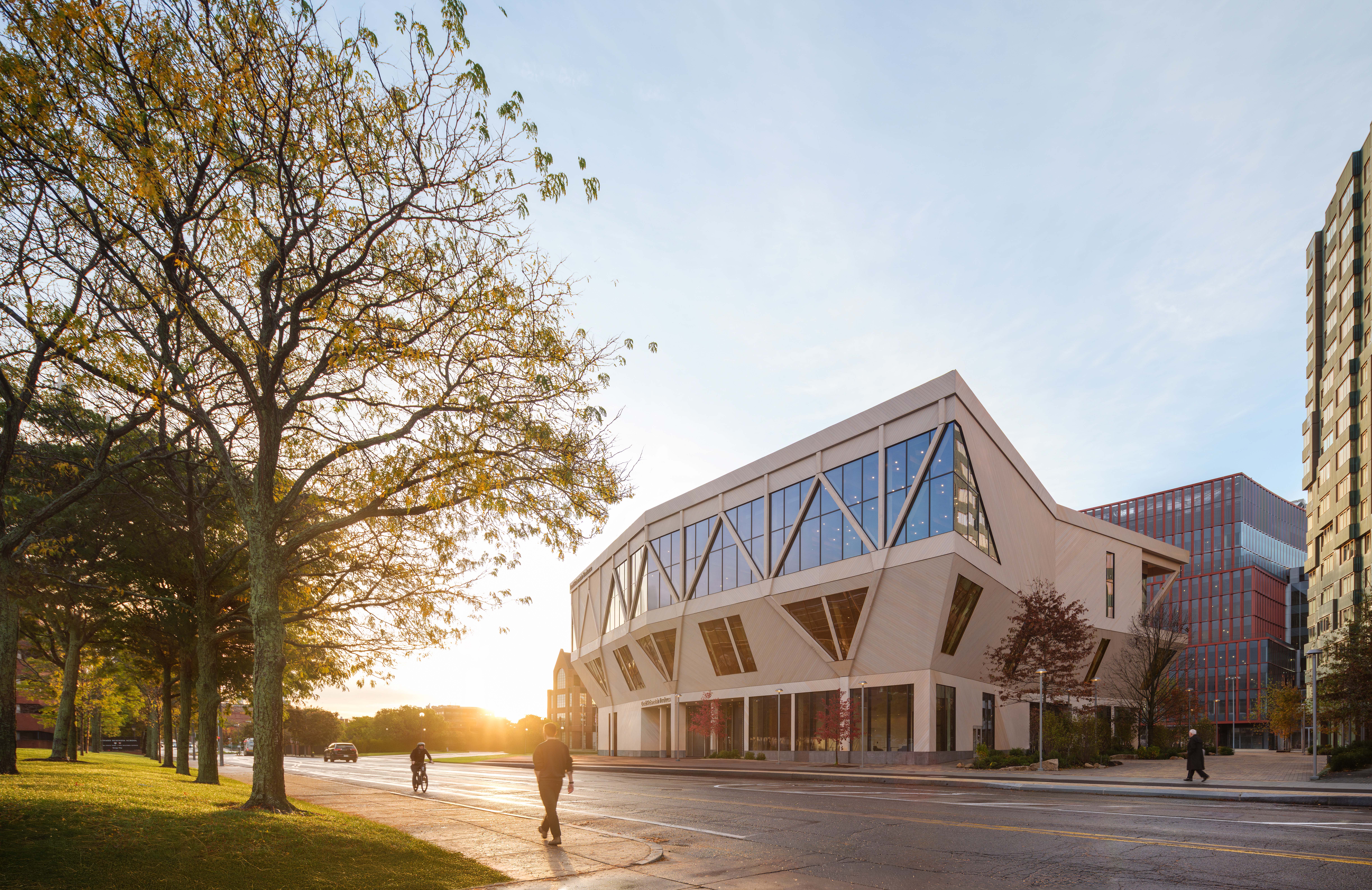
Photo courtesy of Jason O'Rear
 |
Aaron Prinz is the host of the Design:ED Podcast and holds a Masters of Architecture degree from the University of Texas at Austin. He was born and raised in the rural Northern California town of Red Bluff, just two hours south of the Oregon border. After one year of college, Prinz relocated to San Francisco to pursue a career in stand-up comedy. At age 26, he began studying architecture at Portland State University while interning at Studio Petretti Architecture led by Amanda Petretti. His professional contributions while at Studio Petretti were focused on a portion of the new Multnomah County Courthouse which is a prominent addition to the Portland skyline. He currently resides in Austin, Texas with his wife Roxanne where he continues to work as a designer. |

Architectural Record is the #1 source for design news, architect continuing education, and info on sustainability, houses, projects, and architectural products.
Originally published in Architectural Record
Originally published in August 2026
LEARNING OBJECTIVES
- Identify strategies for designing buildings that respond to local climate, context, human experience, and patterns of urban life rather than relying primarily on visual or stylistic references.
- Explain how architects can evaluate structural and design decisions through the lens of embodied carbon, including how material efficiency and targeted structural interventions can reduce environmental impacts.
- Describe how mass timber and other lower-carbon material strategies can support structural performance, occupant experience, healthy interiors, and broader sustainability goals.
- Discuss how iterative, multidisciplinary design processes can integrate structural, acoustic, environmental, programmatic, and human-centered criteria to create high-performing architecture at a range of scales.