
Scott Specht
Project Planning & Design - Building Design
Sponsored by Architectural Record | Presented by Scott Specht
This course examines residential design decision-making through the lens of Specht Novak’s Stealth House—an approximately 1,100 SF courtyard-oriented home on a constrained alley-access ADU lot.
The discussion explores how programming, privacy, daylighting strategy, massing, and durable material choices can produce a calm, high-performance living environment without relying on conventional street-facing glazing. The episode also addresses how architects can avoid repetitive “generic modern” outcomes by prioritizing client life patterns, context-sensitive massing, and long-term material behavior.
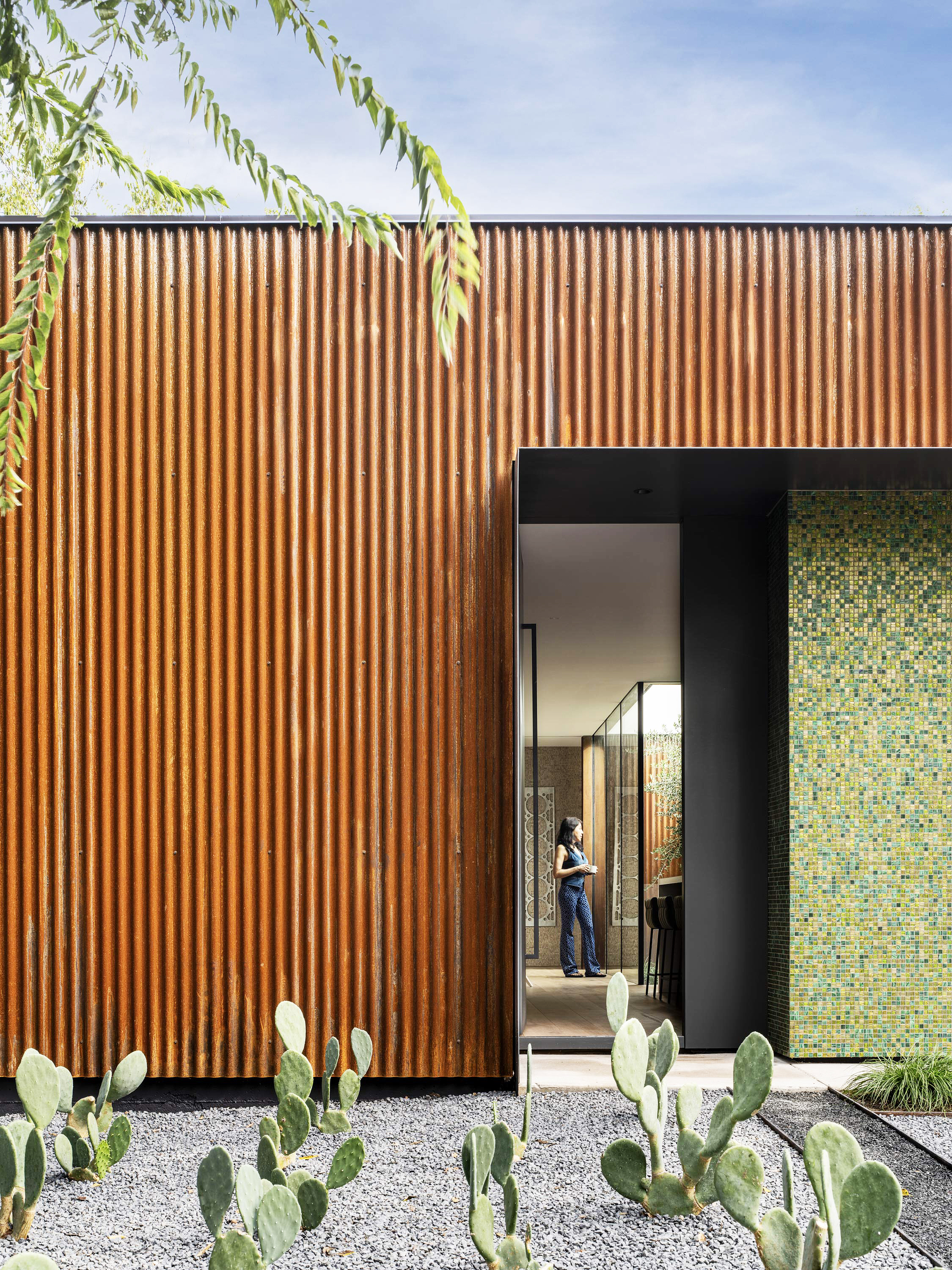
Photo courtesy of Leonid Furmansky
 |
Aaron Prinz is the host of the Design:ED Podcast and holds a Masters of Architecture degree from the University of Texas at Austin. He was born and raised in the rural Northern California town of Red Bluff, just two hours south of the Oregon border. After one year of college, Prinz relocated to San Francisco to pursue a career in stand-up comedy. At age 26, he began studying architecture at Portland State University while interning at Studio Petretti Architecture led by Amanda Petretti. His professional contributions while at Studio Petretti were focused on a portion of the new Multnomah County Courthouse which is a prominent addition to the Portland skyline. He currently resides in Austin, Texas with his wife Roxanne where he continues to work as a designer. |

Architectural Record is the #1 source for design news, architect continuing education, and info on sustainability, houses, projects, and architectural products.
Originally published in Architectural Record
Originally published in February 2026
LEARNING OBJECTIVES
- Identify design and planning tactics for achieving daylight and privacy in compact residential projects using courtyard-based organization rather than perimeter glazing.
- Evaluate how program-driven planning can generate strong architectural concepts without relying on stylistic repetition or purely formal “diagram-first” approaches.
- Differentiate durable, lower-maintenance exterior material strategies (e.g., brick, concrete, select claddings) from higher-maintenance choices (e.g., certain exterior wood applications) based on climate exposure and lifecycle considerations.
- Apply space-efficiency strategies—such as multi-use rooms and time-based programming—to reduce square footage while maintaining functional quality and occupant experience.