
Richard Olcott - Ennead
Building for People, Place, and Planet
Sponsored by Architectural Record | Presented by Richard Olcott
In this course, Richard Olcott of Ennead Architects explores a design philosophy rooted in context, purpose, and the public realm. Through projects ranging from the Princeton University Science and Research Complex to Stanford University’s Denning House, Olcott discusses how research, site conditions, programmatic needs, material selection, and environmental responsibility inform architectural decision-making. The conversation examines strategies for mass timber construction, high-performance laboratory design, adaptive reuse, occupant well-being, and designing within sensitive historic and natural environments. It also explores how Ennead’s cross-disciplinary practice and eLab research initiative allow lessons from different building typologies to inform new approaches to sustainability, materials, and building performance.
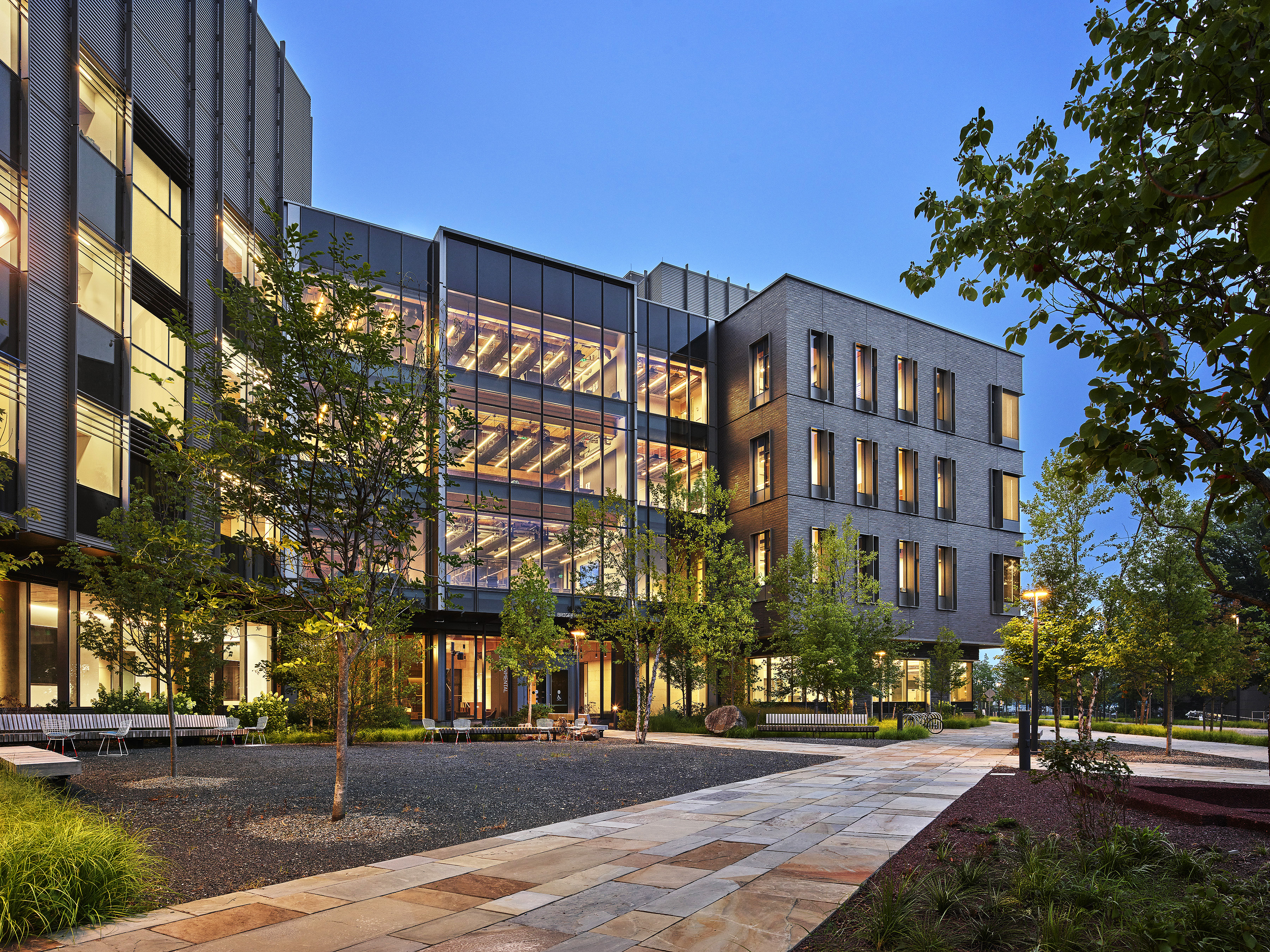
Photo coutesy of Alan Karchmer
 |
Aaron Prinz is the host of the Design:ED Podcast and holds a Masters of Architecture degree from the University of Texas at Austin. He was born and raised in the rural Northern California town of Red Bluff, just two hours south of the Oregon border. After one year of college, Prinz relocated to San Francisco to pursue a career in stand-up comedy. At age 26, he began studying architecture at Portland State University while interning at Studio Petretti Architecture led by Amanda Petretti. His professional contributions while at Studio Petretti were focused on a portion of the new Multnomah County Courthouse which is a prominent addition to the Portland skyline. He currently resides in Austin, Texas with his wife Roxanne where he continues to work as a designer. |

Architectural Record is the #1 source for design news, architect continuing education, and info on sustainability, houses, projects, and architectural products.
Originally published in Architectural Record
Originally published in September 2026
LEARNING OBJECTIVES
- Identify how urban, historical, environmental, and cultural context can inform architectural design decisions and support projects that respond meaningfully to their surroundings.
- Explain how sustainable strategies—including mass timber construction, building orientation, high-performance envelopes, electrification, green roofs, and material selection—can reduce environmental impacts while supporting occupant needs.
- Describe how programming, circulation, visibility, comfort, and access to natural surroundings can contribute to occupant well-being and create welcoming, functional environments.
- Evaluate how research, interdisciplinary collaboration, and knowledge-sharing across building typologies can improve design outcomes, including innovations such as bird-friendly glazing, adaptable buildings, and context-specific material systems.