Photo © Marco Cappelletti
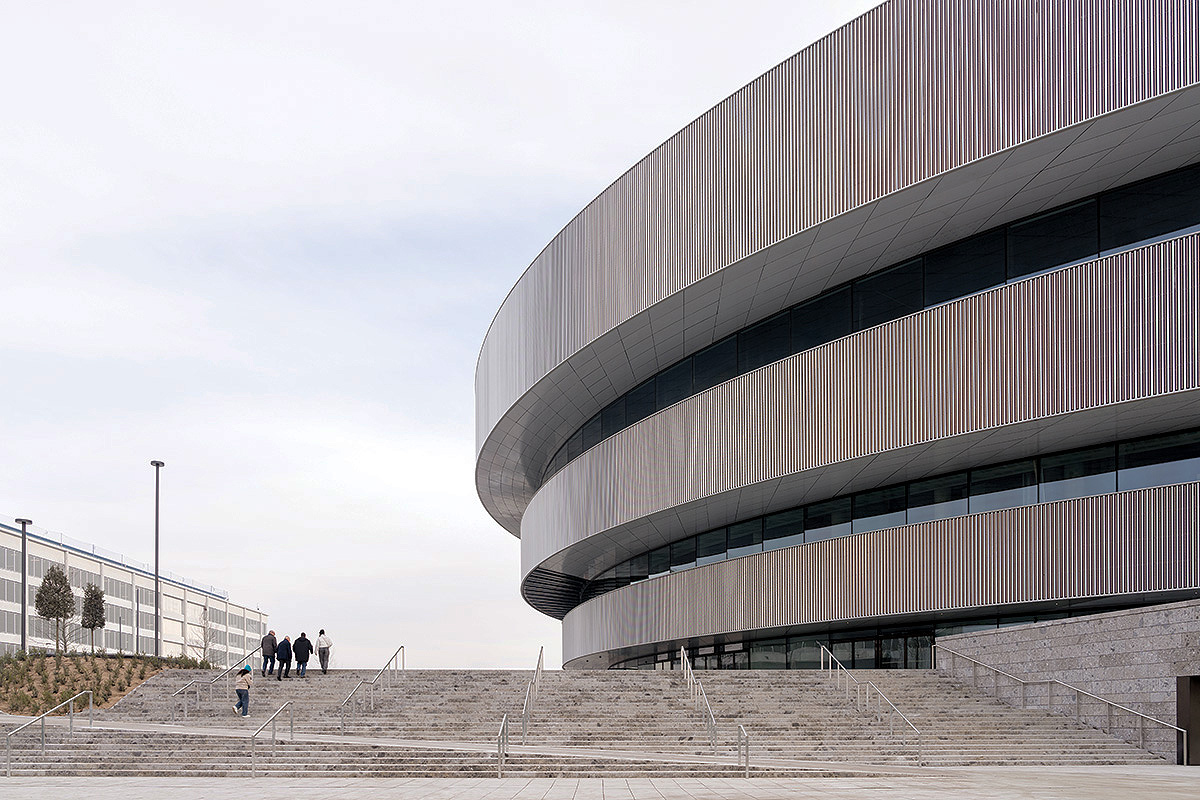
Santagiulia Arena.
It’s the cold hard truth: the Winter Olympics rarely lives up to the same degree of architectural spectacle that the public has come to expect from its summertime counterpart. This comes down to a matter of scale—about one-third as many athletes typically compete—and the outdoor nature of many sporting events on the calendar, where a dramatic snow-dressed slope or landscape suffices. Moreover, the energy infrastructure required to maintain ice rinks at the proper humidity and temperature comes with a hefty price tag that can easily eat into design budgets.
The Milano Cortina 2026 Winter Olympics and Paralympic Games, held February 6–22 and March 6–15 respectively, are no different. More than 2,900 athletes (compared to Paris 2024’s nearly 11,000) have flocked to Italy to vie for gold. There, Olympians and spectators alike will find little in the way of new construction, but planners have carefully considered the afterlife of the games. And, for the first time in history, two cities will jointly play the role of host in what is being billed as one of the most geographically diverse Olympics ever.
“Milan and Cortina d’Ampezzo represent two different but complementary aspects of Italy’s identity,” Andrea Varnier, chief executive officer of Fondazione Milano Cortina 2026, told RECORD. “Milan embodies innovation, contemporary energy, and a global outlook, while Cortina,” set amid the spectacular Dolomite range and the site of the 1956 Winter Olympics, “speaks to Alpine heritage, tradition, and sporting history. Rather than choosing one over the other, our games want to bring these identities together,” he says.
After the opening ceremony, to be held at Milan’s renowned (and now endangered) San Siro Stadium, most sporting events played on ice—including hockey, speed skating, and figure skating—will continue in the city. Mountain and sliding events, such as bobsleigh, luge, biathlon, and skiing, will take place in and around Cortina d’Ampezzo, while two other Alpine outposts—Val di Fiemme and Valtellina—will welcome snowboarders, freestyle skiers, and ski jumpers. This vastly spread out model, Varnier explains, allowed organizers to leverage existing venues. “By building only essential new infrastructure, the games minimize environmental impact, in alignment with the Olympic Agenda 2020+5,” a road map of recommendations, among them the fostering of socially and environmentally sustainable games, assembled by the International Olympic Committee (IOC) for host cities.
In fact, Milano Cortina’s plan that 93 percent of its venues be existing or refurbished helped the Italians clinch, in 2019, the Olympic bid over Sweden’s Stockholm Åre, another proposal for two cities that sought to use (a still impressive) 75 percent existing venues. For example, Milan’s Forum di Assago, which has temporarily hosted ice sports in the past, was easily upgraded with more robust humidity- and temperature-control systems, enhancing its future viability. Additionally, of the six Olympic Villages established for the 2026 games, three depend on existing hotels, two are temporary, and the lone new build will serve as subsidized housing for students afterward. The overall approach follows in the footsteps of Paris 2024, one of the “least architectural” games—in terms of ground-up construction—in decades (RECORD, July 2024) and portends what the world will soon see in Los Angeles, a city that has committed to only reusing and refurbishing venues for the next summer Olympiad.
It isn’t unusual for host cities’ organizing committees to build on previous lessons, says Christophe Dubi, executive director of Olympic Games at the IOC. “The Milano Cortina 2026 team met with and learned from the organizing committees before them, and they too will transfer that knowledge and experience to LA28, French Alps 2030, and so on.” As Dubi puts it, by following the Olympic Agenda 2020+5 framework, “the Olympic Games now adapt to the local context and not the other way around, with hosts making the best use of the venues they already have, where people have the know-how, and where they’re well equipped.” In the case of Milano Cortina, he explains, this means benefiting from decades of winter-sports development in the region and event expertise from hosting other international competitions.
While this strategy of fewer new projects and more renovation might translate to smarter, cheaper, and more sustainable games, should the public still expect ambitious adaptive reuse and renovation projects? And given their generally smaller scale, will a Winter Olympics ever be able to kick-start economic regeneration in the same way that London’s summer games did (RECORD, June 2012)?
It may be possible, but it is too early to tell. The largest building campaign leading up to Milano Cortina was the design and realization of the Santagiulia Arena, overseen by David Chipperfield Architects and Arup. This venue, jacketed in a media facade, will host hockey during the games, but it will go on to serve as a venue for concerts, performances, and other sports championships. The arena also anchors one of the largest master-planning efforts currently under way in Italy, which will see thousands of affordable housing units come online alongside an entirely new commercial district.
In this story, RECORD dives into the most complex building projects undertaken for the 25th Winter Olympic Games.
Santagiulia Arena
The clear frontrunner, architecturally speaking, of the 2026 Winter Games is the Santagiulia Arena. It is also the first building to be constructed as part of the revised 160-acre Santa Giulia neighborhood master plan, overseen by Mario Cucinella Architects (MCA) for Lendlease after it inherited a scheme initiated more than two decades ago by Foster + Partners for Italian developer Risanamento.
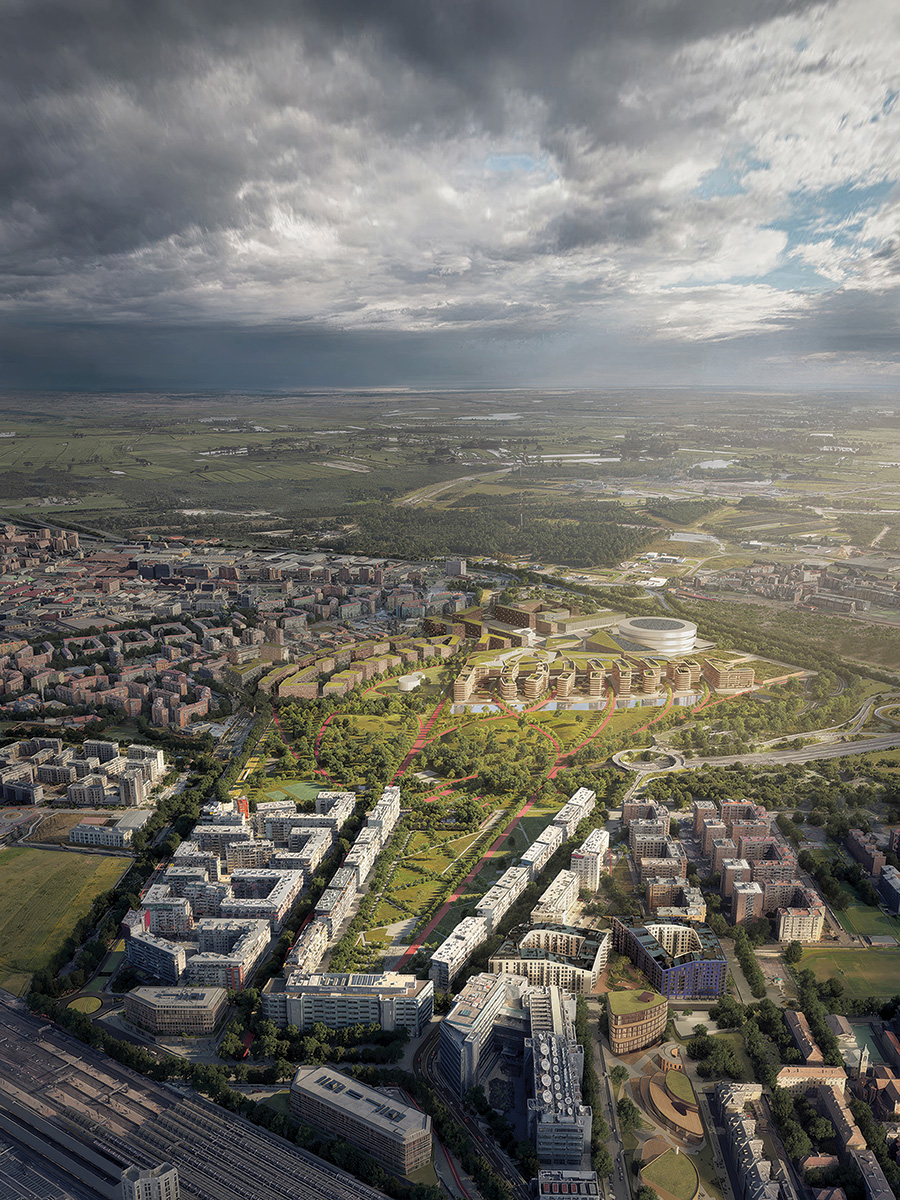
Image © Mario Cucinella Architects
The arena is the first building to be erected as part of Mario Cucinella Architects’ master plan for Santa Giulia (above & below).
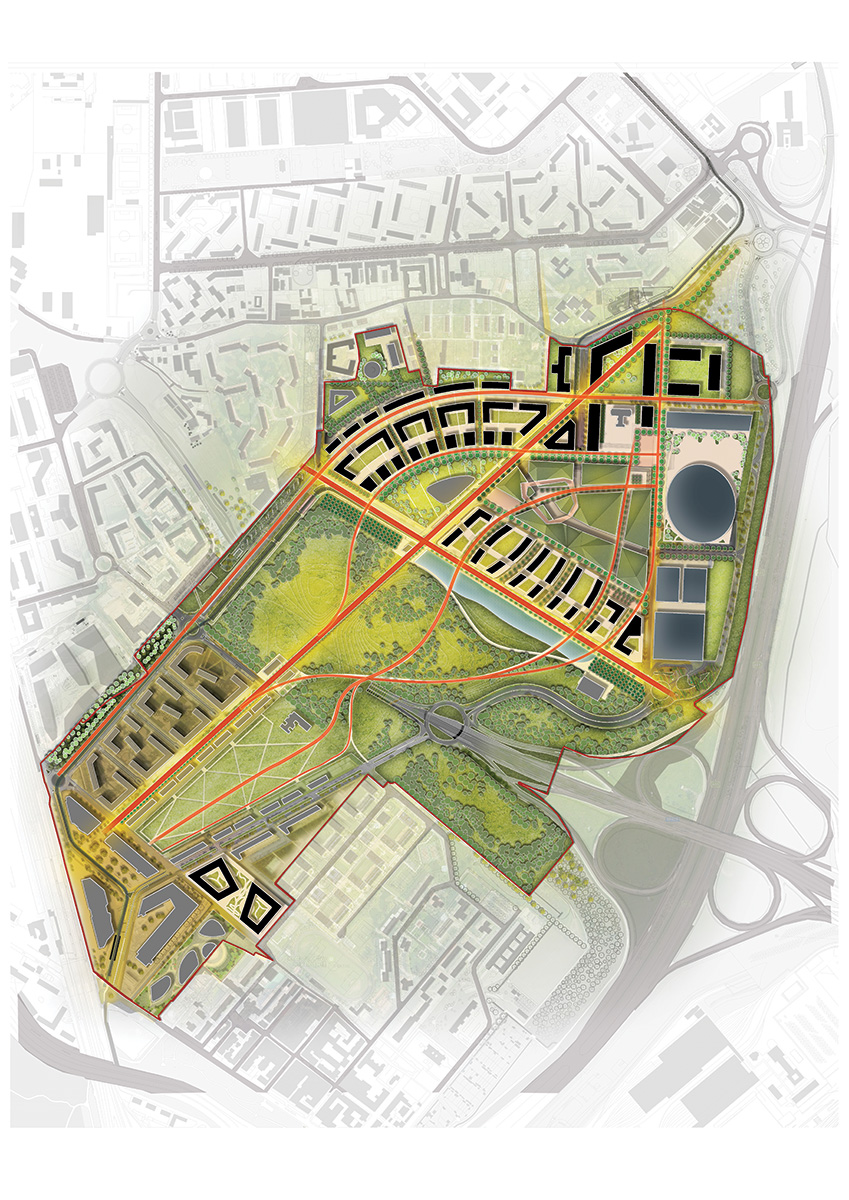
Image © Mario Cucinella Architects
Although shuttles will be in operation during the games, the site, a former brownfield about 3½ miles southeast of the Duomo, is not yet easily accessible by Milan’s extensive tram and metro network. But proximity to Rogoredo Station, a stop along Italy’s high-speed rail system, and Linate, the smaller of the Lombard capital’s two airports, as well as Tangenziale Est, a main highway, provides easy access from the rest of the country and abroad.
From the beginning, Santagiulia Arena was envisioned as a multifunctional venue—it was, after all, financed by German ticketing and live entertainment company CTS Eventim. “Designing a flexible bowl was the impetus for every thought around the project,” says Giammichele Melis, director at Arup. “It was as though we started with the engine of the building and then made the envelope to wrap it.” CTS Eventim engaged the engineering company first, to optimize seating and configurability, and then commissioned David Chipperfield Architects to design the envelope, among other elements. The two firms continued to finesse the project, placing the 16,000-seat arena atop a plinth opposite a parking garage, forming a piazza that was landscaped by the agronomist Laura Gatti, a collaborator on Milan’s famous Bosco Verticale, or Vertical Forest, apartment buildings.
Photo © Marco Cappelletti
Santagiulia Arena.
It’s the cold hard truth: the Winter Olympics rarely lives up to the same degree of architectural spectacle that the public has come to expect from its summertime counterpart. This comes down to a matter of scale—about one-third as many athletes typically compete—and the outdoor nature of many sporting events on the calendar, where a dramatic snow-dressed slope or landscape suffices. Moreover, the energy infrastructure required to maintain ice rinks at the proper humidity and temperature comes with a hefty price tag that can easily eat into design budgets.
The Milano Cortina 2026 Winter Olympics and Paralympic Games, held February 6–22 and March 6–15 respectively, are no different. More than 2,900 athletes (compared to Paris 2024’s nearly 11,000) have flocked to Italy to vie for gold. There, Olympians and spectators alike will find little in the way of new construction, but planners have carefully considered the afterlife of the games. And, for the first time in history, two cities will jointly play the role of host in what is being billed as one of the most geographically diverse Olympics ever.
“Milan and Cortina d’Ampezzo represent two different but complementary aspects of Italy’s identity,” Andrea Varnier, chief executive officer of Fondazione Milano Cortina 2026, told RECORD. “Milan embodies innovation, contemporary energy, and a global outlook, while Cortina,” set amid the spectacular Dolomite range and the site of the 1956 Winter Olympics, “speaks to Alpine heritage, tradition, and sporting history. Rather than choosing one over the other, our games want to bring these identities together,” he says.
After the opening ceremony, to be held at Milan’s renowned (and now endangered) San Siro Stadium, most sporting events played on ice—including hockey, speed skating, and figure skating—will continue in the city. Mountain and sliding events, such as bobsleigh, luge, biathlon, and skiing, will take place in and around Cortina d’Ampezzo, while two other Alpine outposts—Val di Fiemme and Valtellina—will welcome snowboarders, freestyle skiers, and ski jumpers. This vastly spread out model, Varnier explains, allowed organizers to leverage existing venues. “By building only essential new infrastructure, the games minimize environmental impact, in alignment with the Olympic Agenda 2020+5,” a road map of recommendations, among them the fostering of socially and environmentally sustainable games, assembled by the International Olympic Committee (IOC) for host cities.
In fact, Milano Cortina’s plan that 93 percent of its venues be existing or refurbished helped the Italians clinch, in 2019, the Olympic bid over Sweden’s Stockholm Åre, another proposal for two cities that sought to use (a still impressive) 75 percent existing venues. For example, Milan’s Forum di Assago, which has temporarily hosted ice sports in the past, was easily upgraded with more robust humidity- and temperature-control systems, enhancing its future viability. Additionally, of the six Olympic Villages established for the 2026 games, three depend on existing hotels, two are temporary, and the lone new build will serve as subsidized housing for students afterward. The overall approach follows in the footsteps of Paris 2024, one of the “least architectural” games—in terms of ground-up construction—in decades (RECORD, July 2024) and portends what the world will soon see in Los Angeles, a city that has committed to only reusing and refurbishing venues for the next summer Olympiad.
It isn’t unusual for host cities’ organizing committees to build on previous lessons, says Christophe Dubi, executive director of Olympic Games at the IOC. “The Milano Cortina 2026 team met with and learned from the organizing committees before them, and they too will transfer that knowledge and experience to LA28, French Alps 2030, and so on.” As Dubi puts it, by following the Olympic Agenda 2020+5 framework, “the Olympic Games now adapt to the local context and not the other way around, with hosts making the best use of the venues they already have, where people have the know-how, and where they’re well equipped.” In the case of Milano Cortina, he explains, this means benefiting from decades of winter-sports development in the region and event expertise from hosting other international competitions.
While this strategy of fewer new projects and more renovation might translate to smarter, cheaper, and more sustainable games, should the public still expect ambitious adaptive reuse and renovation projects? And given their generally smaller scale, will a Winter Olympics ever be able to kick-start economic regeneration in the same way that London’s summer games did (RECORD, June 2012)?
It may be possible, but it is too early to tell. The largest building campaign leading up to Milano Cortina was the design and realization of the Santagiulia Arena, overseen by David Chipperfield Architects and Arup. This venue, jacketed in a media facade, will host hockey during the games, but it will go on to serve as a venue for concerts, performances, and other sports championships. The arena also anchors one of the largest master-planning efforts currently under way in Italy, which will see thousands of affordable housing units come online alongside an entirely new commercial district.
In this story, RECORD dives into the most complex building projects undertaken for the 25th Winter Olympic Games.
Santagiulia Arena
The clear frontrunner, architecturally speaking, of the 2026 Winter Games is the Santagiulia Arena. It is also the first building to be constructed as part of the revised 160-acre Santa Giulia neighborhood master plan, overseen by Mario Cucinella Architects (MCA) for Lendlease after it inherited a scheme initiated more than two decades ago by Foster + Partners for Italian developer Risanamento.
Image © Mario Cucinella Architects
The arena is the first building to be erected as part of Mario Cucinella Architects’ master plan for Santa Giulia (above & below).
Image © Mario Cucinella Architects
Although shuttles will be in operation during the games, the site, a former brownfield about 3½ miles southeast of the Duomo, is not yet easily accessible by Milan’s extensive tram and metro network. But proximity to Rogoredo Station, a stop along Italy’s high-speed rail system, and Linate, the smaller of the Lombard capital’s two airports, as well as Tangenziale Est, a main highway, provides easy access from the rest of the country and abroad.
From the beginning, Santagiulia Arena was envisioned as a multifunctional venue—it was, after all, financed by German ticketing and live entertainment company CTS Eventim. “Designing a flexible bowl was the impetus for every thought around the project,” says Giammichele Melis, director at Arup. “It was as though we started with the engine of the building and then made the envelope to wrap it.” CTS Eventim engaged the engineering company first, to optimize seating and configurability, and then commissioned David Chipperfield Architects to design the envelope, among other elements. The two firms continued to finesse the project, placing the 16,000-seat arena atop a plinth opposite a parking garage, forming a piazza that was landscaped by the agronomist Laura Gatti, a collaborator on Milan’s famous Bosco Verticale, or Vertical Forest, apartment buildings.
During the concept stages, “the Sphere in Las Vegas was being built, and it was the big new thing in arena design,” says Leander Bulst, project lead at Chipperfield’s Berlin outpost. A media facade was a client request from the get-go. “On day two, we asked ourselves: What should the arena look like when the media facade is off? We didn’t want a TV set.” The office of the Pritzker Prize–winning architect devised an elegant solution for the rather unconventional brief: high-contrast bands, elliptical in plan, that alternate between inset glazing and a mediated scrim of vertically oriented aluminum tubes. Between each tube is a programmable LED element. Visitors circulate on the glazed levels, while systems are hidden behind the scrim, which grows in height with each successive tier.
This scheme required a lot of calibration, explains Bulst. Given the curvilinear geometry of the envelope, the LED elements farthest away from viewers begin to disappear behind the tubes. Nevertheless, the light from the LEDs continues to reflect off nearby metallic surfaces, creating a gentle glow.
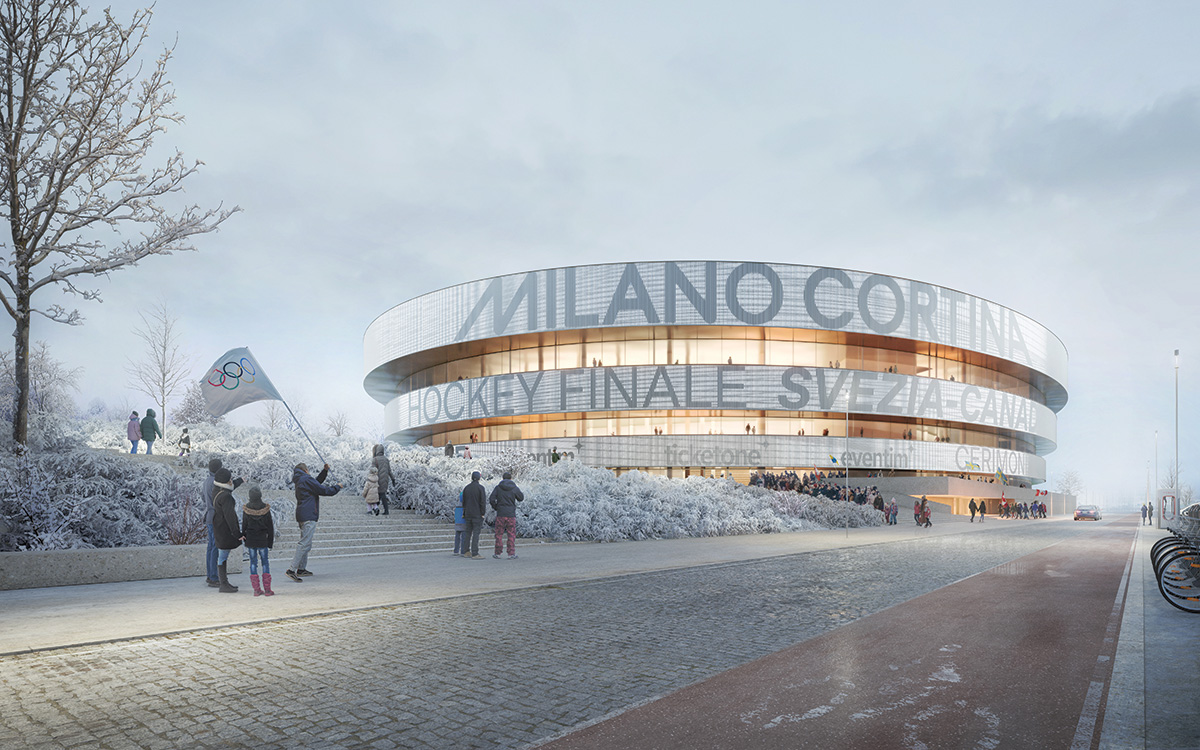
Image © Onirism Studio
LEDs will allow the facade to display text.
Inside, visitors amble toward their seats, passing concessions and amenity spaces that were still being completed at press time. In one configuration, the horseshoe-shaped permanent seating focuses attention on a stage at one end of the arena, but, for the Winter Games and subsequent sporting events, the stage can be removed to accommodate temporary seating and to create a central field of play. “The climatization needs for an Olympic match on ice are completely different from those of a concert,” Melis points out. But the engineering team was able to design around this, with minimal redundancy in the building systems.
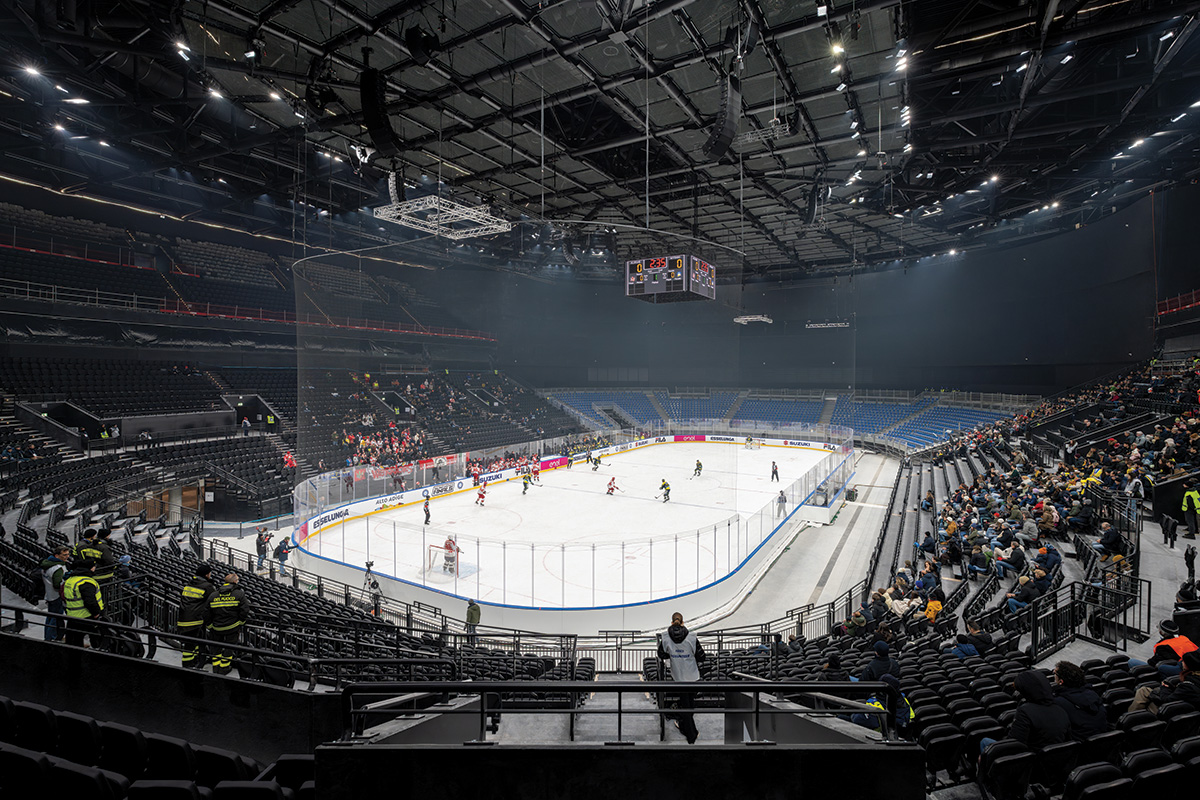
Image © Marco Cappelletti
At Santagiulia Arena (top of page), temporary seating is installed to encircle a rink.
Across the piazza—which, along with the plinth, is clad in Milan’s omnipresent stone, Ceppo di Gré—a parking garage will facilitate visitors’ traveling by car until the public-transit network catches up with development. Chipperfield designed the garage with this temporary challenge in mind. “What happens when they don’t need it as a car park anymore? Many are demolished for the simple and very practical reason that the floor-to-floor height doesn’t allow for any other use,” Bulst says. The team thus planned each level to be about 12 feet tall, without sloped floor plates, opening up the possibility for the structure to be adaptively reused for another purpose in the future.
For the time being, there is little to do in this sliver of Santa Giulia, and the arena’s presence amid bare fields is particularly striking. But MCA has planned a children’s museum, affordable housing, a library, and a conservatory for the immediate surroundings. “The previous master plan that failed was not the failure of Norman Foster,” says Mario Cucinella. “The first developer did not understand that this area of Milan is still growing. They thought to make the apartments very expensive, in an area that few people were willing to live in just yet.”
MCA’s master plan delineates two main axes—“like the Roman system,” he says—to create different quadrants. One extends the grid of the city at the enclave’s fringes. Another establishes a retail and commercial district near the arena, which then filters visitors through a “comb of housing” and onward to what is expected to become Milan’s third-largest public park, a distinction that Cucinella emphasizes. “There will not be fences,” he says.
“It is too bad not more of the master plan will be finished,” Cucinella laments. But projects famously move slowly in Italy, even in cosmopolitan Milan. Although there is still much to do (builders are racing against the clock to wrap critical construction in time for the first hockey match), it’s clear that eyes will stay focused on Santa Giulia well after the games conclude.
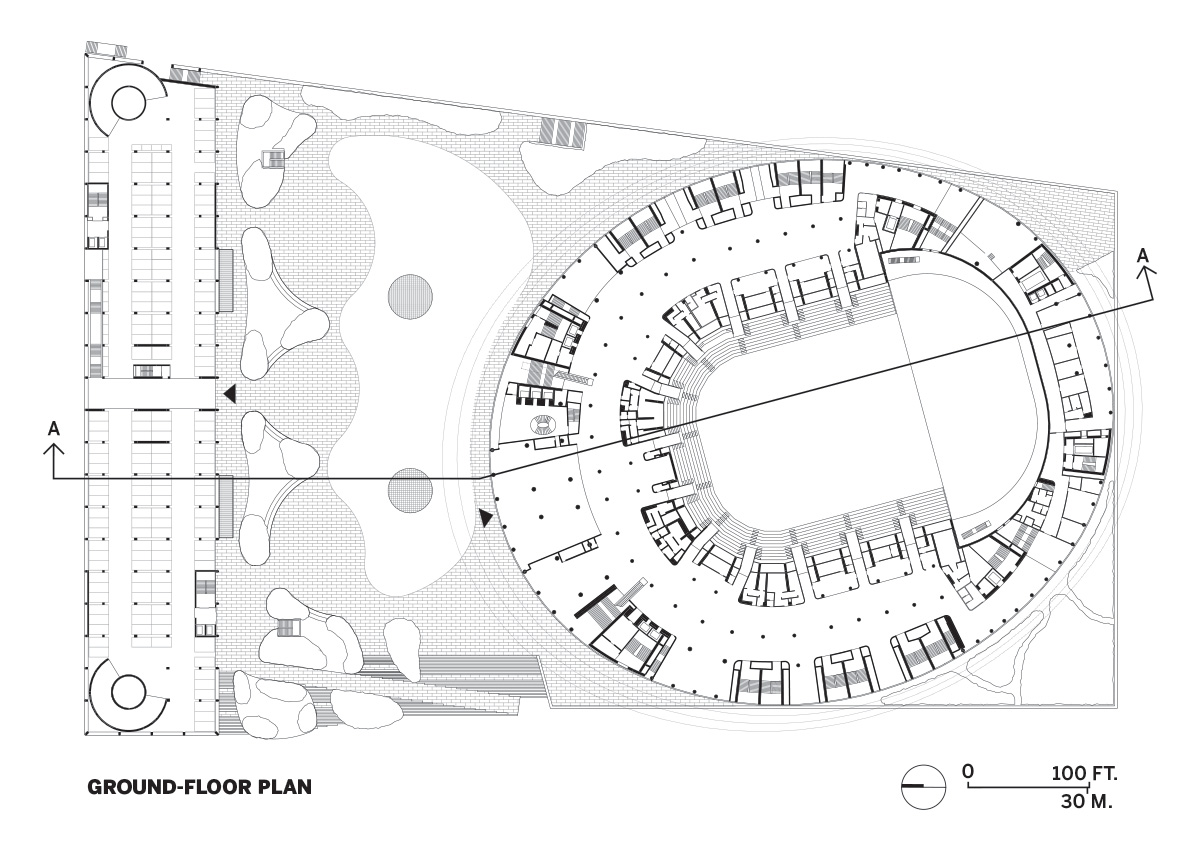
Image courtesy of David Chipperfield Architects
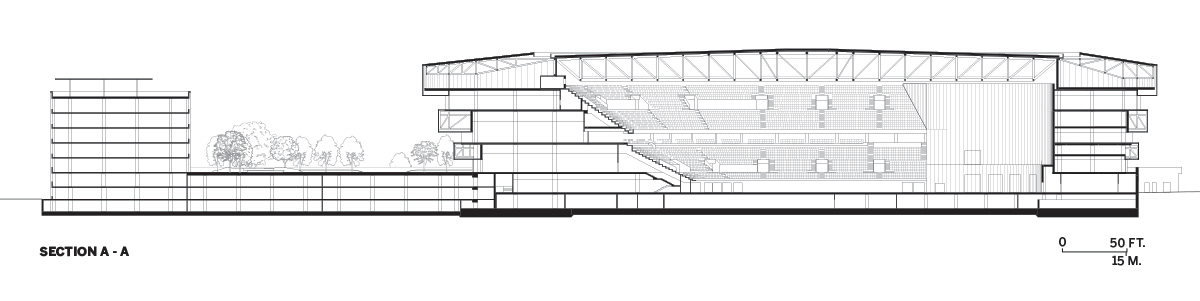
Image courtesy of David Chipperfield Architects
Olympic Village in Milan
When Turin hosted the 2006 Winter Olympics, few expected the complications that arose from the conversion of the Olympic Village into housing. Not only are these accommodations often designed more like dormitories than apartments, but the financial crisis that followed the games upended all work. Many of the buildings were occupied by squatters, and it was only until relatively recently, about two decades later, that a handful of the original 39 buildings have been successfully converted.
“We did not want another post-Olympic transition disaster,” says Gabriele Pascolini, associate director at SOM, which was engaged by Italian developer Coima to design a village that could function as subsidized housing for students after the games. “This project was on time and on budget,” he says, noting its low €1,600 per square meter ($173 per square foot) price. “For what it cost, we are happy how it turned out, and about the ideas behind it.”
Located on the site of a former rail yard in Porta Romana, a neighborhood made more notable by the opening of the Fondazione Prada (RECORD, July 2015), the village consists of six eight-story blocks. Leaning on the expertise of builders who specialize in data centers, each floor was installed at a steady clip using prefabricated modules. The organization is straightforward: a double-loaded corridor of single and double rooms, with a communal kitchen and study rooms on every level, all above a plinth of amenities (spaces that, for the purposes of the Olympics, will host press conferences with the athletes living there). Simple shed roofs feature photovoltaics, and the facade is finished with two tones and two textures: a smooth white stucco and a raked gray.
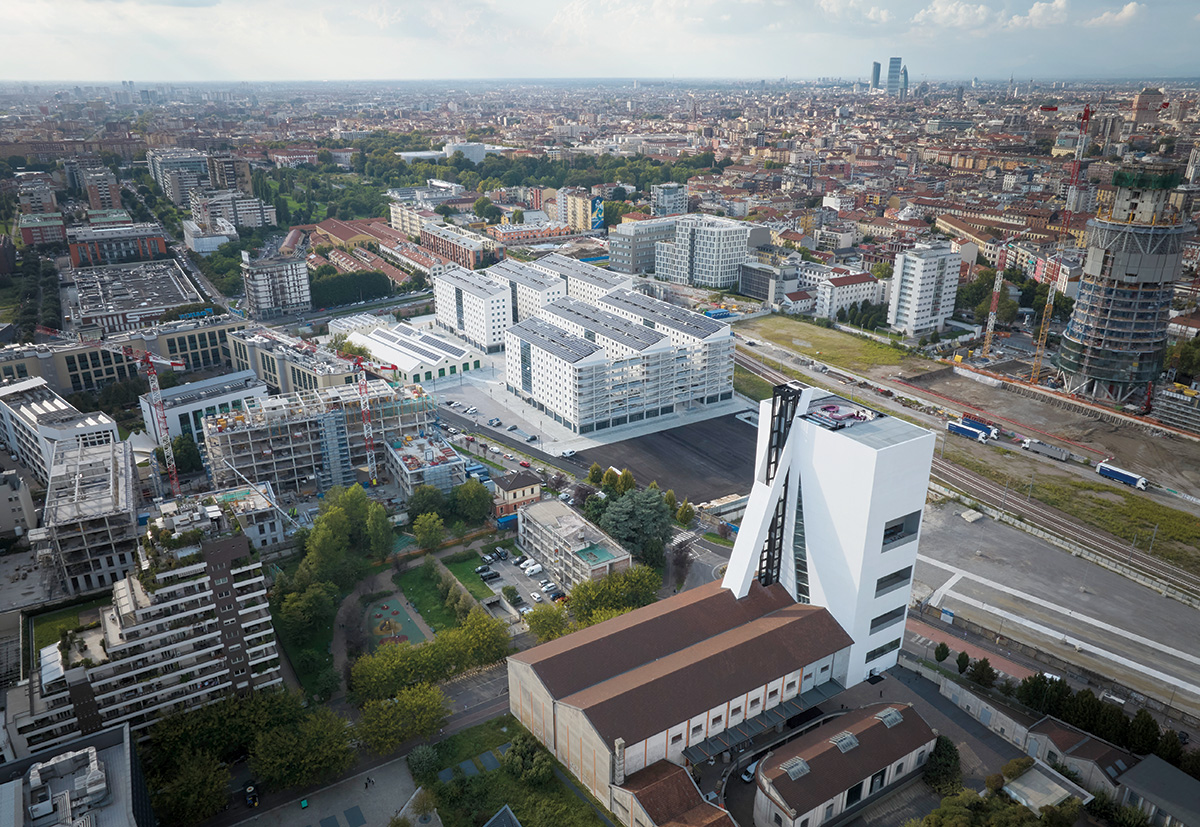
Photo © Dave Burk/SOM
The Olympic Village in Milan (above) consists of six buildings that are interconnected by open-air walkways (below).
Also part of the village are two former industrial warehouses that have been freshened up to serve as a cafeteria. Intimate planted yards are placed between the housing blocks, but the entire development is given a sense of interiority via two bridge structures, which connect three buildings each, at either end. Integrated trellises train plants to grow upward, while Olympians (and, after, students) will be able to use them to walk to neighboring buildings to visit friends and classmates. They also echo the traditional ballatoio, or long balconies, of many neighboring industrial buildings, explains the architect.
Given the proximity of Università Bocconi, converting the Olympic Village to subsidized student housing was a pragmatic solution. But this was not the case in Cortina, where about 1,400 Olympians will reside in a temporary village of 370 mobile houses. In the more isolated areas of Valtellina and Val di Fiemme, planners made use of existing hotel infrastructure.
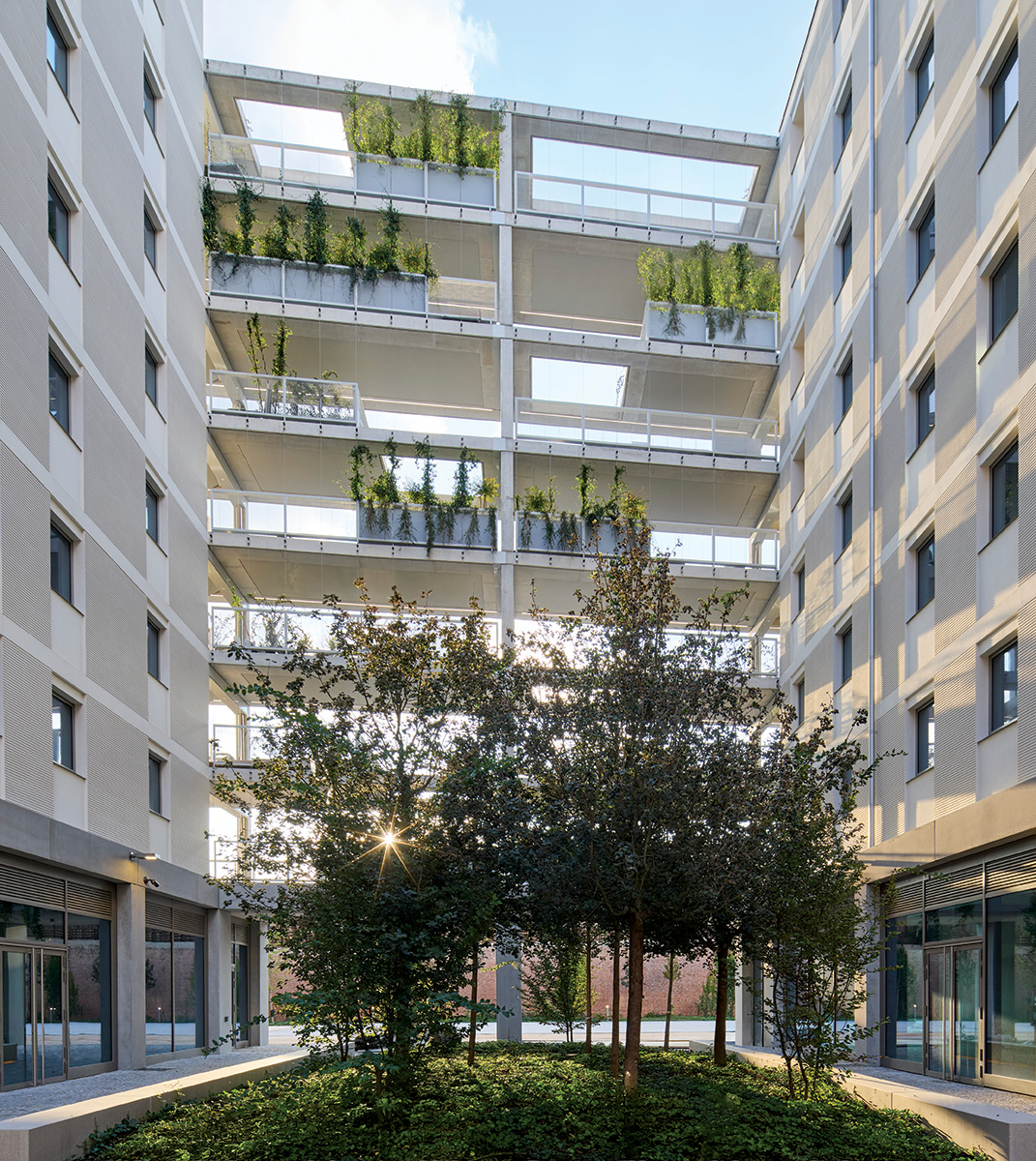
Photo © Dave Burk/SOM
Rho Fiera Milano
The most complicated renovation effort of the games has taken place at Rho Fiera Milano, a 2.1 million-square-foot fairground complex designed by Rome-based Studio Fuksas more than two decades ago (RECORD, August 2005). Most architects and designers know it as the longtime home of Salone del Mobile, the annual furniture trade show that draws well over 300,000 visitors from around the world.
Architect Massimiliano Fuksas once described Rho Fiera Milano as too big to be considered a building—it’s “a city in itself,” he said. Eight expansive warehouses, each measuring about 530 feet by 730 feet, straddle a nearly mile-long linear street covered by an undulant glazed canopy. Large as the warehouses are, they are each bisected lengthwise into two exhibition halls by a fire wall and dotted by a grid of columns supporting the roof—making them, as originally designed, inadequate for sporting events that have large playing areas.
The two westernmost warehouses, consisting of halls 13 and 15 as well as 22 and 24, have been extensively modified to temporarily host a women’s ice hockey rink and a 400-meter speed-skating oval. As Alessandro Pavesi, facility and infrastructure manager at Rho Fiera Milano, explains, the conversion required the disassembly of the fire wall, the installation of hefty box trusses that could span the required lengths, and the deconstruction of original structural columns. The result of the work is two new 387,000-square-foot “live-domes,” each with a ring of grandstands to seat about 7,000 spectators. (Originally, speed skating was to take place at an oval in Baselga di Piné, in the Alps, not far from Cortina—but the cost of enclosing and chilling the currently open-air space proved too high.)
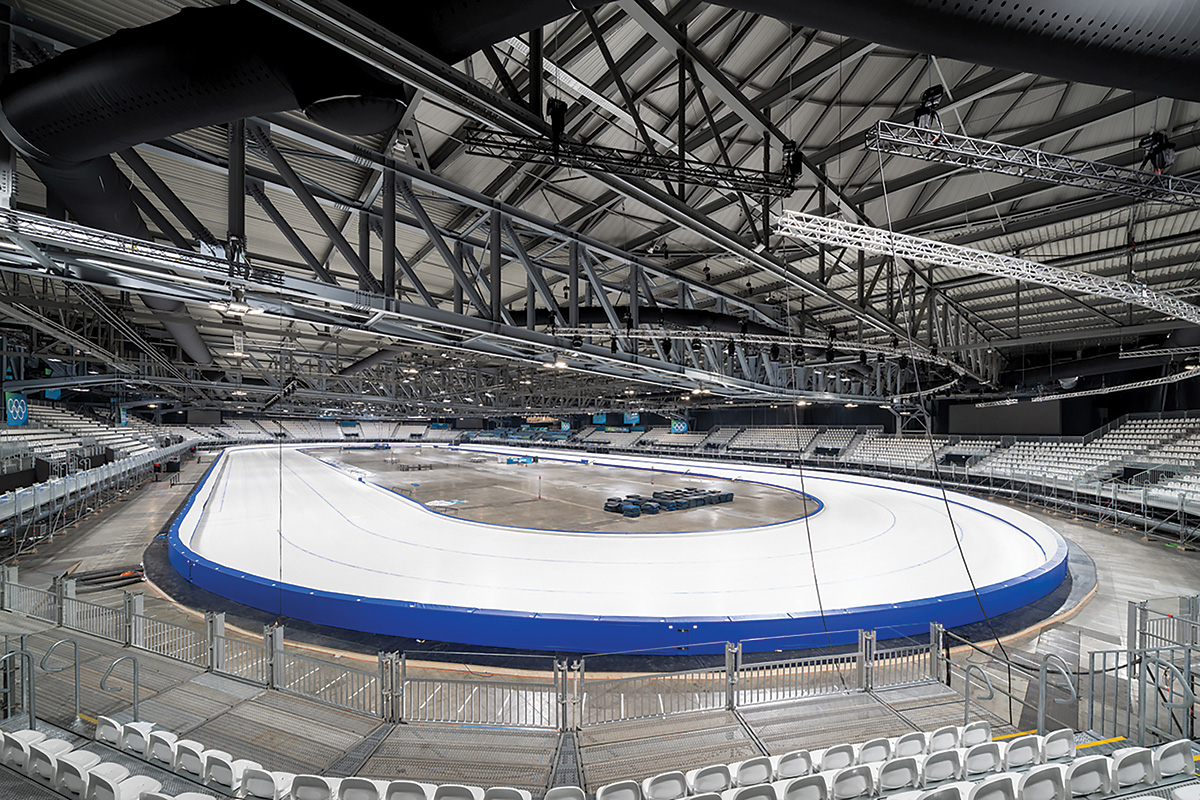
Photo © Marco Cappelletti
New box trusses, in slate blue, allowed Rho Fiera Milano to host speed skating.
Hosting these kinds of sports also requires extensive energy infrastructure to maintain a smooth, icy field of play, explains Angelo Spampinato, head of venue design and delivery at Fondazione Milano Cortina 2026. This is made even more challenging during a retrofit. “In a purpose-built space, the volume is intentionally designed to be compact and well insulated. With the energy demand required for the temperature- and humidity-control units, spaces for hockey and skating are typically the most expensive venues of the Winter Olympics.” This cost, he says, is often cited as a reason that host nations hesitate to bid for them. To help minimize the volume of air that needs to be chilled, temporary drapes ring the grandstands as well.
Getting the environmental conditions wrong can be a detriment to Olympians. “It doesn’t mean that the best athlete won’t win, but it might mean a gold medalist finishes the 100-meter race at 12 or 13 seconds instead of the more expected 9.5,” Spampinato adds. “If we’re successful here, hopefully this shows other nations that it will be possible to host these events in retrofitted spaces,” without incurring outsize energy expenses.
Now that the modifications have completed, staff at Rho Fiera Milano say that the two new “live-domes” will be able to continue hosting trade shows as well as large gatherings and concerts ranging from 30,000 to 45,000 people. And with the plethora of transit options nearby, these events will be easily accessible to the public too.
Cortina d’Ampezzo and Environs
As the host of the 1956 Winter Olympic Games, Cortina d’Ampezzo served as a strategic complement to Milan. Nestled in the Dolomitic Alps, the town is a long-standing getaway for outdoorsy Italians (the population of 6,000 easily swells to 50,000 during peak times around the August and December holidays), and it already had extensive sports infrastructure—including the Tofane Alpine Skiing Centre and, a little farther north, the world-class Anterselva Biathlon Arena.
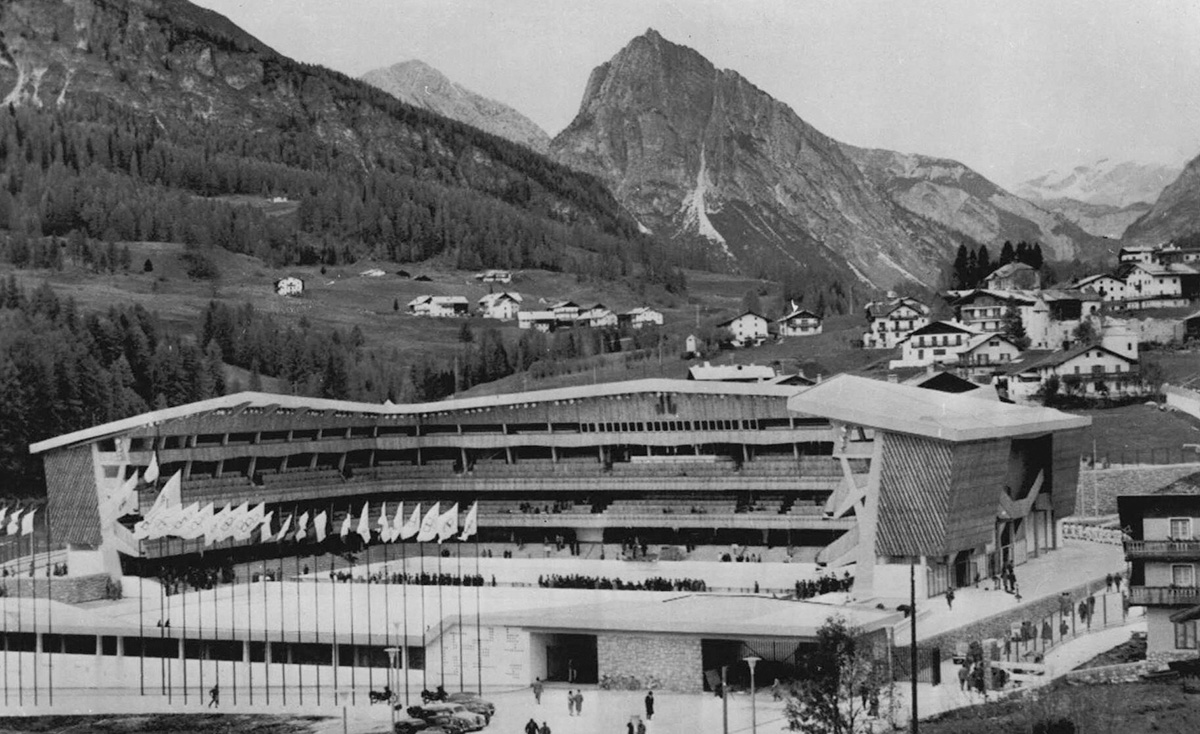
Chief among Cortina’s existing structures is the Stadio Olimpico del Ghiaccio, built 70 years ago, which will accommodate what many consider to be the quirkiest of the winter competitions: curling. Designed by architect Mario Ghedina in collaboration with Francesco Uras and Riccardo Nalli, the three-story C-shaped venue was evocative for its time—its jagged silhouette an echo of the nearby mountains, its timber cladding a nod to regional tectonics. In the early 2000s, the open-air field of play was enclosed beneath an azure space frame and behind a glazed curtain wall, but Milano Cortina planners also added a temporary grandstand to increase the stadium’s capacity, from 2,500 to 3,600. The weathered wood cladding was also replaced. As is often the case when updating historic structures, access affected the renovation’s scope. “With a view toward expanding accessibility to the stadium for the disabled, a hundred new spots have been created with special seats that can be used by both able-bodied people and people in wheelchairs,” Alberto Serafini, director of works at SIMiCo, a government-formed engineering company charged with overseeing construction at sport venues, told Corriere della Sera. “Last summer, the lighting system of the playing field was completely redone, according to the standards required by the IOC.”
Photos © Superstock / Alamy Stock Photo
In Cortina, the existing Olympic Stadium (above) has been enclosed (below).
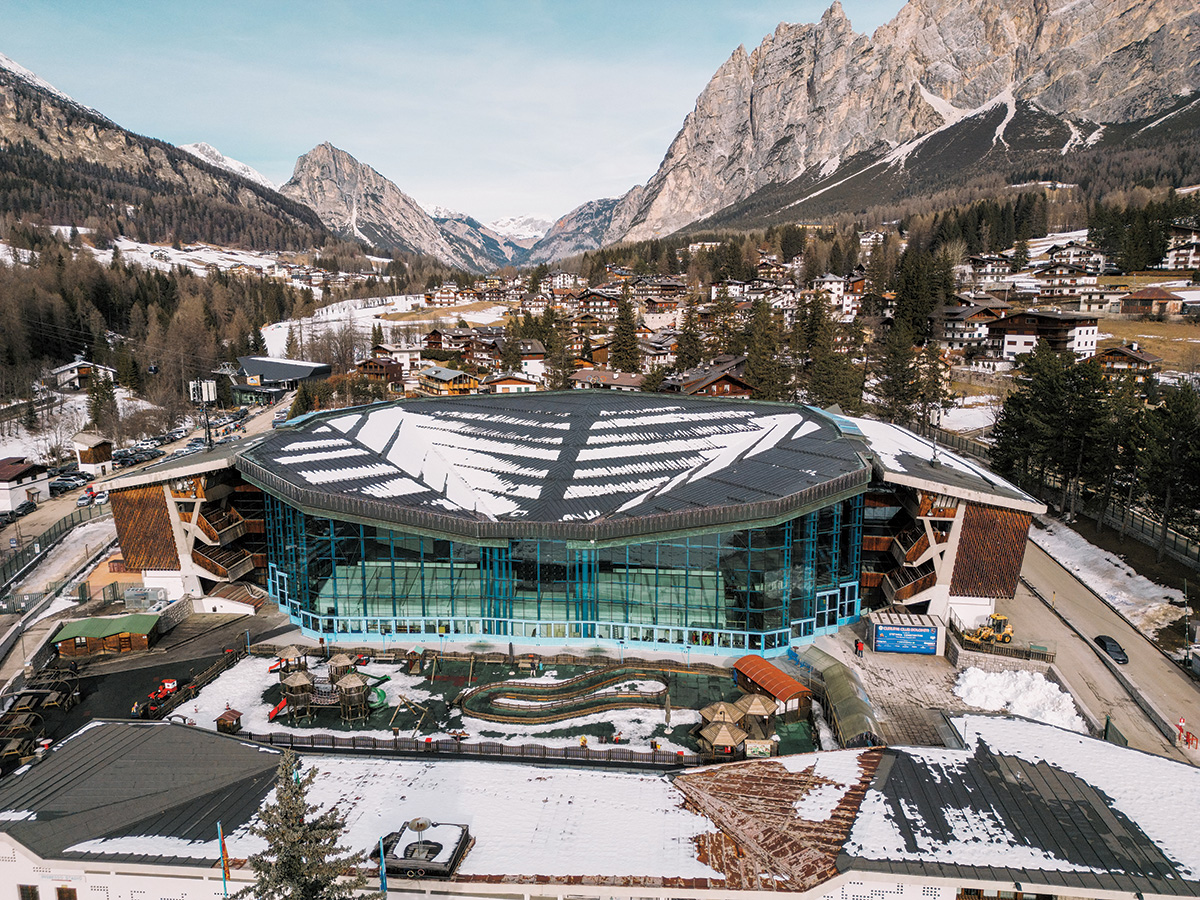
Photo courtesy Fondazione Milano Cortina
Cortina is also home to the Eugenio Monti Sliding Center for bobsleigh, luge, and skeleton competitions—considered to be some of the most dangerous sports on the docket. While the reuse of some elements of the 1956 sliding center aligned with Olympic sustainability goals, the renovations became so extensive that the IOC, in 2024, wary of deadlines, suggested the use of nearby venues in Austria and Switzerland as an alternative. At the time of this writing, the sliding center’s headhouse—depicted in early renderings as wrapped in an arching heavy-timber diagrid and leading to a curvilinear track capped by a green roof—does not appear to be finished. But the 16-turn course—homologated by the International Bobsleigh and Skeleton Federation last November—is ready for races. In a health-conscious and environmentally sensitive move, the sliding center is the first Olympic venue to use an advanced refrigeration system that largely substitutes glycol for more toxic ammonia. However, some critics have derided the decision to cut hundreds of mature pines for parts of the rebuilt track.
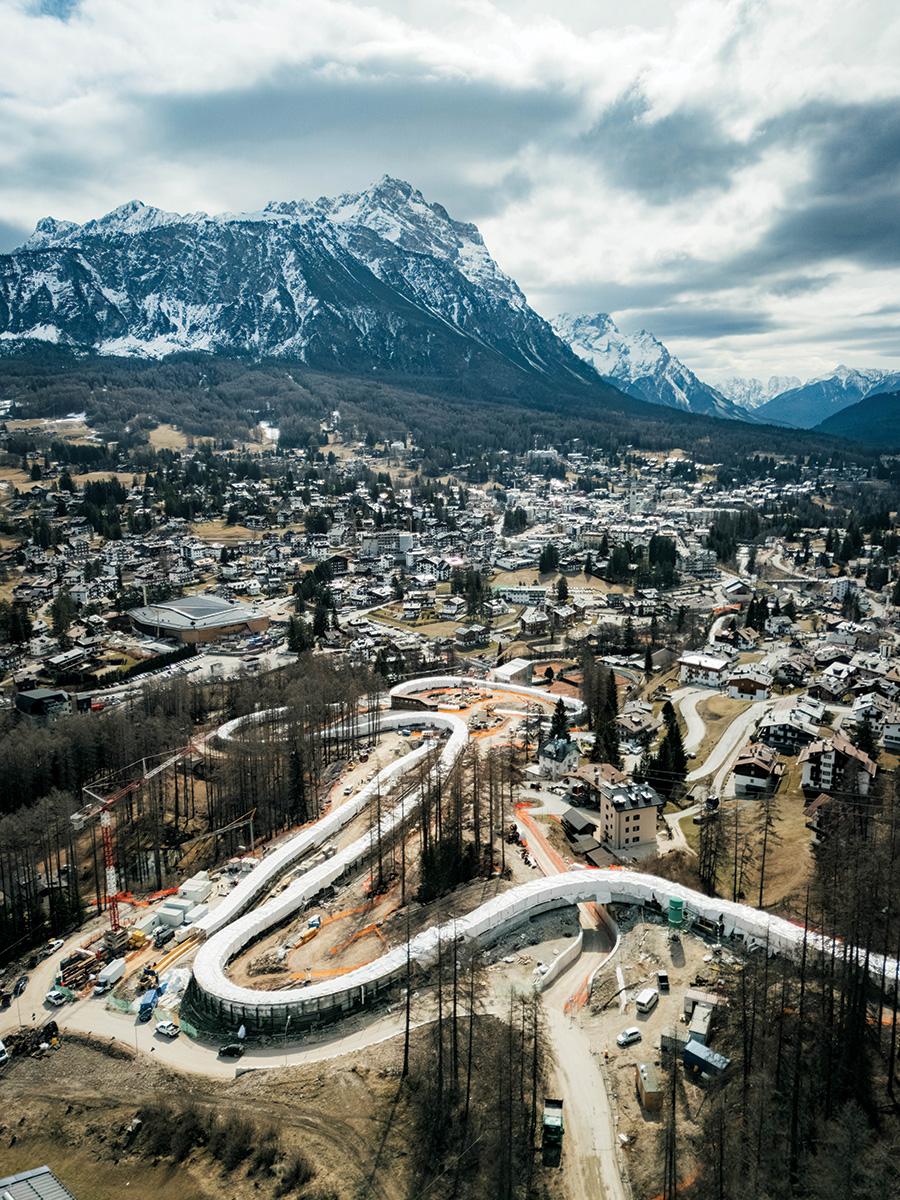
Photo © Josef Plaickner / FIL
The Eugenio Monti Sliding Center has been extensively renovated for competitions.
Game organizers also caution the potential for new construction to overwhelm particularly rural towns and subsequently fall into a state of disuse. This is especially the case in the more isolated areas of Valtellina (for freestyle skiing, moguls, and snowboarding) and Val di Fiemme (ski jump and cross-country skiing). Here, where athletes compete on a slope or in a landscape rather than in a stadium, planners rely on temporary structures with a minimal footprint—seating for spectators, rest areas, food and beverage stalls, and space for broadcasters—and focus on upgrading essential infrastructure. “For example, the capacity of the venues at Bormio in Valtellina is more people than live in the entire town,” says Spampinato. “This illustrates the scale of the games. We don’t want to be intrusive—we want to get in, build, and then remove.”
Closing Ceremony
“Although the games carry the names of Milan and Cortina, from an infrastructure perspective they will span an area of 22,000 square kilometers [8,500 square miles], crossing two cities, two regions, and two autonomous provinces in a shared effort,” says Varnier, adding, “They are a celebration of an entire country,” one that has much history to share. Olympians, administrators, and spectators will gather for the closing ceremony at the Arena di Verona, a monument from antiquity and counterpoint to the century-old San Siro.
While Milano Cortina 2026 will only offer a tinge of ground-up architectural bravura, it is clear that planners have carefully considered how these spaces will be used after athletes go home, some with medals in hand. But more responsible and smarter reuse strategies need not eschew imaginative design—they, too, can aim for gold.
Supplemental Materials
“Going for the Green,” Hattie Hartman. Architectural Record, June 2012, pages 80-88.