Mark Cvagnero
Renewing Historic Cultural Institutions in Seismic San Francisco: Temple Emanu-El and the SF Symphony
Sponsored by Architectural Record | Presented by Mark Cvagnero
This episode features Mark Cavagnero discussing the renovation and expansion of Temple Emanu-El in San Francisco, including restoring key historic spatial sequences, adding new education/community space, and integrating major seismic upgrades in a way that remains architecturally cohesive.
The conversation also addresses performance-venue revitalization strategies for Davies Symphony Hall and its public-facing civic role, with emphasis on structural coordination, building performance, and making contemporary interventions that respect historic fabric.
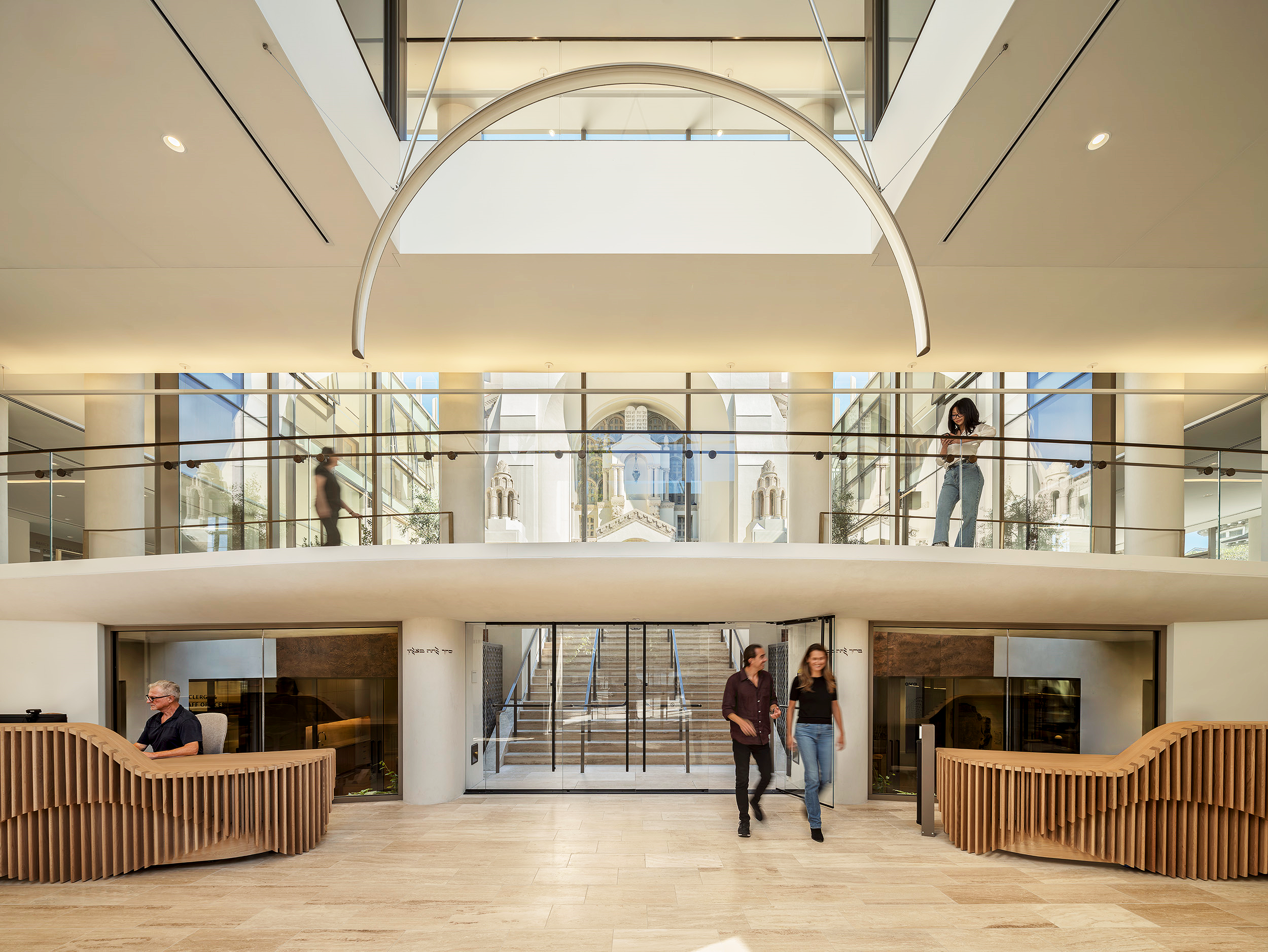
Photo ©️ Tim Griffith
 |
Aaron Prinz is the host of the Design:ED Podcast and holds a Masters of Architecture degree from the University of Texas at Austin. He was born and raised in the rural Northern California town of Red Bluff, just two hours south of the Oregon border. After one year of college, Prinz relocated to San Francisco to pursue a career in stand-up comedy. At age 26, he began studying architecture at Portland State University while interning at Studio Petretti Architecture led by Amanda Petretti. His professional contributions while at Studio Petretti were focused on a portion of the new Multnomah County Courthouse which is a prominent addition to the Portland skyline. He currently resides in Austin, Texas with his wife Roxanne where he continues to work as a designer. |

Architectural Record is the #1 source for design news, architect continuing education, and info on sustainability, houses, projects, and architectural products.
Originally published in Architectural Record
Originally published in February 2026
LEARNING OBJECTIVES
- Identify strategies for integrating seismic strengthening into historic buildings while maintaining architectural clarity and continuity.
- Explain how entry sequences, daylight, and spatial “thresholds” can support occupant experience in sacred and civic architecture.
- Evaluate approaches for distinguishing “new from old” in renovations without compromising the integrity of the original building.
- Describe the architect–structural engineer collaboration workflow needed to resolve structural, enclosure, and performance requirements early in design. 5. Recognize building-systems considerations (including comfort and air quality) that affect occupant welfare in performance and assembly spaces.