Luis Vidal - Luis Vidal +Architects
Designing the Future of Passenger-Centered Airports
Sponsored by Architectural Record | Presented by Luis Vidal
In this podcast episode, internationally recognized architect Luis Vidal discusses the evolution of airport architecture and the growing importance of passenger-centered design in modern aviation infrastructure. Drawing from his experience leading large-scale airport projects around the world, Vidal shares insights into designing flexible, sustainable, and civic-focused transportation environments that improve traveler experience while meeting complex operational demands.
The conversation explores airport planning, stakeholder coordination, sustainability, commercial integration, and how airports are evolving beyond transportation hubs into dynamic public spaces connected to the life of the city. Vidal also reflects on the challenges of building a global architecture practice and the lessons learned from decades of designing complex infrastructure projects.
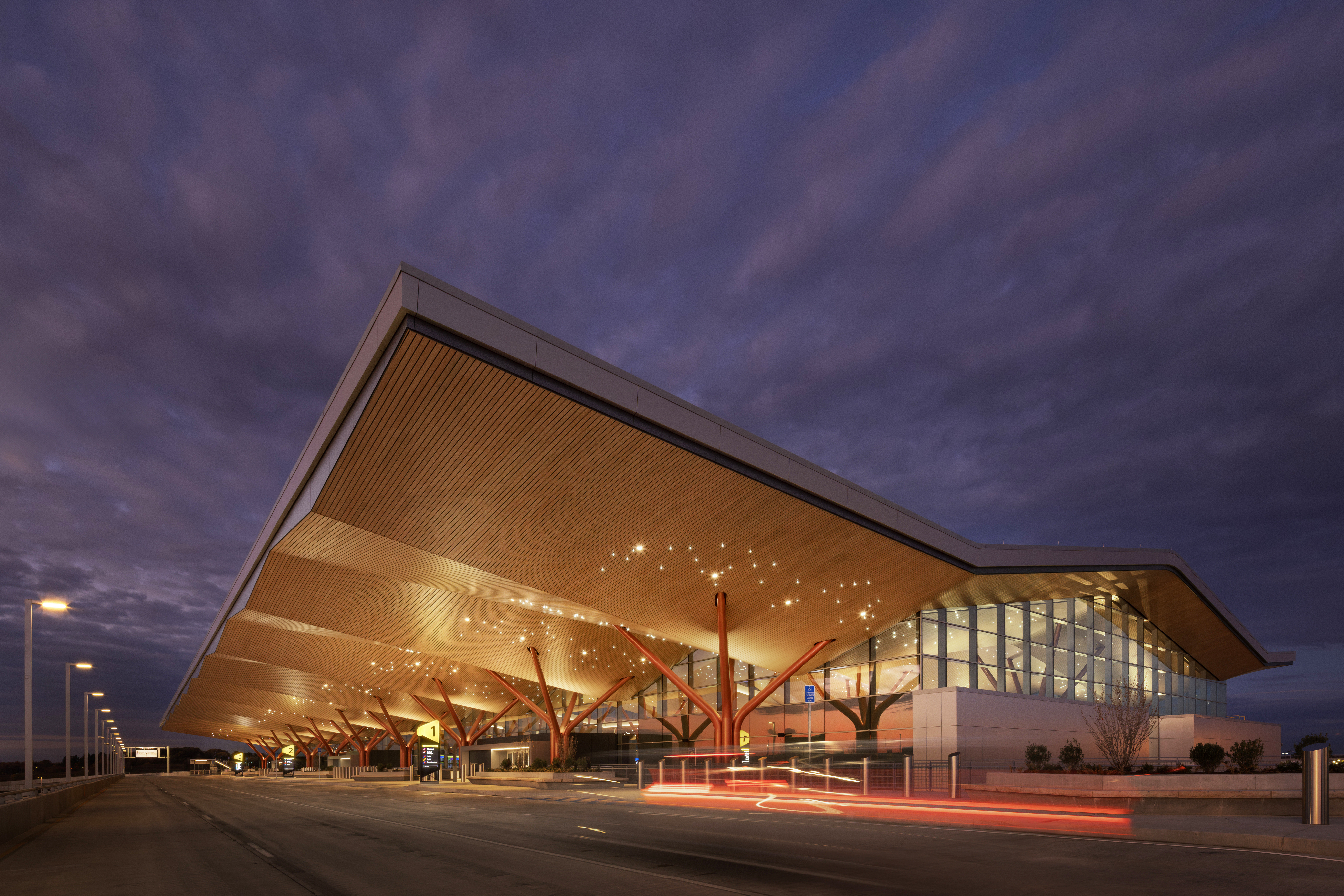
Photo courtesy of Ema Peter
 |
Aaron Prinz is the host of the Design:ED Podcast and holds a Masters of Architecture degree from the University of Texas at Austin. He was born and raised in the rural Northern California town of Red Bluff, just two hours south of the Oregon border. After one year of college, Prinz relocated to San Francisco to pursue a career in stand-up comedy. At age 26, he began studying architecture at Portland State University while interning at Studio Petretti Architecture led by Amanda Petretti. His professional contributions while at Studio Petretti were focused on a portion of the new Multnomah County Courthouse which is a prominent addition to the Portland skyline. He currently resides in Austin, Texas with his wife Roxanne where he continues to work as a designer. |

Architectural Record is the #1 source for design news, architect continuing education, and info on sustainability, houses, projects, and architectural products.
Originally published in Architectural Record
Originally published in June 2026
LEARNING OBJECTIVES
- Explain how passenger experience influences modern airport planning and architectural design.
- Identify key operational, circulation, and security challenges involved in large-scale airport projects.
- Describe strategies for creating flexible and future-ready airport infrastructure.
- Discuss how civic space, sustainability, and commercial functions are integrated into contemporary airport environments.
- Recognize the importance of multidisciplinary collaboration and stakeholder coordination in transportation design projects.