
Lisa Iwamoto and Craig Scott of Iwamoto Scott
Designing Through Research, Geometry, and Performance
Sponsored by Architectural Record | Presented by Lisa Iwamoto and Craig Scott
This course explores the design philosophy and practice of architects Lisa Iwamoto and Craig Scott, examining how research, geometry, site conditions, structural logic, environmental considerations, and precedent inform architectural decision-making.
Through projects ranging from residences and pavilions to large-scale mixed-use developments, the discussion demonstrates how architects reconcile program, context, client goals, budget, building performance, and constructability while maintaining a strong design vision.
The course also examines methods for delivering complex international projects, including collaboration with local design institutes, and considers how evolving digital technologies and artificial intelligence are influencing architectural practice and education.
Particular attention is given to the relationship between architectural form and performance, illustrating how expressive geometry can emerge from pragmatic responses to site, structure, climate, and program rather than from form-making alone.
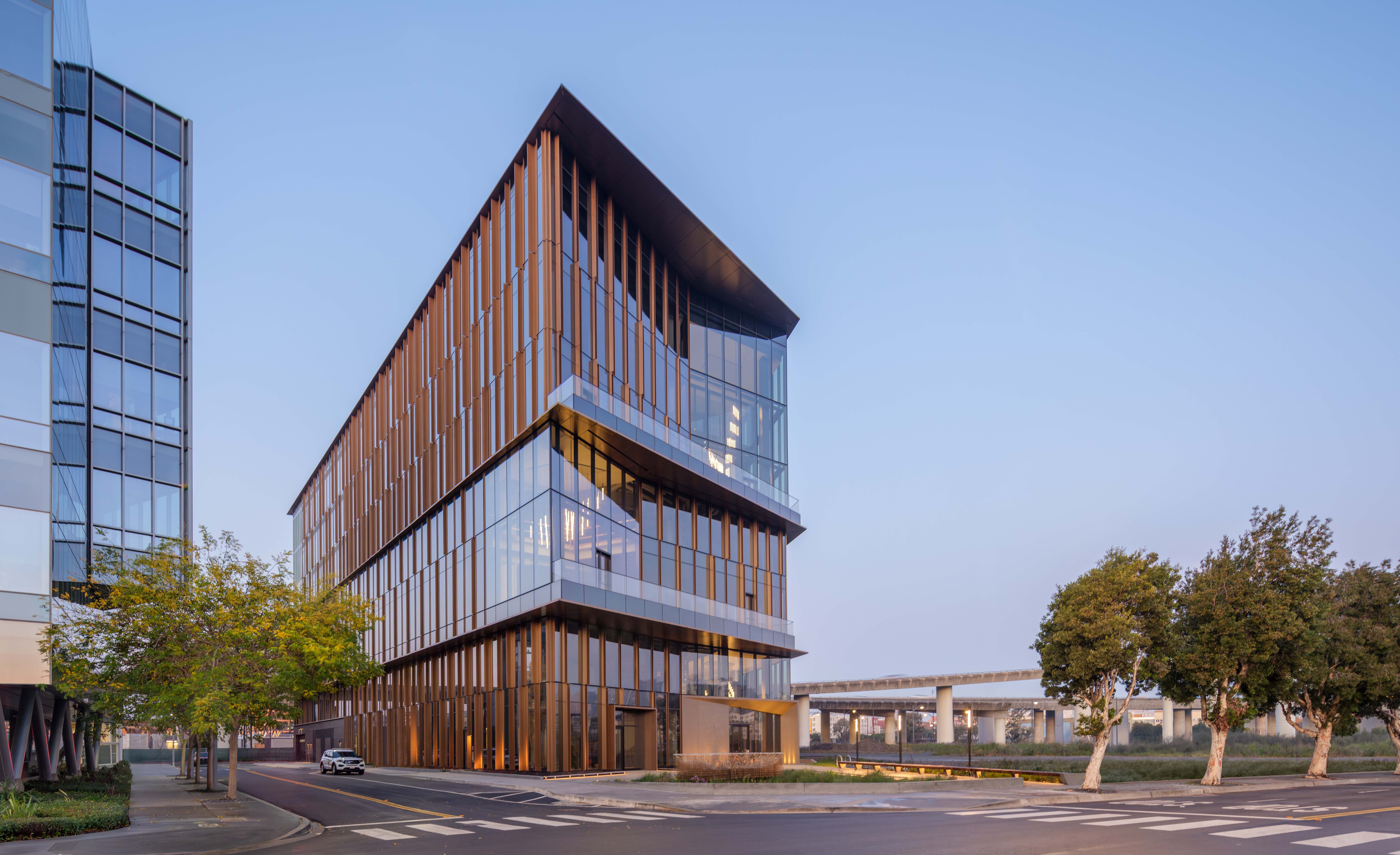
Architect: IwamotoScott Architecture (Design Architect) / DGA (Executive Architect)
Project Location: San Francisco, California
Photographer: Jason O’Rear
 |
Aaron Prinz is the host of the Design:ED Podcast and holds a Masters of Architecture degree from the University of Texas at Austin. He was born and raised in the rural Northern California town of Red Bluff, just two hours south of the Oregon border. After one year of college, Prinz relocated to San Francisco to pursue a career in stand-up comedy. At age 26, he began studying architecture at Portland State University while interning at Studio Petretti Architecture led by Amanda Petretti. His professional contributions while at Studio Petretti were focused on a portion of the new Multnomah County Courthouse which is a prominent addition to the Portland skyline. He currently resides in Austin, Texas with his wife Roxanne where he continues to work as a designer. |

Architectural Record is the #1 source for design news, architect continuing education, and info on sustainability, houses, projects, and architectural products.
Originally published in Architectural Record
Originally published in September 2026
LEARNING OBJECTIVES
- Explain how site, climate, program, and structural requirements influence architectural form, including the use of geometry and cantilevered structural strategies to minimize site disturbance and respond to physical constraints.
- Identify strategies for integrating environmental and building-performance considerations into design, including passive climate responses, solar energy, water systems, and approaches to reducing a building’s impact on its site.
- Describe collaborative project-delivery approaches for complex and large-scale architecture, including coordination among design architects, local A&E/design institutes, construction-document teams, and construction-administration professionals.
- Evaluate how architects balance design intent with occupant, community, contextual, performance, and constructability considerations to develop buildings and urban environments that respond to multiple, and sometimes competing, project requirements.