Lemay & FX Collaborative
Design-Led Growth: Mergers, Urban Design, Net-Positive Metrics, and Flexible Cities
Sponsored by Architectural Record | Presented by Dan Kaplan and Louis T. Lemay
This course examines how design firms are restructuring to meet the growing complexity of city-making—through mergers, transdisciplinary practice models, and expanded technical capacity. Using the FX Collaborative + Lemay partnership (and the addition of a Copenhagen-based design firm) as a case discussion, participants will explore how scale, talent pools, and integrated disciplines (urban design, landscape, interiors, engineering, energy modeling, and operations) can improve project outcomes.
The episode links business strategy to design performance, focusing on transit-oriented density, public realm quality, and “ground plane” experience as key urban design drivers. It also introduces a “net positive” sustainability framework emphasizing health-oriented environments, embodied carbon reduction, and operational energy management, along with the role of adaptive reuse and flexibility in extending building life cycles.
Participants will leave with practical takeaways for evaluating urban design approaches, sustainability claims, and future-ready building typologies.
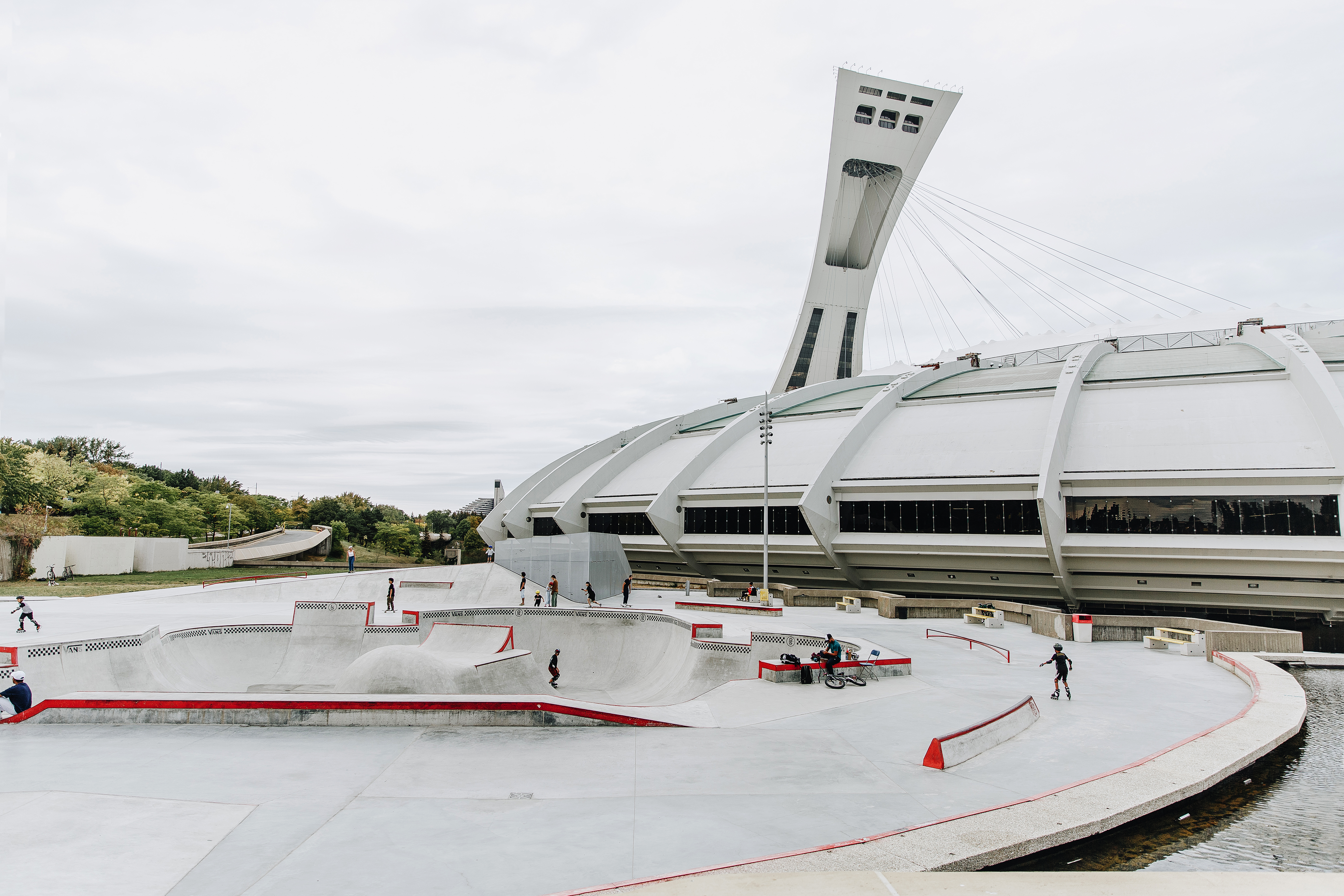
Photo courtesy of Julien Lauzon
Parc Olympique Skatepark.
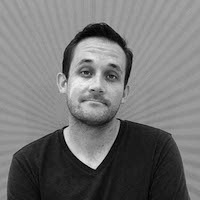 |
Aaron Prinz is the host of the Design:ED Podcast and holds a Masters of Architecture degree from the University of Texas at Austin. He was born and raised in the rural Northern California town of Red Bluff, just two hours south of the Oregon border. After one year of college, Prinz relocated to San Francisco to pursue a career in stand-up comedy. At age 26, he began studying architecture at Portland State University while interning at Studio Petretti Architecture led by Amanda Petretti. His professional contributions while at Studio Petretti were focused on a portion of the new Multnomah County Courthouse which is a prominent addition to the Portland skyline. He currently resides in Austin, Texas with his wife Roxanne where he continues to work as a designer. |
Architectural Record is the #1 source for design news, architect continuing education, and info on sustainability, houses, projects, and architectural products.
Originally published in Architectural Record
Originally published in February 2026
LEARNING OBJECTIVES
- Evaluate how firm partnerships and transdisciplinary teams can expand delivery capacity for complex urban projects while maintaining design quality.
- Analyze urban design strategies that prioritize public realm, transit integration, density, and ground-plane experience to support livable cities.
- Distinguish between embodied carbon and operational carbon strategies, including how measurement (“net”) and performance outcomes (“positive”) shape sustainability decision-making.
- Assess how flexibility and adaptive reuse strategies can extend building service life and reduce life-cycle environmental impacts across changing occupancy needs.