Jeff Kovel & John Hoke
Narrative Design at Campus Scale
Sponsored by Architectural Record | Presented by Jeff Kovel & John Hoke
This course examines the long-term architect–client relationship between Skylab and Nike through the design and delivery of the Serena Williams Building on Nike’s Beaverton, Oregon campus.
Participants will explore how narrative-driven design, metaphor, and place-based strategies can translate a complex program (product design, merchandising, prototyping, and shared amenities) into legible “neighborhoods” that support collaboration and wayfinding at an urban scale.
The course also reviews integrated site and building strategies that connect architecture to landscape—including daylight/air access, roofscape planning, stormwater capture and reuse, terracing, and visible water features—along with lessons learned about flexibility and post-occupancy evolution following COVID-era workplace shifts.
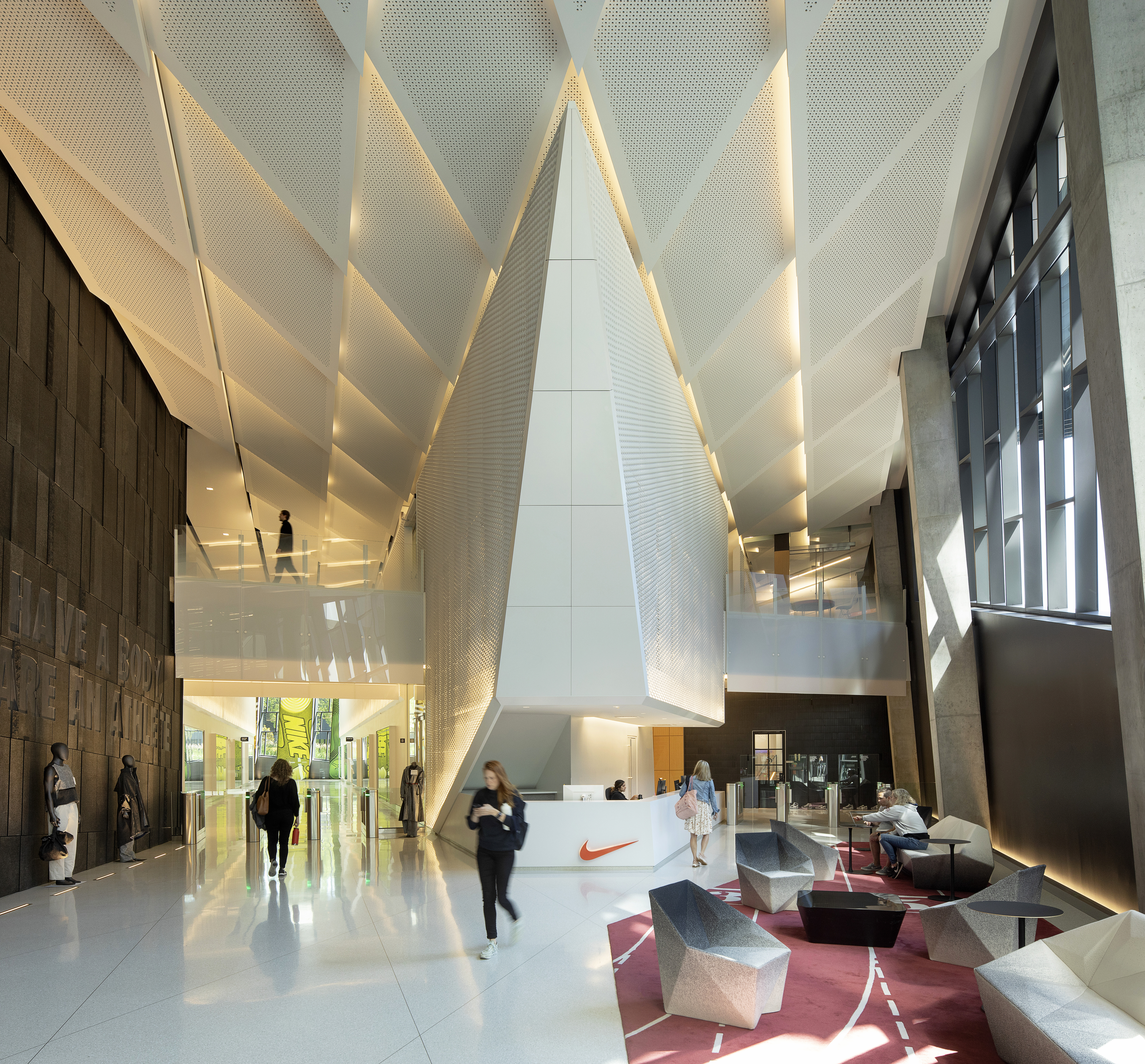
Photo courtesy of Jeremy Bitterman
 |
Aaron Prinz is the host of the Design:ED Podcast and holds a Masters of Architecture degree from the University of Texas at Austin. He was born and raised in the rural Northern California town of Red Bluff, just two hours south of the Oregon border. After one year of college, Prinz relocated to San Francisco to pursue a career in stand-up comedy. At age 26, he began studying architecture at Portland State University while interning at Studio Petretti Architecture led by Amanda Petretti. His professional contributions while at Studio Petretti were focused on a portion of the new Multnomah County Courthouse which is a prominent addition to the Portland skyline. He currently resides in Austin, Texas with his wife Roxanne where he continues to work as a designer. |

Architectural Record is the #1 source for design news, architect continuing education, and info on sustainability, houses, projects, and architectural products.
Originally published in Architectural Record
Originally published in February 2026
LEARNING OBJECTIVES
- Analyze how long-term client–architect relationships influence project outcomes, decision-making, and design continuity across multiple project scales (residential to campus landmark).
- Apply narrative and metaphor-based design methods (e.g., branching/wing diagrams, “eras” themes, embedded details) to organize large programs into legible zones that support wayfinding and user experience.
- Evaluate strategies for creating high-performing creative workplaces by integrating access to daylight, air, and biophilic connections while breaking down perceived mass at large building scales.
- Describe integrated water and landscape approaches—such as stormwater capture, cistern reuse, wetland features, roofscape planning, and creek connectivity—that support resilient site performance and occupant experience.