This CE Center article is no longer eligible for receiving credits.
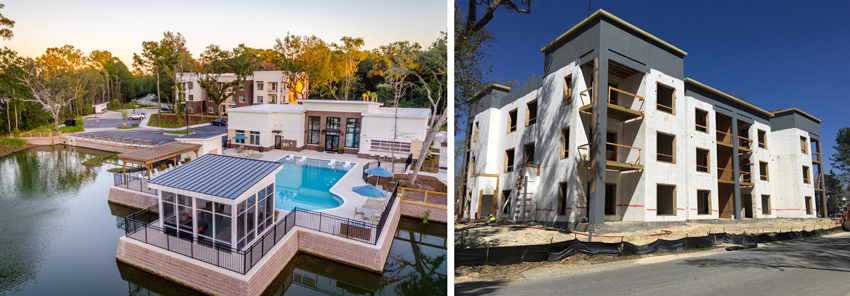
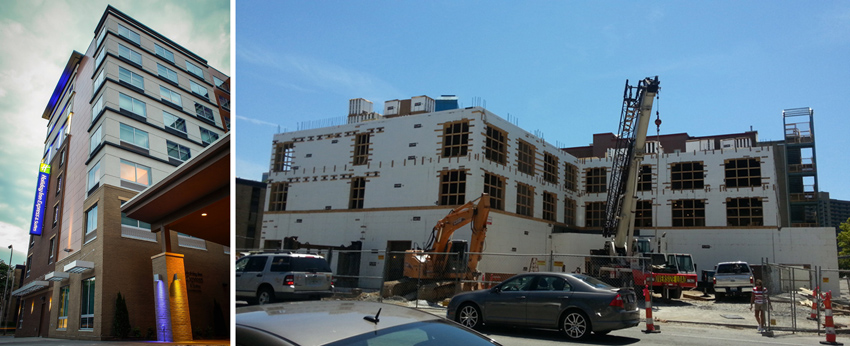
Developers live by two rules: minimize cost and minimize risk. There is a common misconception that building with concrete is more expensive than wood frame. But the reality is that concrete building systems such as insulated concrete forms (ICFs) have made concrete construction competitive on a first-cost basis and more profitable in the long run because of their energy cost savings, lower insurance costs, and reduced tenant turnover.
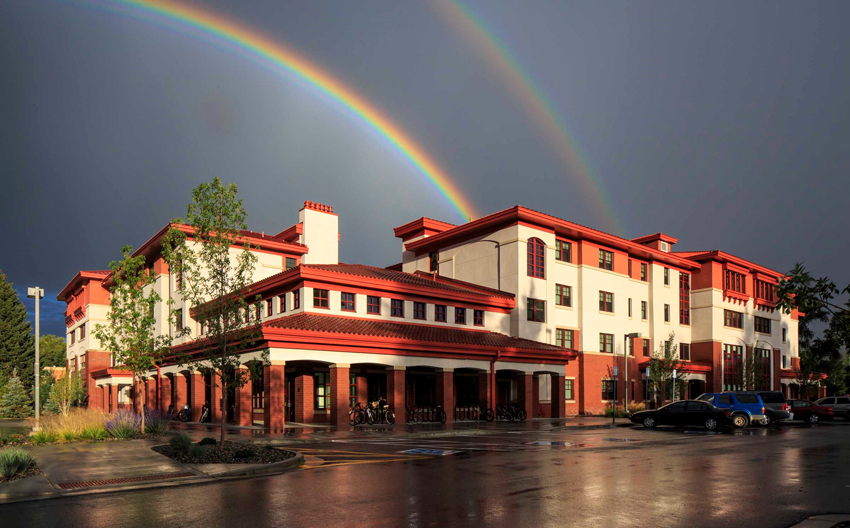
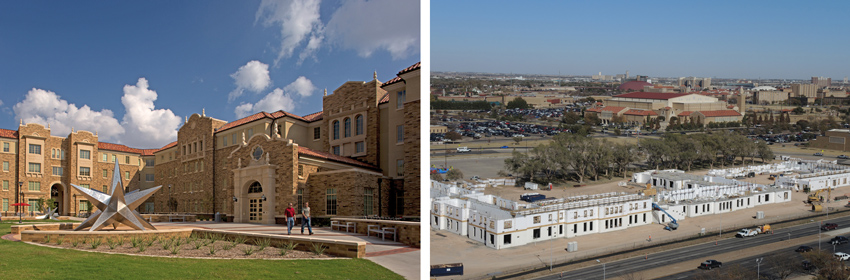
Photo courtesy of Design West Architects
The Student Apartments at Western State Colorado University were built with insulated concrete forms (ICFs) to withstand high altitudes and severe winter weather.
With softwood lumber prices rapidly increasing and concrete prices remaining stable, more developers are choosing to build with concrete. In addition, increased risk from structure fires, along with risks from natural disasters such as hurricanes, tornadoes, and wildfires, makes concrete the material of choice for life safety and reducing long-term costs. This results in a long-term investment strategy for apartments, condos, hotels, dormitories, and long-term care facilities.
The Calvert Lancaster apartment building in East Harlem, New York City, is an example of ICFs being able to withstand a disaster, saving lives and protecting long-term investments. In 2014, a natural gas explosion in the neighborhood leveled two 5-story apartment buildings and shattered the windows of structures in the surrounding block. Eight people were killed and 70 others injured.
Immediately next door to the explosion was the four-story Calvert Lancaster building. Despite being situated just inches from the blast, no one in the building was harmed, and all of the occupants managed to evacuate safely.
Curtis + Ginsberg Architects designed the building using ICF construction. The exterior walls were “formed by pouring concrete in a rigid foam form framed with steel rebar.” Curtis + Ginsberg Partner Mark Ginsberg says, “There were only a few cracks in the concrete—which is remarkable considering the impact of the explosion. The ICFs facing those two buildings got a little charred but did not burn.”1
The 6 to 8 inches of concrete provided the building with a fire break, and the New York Building Department informed owner Steve Bluestone that amazingly, “there was no structural damage at all.” There was also no damage to the cellar of the building where the boiler, hot water heater, laundry equipment, water booster pump, and fire pump were located.2
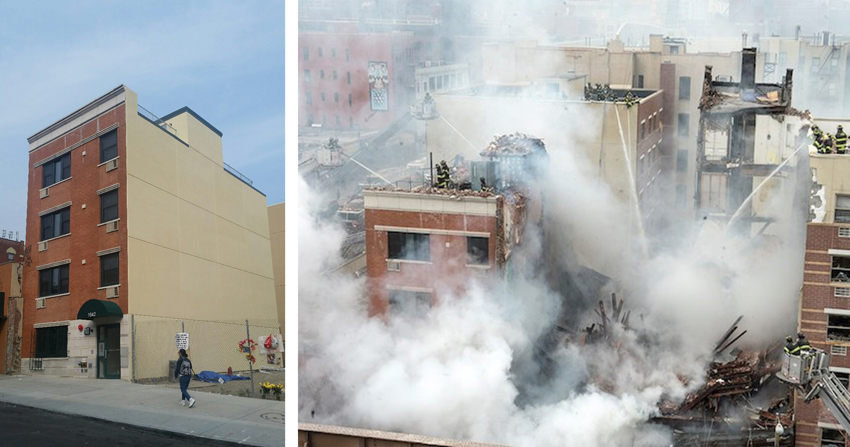
Photos courtesy of Steve Bluestone
The Calvert Lancaster apartments in East Harlem, New York, survived a gas explosion in the building right next door.
Defining Insulated Concrete Forms
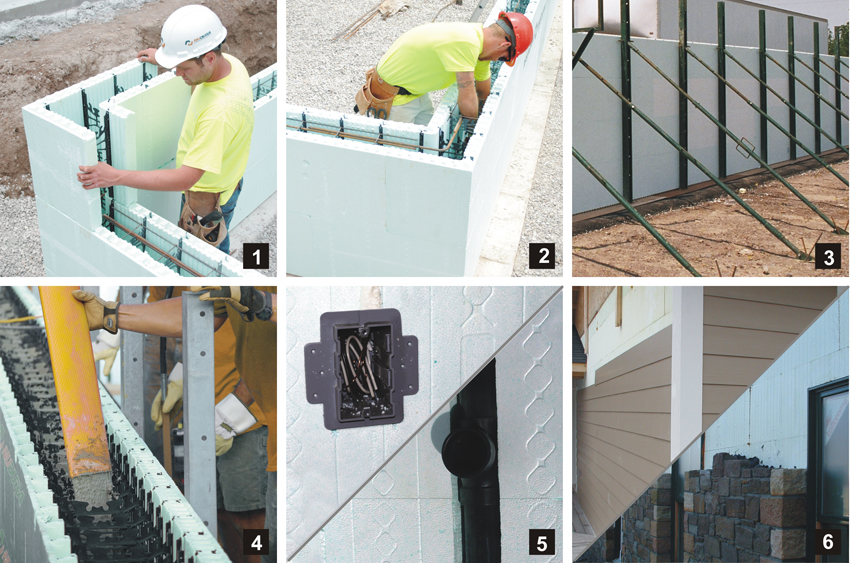
ICFs combine two building products: reinforced concrete for strength and durability, and expanded polystyrene (EPS) insulation for energy efficiency. ICF walls are made up of two layers of rigid insulation held together with plastic ties to form ICF units with a cavity in the center. The ICF units are stacked in the shape of the wall, reinforcing steel is added into the form cavity, and then concrete is placed into the form. The result is a reinforced concrete wall with a layer of insulation on each side. What makes ICFs different than traditional concrete construction is that the forms remain in place after the concrete is cured to provide thermal insulation. The combination of reinforced concrete and insulation provides an ideal load-bearing wall, thermal envelope, fire barrier, and sound barrier.
ICF wall systems have been used for bearing-wall buildings ranging from single-story to high-rise buildings more than 20 stories tall and everything in between. In addition to ICF walls, there are also ICF floor and roof systems. The concept is similar in that the ICF form is made with rigid insulation to function as a one-sided form at the bottom surface. The forms are installed to span between concrete walls, reinforcing steel is placed, and then concrete is placed over the forms. The result is a reinforced concrete floor or roof with rigid insulation on the bottom.
There are examples of ICF buildings all over the United States and Canada, including single-family residential, multifamily residential, hotels, dormitories, assisted living facilities, offices, health-care facilities, manufacturing, and warehouse buildings. Schools built with ICFs are popular due to low- or net-zero energy use. Theaters are also trending toward ICF construction for superior sound attenuation. Because apartments, dormitories, senior residences, and hotels and motels are typically revenue-generating properties, ICFs are particularly well-suited for this type of construction.
What makes ICFs so attractive for multifamily construction is that they are cost competitive with wood frame. A building owner gets a building that is more disaster resilient and energy efficient at or nearly the same cost. Fire safety is a key element of multifamily construction since occupants sleep in these buildings and are often challenged to evacuate during a fire. Concrete walls and floors provide the fire resistance needed not only to allow occupants to evacuate but also contain the fire within a single unit, imposing less risk on firefighters and property.
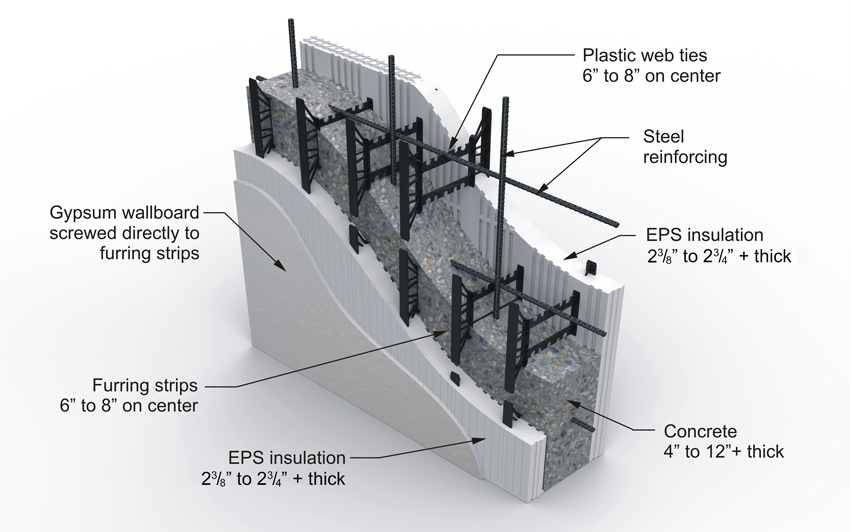
Image courtesy of Logix
Shown is a typical insulated concrete form (ICF) wall detail.
ICF Wall Systems
The efficient construction process is what sets ICF building systems apart from other building systems, such as wood frame, steel frame, and masonry construction. ICF construction can help contain construction costs and reduce construction time because of the inherent efficiencies of the installed assembly, which serves nine functions:
- Concrete form (that stays in place)
- Thermal barrier
- Air barrier
- Moisture barrier
- Fire barrier
- Sound barrier
- Substrate for running utilities
- Substrate for attaching finish materials
- Reinforced concrete structure
In other forms of construction, these functions are installed by several different trades, usually at a significant added cost. General contractors can realize a number of on-site efficiencies, including fewer trades, reduced crew size, and accelerated construction schedules. Because construction schedules are usually much shorter with ICF construction, the general contractor can finish the project both on time and within budget. This means that the building owner can put the building into service sooner, cutting short the financing costs and initiating a quicker revenue flow.
There are many different ICF manufacturers with similar ICF systems. The blocks range in size from 48 to 96 inches long and 12 to 24 inches high depending on the manufacturer. The most common configuration of an ICF unit is made up of two layers of 23⁄8- to 23⁄4-inch-thick EPS insulation spaced 4, 6, 8, 10, or 12 inches apart depending on design requirements. The most common spacing is 6 or 8 inches for most low- to mid-rise buildings, but for taller buildings, taller walls, or exceptionally large loadings, thicker walls are necessary. For simplicity, ICFs are generally called out by the width of the cavity; hence, an ICF with a 6-inch cavity is called a 6-inch ICF and an ICF with an 8-inch cavity is called an 8-inch ICF.
ICF manufacturers have a variety of ICF blocks to accommodate any design condition and offer thorough technical support, including design manuals, design details, engineering support, and test reports needed for commercial construction, including fire, energy, and noise. They have special components, including straight blocks, corner blocks, brick ledges, angled blocks, curved blocks, and half-height units, minimizing the need for field modifications and further reducing construction time.
Another benefit of ICFs is that construction projects can continue through the coldest and hottest weather because of the insulating quality of the ICF forms. This means that concrete will continue to gain strength within the protective formwork despite freezing conditions and not overheat during extreme summer conditions.
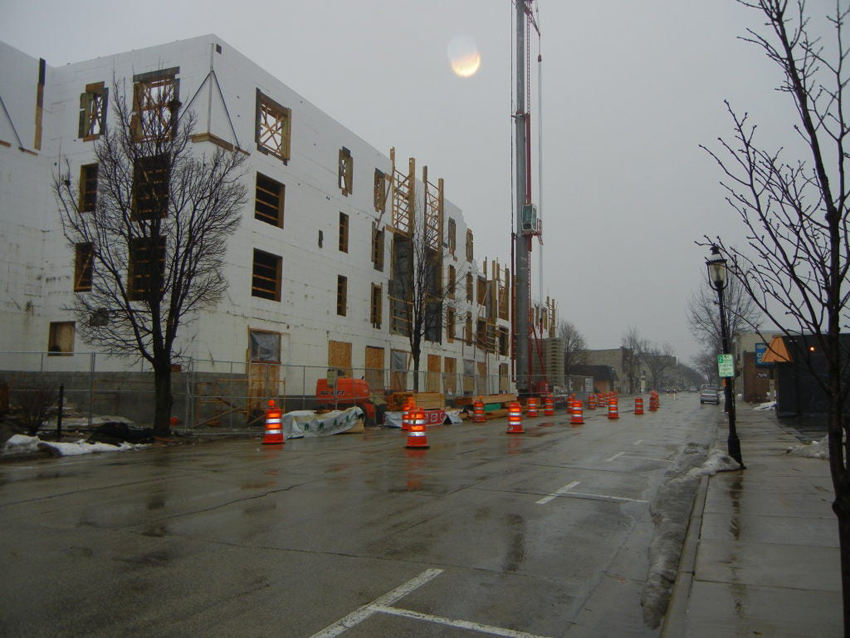
Matt Green, the vice president of KB Walker based in Waukesha, Wisconsin, discusses the ability to build with ICFs in winter conditions. “One of the biggest things you can look at with ICFs in terms of hard numbers is pouring concrete in winter conditions,” he says. “In climate zones 4 and up, there are going to be temperatures below which concrete cannot otherwise be poured. However, with ICFs, we have poured concrete in temperatures as low as 5 degrees Fahrenheit.”
Rather than waiting for spring to begin construction, specifiers can leverage the insulating properties of ICFs to begin building at any time of the year.
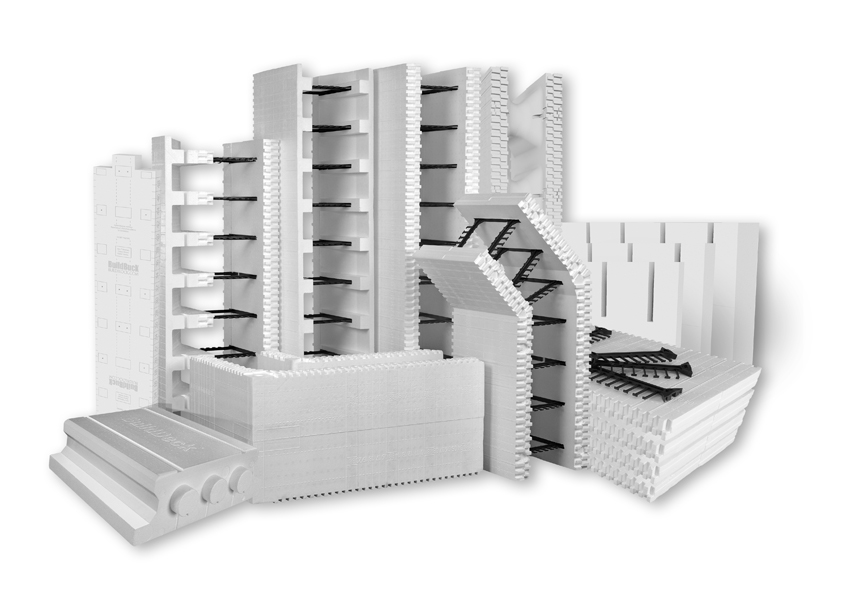
Image courtesy of BuildBlock
Shown are ICF wall and floor components.
Developers live by two rules: minimize cost and minimize risk. There is a common misconception that building with concrete is more expensive than wood frame. But the reality is that concrete building systems such as insulated concrete forms (ICFs) have made concrete construction competitive on a first-cost basis and more profitable in the long run because of their energy cost savings, lower insurance costs, and reduced tenant turnover.
Photo courtesy of Design West Architects
The Student Apartments at Western State Colorado University were built with insulated concrete forms (ICFs) to withstand high altitudes and severe winter weather.
With softwood lumber prices rapidly increasing and concrete prices remaining stable, more developers are choosing to build with concrete. In addition, increased risk from structure fires, along with risks from natural disasters such as hurricanes, tornadoes, and wildfires, makes concrete the material of choice for life safety and reducing long-term costs. This results in a long-term investment strategy for apartments, condos, hotels, dormitories, and long-term care facilities.
The Calvert Lancaster apartment building in East Harlem, New York City, is an example of ICFs being able to withstand a disaster, saving lives and protecting long-term investments. In 2014, a natural gas explosion in the neighborhood leveled two 5-story apartment buildings and shattered the windows of structures in the surrounding block. Eight people were killed and 70 others injured.
Immediately next door to the explosion was the four-story Calvert Lancaster building. Despite being situated just inches from the blast, no one in the building was harmed, and all of the occupants managed to evacuate safely.
Curtis + Ginsberg Architects designed the building using ICF construction. The exterior walls were “formed by pouring concrete in a rigid foam form framed with steel rebar.” Curtis + Ginsberg Partner Mark Ginsberg says, “There were only a few cracks in the concrete—which is remarkable considering the impact of the explosion. The ICFs facing those two buildings got a little charred but did not burn.”1
The 6 to 8 inches of concrete provided the building with a fire break, and the New York Building Department informed owner Steve Bluestone that amazingly, “there was no structural damage at all.” There was also no damage to the cellar of the building where the boiler, hot water heater, laundry equipment, water booster pump, and fire pump were located.2
Photos courtesy of Steve Bluestone
The Calvert Lancaster apartments in East Harlem, New York, survived a gas explosion in the building right next door.
Defining Insulated Concrete Forms
ICFs combine two building products: reinforced concrete for strength and durability, and expanded polystyrene (EPS) insulation for energy efficiency. ICF walls are made up of two layers of rigid insulation held together with plastic ties to form ICF units with a cavity in the center. The ICF units are stacked in the shape of the wall, reinforcing steel is added into the form cavity, and then concrete is placed into the form. The result is a reinforced concrete wall with a layer of insulation on each side. What makes ICFs different than traditional concrete construction is that the forms remain in place after the concrete is cured to provide thermal insulation. The combination of reinforced concrete and insulation provides an ideal load-bearing wall, thermal envelope, fire barrier, and sound barrier.
ICF wall systems have been used for bearing-wall buildings ranging from single-story to high-rise buildings more than 20 stories tall and everything in between. In addition to ICF walls, there are also ICF floor and roof systems. The concept is similar in that the ICF form is made with rigid insulation to function as a one-sided form at the bottom surface. The forms are installed to span between concrete walls, reinforcing steel is placed, and then concrete is placed over the forms. The result is a reinforced concrete floor or roof with rigid insulation on the bottom.
There are examples of ICF buildings all over the United States and Canada, including single-family residential, multifamily residential, hotels, dormitories, assisted living facilities, offices, health-care facilities, manufacturing, and warehouse buildings. Schools built with ICFs are popular due to low- or net-zero energy use. Theaters are also trending toward ICF construction for superior sound attenuation. Because apartments, dormitories, senior residences, and hotels and motels are typically revenue-generating properties, ICFs are particularly well-suited for this type of construction.
What makes ICFs so attractive for multifamily construction is that they are cost competitive with wood frame. A building owner gets a building that is more disaster resilient and energy efficient at or nearly the same cost. Fire safety is a key element of multifamily construction since occupants sleep in these buildings and are often challenged to evacuate during a fire. Concrete walls and floors provide the fire resistance needed not only to allow occupants to evacuate but also contain the fire within a single unit, imposing less risk on firefighters and property.
Image courtesy of Logix
Shown is a typical insulated concrete form (ICF) wall detail.
ICF Wall Systems
The efficient construction process is what sets ICF building systems apart from other building systems, such as wood frame, steel frame, and masonry construction. ICF construction can help contain construction costs and reduce construction time because of the inherent efficiencies of the installed assembly, which serves nine functions:
- Concrete form (that stays in place)
- Thermal barrier
- Air barrier
- Moisture barrier
- Fire barrier
- Sound barrier
- Substrate for running utilities
- Substrate for attaching finish materials
- Reinforced concrete structure
In other forms of construction, these functions are installed by several different trades, usually at a significant added cost. General contractors can realize a number of on-site efficiencies, including fewer trades, reduced crew size, and accelerated construction schedules. Because construction schedules are usually much shorter with ICF construction, the general contractor can finish the project both on time and within budget. This means that the building owner can put the building into service sooner, cutting short the financing costs and initiating a quicker revenue flow.
There are many different ICF manufacturers with similar ICF systems. The blocks range in size from 48 to 96 inches long and 12 to 24 inches high depending on the manufacturer. The most common configuration of an ICF unit is made up of two layers of 23⁄8- to 23⁄4-inch-thick EPS insulation spaced 4, 6, 8, 10, or 12 inches apart depending on design requirements. The most common spacing is 6 or 8 inches for most low- to mid-rise buildings, but for taller buildings, taller walls, or exceptionally large loadings, thicker walls are necessary. For simplicity, ICFs are generally called out by the width of the cavity; hence, an ICF with a 6-inch cavity is called a 6-inch ICF and an ICF with an 8-inch cavity is called an 8-inch ICF.
ICF manufacturers have a variety of ICF blocks to accommodate any design condition and offer thorough technical support, including design manuals, design details, engineering support, and test reports needed for commercial construction, including fire, energy, and noise. They have special components, including straight blocks, corner blocks, brick ledges, angled blocks, curved blocks, and half-height units, minimizing the need for field modifications and further reducing construction time.
Another benefit of ICFs is that construction projects can continue through the coldest and hottest weather because of the insulating quality of the ICF forms. This means that concrete will continue to gain strength within the protective formwork despite freezing conditions and not overheat during extreme summer conditions.
Matt Green, the vice president of KB Walker based in Waukesha, Wisconsin, discusses the ability to build with ICFs in winter conditions. “One of the biggest things you can look at with ICFs in terms of hard numbers is pouring concrete in winter conditions,” he says. “In climate zones 4 and up, there are going to be temperatures below which concrete cannot otherwise be poured. However, with ICFs, we have poured concrete in temperatures as low as 5 degrees Fahrenheit.”
Rather than waiting for spring to begin construction, specifiers can leverage the insulating properties of ICFs to begin building at any time of the year.
Image courtesy of BuildBlock
Shown are ICF wall and floor components.
ICFs in Combination with Other Floor and Roof Systems
There are many options for floor systems that integrate well with ICF wall systems. ICF walls are simply concrete bearing walls, so any floor system that is used for other types of bearing-wall construction can be used in combination with ICF wall systems. These include traditionally formed reinforced concrete slabs, ICF slabs, precast hollow-core plank, concrete on metal deck combined with steel joists, or cold-formed joists. Wood framing systems for floor construction can also be adapted for connection to ICF walls using embedded ledger bolts.
When to Use ICFs
ICF walls are best suited for bearing-wall-type construction. If the architectural style for the building is to be floor-to-ceiling glass with large cantilevered balconies, traditional concrete flat-plate construction is the best option. However, if the building is a typical apartment building, hotel, dormitory, or assisted living facility with a significant solid exterior wall that includes punched window openings, ICFs are the ideal solution. Generally, these types of buildings have a rectangular floor plate with the elevator located in the center. Longitudinal corridors service living units on either side. Each unit has a solid wall both on the exterior and at the corridor, making them ideal to function as structural bearing walls.
Furthermore, since multifamily construction requires fire barriers between dwelling units, ICF walls create a superb demising wall. Besides providing superior protection from spreading fire (2 to 4 hours), ICFs also have excellent noise-attenuation properties. Whether designing an apartment complex or hotel, both fire safety and noise reduction are always concerns. Energy efficiency is also a major concern for apartment owners and hotel operators. ICF concrete buildings benefit from the lower energy bills resulting from the high-performance envelope.
When to Consider ICFs
ICFs should be considered for any building that has a long-term owner, such as a build and hold developer or a government entity. Generally, because these forms and the wall system become so energy efficient, locations, where the latest energy codes have been adopted are well-suited to building with ICFs. They are also well-suited to any kind of a wall system that has many punched openings, as the energy codes are now forcing buildings to adopt such openings, especially in multifamily construction. Any place where resilience (to fire, wind, earthquakes, and/or flooding) is an issue is also ideal for building with ICFs.
In the past, short-term building owners or build and sell developers—who oftentimes are not concerned about long-term value and are more concerned about short-term costs—usually built with the cheapest form of construction: wood frame. However, with recent spikes in soft-wood lumber prices, ICF construction has become first-cost competitive. If the building is in a location where energy codes are outdated (which is becoming rare), constructing a highly energy-efficient building might become less compelling if the builder is intent on selling the building.
As mentioned previously, curtain walls are better suited to concrete-frame construction than ICFs. However, some structures with curtain walls have been built using ICFs, where ICFs more or less form a frame around the exterior and then spandrel glass is used in front of the ICFs.
First-Cost Comparison
Senior Living Facility: ICFs versus Wood Frame
ICFs can easily be compared to wood-frame construction to assess long-term cost savings. One example is a senior living facility in Oconomowoc, Wisconsin:
- Total size of wood-frame construction = 176,444 square feet
- Cost of wood framing including the exterior insulation = $4.32 million or $24.48 per square foot
- The codes have stepped up to increase insulation requirements on the exterior of multifamily buildings, which also drives up the costs.
- Cost of wood framing minus the exterior walls = $3.4 million or $19.27 per square foot
- This is the same project without exterior walls. Wood is only used on the interior (for example, trusses, floor joists, interior walls).
- Cost of ICF exterior walls = $950,000 or $5.38 per square foot
- Total for wood frame = $4.32 million
- Total for ICFs plus wood frame interior = $4.35 million
Pros of ICFs During Construction
ICFs offer the following benefits for projects like the senior living facility discussed above.
- Ability to pour stair towers and elevators shafts concurrent with structure, also making both more soundproof. For example, a mason does not have to come in to run a CMU shaft prior to the walls going up.
- Eliminate exterior vapor barrier.
- Continuous R-22 or greater continuous insulation with the added bonus of concrete thermal mass.
- Can pour in winter conditions (down to 15 degrees Fahrenheit because both sides of the wall are insulated; the contractor simply insulates the top of the wall).
- Structural integrity of the wall allows for numerous possibilities, including hanging balconies, masonry tower, or trash chute tie-offs, skip hoist tie-offs, etc.
- Improves sound transfer through the exterior wall.
The best long-term savings occur in climates where the average daytime temperature goes above and below the interior temperature. The concrete will act as a thermal mass, eliminating the need for heating or cooling spaces in those conditions. In a cold environment like Wisconsin, there are many benefits to using ICFs.
Cost Comparison: ICFs/Steel Stud versus Wood
ICFs can also be compared to wood/steel stud construction. The example below discusses a 60-unit structure in Sarasota, Florida, with 71,769 total square footage.
- Total for wood frame = $24 per square foot, $1,722,456
- ncludes Florida hurricane bracing requirements and treating the studs for termites, both of which increase the price.
- All concrete/steel stud:
- ICFs = $920,000
- Precast concrete with stairs and topping = $680,000
- Steel stud interior walls = $175,000
- Total for ICFs/steel stud = $1,775,000
Pros of ICFs in Florida
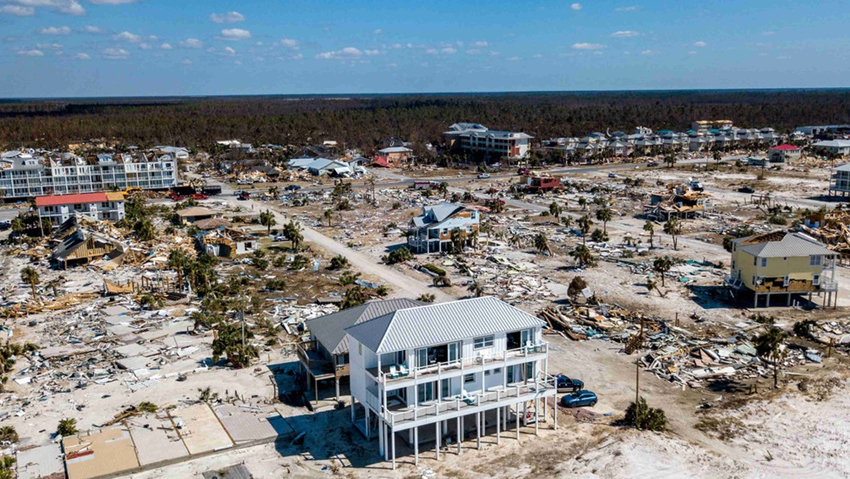
As the Mexico Beach home in the introduction illustrated, using ICFs in Florida provides the following benefits:
- Disaster resistance
- Mold resistance
- Termite protection
- Energy efficiency
Overall, ICFs provide long-term value for occupants and owners. They are cost competitive with wood per square foot. However, the thermal properties and durability of ICFs often outperform wood for greater life-cycle savings.
Increasing Energy Efficiency and Decreasing Noise and Vibration
Houses and mid-rise apartments are sometimes constructed poorly, often for the sake of flipping a house or apartment building for a profit. However, it is becoming readily apparent that buildings need to be designed and constructed to last for generations rather than only a few decades.
Energy Efficiency
According to a report from the Institute for Market Transformation (IMT), increasing the energy efficiency of America’s multifamily buildings—nearly 18.5 million households—could save building owners and managers, residents, governments, energy-efficiency service providers, and financiers close to $3.4 billion annually. ICFs provide solutions to these growing energy concerns: their high thermal mass reduces conduction and convection. The result is a building with lower energy usage and improved comfort inside due to more consistent temperatures and lack of drafts. A more energy-efficient envelope means more money saved every year while reducing the project’s carbon footprint.
ICF walls are considered by the IECC and ASHRAE 90.1 as mass walls with continuous insulation. Typical whole wall ICF assemblies have an R-value between R-24 and R-26 depending on the exterior and interior finish materials compared to R-11 and R-19 for 2x4 and 2x6 wood frame. Thermal resistance (R-value) does not take into account the effects of thermal mass, and by itself does not fully describe the beneficial properties of ICFs. The damping and lag effect of thermal mass means fewer spikes in heating and cooling requirements since the mass buffers indoor temperature fluctuations, contributing to occupant comfort. Thermal mass shifts energy demand to off-peak time periods when utility rates are lower, reducing costs further. ICF walls can exceed the requirements for all climate zones for both residential and commercial thermal envelopes above and below grade because of the combination of extreme R-value and thermal mass.
Achieving a high-performance building envelope also means minimizing air leakage, and ICF walls are tighter than wood-frame or light-gauge steel walls. In tests, they averaged about half as much air infiltration as wood frame. In many cases, the air-infiltration rates are as low as 0.5 air changes per hour. Thermal bridging is also eliminated with ICF walls when compared to wood and light-gauge steel. Since the energy consumption of ICF buildings are lower, the HVAC systems can be smaller and more efficient, adding to energy savings. The result is energy savings ranging from 20 percent to as much as 50 percent depending on other energy-efficiency strategies employed for the building.
Noise and Vibration
Concrete walls and floors have long been used as the material of choice for reducing sound transmission, which is key to a better guest experience in the hospitality sector and better retention rates in multifamily housing. Occupant retention rates and financial savings will be discussed in more detail in the following section.
ICFs are often used for hotel and hospitality projects for their ability to isolate and dissipate noise. Noise transmission in residential buildings is also important to reduce noise both between units and from the outside. Most multifamily buildings, whether they are apartment buildings or hotels, are generally located in urban centers where car and truck traffic can affect occupants’ quality of life. The fact that ICFs can eliminate sound transmission at virtually no additional cost makes them attractive for any project in which peace and quiet is a selling point.
The concrete core of ICFs offer excellent noise control in two ways. First, it blocks airborne sound transmission over a wide range of frequencies. Second, concrete absorbs noise, thereby diminishing noise intensity. Because of these attributes, ICF walls and floors have been used successfully in multifamily and hospitality applications.
The International Building Code (IBC) has requirements to regulate sound transmission through interior partitions separating adjacent dwelling units and separating dwelling units from adjacent public areas. Six-inch ICF walls easily achieve a sound transmission classification (STC) rating of 55. Higher STC ratings of up to STC 70 can be achieved with additional gypsum wallboard or special isolation channels. For ICF floors, most meet STC 50 or higher and an impact insulation class (IIC) rating of 50 or higher depending on the floor and ceiling finish as required by the IBC.
The Ownership Benefits of Building with ICFS
For architects, owners, or developers considering working with ICFs, there are four key factors to consider:
- Retention. This is especially important when considering senior living and multifamily apartments. If residents are comfortable, safe, and saving money on electric and gas bills, they are more likely to stay in their units. If the occupant turnover rate is reduced, the owner saves money.
In wood-frame buildings in the United States, units experience approximately 30–40 percent turnover rates. With ICFs, the turnover rate is 15–25 percent. It should be noted that some turnover rates are because renters are moving from one- to two-bedroom units in the same building. Owners still pay some of the turnover cost, but the tenant is not actually leaving.
Example: If there are 100 units in a wood-frame building and each has a re-rental cost of $500, a 30 percent turnover equates to $15,000. With ICFs, a 15 percent turnover amounts to $7,500.
Result: $7,500 increase to net operating income (NOI) or $136,000 of value at 5.5 percent capitalization rate (CAP).
- Reserves/deferred maintenance. This is an important issue with people that are acquisition buyers for apartments, but ground-up developers frequently do not do a good job with reserves or deferred maintenance costs on projects. With ICFs, these reserves can be reduced by about 30 percent. Typically, about $250 a unit per year goes into a reserve fund; however, this can be reduced primarily because there are no issues with water intrusion and mold on the exterior. Often, when siding is replaced, owners end up having to replace the substructure and the OSB that is there because of unexpected mold.
Example: 100 units at $250 a unit is $25,000 for a wood frame. With ICFs, the cost is approximately $17,500, which is another savings of $7,500.
Result: $7,500 increase to NOI or $136,000 of value at 5.5 percent CAP
- Energy efficiency. Conservatively speaking, there is an estimated 50 percent in heating and cooling savings. Depending on construction methods and the efficiency of the products used, energy savings often are more than 50 percent.
Example: 100 units with average heating and cooling costs for common areas is $2,500 a month. Wood frame is $30,000; ICFs are $15,000.
Result: $15,000 increase to NOI or $272,000 of value at 5.5 percent CAP
- Insurance. Owners have the opportunity for a possible savings of 10–15 percent off annual insurance premiums as builder’s risk policies have been increasing for wood-frame construction. From an ownership standpoint, there is an average of 10–15 percent annual savings, which sometimes amounts to 30 percent.
Example: 100 units at $400 a unit per year.
Wood frame: $40,000
ICFs: $34,000–$36,000
Result: $4,000 to $6,000 increase to NOI or $72,000 to $109,000 of value at 5.5 percent CAP.
In total, owners would save $34,000 to NOI or $618,000 of value at 5.5 percent CAP. There are additional savings if the owner is responsible for utilities or if the building is a hotel.
Example: 100 units, $100 average monthly heating and cooling costs.
Wood frame: $120,000/year
ICFs: $60,000/year
Result: $60,000 addition to NOI or $1,090,000 in value at 5.5 percent CAP.
Overall, while the upfront costs of building with ICFs might be slightly more, the savings over time are more substantial than the initial increase in construction cost.
Conclusion
ICF systems result in construction that is faster, easier, and less labor intensive than other construction methods, such as wood or steel framing. ICFs are lightweight, durable, and offer a system that requires less skilled labor. The system combines the reinforced-concrete structural system along with the thermal, air, and moisture barrier in one step, which reduces the number of trades required on-site. Construction can also continue all year long since the forms provide an ideal curing condition for concrete during the hottest and coldest weather. Because the forms stay in place after concrete is poured, there is no need for labor-intensive wood, aluminum, and steel formwork that requires large cranes and other expensive hauling equipment.
All of this leads to a construction system that is ideal for today’s competitive construction environment. ICFs are also ideal for building owners, providing retention, deferred maintenance, energy efficiency, and insurance benefits and savings without sacrificing design quality.
As Matt Green of KB Walker maintains, “Design and functionality should coexist. As the world becomes more interconnected and cities become denser, ICFs will continue to offer bigger and bigger advantages.” He notes that developers, owners, builders, and architects alike will “want to make sure their buildings are as insulated from man-made disasters as from natural disasters. And the best thing you can do to make sure your bottom line is not impacted through any sort of adverse activity is to build with concrete.”
End Notes
1“The Benefits of Using ICF: One Architect’s Perspective.” Architect. Web. 23 April 2021
2“Standing Up to Man-Made Disasters.” ICF Builder. 15 September 2017. Web. 23 April 2021
3Mazzei, Patricia. “Among the Ruins of Mexico Beach Stands One House, Built ‘for the Big One.’” The New York Times. 14 October 2019. Web. 23 April 2021
4Mazzei, Patricia. “Among the Ruins of Mexico Beach Stands One House, Built ‘for the Big One.’” The New York Times. 14 October 2019. Web. 23 April 2021
5“Ricchi Condos.” ICF Builder. 4 July 2014. Web. 23 April 2021
6“Ricchi Condos.” ICF Builder. 4 July 2014. Web. 23 April 2021