CASE STUDY: HIGH-PERFORMANCE GRILLES, STORAGE FACILITY, DENVER
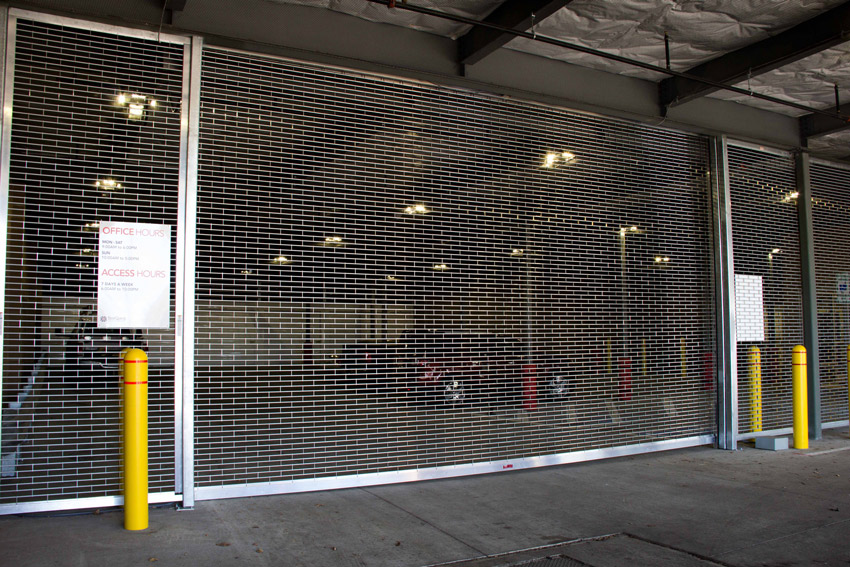
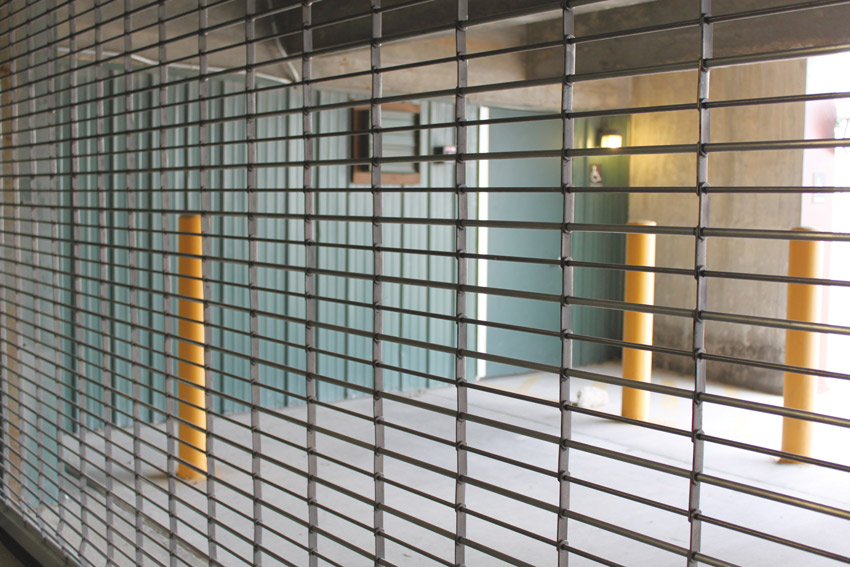
Photo courtesy of CornellCookson
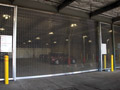
For a storage facility recently constructed in Denver, the architect wanted a very aesthetically pleasing front entry system for the entire space. Because of its longevity, lack of maintenance, and the fact that a spring would never need to be replaced, it chose a high-performance grille that was ideal for parking garages or other high-traffic openings, which delivers 300,000 maintenance-free cycles and has an operating speed of up to 24 inches per second. The end user liked the speed of operation of the door and additional features such as grille pattern, light curtain, and ability to install additional fixed panels that matched the grille curtain, which tied in nicely with the exit and entrance aesthetic and security requirements.
According to D.J. Seeber, general sales manager with Denver-based Colorado Garage Door Services Inc., the door is functioning flawlessly. He says, “The feedback from the end user has been very positive. He loves the door, and there have been zero issues. We haven’t had any requests for service.”
CASE STUDY: WOOD WINDOWS ENHANCE AN ENGLISH COTTAGE
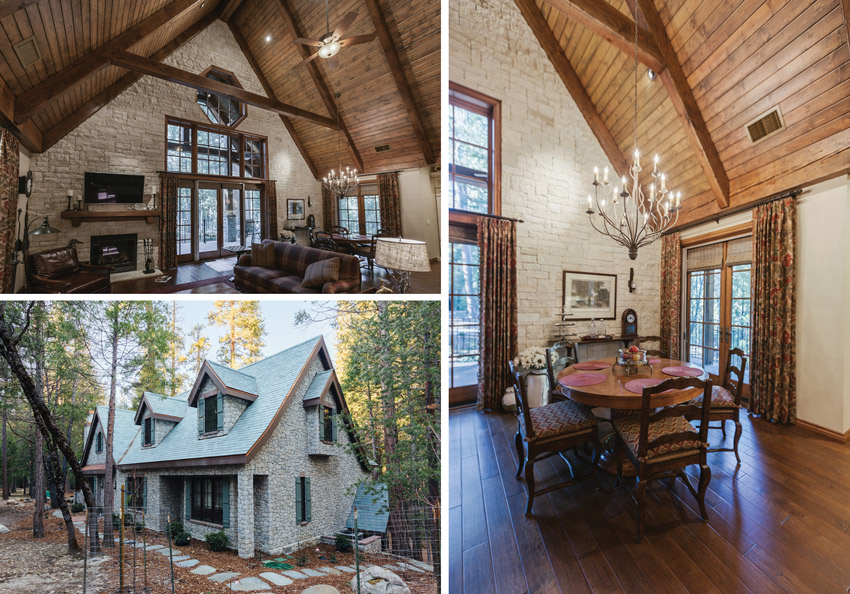
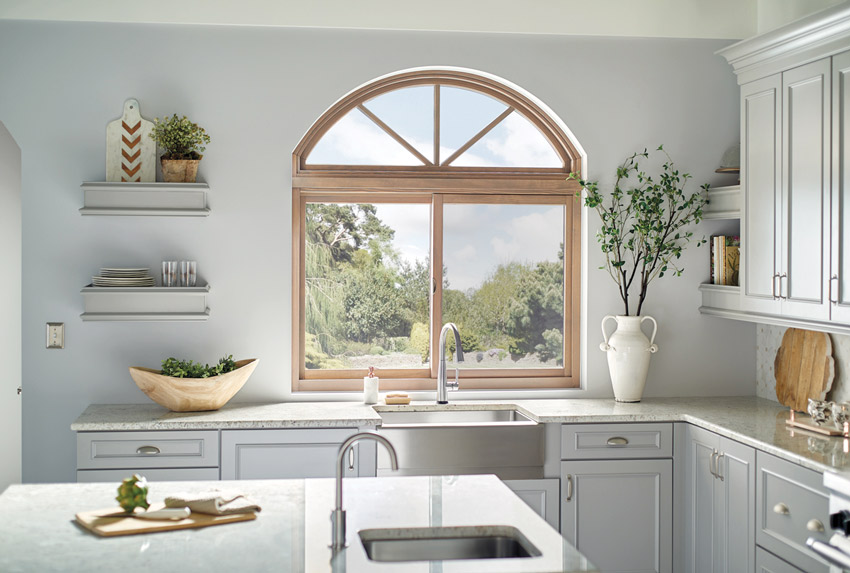
© Joe Goger Photography
Location: The Merced River outside the Yosemite National Park boundary, California
Window Dealer: Yosemite Glass & Window
Builder: Dave Lawson
Designer: Jeanie Bartholomew, Yosemite Drafting & Design
Civil Engineer: Crandall Engineering
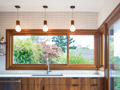
As the project’s builder Dave Lawson tells it, a tree fell on a cabin owned by his firm’s clients, near their main house. The homeowners wanted to rebuild it as a guest house for family and friends to visit, articulating a clear vision of an English cottage style. Together with Jeanie Bartholomew of Yosemite Drafting & Design, a review of preliminary plans quickly got underway. They also brought in a civil engineer to ensure the style could support the design, which included a solid stone exterior and slate roof.
In order to achieve the project’s English cottage look and support the performance requirements, the team needed a high-end window and patio door product. They chose a new wood window solution with a fiberglass exterior, which would not only look great but could stand up against snow in winter as well as the heat of summer. Moreover, the product had a true lifetime warranty—a real bonus.
Bartholomew notes, “When reviewing [a project], I determine how the client wants the space to flow and use that to reflect their personal style. I also ensure that California’s strict Title 24 energy requirements are met or, in some cases, exceeded.”
Lawson adds that the success of this project rested on preparation, choosing the right team and choosing the right products. He says, “Do your research, and put together a quality group of people. Get an energy consultant early in the project to ensure meeting Title 24 requirements.”
As for success of bringing this English cottage to fruition, Lawson says, “Everyone involved on the project delivered even more than expected. I’ve know the homeowners for years and was honored to bring their vision to life with such an amazing team.”
CASE STUDY: OLD MAIN WINDOW REHABILITATION, MACALESTER COLLEGE, ST. PAUL, MINNESOTA
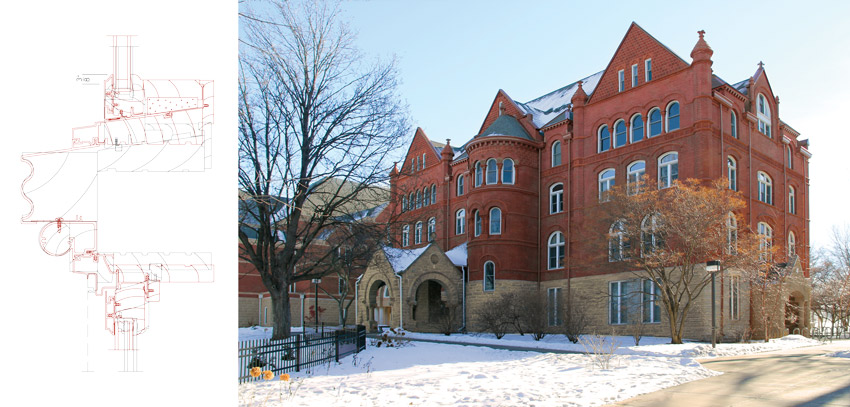
Images courtesy of Marvin Windows and Doors
The main challenge on this project was meeting the strict requirements of the local Historic Preservation Commission (HPC).
The window manufacturer’s architectural project manager supported Macalester College by providing detailed drawings, attending HPC meetings with facilities personnel, and answering HPC questions about the proposed window replacement project. When the Commission determined that the transom bottom rail was too tall, the window manufacturer adjusted the design and the plan was approved. The particular challenge of this project was that custom casings for the replacement windows needed to match existing profiles to the exterior, and to marry up with interior jamb extensions and trim, which would not be rebuilt to accommodate new window units. For some openings, the architectural project manager designed custom jamb extensions, which were milled and applied in the factory.
CASE STUDY: SKULLCANDY HEADQUARTERS RELOCATION, SALT LAKE CITY
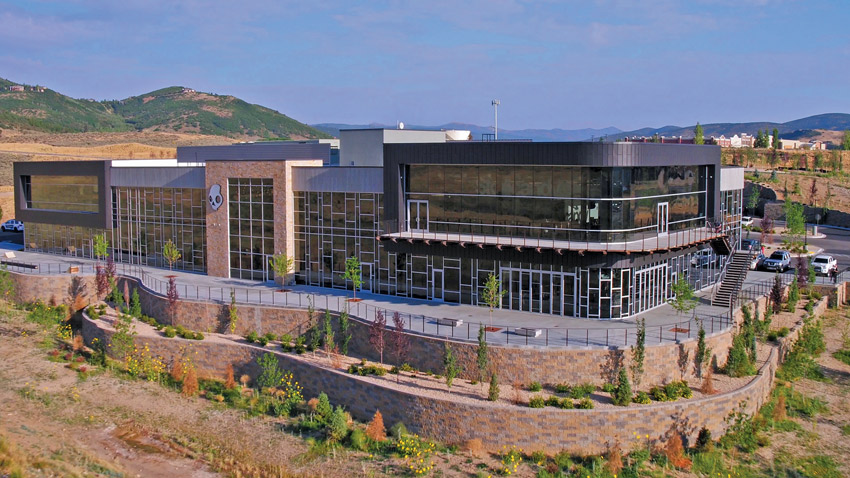
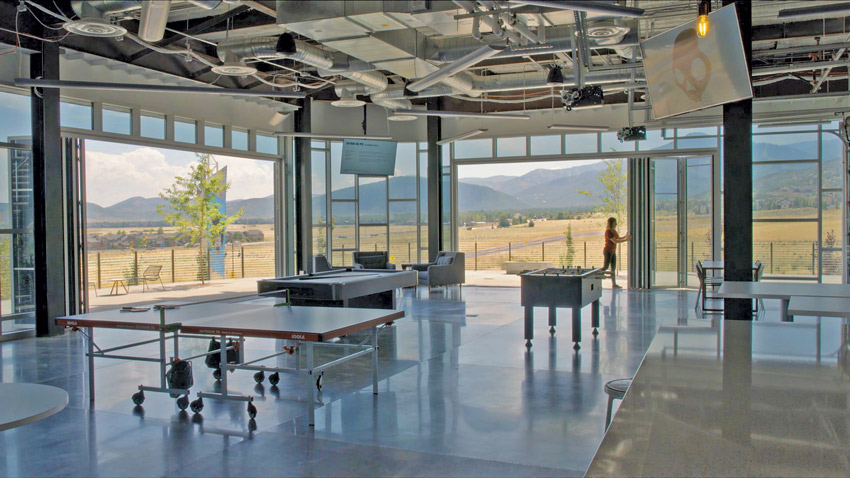
Photo courtesy of NanaWall Systems
Skullcandy, the iconic performance and lifestyle audio brand, was born on the ski slopes of Park City, Utah. The company recently relocated to brand new headquarters at the base of Utah Olympic Park. The Park City site was selected for its stunning views of the dedicated open space as well as its visibility from Highway 40.
Think Architecture was tasked with designing an environmentally friendly structure that integrated into the landscape and maximized its striking views. According to architect Tyler Kirk, the “overall aesthetic of the building needed to reflect the future of where Skullcandy is going while maintaining a connection to its past.” Zinc metal panels, organic stone, weathering steel, and naturally colored concrete panels complement the high-performance glass system.
A distinctive window mullion pattern creates a visual sense of movement and energy, evoking Skullcandy’s identity as a musical and active lifestyle brand. Tint, solar heat gain, transmittance, shading coefficients, and energy performance balanced the goals to bring in as much natural light as possible, preserve the views, and reduce glare.
Operable walls were customized to include horizontal mullion locations that match up with the curtain wall system, ensuring design cohesion. Initially, the architect considered using garage doors that would open the common areas up to the outside, but these would have interrupted the motif, compromised the heat sealing of the structure, and interfered with some of the ceiling and lighting features. “The operable wall system allowed us to seamlessly integrate the exterior facade so that from the outside it was perfectly integrated. Until you open the building, you would never even know that the doors were there,” Kirk says. The thermally broken operable wall system performs to the same rigorous energy compliance and efficiency standards as the adjacent curtain wall.
With stunning views of the Uinta and Wasatch Mountains, the digs have reinvigorated the company. “The new space is very uplifting,” says Skullcandy CEO Jason Hodell, “and the operable wall [makes it] so easy to bring the outside to the inside and connect them.” Skullcandy was founded at the intersection of innovation and creative culture, and that sensibility is embodied in the unique functionality and design of their new headquarters.
CASE STUDY: PORTLAND JAPANESE GARDEN
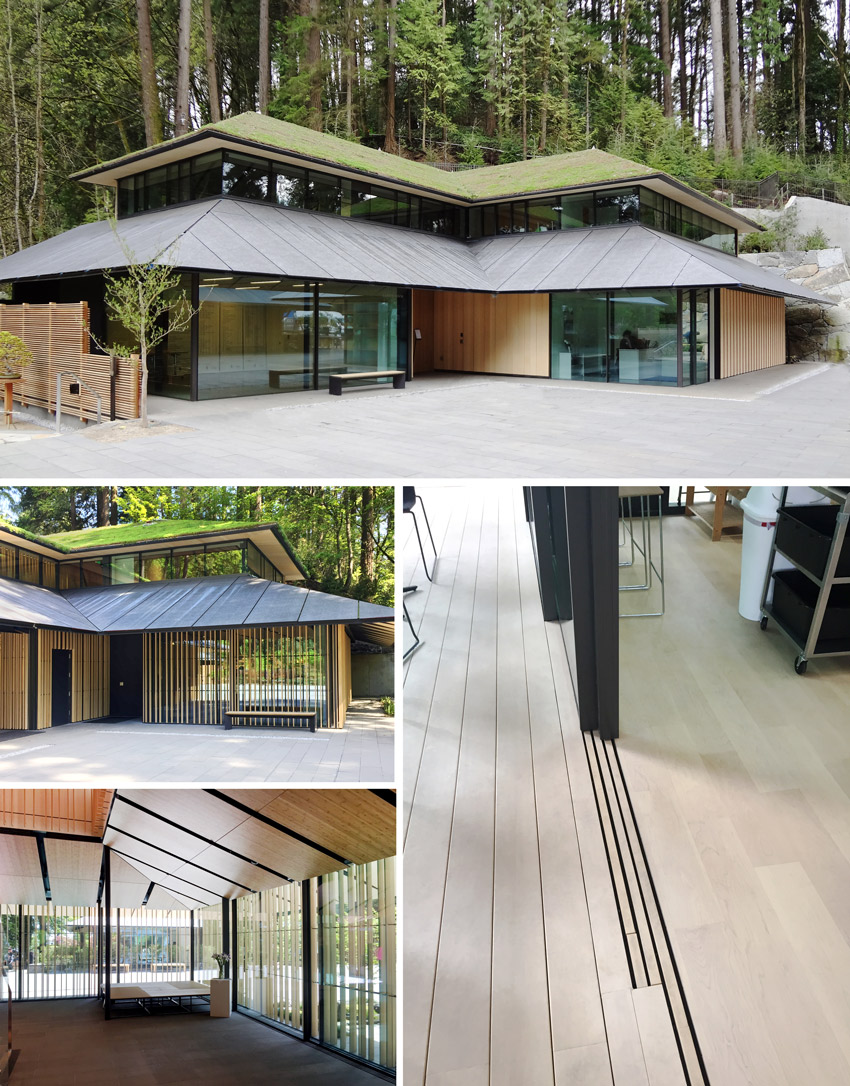
Photos courtesy of Vitrocsa USA
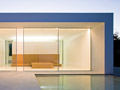
Kengo Kuma Architects specified slim glass fixed and sliding systems throughout the expansion and the Umami café for the Portland Japanese Garden Cultural Expansion. The units showcase a patented invisible sill option as well.
CASE STUDY: MEETING CODES FOR RETROFIT THREE-STORY OFFICE COMPLEX, EL SEGUNDO, CALIFORNIA
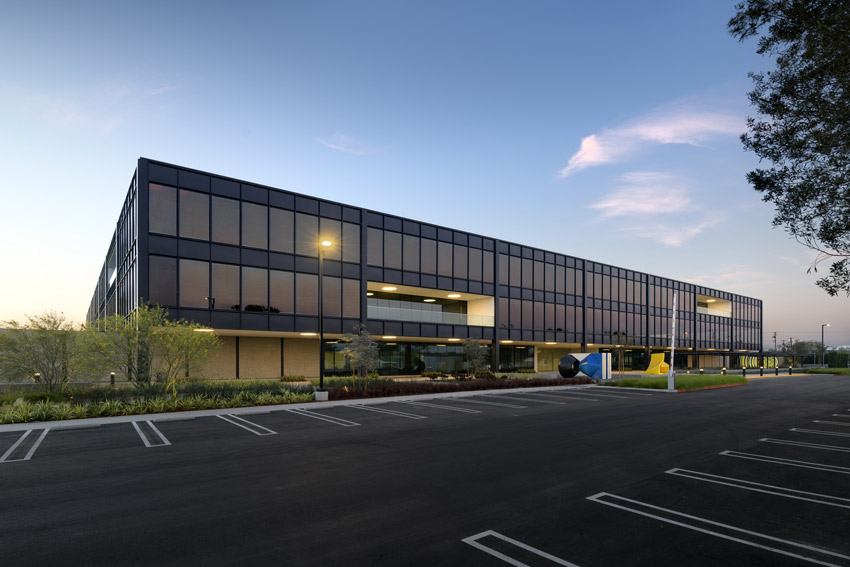
© Geoff Captain
Project: 777 Aviation, El Segundo, California
Project Type: Retrofit
Architect: Skidmore, Owings & Merrill (SOM)
Developer: Embarcadero Capital Partners and Westbrook Partners
General Contractor: W.L. Butler
Glazing Contractor: Glazing Concepts, Electrolurgy Manufacturing
Glass Fabricator: Triview
Metal Manufacturer: C.R. Laurence – U.S. Aluminum
Fenestration Systems Supplied: All-Glass Thermal Entrance System, Curtain Wall System
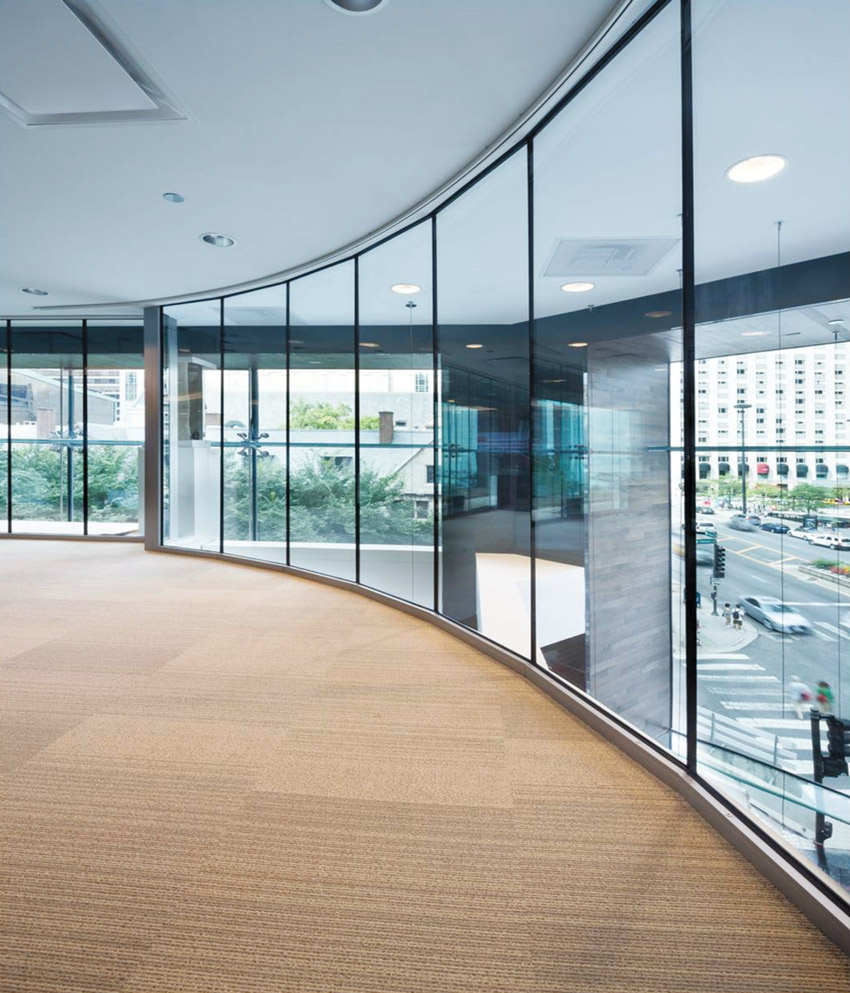
777 Aviation is a new, three-story Class A office complex that spans 318,182 square feet. Originally designed in 1968 by famed modernist architect Craig Ellwood, 777 Aviation has been reimagined to reflect the needs and culture of today’s workspaces. Amenities include a gym, cafe, dog park, and several congregation areas.
Developers Embarcadero Capital Partners and Westbrook Partners wished to convert the building from a single-tenant to a multi-tenant space with indoor and outdoor collaborative environments that activated the landscape. They enlisted the services of renowned architecture firm Skidmore, Owings & Merrill (SOM) to bring their vision to fruition.
Because of its iconic status, SOM aimed to preserve much of the existing design. At the same time, three important objectives were to increase daylighting, give the building an updated look, and blur the lines between the indoors and outdoors. This was accomplished by integrating a grand atrium with a series of large-scale skylights, removing concrete shear walls, and installing fenestration systems with all-glass aesthetics.
The first floor features a new structural silicone glazed curtain wall. The curtain wall has no exposed exterior vertical mullions or joint fasteners. This produces uninterrupted horizontal glass spans that provide modern, streamlined visuals and a seamless transition to the interior.
New fenestration also includes a unique thermal entrance system that was installed in multiple areas on the building’s facade. The system features ultra-narrow 11/8-inch vertical stiles and an overall system depth of only 2½-inch. In addition, it has the ability to support handle hardware on 1-inch insulating glass using proprietary through-glass fittings. This produces a distinctive “floating on air” look. Like the curtain wall, the thermal entrance system offers streamlined visuals. Since it keeps hardware to a minimum, it also allows ample daylight to flow through while blurring the lines between the interior and exterior.
SOM’s design for the 777 Aviation retrofit kept much of the fenestration on the upper floors intact. In terms of energy code compliance, these systems were grandfathered in and upgraded with high-performance sun control film; however, both the new structural silicone glazed curtain wall and ultra-narrow stile thermal entrance systems were subjected to California’s stringent Title 24. As a double thermal system with 1-inch insulating glass, the curtain wall met the performance requirements contained therein. It features a polyurethane thermal break and a unique injection-molded thermoplastic connector that together produce exceptional thermal performance. The thermal entrance system features thermally broken framing and cladding that provides U-factors as low as 0.43 to meet code.
“Given the performance criteria for the new fenestration and our goal of having a minimal aesthetic, there was no other option than the ultra-narrow stile thermal entrance system we specified,” says Susan Bartley, AIA, LEED AP, and project manager at SOM Architecture.
The structural silicone glazed curtain wall and thermal entrance system were ideal for the 777 Aviation retrofit because their clean sightlines and minimal aesthetic don’t conflict with the iconic facade that was retained. At the same time, they give the project an updated, contemporary look.
“We always select systems that can perform to the best of their ability, but from an aesthetic, qualitative perspective, we did not want to compete with or overpower the existing architecture,” says Carlos Madrid, lead designer at SOM Architecture.
Fenestration systems can play an essential role in retrofit projects, as shown in 777 Aviation. They can enhance aesthetics, increase daylighting, and create open, collaborative environments.
Architects should be aware that, in many cases, performance requirements for existing components can be grandfathered in, but new systems will be subjected to local energy codes. It’s important to partner with the manufacturer to ensure new fenestration will meet local codes.
CASE STUDY: STARRETT-LEHIGH, NEW YORK CITY

Photo courtesy of Graham Architectural Products
Owner: RXR Realty
Architect: Boddewyn Gaynor Architects
Installer: Ecker Window Corporation
Window Design Consultation: Maurice Benor, Bill Wilder, Graham Architectural Products
Window Manufacturer: Graham Architectural Products
Product: Aluminum Steel Replica Window
After the industry’s off-the-shelf solution was rejected, the task at hand was to meet the challenge of creating a whole new window for New York City’s iconic Starrett-Lehigh Building and its 5,000 openings. Compounding the challenge were the demands of a very skeptical Landmark Preservation Committee, as well as serpentine strips of windows with radiused corners and angled mullions that had to be custom made and precision matched. Add structural and thermal requirements, and this project was the ultimate test.
At 2.3 million square feet, the Starrett-Lehigh Building is larger than the Empire State Building. It occupies a full Manhattan city block and is home to some of the world’s most recognizable brands: Martha Stewart Living Omnimedia, Club Monaco of the Ralph Lauren Corporation, and Tommy Hilfiger USA. In 1986, it was named a New York City landmark. Additionally, it is wrapped in ribbons of windows that if placed end-to-end would extend 8 miles.
The team had the added challenge of getting the window approved by the New York City Landmarks Preservation Commission (LPC). According to Michael Ankuda, AIA, an architect at Boddewyn Gaynor Architects, “For a window to be approved by LPC, it must first get an OK from the local community board.” In this case, that was Community Board 4, which, Ankuda says, “was enthusiastic with ownership’s commitment to the historic property.”
But the bar for approval was extremely high. New York City’s Historic Districts Council had already referred to the project as “the window job of the year (if not the century),” adding, “if any windows deserve an above-and-beyond restoration or specially made replacements, it is these.”
As it turned out, restoration was not an option. It would have been cost prohibitive and too time consuming for most building design consultants. They still explored the option, actually renovating a couple of windows and performing air and water tests, but window stripping failed miserably. “Plus,” Ankuda says, “the existing sections would not accept an insulating glass unit (IGU) of any real value.”
Eventually, the selected window design specialists drew up details and created a full-size mockup of a special window originally endorsed by the owners. However, the LPC rejected it, citing its lack of a well-defined floating vent and muntins that were too thick.
Meanwhile, the window design consultant had been discussing windows with National Park Service representatives, who indicated there were countless old warehouse-type buildings across the United States with windows similar to Starrett-Lehigh’s.
The team ultimately looked at the rejection as an opportunity to parlay the large scope of the job with paying for the R&D for a new product that is unique to the industry.
“After the first rejection from LPC, we knew the project was shifting toward a custom product,” Ankuda says. “Time and cost implications entered the equation. It took some time for the window manufacturer to sort it out amongst themselves, but they committed to R&D a custom matching unit.”
Ultimately, the window design consultants took the window developed for 525@vine, a National Park Service job in North Carolina, and reengineered it to incorporate the floating vent without altering the look of the small horizontal muntin bars that supported it.
The new breakthrough product had the sightlines and floating vent appearance that are the signature of the window-centric building. The owner, RXR Realty, absolutely loved it. The LPC loved it, and Ankuda loved it too.
Additional hurdles awaited, notes Bill Wilder, Graham Architectural Products director of technical sales. He says, “There is a serpentine pattern to the windows on the setbacks. And replicating all the mullions was a particular challenge. Every corner, every angle had to be custom made and matched.”
Plus, the building was occupied, making installation a challenge. Weekly meetings and nighttime installations optimized the process and minimized tenant inconvenience.
Conclusion
Designers and architects looking to meet a host of challenges related to building openings have an enormous advantage given the current options available to them. From aesthetics and design trends to code compliance and energy efficiency, innovations in fenestration play an integral role in helping to optimize the aesthetics and performance of new construction and renovation projects throughout the United States and beyond.

|

|

|

|

|

|

|

|

|